

A single typo in your VUMPA submission isn’t just a minor clerical error; it’s a USD 100,000 gamble with your Neopanamax reservation fee. When the 96-hour critical window opens, the pressure to meet bilingual submission standards can be overwhelming for any technical manager. Professional panama canal transit documentation services act as your strategic insurance policy against these administrative bottlenecks and the threat of costly ACP fines. We understand the stress of managing complex maritime logistics while facing the high stakes of local compliance. It’s a burden that shouldn’t rest solely on your shoulders when precision is the only path forward.
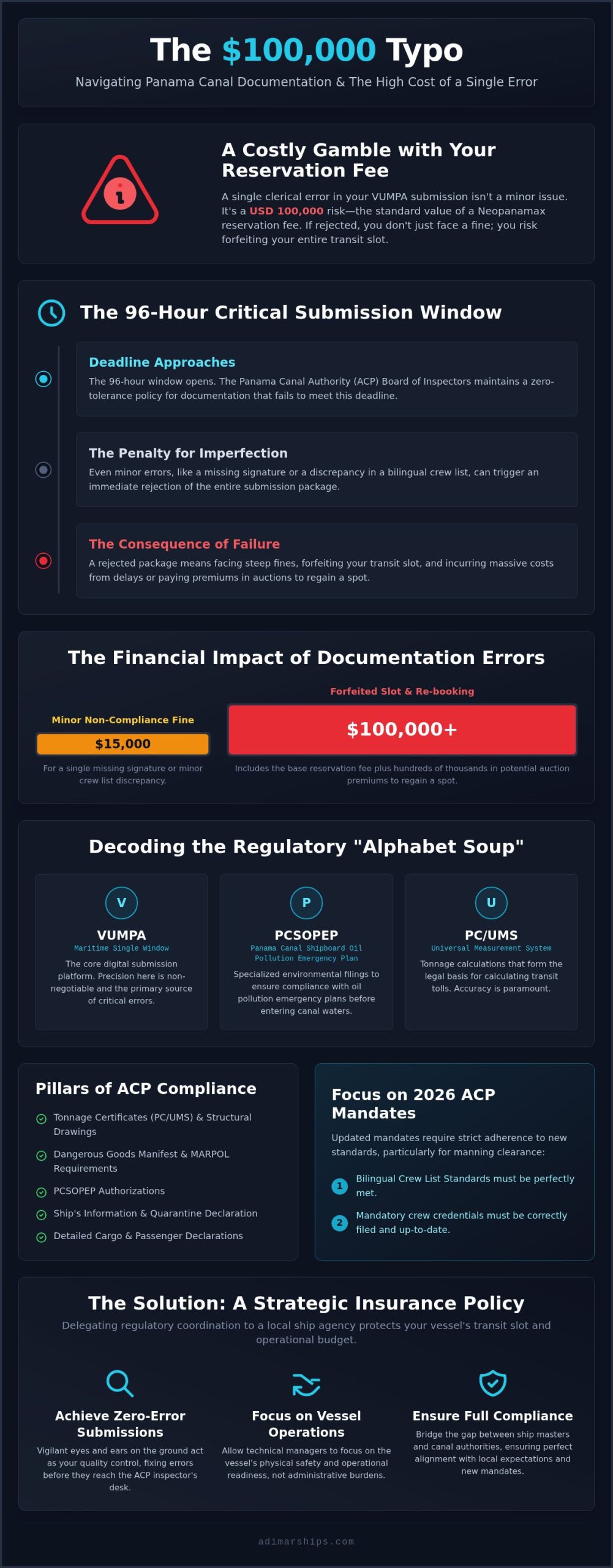
Delegating this “alphabet soup” of regulations allows you to focus on vessel operations while we act as your vigilant eyes and ears on the ground. This article explains how to secure zero-error submissions and maintain full compliance with the updated 2026 ACP mandates. You’ll discover the specific steps needed to ensure transparent coordination and protect your bottom line from avoidable delays. We’ll break down the latest requirements to keep your transit schedule predictable and your vessel moving through the locks without incident.
Key Takeaways
- Professional panama canal transit documentation services provide the specialized local knowledge needed to manage the complex “alphabet soup” of VUMPA, PCSOPEP, and PC/UMS filings.
- The 96-hour VUMPA submission window is a critical deadline where even minor clerical errors can lead to rejected packages and significant financial penalties.
- Neopanamax transits demand specific technical documentation, including precise beam and draft specifications, to navigate the newer locks successfully.
- Updated 2026 ACP mandates require strict adherence to bilingual crew list standards and mandatory credentials to ensure smooth manning clearance.
- Delegating regulatory coordination to a local ship agency acts as a strategic insurance policy, protecting your vessel’s transit slot and operational budget.
The Strategic Importance of Panama Canal Transit Documentation Services
Precision is not optional. When your vessel approaches the Isthmus, the administrative burden shifts from the high seas to a complex digital and physical landscape governed by strict local protocols. Panama canal transit documentation services represent the end-to-end management of all required vessel, cargo, and crew declarations necessary for clearance from the Panama Canal Authority (ACP). This isn’t merely a clerical task; it’s a specialized discipline that requires navigating a dense “alphabet soup” of regulatory requirements.
Technical managers often find themselves buried under VUMPA (Maritime Single Window) submissions, PCSOPEP (Panama Canal Shipboard Oil Pollution Emergency Plan) authorizations, and PC/UMS (Universal Measurement System) tonnage calculations. Each of these acronyms carries its own set of pitfalls. A single missing signature or a minor discrepancy in a bilingual crew list can trigger an immediate USD 15,000 non-compliance fine. Without a Panama Canal ships agent acting as your vigilant eyes and ears on the ground, these administrative hurdles can quickly spiral into operational disasters.
The High Cost of Administrative Errors in 2026
The financial stakes for transiting the canal have never been higher. In 2026, a Neopanamax vessel standard reservation fee sits at USD 100,000; a figure that can double for last-minute bookings. If your paperwork is rejected by the ACP Board of Inspectors, you don’t just face a fine. You risk forfeiting your slot entirely. When a vessel loses its position, the resulting delay forces the owner to choose between waiting days for a new opening or paying hundreds of thousands of dollars in auction premiums to regain a spot. The Board of Inspectors maintains a zero-tolerance policy for documentation that fails to meet the 96-hour submission window. Specialized documentation services function as a critical risk-mitigation tool that safeguards your maritime logistics chain from these catastrophic expenses.
Delegating Complexity to Local Experts
Global logistics teams are experts at deep-sea operations, but they often struggle with the specific nuances of Panamanian “Aduanas” (Customs) and ACP requirements. Local regulations are frequently updated, and the interpretation of these rules can change based on current water levels or lock congestion. A local partner provides real-time resolution for ACP queries, often fixing errors before they reach the inspector’s desk. Professional services bridge the gap between ship masters and the canal authorities, ensuring that the vessel’s technical specifications and crew credentials align perfectly with local expectations. By delegating this technical “alphabet soup” to regional specialists, managers can focus on the vessel’s physical safety while we handle the regulatory safety net.
Essential Documentation Categories for a Successful ACP Submission
Successful transits begin with a technical baseline that leaves no room for ambiguity. Accuracy drives the schedule. The Panama Canal Authority requires precise tonnage certificates and PC/UMS documentation, as these form the legal basis for calculating transit tolls. Structural drawings must also be submitted to verify the vessel’s physical compatibility with the specific lock dimensions of the chosen route. For tankers, managing the Dangerous Goods Manifest and MARPOL requirements is a high-stakes task where minor errors lead to immediate vessel detention. Professional panama canal transit documentation services ensure these technical filings are perfectly synchronized across all digital platforms. Additionally, PCSOPEP authorized persons manage specialized environmental filings to ensure compliance with oil pollution emergency plans before the vessel enters canal waters.
The 12 Pillars of ACP Compliance
The ACP evaluates every submission against 12 essential document categories that define the vessel’s legal status. These include the Ship’s Information and Quarantine Declaration, the detailed Cargo Declaration, and the Passenger List for cruise vessels. High-density cargo carriers, such as LNG or chemical tankers, face even stricter scrutiny regarding their technical specifications and safety systems. All bilingual forms must meet the updated February 2026 formatting standards to avoid automated rejection by the VUMPA system. Technical managers often find that a pre-transit documentation audit provides the security needed to avoid last-minute delays. Beyond cargo, crew and manning requirements are equally strict; every seafarer must have mandatory credentials and appear on a correctly formatted 2026 bilingual crew list to pass the Board of Inspectors’ review.
Husbandry and Security Documentation
Security documentation involves managing the ISPS Code and providing clear port facility security declarations for every port of call in the previous ten visits. When coordinating husbandry services in Panama, agents must also handle crew change visas and medical declarations with extreme care. Effective 2026, regulations require specific “Spares in Transit” documentation to be filed alongside the manifest to ensure technical parts reach the vessel without incurring local import taxes. This filing must be completed before the spares arrive in the country to maintain tax-exempt status. By organizing these categories by submission urgency and technical type, panama canal transit documentation services keep the vessel’s schedule moving forward while protecting the owner’s budget from unnecessary local fees.
Navigating the 96-Hour Critical Window: A Timeline for Compliance
Timing dictates success at the canal. The 96-hour rule is the most rigid deadline in maritime logistics. Every VUMPA (Maritime Single Window) package must be perfect upon its first submission to avoid immediate rejection. Professional panama canal transit documentation services provide the necessary oversight to ensure this digital package aligns with the latest Notices to Shipping. We don’t just relay information; we audit the Master’s paperwork to catch discrepancies before they reach the ACP server. This proactive approach prevents the administrative friction that leads to costly delays.
For Neopanamax vessels, the pressure intensifies with the 48-hour Visibility Condition Report. This specific filing confirms the vessel’s line-of-sight from the bridge, which is vital for safe lock navigation. A proactive ship agency in Panama coordinates these real-time updates as your vessel approaches the locks, ensuring that technical data matches the physical reality of the ship. By maintaining this constant flow of information, we keep the canal authorities informed and your transit schedule protected.
Step-by-Step: The Documentation Management Workflow
Efficiency relies on a structured timeline. We follow a three-phase workflow to eliminate last-minute friction and ensure a seamless entry into Panamanian waters:
- Phase 1 (7 days out): We conduct a comprehensive pre-arrival audit and verification of all certificates, including tonnage measurements and structural drawings.
- Phase 2 (96 hours out): Our team executes the initial VUMPA submission and begins direct coordination with ACP inspectors to address any preliminary queries.
- Phase 3 (24 hours out): We perform final manifest reconciliation and secure “Spares in Transit” clearance to ensure technical parts are ready for delivery without local tax complications.
Avoiding Common Submission Pitfalls
Rejections often stem from simple human error. Typos in container numbers, outdated certificate versions, or missing bilingual translations can stall a transit. While automated systems might flag some errors, they lack the “vigilance” required to spot nuanced documentation gaps that an inspector might challenge. We act as your local extension, providing contingency planning for last-minute cargo changes or crew medical emergencies. This hands-on approach ensures your vessel remains in its assigned slot, protecting your USD 100,000 reservation fee from the consequences of administrative failure. Panama canal transit documentation services are your best defense against the unpredictable nature of maritime bureaucracy.
Specialized Documentation for Neopanamax and Technical Operations
Neopanamax transits demand a higher level of technical precision than traditional lock passages. Because these vessels utilize the expanded locks, the ACP requires exhaustive documentation regarding beam measurements and specific draft restrictions. As of August 2026, the maximum authorized draft for Neopanamax locks is 14.78 meters (48.5 feet) TFW. Any discrepancy in your reported draft can lead to immediate transit suspension or the mandatory use of additional tugboats, which carry a standard fee of USD 30,000. Professional panama canal transit documentation services manage these technical declarations to ensure your Panama Canal transit schedule remains uninterrupted. We also oversee the Disbursement Account (DA), ensuring all documentation fees and port dues are settled transparently and on time.
Logistics Coordination for Critical Spares
Technical deliveries often occur simultaneously with the transit process. When a critical spare part arrives at Tocumen International Airport (PTY), its journey to the vessel depends on precise paperwork. The Air Waybill (AWB) must be clearly marked as “Spares in Transit” to bypass local customs duties and move directly to the ACP manifest. Our team verifies the condition and quantity of these parts before they reach the ship, providing a local layer of oversight that protects the owner’s interests. This integration of husbandry and panama canal transit documentation services eliminates the risk of technical delays caused by missing components.
Environmental and PCSOPEP Documentation
Environmental compliance is a non-negotiable pillar of canal operations. Every vessel must have a designated Authorized Person for the Panama Canal Shipboard Oil Pollution Emergency Plan (PCSOPEP). This role involves managing complex environmental filings and ensuring the vessel meets MARPOL and local ballast water standards. Effective 2026, the ACP requires all transiting vessels to submit electronic record book (ERB) data for oil, ballast, and garbage logs through the digital portal before arrival. This shift to digital-only record-keeping means that paper logs are no longer sufficient for initial clearance. To secure your vessel’s compliance, request a technical documentation review with our specialized team today.
Why Adimar Shipping is Your Strategic Documentation Partner
Complexity requires a partner, not just a provider. As the Panama Canal Authority (ACP) moves toward increasingly digital and stringent enforcement in 2026, the margin for error has effectively vanished. Adimar Shipping, Inc. provides the specialized panama canal transit documentation services needed to navigate this shifting regulatory environment with absolute confidence. We operate with a “Zero-Error” philosophy because we recognize that your transit slot is a multi-million dollar asset that deserves uncompromising protection. Our team treats every filing, from tonnage certificates to bilingual crew lists, as if our own reputation is on the line.
Integrating our owner’s nominated agency services with our compliance management ensures a seamless flow of information. We don’t just process papers; we act as a local extension of your office. This partnership allows technical managers to delegate the exhausting “alphabet soup” of VUMPA and PCSOPEP requirements to experts who live and breathe these regulations daily. We maintain high ethical standards in all ACP dealings, ensuring that your vessel’s representation is as professional as your own operations.
The Adimar Advantage: Vigilance and Precision
We serve as your vigilant eyes and ears on the ground. This approach eliminates the stress of maritime bureaucracy by identifying potential bottlenecks before they manifest as delays. Our track record includes managing transits for complex Neopanamax vessels and high-risk cargo carriers where documentation requirements are at their peak. We view every document as a critical component of the voyage. Precision in paperwork translates directly to speed in the locks. By catching errors that automated systems miss, we protect your bottom line from the rising costs of auction premiums and administrative fines.
Secure Your 2026 Transit Today
Preparation is the only way to avoid the high costs of non-compliance. We invite you to request a comprehensive documentation audit for your upcoming passage to ensure every certificate and manifest meets current ACP standards. Nominating Adimar Shipping, Inc. as your local representative in Panama provides you with the security of a seasoned partner who understands the financial importance of timing. Our team is ready to guide your vessel through the 96-hour critical window with transparency and expertise. Partner with Adimar Shipping, Inc. for your documentation and transit needs to ensure your 2026 operations remain profitable and predictable.
Securing Your Vessel’s Future in the Panama Canal
Navigating the Isthmus in 2026 requires more than technical skill; it demands administrative perfection. As we have explored, the 96-hour submission window and the specific draft restrictions for Neopanamax vessels leave no room for oversight. Professional panama canal transit documentation services act as your primary defense against the administrative friction that leads to rejected VUMPA packages and forfeited reservation fees. By delegating the technical “alphabet soup” of compliance to a local partner, you ensure that your vessel remains on schedule and your operational budget remains intact.
Adimar Shipping serves as your vigilant eyes and ears on the ground. We provide the security of an authorized PCSOPEP person and specialized expertise in Neopanamax compliance. Our 100% focus on protecting the owner’s interest ensures that every document is audited for precision before it reaches the authorities. We treat your transit slot as our own, providing the transparency and reliability your fleet deserves. Ensure a rejection-proof transit with Adimar’s expert documentation services. We look forward to guiding your vessel safely through the locks.
Frequently Asked Questions
What is the 96-hour rule for Panama Canal transit documentation?
The 96-hour rule requires all vessels to submit their complete VUMPA documentation package at least 96 hours before their scheduled arrival at canal waters. This deadline is strictly enforced by the ACP to allow sufficient time for the Board of Inspectors to review vessel specifications, cargo manifests, and crew credentials. Failure to meet this window often results in the immediate loss of your transit slot and significant administrative penalties.
How much are the fines for incorrect documentation at the Panama Canal?
Fines for non-compliance or submission errors within panama canal transit documentation services can reach USD 15,000 per incident. Beyond these direct fines, the financial impact includes the potential forfeiture of the Neopanamax reservation fee, which stands at USD 100,000. If a vessel is delayed due to paperwork errors, owners may also face high auction premiums to secure a new slot, which reached USD 425,000 in May 2026.
Can I submit Panama Canal transit documents in English only?
No, the ACP requires specific documents to be submitted in a bilingual format using both English and Spanish. This requirement applies primarily to crew lists, passenger manifests, and certain health declarations required for clearance. Submitting documents in English only will lead to an automated rejection by the VUMPA system, causing unnecessary delays during the 96-hour critical window.
What is VUMPA and how does it affect my vessel clearance?
VUMPA stands for Ventanilla Única Marítima de Panamá, which is the digital Maritime Single Window used by the ACP and other Panamanian authorities. It serves as the centralized portal for all vessel, cargo, and crew declarations. Your vessel cannot receive clearance to transit the locks until the VUMPA package is fully approved by all participating government agencies, making its accuracy vital for your schedule.
Do I need a local ship agent to handle my documentation in Panama?
Yes, the ACP requires a registered local ship agent to act as the official liaison between the vessel and the canal authorities. Professional panama canal transit documentation services provided by a local expert are essential for coordinating with the Board of Inspectors and settling the Disbursement Account. An agent provides the necessary local presence to resolve technical queries in real-time before they escalate into fines.
What are the specific documentation requirements for Neopanamax vessels in 2026?
Neopanamax vessels must provide detailed visibility condition reports and precise declarations regarding their beam and draft. As of August 2026, the maximum authorized draft is 14.78 meters (48.5 feet) TFW. Additionally, the ACP now mandates the submission of electronic record book (ERB) data for oil, ballast, and garbage logs through the digital portal prior to the vessel’s arrival at the Isthmus.
How do I document “Spares in Transit” to avoid Panamanian taxes?
To avoid local import taxes, all technical parts must be clearly marked as “Spares in Transit” on the Air Waybill (AWB) and the vessel’s manifest. These documents must be filed with the authorities before the spares arrive in Panama or reach the vessel. Proper documentation ensures that critical components move directly from Tocumen International Airport to the ship without being subject to standard customs duties.
What happens if my documentation is rejected by the ACP?
If the ACP rejects your documentation, your vessel will lose its assigned transit slot and be moved to the end of the queue. This often results in delays of several days, leading to increased fuel costs and potential missed arrival windows at the next port. You’ll also be required to pay administrative fees to resubmit the corrected paperwork and may face additional fines for the initial non-compliance.