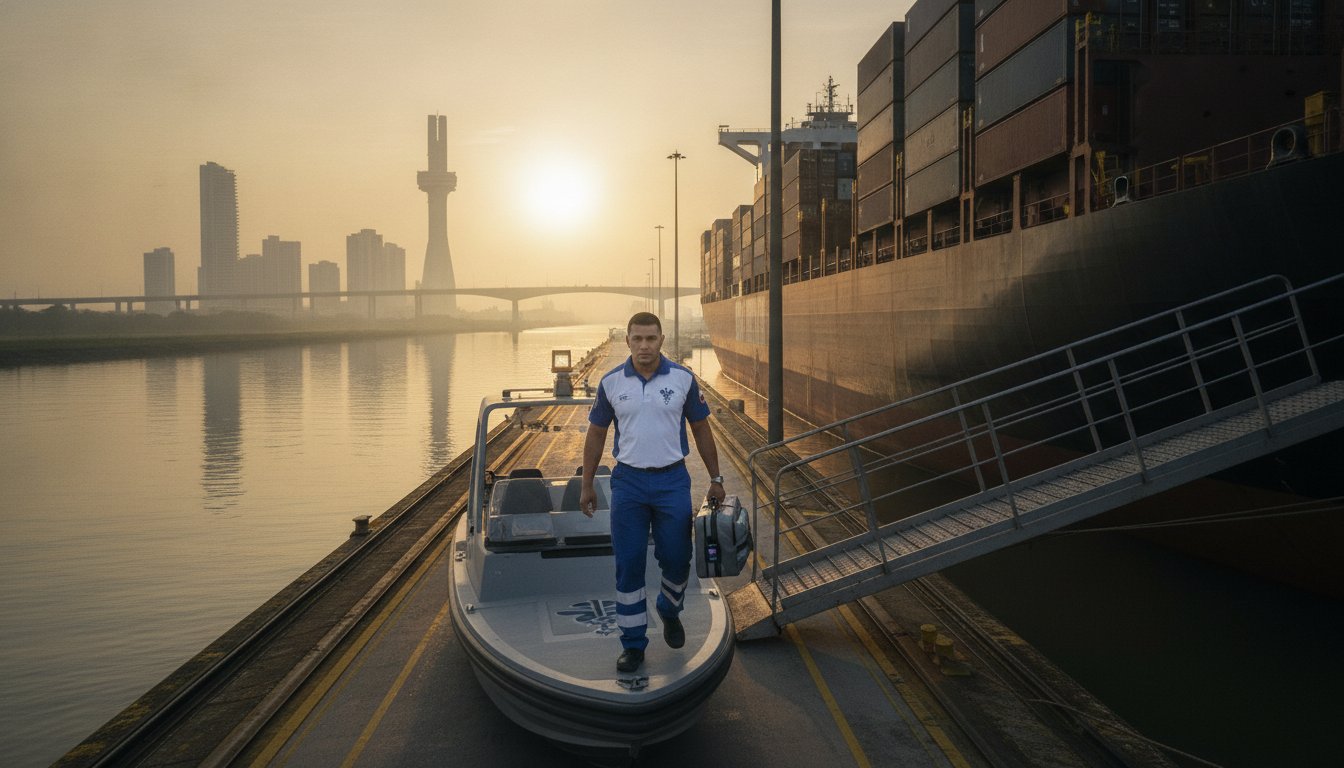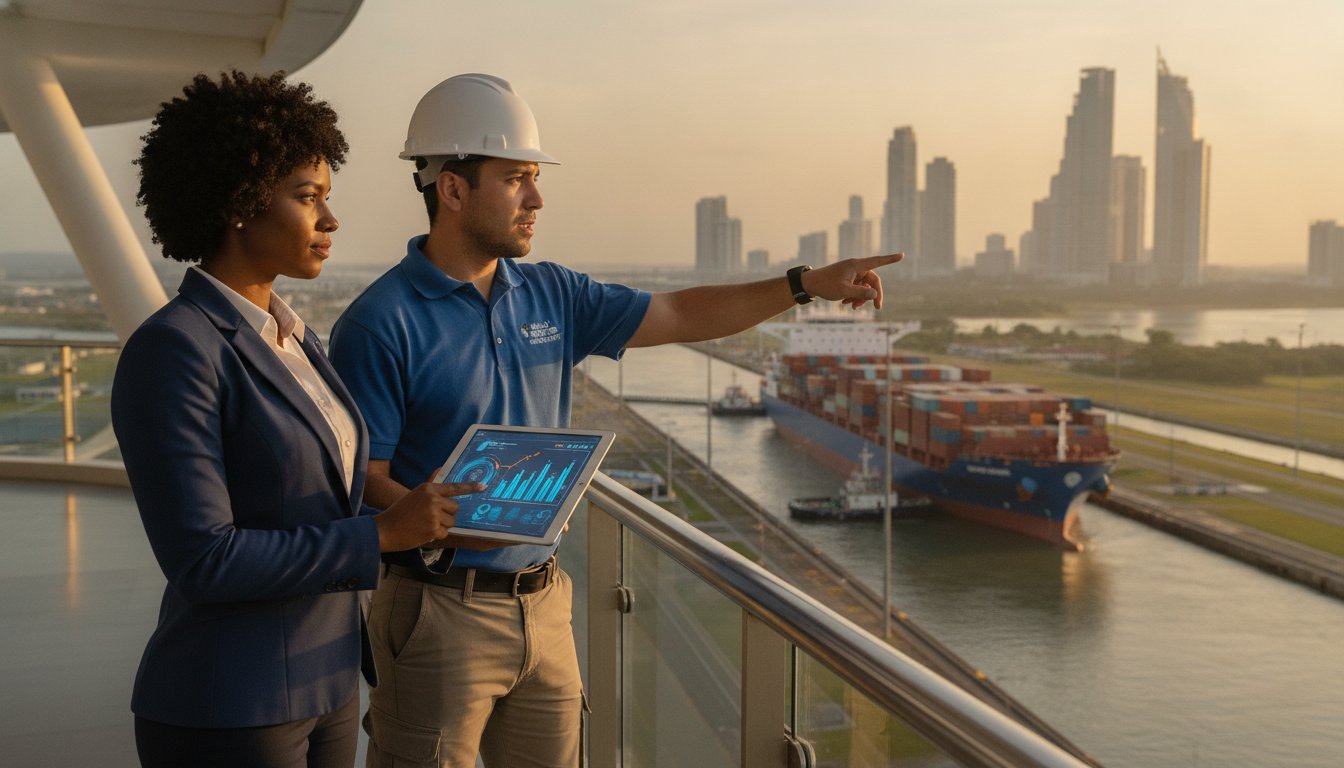

Your chandler confirms delivery. Your bonded stores are cleared. Then the ACP pilot schedule shifts by four hours, and everything unravels. For any Master coordinating vessel provisioning through Balboa, that scenario isn’t a worst-case hypothetical – it’s a recurring operational risk. A qualified husbandry agent in Balboa, Panama isn’t simply a logistics coordinator; they’re the on-the-ground presence that stands between a smooth transit and a costly delay.
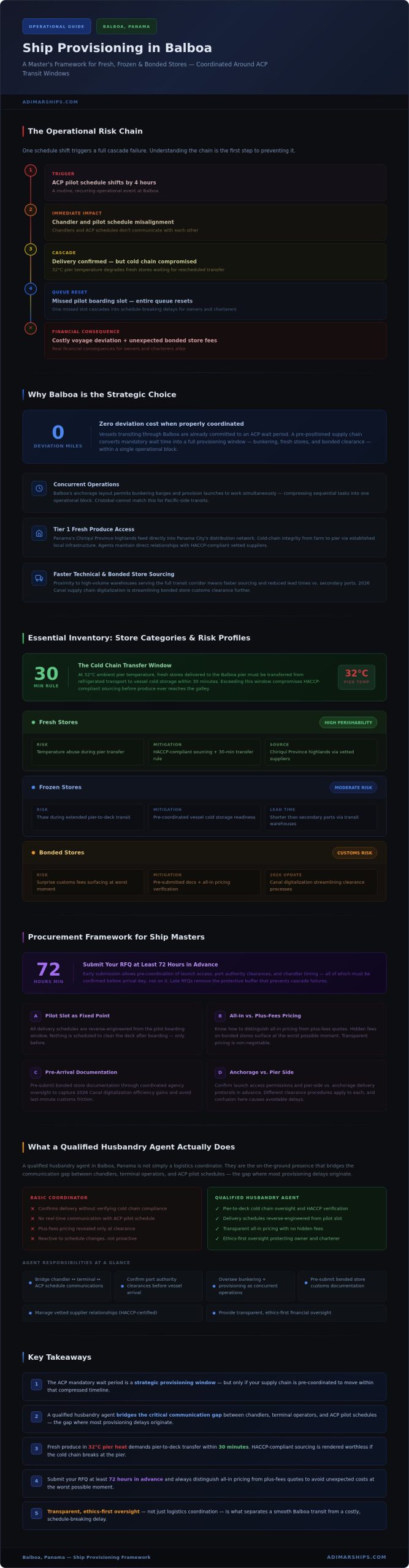
You already know Balboa’s complexity. The tropical heat accelerates spoilage windows. Bonded store customs fees surface at the worst possible moment. Chandlers and ACP pilot schedules don’t naturally communicate with each other, and the gap between those two timelines is where provisions go wrong. These aren’t minor inconveniences – they’re operational threats with real financial consequences for owners and charterers alike.
This guide gives you a practical framework for securing Tier 1 quality fresh and bonded stores in Balboa, coordinating deliveries around ACP transit windows, and working with a husbandry agent who provides transparent pricing and genuine protective oversight. What follows covers every critical stage of the provisioning chain, so your vessel clears Balboa on schedule and fully stocked.
Key Takeaways
- Balboa’s mandatory ACP wait times create a strategic provisioning window – but only if your supply chain is pre-coordinated to move within that compressed timeline.
- A qualified husbandry agent in Balboa, Panama bridges the critical communication gap between chandlers, terminal operators, and ACP pilot schedules – the gap where most provisioning delays originate.
- Fresh produce deliveries in 32°C tropical humidity demand more than a standard cold-chain plan; pier-to-deck transfer protocols and HACCP-compliant sourcing are non-negotiable for quality assurance.
- Submitting your RFQ at least 72 hours in advance and knowing how to distinguish all-in pricing from plus-fees quotes can protect your vessel from unexpected costs at the worst possible moment.
- Transparent, ethics-first agency oversight – not just logistics coordination – is what separates a smooth Balboa transit from a costly, schedule-breaking delay.
Why Balboa, Panama is the Strategic Choice for Ship Provisions in 2026
Every hour a vessel spends at anchor costs money. The Masters who understand Balboa’s operational geometry are the ones who turn that unavoidable wait into a logistical advantage. The Panama Canal’s mandatory ACP staging process isn’t a delay to be endured; it’s a provisioning window to be exploited, provided your supply chain is pre-positioned to move within it.
That’s the chokepoint advantage. Vessels transiting southbound or northbound through the Pacific entrance are already committed to a wait period before pilot boarding. A vessel that arrives with a confirmed provisioning schedule can complete bunkering, fresh store delivery, and bonded store clearance within that same window, eliminating any need for a costly voyage deviation. The math is straightforward: zero deviation miles equals zero deviation cost.
The Time-is-Money Factor at the Pacific Entrance
Balboa’s anchorage layout supports simultaneous operations in a way that Cristobal simply can’t match for Pacific-side transits. Bunkering barges and provision launches can work concurrently alongside a vessel at anchor, compressing what would otherwise be sequential tasks into a single operational block. The critical variable is pilot boarding time. A missed boarding slot doesn’t just delay departure; it resets the entire queue, and the cascading schedule impact can translate into significant costs for owners and charterers. A qualified husbandry agent in Balboa, Panama treats the pilot boarding window as the fixed point around which every other delivery is reverse-engineered.
- Concurrent operations: Balboa’s anchorage permits bunkering and provisioning to run simultaneously, reducing total alongside time.
- Pilot slot priority: All delivery schedules must be structured to clear the deck before pilot boarding, not after.
- Pre-coordination requirement: Launch access, port authority clearances, and chandler timing must be confirmed before the vessel arrives, not on arrival day.
Access to the Colon Free Zone and Local Markets
Balboa’s position on the Pacific entrance gives it a sourcing advantage that’s easy to overlook. Panama’s primary agricultural interior, including the highlands of Chiriquí Province, feeds directly into Panama City’s distribution network, making Balboa terminals a natural endpoint for Tier 1 fresh produce. Cold-chain integrity from farm to pier is maintained through established local infrastructure, and a competent husbandry agent in Balboa, Panama maintains direct relationships with vetted suppliers who meet HACCP-compliant handling standards.
For technical stores and bonded supplies, the proximity to high-volume warehouses serving the broader transit corridor means faster sourcing and reduced lead times compared to provisioning at secondary ports. In 2026, the ongoing digitalization of Canal supply chain documentation is streamlining customs clearance processes for bonded stores, which reduces the administrative friction that has historically created last-minute delays. Vessels that pre-submit documentation through coordinated agency oversight are best positioned to capture those efficiency gains.
Essential Inventory: Sourcing Fresh, Frozen, and Bonded Stores in Balboa
Getting the right stores aboard isn’t just a procurement task. It’s a quality assurance operation conducted under time pressure, in tropical heat, against a fixed pilot boarding window. Every category of provision – fresh, frozen, bonded, or technical – carries its own sourcing risk in Balboa, and each demands a different mitigation strategy.
Quality Control in a Tropical Climate
At 32°C ambient pier temperature, fresh produce degrades faster than most shoreside logistics teams account for. The practical standard used by experienced agents is a 30-minute rule: fresh stores delivered to the Balboa pier must be transferred from refrigerated transport to vessel cold storage within that window. Any longer, and the cold-chain integrity that justified the HACCP-compliant sourcing in the first place is compromised before the product ever reaches the galley.
Pre-delivery inspection is non-negotiable. A qualified husbandry agent in Balboa, Panama acts as the eyes on the pier, verifying produce condition, checking packaging integrity, and cross-referencing delivery manifests against the original order before goods are loaded onto the launch. Discrepancies caught at the pier are correctable. Discrepancies discovered three days into a Pacific crossing are not.
For long-haul voyages post-transit, packaging standards matter as much as sourcing standards. Vacuum-sealed proteins, waxed produce cartons, and moisture-controlled dry goods packaging aren’t optional upgrades – they’re the difference between a well-stocked galley at the next port and a spoilage write-off.
- Fresh produce: Verify cold-chain continuity from supplier vehicle to vessel hold; reject any goods arriving in non-refrigerated transport.
- Frozen and dairy: Confirm HACCP documentation accompanies each delivery; check core temperatures on receipt, not just surface temperatures.
- Dry stores: Inspect packaging for moisture damage, particularly for provisions sourced from warehouse environments with variable humidity control.
2026 Bonded Stores Regulations in Panama
Bonded store deliveries in Balboa operate under Panama’s tax-free ship supply framework, but the documentation requirements are precise. In 2026, compliant bonded deliveries require a valid ship’s store declaration, a customs-authorized delivery note specific to the vessel’s IMO number, and pre-clearance confirmation from the National Customs Authority of Panama (ANA) before goods leave the bonded warehouse. Missing or incomplete documentation doesn’t just delay delivery; it can trigger inspection holds that cascade directly into pilot slot conflicts.
The more common financial risk isn’t a regulatory violation – it’s a buried handling fee. Chandler quotes for spirits, tobacco, and high-value bonded items frequently separate the goods cost from warehouse release fees, port authority handling charges, and launch delivery surcharges. Reviewing any bonded store quote line-by-line, and requesting an all-in delivery price before confirming the order, is standard protective practice. A transparent ship husbandry agent will identify those fee structures before they reach the final disbursement account.
For technical and deck stores, Balboa’s position as a high-volume transit hub means faster sourcing lead times for urgent engine spares and LSA/FFE equipment than most secondary provisioning ports can offer. Established supplier relationships in the Panama City distribution network mean that critical items – immersion suits, fire detection components, or specific engine parts – can often be sourced and delivered within the ACP staging window, provided the request is placed well in advance of arrival.
Navigating Balboa Logistics: Anchorage vs. Pier Side Coordination
Balboa isn’t a single operational environment. It’s two distinct logistical theaters running simultaneously, and confusing them is where provisioning plans fall apart. Anchorage deliveries and pier side operations each carry their own clearance requirements, timing constraints, and failure modes. A Master coordinating remotely can’t see those differences. A qualified husbandry agent in Balboa, Panama can, and that ground-level visibility is what keeps both theaters running in sync.
The Complexity of the Balboa Anchorage
The Pacific entrance anchorage isn’t a single waiting area. Vessels are assigned to specific sectors based on vessel type, LOA, and transit queue position, and not every sector offers the same accessibility for supply launches. Shallow-draft areas near the Flamenco causeway corridor have different approach windows than the deeper anchorage sectors further offshore. A launch operator who doesn’t know the assigned sector in advance loses time that can’t be recovered once the pilot boarding clock starts.
Pacific swells compound that problem. A 1.5-metre swell that looks manageable from the bridge makes mid-stream cargo transfers genuinely risky, particularly for fragile fresh produce or crated technical stores. Experienced agents build a weather buffer into the delivery schedule rather than treating sea state as an afterthought.
Launch fees are also a significant cost lever that most vessels don’t optimize. Each launch run to anchorage carries a fixed access cost regardless of cargo volume. Consolidating crew changes, provisions, spare parts, and mail into a single launch run rather than scheduling them separately can produce meaningful savings per call.
- Sector confirmation: Verify the assigned anchorage sector before dispatching any supply launch; approach windows vary by location.
- Sea state assessment: Build a swell contingency into the delivery schedule for mid-stream transfers of fragile or temperature-sensitive cargo.
- Launch consolidation: Combine crew changes, provisions, and spares into a single run wherever the timeline permits to reduce per-call launch costs.
The Agent’s Role in Last-Mile Delivery
Pier side operations introduce a different set of risks. PSA Panama and the Balboa Terminal have their own vehicle access protocols, and a chandler’s delivery truck that arrives without pre-authorized terminal entry documentation simply doesn’t get through the gate. The fresh stores sitting in that truck aren’t waiting in a temperature-controlled environment while the paperwork gets resolved.
This is where the vigilant observer role becomes concrete. An agent physically present on the pier can intercept that scenario before it becomes a spoilage event. Real-time communication between the pier, the chandler’s dispatch, and the vessel’s Master is what separates a managed operation from a reactive one. When the ACP adjusts a transit slot at short notice, and it does, the agent’s job is to immediately resequence every pending delivery around the new boarding time, not to relay the update and wait for instructions.
The communication triangle of Master, agent, and chandler only functions when the agent holds the center. Both the Master and the chandler are operating with partial information. The Master knows the vessel’s internal readiness; the chandler knows the goods status. Only the agent sees the full operational picture: terminal access, launch availability, pilot schedule, and delivery status simultaneously. That unified visibility is the coordination mechanism that protects the transit window.
Avoiding Delays: A Procurement Framework for Ship Masters
Most provisioning failures don’t happen on the pier. They happen in the planning stage, days before the vessel arrives, when assumptions go unverified and quote comparisons get skipped in the interest of speed. A disciplined five-step procurement framework eliminates those upstream errors before they become downstream delays.
Step 1: Submit your RFQ at least 72 hours before arrival. Specialized items – specific engine spares, LSA components, particular bonded store categories – can’t be sourced on the day. The Balboa supply network is deep, but it isn’t instantaneous. A 72-hour minimum gives your husbandry services partner time to confirm actual stock availability rather than assumed availability, which is a meaningful distinction.
Step 2: Compare quotes on a like-for-like basis. An all-in quote and a plus-fees quote for the same order can differ substantially once launch charges, warehouse release fees, and port handling surcharges are added back. Request an itemized breakdown before confirming any order, not after.
Step 3: Verify Colon Free Zone inventory before arrival. Chandlers sometimes quote from catalogue rather than confirmed stock. Pre-arrival inventory verification, particularly for bonded items sourced from the Free Zone, prevents the scenario where a confirmed order becomes a partial delivery at the pier.
Step 4: Run a final coordination check 12 hours before arrival. At that point, the ACP pilot schedule is as firm as it’s going to get. Every pending delivery should be re-timed against the confirmed boarding window, with contingency built in for any last-minute slot adjustments.
Step 5: Inspect on receipt, report immediately. Discrepancies documented at the pier are recoverable. Those discovered at sea are not. A standardized delivery inspection protocol, cross-referencing manifests against orders and checking temperature logs for cold-chain items, should be treated as mandatory, not optional.
Identifying Hidden Costs in Provisioning Quotes
Barge fees, launch fees, and overtime delivery surcharges are the three most common cost items that appear on a disbursement account without appearing in the original quote. Customs clearance fees for technical spares are also frequently separated from the goods cost itself, which can make a competitive-looking quote considerably less competitive by the time the invoice arrives. A qualified husbandry agent in Balboa, Panama audits these structures as a matter of protective agency practice, identifying fee exposure before it’s committed rather than after.
The Master’s Pre-Arrival Checklist
Before arrival, the Master should have three things confirmed: a prioritized inventory split between critical galley needs and secondary stores, a verified readiness status for the vessel’s crane or derrick if mid-stream transfer is planned, and a clear reporting protocol for damaged or substandard goods. That last point matters more than most Masters budget for. A standardized discrepancy report, submitted to the agent within hours of delivery, is the document that protects the vessel’s interests in any subsequent claim against a chandler.
The procurement framework isn’t administrative overhead. It’s the operational structure that keeps a Balboa transit on schedule. Contact Adimar Shipping to coordinate your pre-arrival provisioning plan before your next Canal transit.
Beyond the Shopping List: The Adimar Shipping Approach to Husbandry
Provisioning coordination is a commodity. Any competent chandler can take an order and arrange a delivery. What separates a qualified husbandry agent in Balboa, Panama from a logistics intermediary is what happens between the order confirmation and the final disbursement account – the oversight layer that protects your vessel’s interests at every point where third-party vendors intersect with your schedule and your budget.
Adimar Shipping operates as an extension of your team, not a contractor you brief once and wait to hear from. With over 20 years of experience at the Panama Canal, the operational knowledge that informs every provisioning coordination isn’t theoretical. It’s built from the specific failure modes of Balboa: the chandler who quotes ex-warehouse rather than delivered-on-deck, the bonded store release that stalls because a customs reference number doesn’t match the vessel’s IMO on file, the launch that arrives at the wrong anchorage sector because nobody confirmed the assignment before dispatch.
Protecting the Owner’s Interests in Balboa
Through Adimar’s owner’s nominated agency service, third-party vendor oversight is built into the mandate from the start. That means delivery manifests are cross-referenced against confirmed orders before goods are signed for, not after. It means temperature logs for cold-chain items are checked on the pier, not assumed correct. And it means the disbursement account reflects what was actually delivered aboard, not what was invoiced by a chandler operating without independent verification.
Local expertise matters here in ways that aren’t visible from a shoreside operations desk. The Balboa port community has established relationships, informal pricing tiers, and vendor tendencies that only become apparent through sustained on-the-ground presence. Knowing which suppliers consistently deliver to specification and which require closer scrutiny at receipt is institutional knowledge. It’s the kind of intelligence that protects owners from repeat exposure to the same avoidable costs.
Adimar’s integrated approach also extends to bunkering in Panama and crew change coordination, consolidating what would otherwise be separate vendor relationships into a single accountable point of contact. That consolidation isn’t just operationally convenient; it eliminates the communication gaps between service providers that create schedule conflicts.
The Adimar Vigilance Metaphor in Action
Fresh stores don’t wait. Neither does a pilot boarding window. The practical value of having Adimar’s team physically present at the pier is that problems get intercepted before they become losses. A delivery vehicle that arrives without terminal pre-authorization doesn’t sit at the gate while someone calls the office; it gets resolved in real time by someone who already knows the terminal access protocol and has the right contacts on speed dial.
Every vessel transit is treated as a distinct logistical mission, not a repeating template. Vessel type, voyage duration, crew complement, and cargo constraints all shape the provisioning requirement, and a standardized approach serves none of them well. That specificity is what genuine husbandry service looks like in practice.
Contact Adimar Shipping to coordinate your next Balboa provisioning before your Canal transit. The earlier the pre-arrival plan is locked, the more operational leverage you have over every variable that follows.
Your Next Canal Transit Starts Here
Balboa rewards preparation. The Masters who clear the Pacific entrance on schedule aren’t lucky; they’ve pre-positioned every variable before the vessel arrives. A qualified husbandry agent in Balboa, Panama is the operational mechanism that makes that preparation real: coordinating fresh and bonded store deliveries around ACP pilot windows, intercepting pier-side problems before they become spoilage events, and auditing disbursement accounts so hidden fees don’t surface after the fact.
Three things determine whether a Balboa provisioning call succeeds: a 72-hour pre-arrival lead time, transparent all-in pricing, and an agent with genuine ground-level visibility. Get those right, and the mandatory ACP staging window becomes an asset rather than a liability.
Adimar Shipping brings 20+ years of Panama Canal expertise, specialized protective agency oversight, and a commitment to ethical, fee-free coordination that protects your vessel’s interests at every stage. Don’t leave your next transit to chance. Secure your vessel’s provisions with Adimar Shipping and arrive at the Canal fully prepared.
Frequently Asked Questions About Husbandry Services in Balboa, Panama
What are the main advantages of provisioning in Balboa vs. Cristobal?
Balboa’s primary advantage is its direct access to Panama City’s agricultural distribution network, which shortens cold-chain transit times for fresh produce compared to Cristobal’s Atlantic-side supply routes. For Pacific-bound vessels, provisioning at Balboa also eliminates any need for a voyage deviation, since the ACP staging wait already creates a natural delivery window. Cristobal serves Atlantic transits well, but it can’t replicate Balboa’s concurrent bunkering and provisioning capability for Pacific-entrance vessels.
How far in advance should I order ship provisions for a Balboa transit?
Submit your RFQ a minimum of 72 hours before your estimated arrival. That lead time isn’t a formality; it’s what separates confirmed stock availability from catalogue assumptions. Specialized items like LSA components, specific engine spares, or particular bonded store categories require supplier confirmation that simply can’t happen on arrival day. For vessels with complex or high-volume requirements, extending that window to 96 hours gives your husbandry agent in Balboa, Panama additional sourcing flexibility without compromising delivery timing.
Can I receive bonded stores (tobacco/alcohol) at the Balboa anchorage?
Yes, bonded store deliveries to the anchorage are possible, but they require pre-clearance from Panama’s National Customs Authority (ANA) before goods leave the bonded warehouse. The delivery note must reference the vessel’s IMO number, and all documentation must be in order before the launch departs the pier. Any gap in that paperwork chain doesn’t just delay the bonded delivery; it can create an inspection hold that conflicts directly with your pilot boarding window. Pre-authorization is non-negotiable.
What happens to my provision delivery if my Panama Canal transit slot is delayed?
A slot delay requires immediate resequencing of every pending delivery around the revised boarding window. Perishable goods already in transit are the highest-priority concern; fresh stores that can’t be held in temperature-controlled conditions at the pier may need to be returned to the supplier and redelivered. A qualified agent manages this resequencing in real time, contacting chandlers, launch operators, and terminal coordinators simultaneously rather than relaying the update and waiting for instructions. That speed of response is what limits spoilage exposure and cost.
Are there specific customs fees for ship provisions in Panama in 2026?
Panama’s tax-free ship supply framework exempts qualifying vessel provisions from import duties, but that exemption doesn’t eliminate all associated costs. Warehouse release fees, ANA processing charges, and port authority handling surcharges are applied separately from the goods cost itself and frequently don’t appear in an initial chandler quote. The practical risk isn’t a regulatory violation; it’s a disbursement account that looks different from the original quote. Always request an itemized, all-in delivery price before confirming any order.
How does Adimar Shipping ensure the quality of fresh stores in the tropical heat?
Adimar’s team is physically present at the pier during delivery, not monitoring remotely. That on-the-ground presence means produce condition is verified, packaging integrity is checked, and delivery manifests are cross-referenced against the original order before goods are loaded onto the launch. Cold-chain continuity is confirmed from the supplier vehicle to the vessel hold, and any goods arriving in non-refrigerated transport are rejected at the pier. Problems intercepted before loading are correctable; problems discovered mid-Pacific are not.
Can Adimar coordinate technical spares delivery along with my food provisions?
Yes. Adimar’s husbandry services cover technical and deck stores alongside food provisioning, including urgent engine spares and LSA/FFE equipment. Coordinating these through a single point of contact eliminates the communication gaps that occur when separate vendors operate without visibility into each other’s delivery timelines. Consolidating spares, provisions, and crew change logistics into a unified pre-arrival plan also reduces launch costs, since each run to anchorage carries a fixed access fee regardless of cargo volume.
What is the role of a protective agent during the provisioning process?
A protective agent’s mandate goes beyond logistics coordination. It includes independent verification that third-party vendors deliver what was ordered, at the quality specified, at the price agreed. In practice, that means auditing disbursement accounts for fee structures that weren’t disclosed in the original quote, cross-referencing delivery manifests against confirmed orders before goods are signed for, and maintaining real-time visibility across the entire supply chain simultaneously. The protective agent holds the center of the communication triangle between Master, chandler, and terminal, so no party operates on incomplete information.