
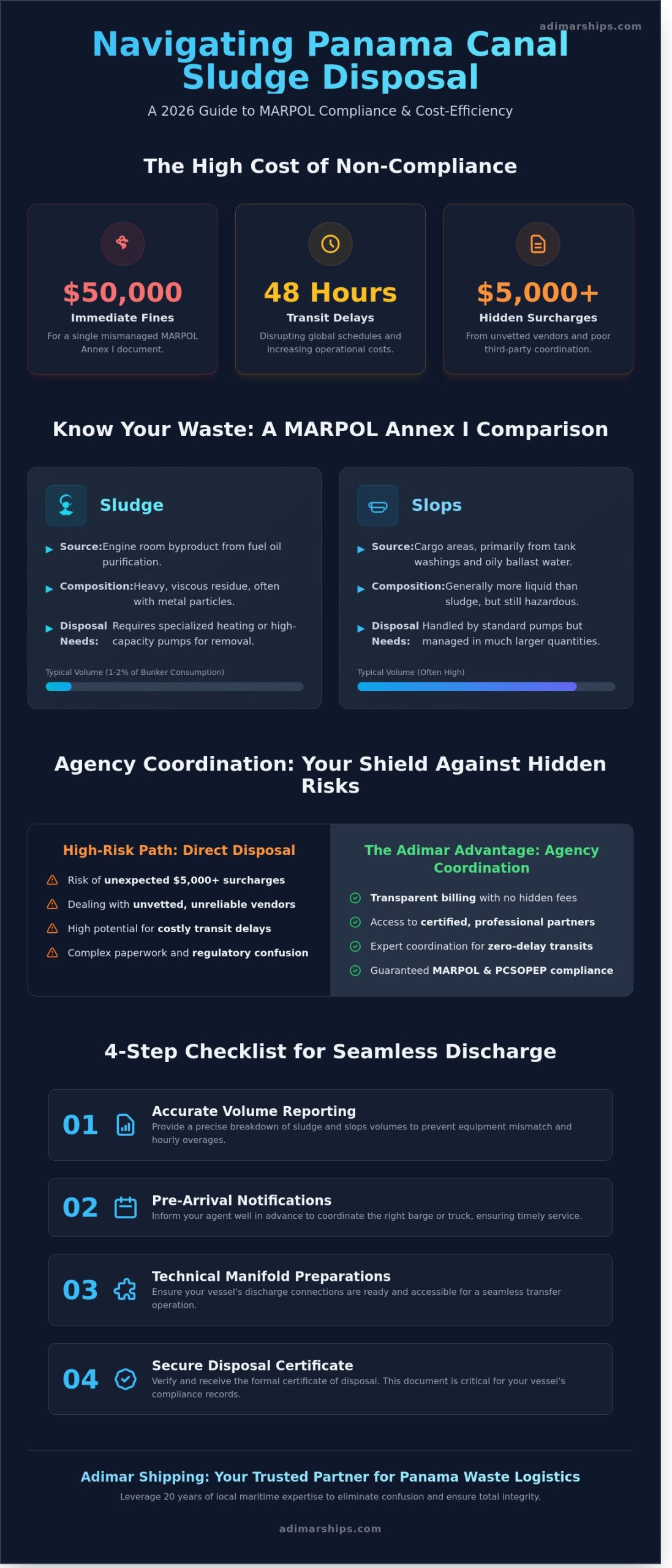
Mismanaging a single MARPOL Annex I document can cost a vessel owner $50,000 in immediate fines and delay a scheduled 2026 Panama Canal transit by 48 hours. When you’re operating on a tight margin, finding reliable sludge disposal services panama isn’t just a maintenance task. It’s a high-stakes logistics move. We’ve seen how poor coordination with third party contractors leads to unexpected $5,000 surcharges and missed slots that disrupt entire global schedules.
You already know that every hour spent at anchor is a drain on your budget. It’s frustrating to deal with complex MARPOL requirements while worrying about hidden fees from unvetted vendors. We are experts so you don’t have to be. This guide will teach you how to manage vessel waste efficiently while ensuring your billing remains transparent and cost-conscious. We’ll walk you through the exact steps to achieve a zero-delay transit with full regulatory compliance. By the end, you’ll understand how to use professional agency coordination as your eyes at the Panama Canal to protect your bottom line.
Key Takeaways
- Understand the critical distinctions between sludge, slops, and bilge water to ensure your vessel remains fully compliant with MARPOL Annex I requirements.
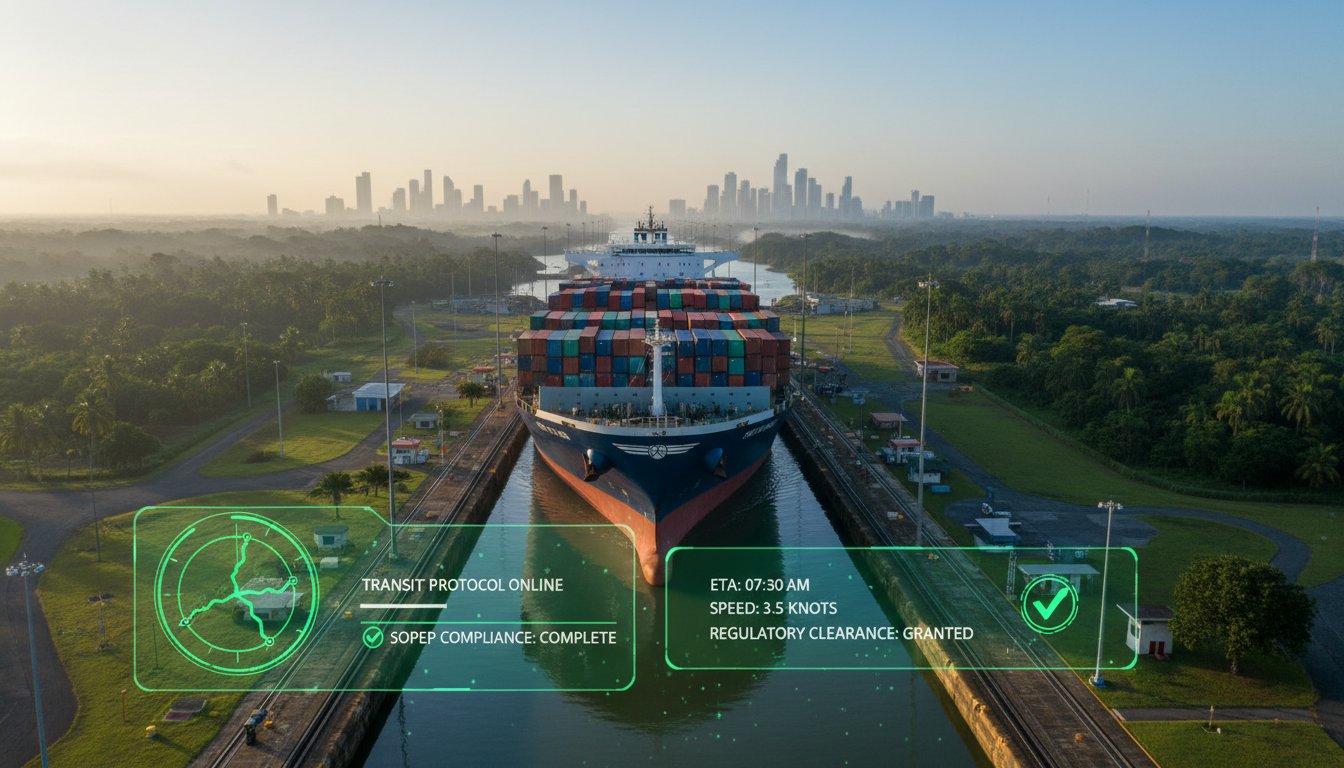
- Discover how professional sludge disposal services panama protect your vessel’s PCSOPEP status and prevent expensive scheduling conflicts with the Canal Authority.
- Analyze the cost-benefit of agency coordination to avoid hidden logistical gaps that can result in thousands of $ USD in avoidable transit delays.
- Identify the specific pre-arrival notifications and technical manifold preparations required for a seamless discharge during your 2026 transit.
- Learn how to leverage 20 years of local maritime expertise to eliminate confusion and ensure your waste logistics are handled with total integrity and efficiency.
What are Sludge Disposal Services in Panama?
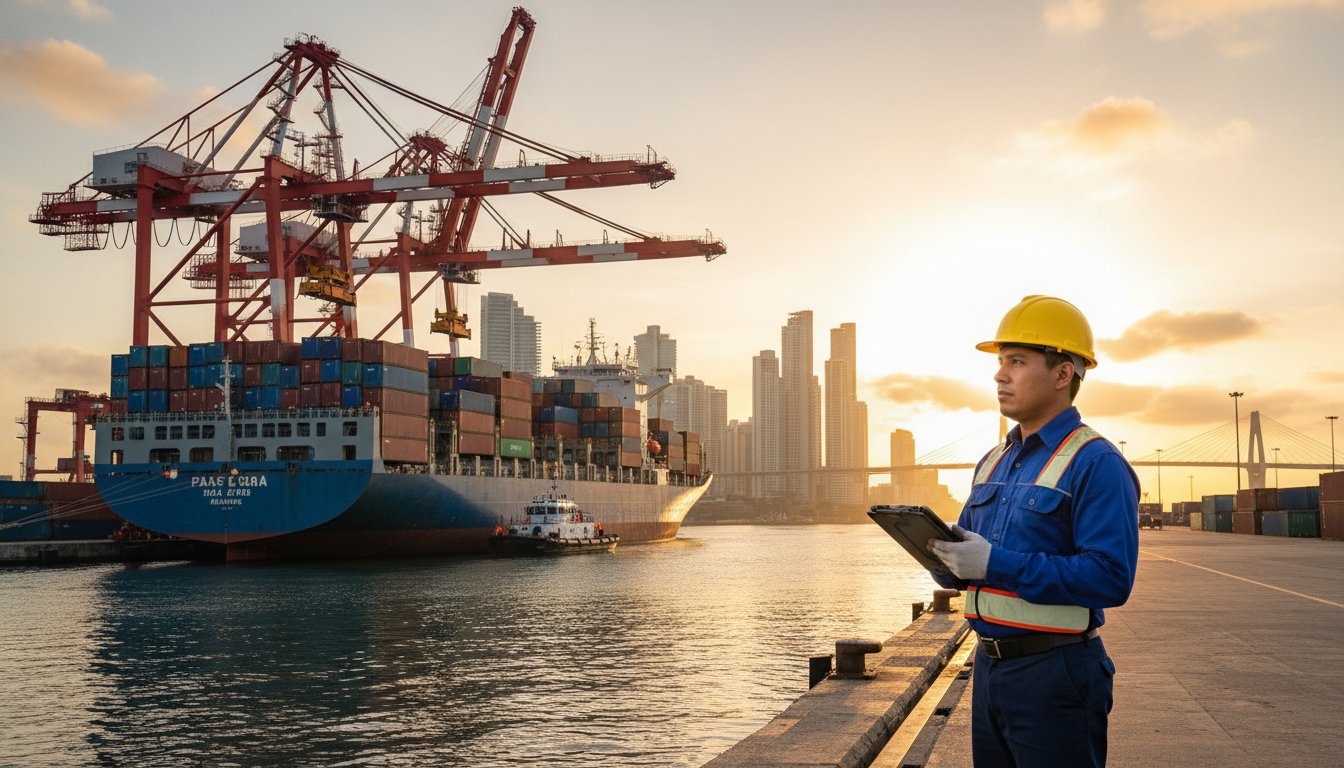
Sludge disposal services panama represent the specialized logistics chain required to collect, transport, and treat oily waste from vessels during port stays or canal transits. This process focuses primarily on Annex I waste as defined by the international MARPOL 73/78 convention. In a high-traffic zone like the Panama Canal, where over 14,000 vessels transit annually, managing these residues isn’t just a maintenance task. It’s a strict legal requirement. These services ensure that hazardous hydrocarbons don’t enter the local ecosystem, protecting both the Gatun Lake watershed and the surrounding oceans.
Every ship generates waste through standard operations. Sludge disposal services panama provide the certified personnel and equipment to remove these materials safely. The service includes the physical suction of the waste, its transport to a licensed facility, and the issuance of a formal certificate of disposal. Without this documentation, a vessel can face significant delays or heavy fines from maritime authorities. We act as your eyes on the ground to ensure every gallon is accounted for and every document is signed correctly.
The Panama Canal Authority (ACP) oversees all waste discharge activities within canal waters. They maintain rigorous standards to prevent contamination of the freshwater supply used for both canal operations and local consumption. Because Panama serves as a global maritime crossroads, the waste management infrastructure here is more robust than in most regional ports. This strategic advantage allows ship owners to consolidate their husbandry needs, including waste disposal, while waiting for their transit slot or during bunkering operations.
The Technical Difference: Sludge vs. Slops
Distinguishing between waste types is vital for accurate agency quotes and operational planning. Sludge is the heavy, viscous residue resulting from the purification of fuel oil. It typically accounts for 1% to 2% of a vessel’s total bunker consumption. Because it’s thick and often contains metal particles, it requires specialized heating or high-capacity pumps for removal. If you don’t report these volumes accurately, you risk equipment mismatch and costly hourly overages.
Slops, on the other hand, consist of tank washings and oily ballast water. These are generally more liquid than sludge but often come in much higher volumes, especially for tankers. While sludge is an engine room byproduct, slops come from the cargo areas. Providing your agent with a precise breakdown of these volumes ensures we send the right barge or truck, keeping your costs predictable. In Panama, prices for these services are always quoted in USD $, reflecting the international nature of the local maritime economy.
Available Infrastructure in Panama
Vessels have access to diverse disposal methods depending on their location. At the Pacific entrance in Balboa, large disposal barges handle high-volume transfers for ships at anchorage. This is often the most efficient route for deep-draft vessels that can’t easily access smaller piers. On the Atlantic side near Cristobal, a combination of barges and vacuum trucks provides flexibility for ships docked at the container terminals or waiting in the breakwater.
Certified treatment plants in Panama don’t just store this waste; they process it. Most facilities utilize centrifugal separation and thermal treatment to reclaim usable oil. This recycled product often finds a second life as industrial fuel or energy for local manufacturing. By choosing a certified service provider, you ensure your waste is handled by plants that meet the 2024 environmental standards set by the Ministry of Environment (MiAmbiente) and the ACP. It’s about more than just getting rid of oil; it’s about maintaining your vessel’s integrity and compliance in a complex regulatory environment.
MARPOL Compliance and PCSOPEP Requirements in 2026
As of January 2026, the Panama Canal Authority (ACP) has tightened its grip on environmental oversight. For every vessel transiting the waterway, adhering to the International Convention for the Prevention of Pollution from Ships (MARPOL) Annex I isn’t a suggestion; it’s a strict operational requirement. If your ship carries heavy fuel oil or generates oily waste, your sludge disposal records directly dictate your standing within the Panama Canal Shipboard Oil Pollution Emergency Plan (PCSOPEP). The ACP now uses automated monitoring to cross-reference tank levels with reported waste volumes, making precision more vital than ever before.
Mismanaging these records leads to more than just paperwork headaches. Non-compliant waste discharge in Panamanian waters can result in fines exceeding $100,000 and immediate vessel detention. The ACP requires a “Safe Disposal Certificate” for every cubic meter of waste offloaded. This document acts as a legal shield, proving that your waste entered a licensed facility rather than the ocean. It must remain in your vessel’s permanent log for at least three years to satisfy audit requirements during future transits. Since time is money in the maritime world, a single missing signature on this certificate can cause a domino effect of expensive delays.
Using professional sludge disposal services panama ensures that every gallon of oily water or sludge is accounted for before you enter the locks. This level of precision prevents the “red flag” status that halts transits and inflates operational costs. Data from recent 2025 audits shows that 92% of environmental delays are preventable through proactive documentation and early coordination with local port authorities. We’ve seen how quickly a minor clerical error can turn into a major financial loss.
The Role of the PCSOPEP Authorized Person
Every vessel over 400 gross tons needs a designated Authorized Person (AP) to manage pollution risks. This individual links your daily waste management to the broader emergency response framework. They don’t just watch the deck; they oversee the strategy. Adimar Shipping serves as your eyes for compliance during the entire transit process. We coordinate with local barges and treatment plants so your AP has real-time data to verify that all discharges align with the latest 2026 environmental protocols. You can nominate us as your agent to bridge the gap between shipboard operations and local Panamanian law. We’re experts so you don’t have to be.
Documentation and MARPOL Certificates
The Oil Record Book (ORB) is the first thing an inspector checks. In 2026, the ACP introduced standardized reporting formats that require digital synchronization with their Single Window for Maritime Commerce (VUMPA) system. Your ORB entries must match the timestamps and volumes listed on your disposal certificates exactly. If there’s a 5% discrepancy between recorded sludge levels and what’s actually in your tanks, you risk a “Condition of Assignment.” This could delay your canal entry by 24 to 48 hours, costing thousands in fuel and port fees. Ensuring your disposal certificate meets both international IMO standards and local ACP regulations is the only way to maintain a clean record and keep your transit on schedule.
Agency Coordination vs. Direct Disposal: A Cost-Benefit Analysis
Choosing between direct vendor contact and agency coordination often feels like a choice between saving a few dollars and ensuring operational safety. Many operators assume they save money by bypassing an agent. They’re usually wrong. In the high-stakes environment of the Panama Canal, a single hour of idle time can cost a vessel upwards of $2,500 USD in fuel and operational overhead. Direct disposal often leads to “logistics gaps” where the barge arrives, but the vessel is still clearing customs or waiting for a pilot. These gaps result in detention fees that quickly erase any perceived savings from “cutting out the middleman.”
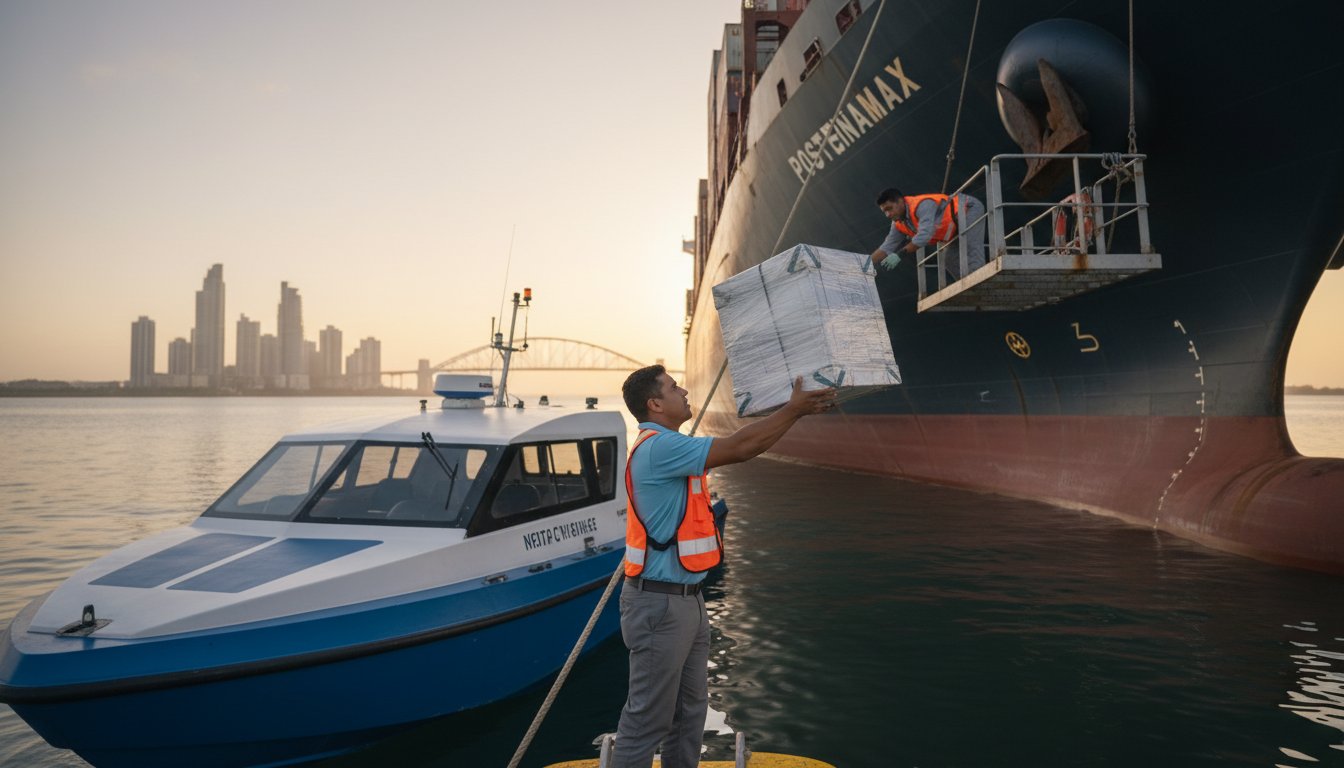
We see ourselves as your local office at the Panama Canal. Our role is to synchronize every moving part. We align your disposal needs with pilotage schedules, tug availability, and specific transit slots. When you integrate sludge disposal services panama into a broader husbandry package, you create massive efficiencies. Combining waste offloading with crew changes or bunkering reduces the number of launches and barge movements required. This “Cost-Conscious” approach is how we’ve operated for 20 years, focusing on your bottom line by eliminating redundant fees.
Eliminating the “Middleman” Myth
An agent doesn’t add a layer of cost; they provide a layer of protection. Without local expertise, vessels often pay “spot rates” that are 15% to 20% higher than market averages. We negotiate fair rates because we manage high volumes of traffic. You also benefit from consolidated billing. Instead of chasing five different invoices from third-party vendors, you receive one transparent statement. This reduces administrative hours and prevents the $50 USD wire transfer fees associated with multiple international payments. We are your eyes at the Panama Canal, ensuring you only pay for the services you actually receive.
Timing and Coordination Logistics
Timing is the most expensive variable in Panama. You have two primary options: disposal at anchor or during transit. While disposal at anchor offers more flexibility, it can lead to “frustration of misjudged timing” if the barge isn’t synced with your arrival. We coordinate with barges to meet your vessel specifically at the Pacific anchorage or the Atlantic side, depending on your schedule. Consider these factors:
- Transit Slots: We ensure disposal happens within your 12-hour arrival window to avoid missing your canal entry.
- Barge Standby: Direct booking often results in $400 USD per hour standby fees if the ship isn’t ready; we eliminate this through constant communication.
- Regulatory Flow: We handle the paperwork with the Panama Maritime Authority (AMP) so the barge is cleared before your ship even drops anchor.
The complexity of the local market means that “direct” is rarely “simple.” Most owners who rely on Adimar for sludge disposal services panama find that the agency fee is more than offset by the lack of delays. We don’t just book a barge; we manage a timeline. If a pilot is delayed by 45 minutes, we’re already on the phone with the disposal vendor to adjust the barge’s approach. This proactive stance is why we say we’re experts so you don’t have to be. Put your transit in our hands and we’ll eliminate the confusion with personalized, transparent service every time.
Preparation Checklist for Vessel Sludge Discharge
Efficiency at the Panama Canal isn’t accidental. It’s the result of rigorous planning and local expertise. When you’re coordinating sludge disposal services panama, the margin for error is thin. A single delay in notification or a mismatched flange can cost thousands in port fees or missed transit slots. We see ourselves as your local office at the Panama Canal. Our goal is to eliminate the confusion that often surrounds waste logistics, ensuring your vessel stays on schedule and in compliance.
Technical readiness is the backbone of a smooth operation. Your pumps must be tested and ready to maintain the agreed-upon flow rate to avoid overstaying your window. In the Port of Balboa, terminal congestion means that if you miss your pumping window by even 30 minutes, you might be bumped for another vessel. This results in significant anchorage fees and potential delays to your canal transit. We coordinate with the terminal and the barge operators to ensure all parties are synced before the first hose is connected.
48 Hours Before Arrival: Step-by-Step
The countdown starts 48 hours before you reach the pilot station. You must send the “Declaration of Waste” to Adimar immediately. Specify the exact volume and water content to avoid surcharges. Confirm your ship’s manifold dimensions match Standard ISO 17617 connections. This prevents a $1,200 standby fee for non-standard adapters. Finally, update your Oil Record Book to ensure it’s ready for any ACP boarding officer inspections.
During the Discharge Operation
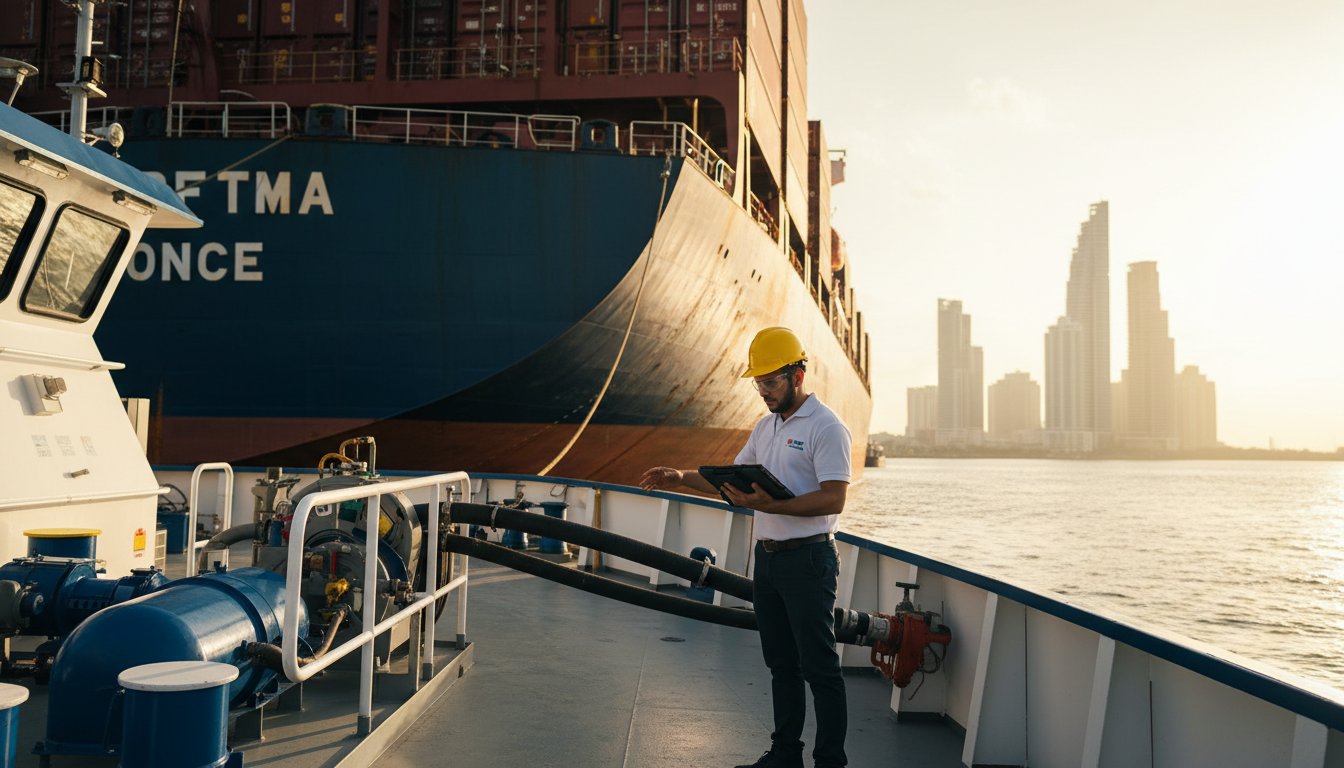
Safety is the priority once the transfer begins. We advocate for the “Eyes on Deck” principle, where a designated officer monitors the manifold for spill prevention. Panama’s environmental regulations are strict; a 15-liter spill can trigger massive fines. Verify the barge meter readings before and after the operation. Don’t sign the safe disposal receipt until the final volume is confirmed. This document is your proof of MARPOL compliance.
- Establish a clear communication channel, such as VHF or hand signals, between the deck and the barge operator.
- Ensure all scuppers are plugged and a “save-all” is in place under the manifold area.
- Check that the barge’s hoses have been pressure tested within the last 12 months.
- Verify that the receiving unit’s flow meter has a valid calibration certificate.
Finalizing the quantity and type of waste is where most commercial disputes happen. You must be precise about whether you’re discharging oily water, engine room sludge, or bilge water. Each category has a different price point in the Panama market. Mixing these streams can result in the entire load being billed at the highest possible rate. This often increases your final invoice by 30% or more. Accurate reporting ensures you only pay for what you actually discharge. We provide the transparency you need to manage these costs effectively.
We’re your eyes at the Panama Canal, watching every liter to protect your bottom line. We are experts so you don’t have to be. Nominate Adimar as your agent to ensure your next sludge disposal services panama are handled with total integrity and transparency.
Adimar Shipping: Your Trusted Partner for Panama Waste Logistics
Since 2004, Adimar Shipping, Inc. has operated as a cornerstone of reliability for vessels crossing the Isthmus. We’ve spent over 20 years mastering the specific, often grueling requirements of the Panama Canal Authority. Our team doesn’t just sit in an office; we serve as your eyes on the ground. This local presence is vital because timing at the Canal is everything. If you misjudge your window by even an hour, the financial repercussions in port fees and lost time can be staggering. We eliminate that risk by providing a “Local Office” advantage. We see exactly what is happening at the piers and anchorages in real-time so you don’t have to guess from a distance.
Our approach to sludge disposal services panama is built on the foundation of personalized service. We recognize that ship owners and charterers face enough stress without the added weight of confusing logistics. When you work with us, you aren’t just another hull number in a database. You get a dedicated partner who manages the movement of every barge and the filing of every permit. We’ve spent two decades refining our network of vendors to ensure that when we schedule a service, it happens. This reliability is why 92% of our clients return to us for their subsequent transits.
Integrity is the heartbeat of our operations. In an industry where hidden surcharges can suddenly inflate a bill, we maintain absolute transparency. Every quote we provide is clear, honest, and denominated in USD. We don’t believe in “convenience fees” or “administrative adjustments” that weren’t agreed upon upfront. Our goal is to protect your bottom line while ensuring your vessel remains in full compliance with local environmental laws and MARPOL standards. By handling the complexities of waste logistics with total transparency, we allow your crew to focus on the safe navigation of the vessel.
Why Nominate Adimar Shipping, Inc. as Your Agent?
We provide high-quality, timely shipping services with integrity every time. Our expertise spans both general Husbandry and specialized PCSOPEP authorized person services. This dual capability ensures that your sludge disposal services panama are integrated seamlessly into your transit schedule. We offer direct communication and quick solutions. If a waste disposal hurdle appears at the Balboa or Cristobal anchorages, we resolve it immediately through our established local channels. We don’t just report problems; we fix them before they impact your schedule.
Get a Quote for Your 2026 Transit
Planning for your 2026 transit begins with accurate data. To receive a precise disposal estimate, please provide your vessel type, the specific volume of sludge for discharge, and your last port of call. The Adimar Shipping, Inc. promise is centered on eliminating the frustration of Canal logistics. We’re the experts so you don’t have to be. Let us manage the technicalities of waste removal while you maintain your operational momentum. Nominate Adimar Shipping, Inc. for your next Panama Canal transit to experience a higher standard of maritime agency service.
Secure Your 2026 Panama Canal Transit with Expert Waste Logistics
Effective 2026, the Panama Canal Authority’s heightened focus on environmental standards makes proactive waste management a non-negotiable part of your voyage plan. Coordination between agency services and local barge operators can be frustrating; however, choosing a dedicated partner simplifies the entire process. Adimar Shipping celebrates its 20th year in business, offering the deep local expertise required to navigate these complexities. As an authorized PCSOPEP person, we provide the compliance security needed to protect your vessel from unnecessary risks and delays. We’re your eyes at the Panama Canal, providing transparent oversight and quick solutions that keep your operational costs down. Our team ensures that sludge disposal services panama are handled with total integrity and precision. You shouldn’t have to worry about the fine print of MARPOL annexes when you’re focused on your core business. Put your transit in our hands and eliminate the confusion of maritime regulations today.
Get a Quote for Sludge Disposal and Transit Services
We look forward to ensuring your next transit is your most efficient and compliant one yet.
Frequently Asked Questions
Is sludge disposal mandatory for all vessels transiting the Panama Canal?
Sludge disposal isn’t mandatory for every transit, but staying compliant with MARPOL Annex I is a legal requirement for all vessels. The Panama Canal Authority monitors tank levels during inspections to ensure no illegal discharge occurs within canal waters. If your tanks are at 85% capacity or higher, we recommend scheduling a discharge to avoid fines that can exceed $25,000. Our team acts as your eyes at the canal to ensure you stay within these strict environmental limits.
Can sludge disposal be performed while the vessel is in motion during transit?
You can’t perform sludge disposal while the vessel is in motion because safety regulations prohibit barge operations during active transit. All sludge disposal services panama must take place at the designated Pacific or Atlantic anchorages before or after your canal passage. This typically occurs at the Balboa or Cristobal anchorage areas. Stopping for these services requires precise coordination with the canal authorities to ensure your scheduled transit slot isn’t delayed or cancelled.
What are the average costs for sludge disposal services in Panama for 2026?
Estimated costs for sludge disposal services in Panama for 2026 range between $3,800 and $6,200 for a standard barge mobilization. This base fee covers the barge arrival at the anchorage, while the actual disposal cost is calculated per metric ton of waste. Current projections suggest a 4% increase in environmental handling fees compared to 2024 rates. We provide transparent, itemized quotes so you don’t face unexpected surcharges during your stop at the canal.
How much notice does Adimar Shipping need to arrange a disposal barge?
Adimar Shipping typically requires a minimum of 48 to 72 hours of notice to secure a disposal barge and coordinate with local authorities. While we often handle urgent requests in under 24 hours, early notification ensures you get the best rates and avoids peak-time congestion at the Balboa anchorage. Providing your sludge specifications and estimated volume early allows us to streamline the paperwork and eliminate potential delays for your vessel.
What happens if the volume of sludge is different from the initial declaration?
If the actual volume of sludge differs from your initial declaration, the final invoice is adjusted based on the barge’s certified flow meter readings. Most service providers allow for a 10% variance without additional administrative penalties. However, if the volume exceeds the barge’s capacity, you’ll face a second mobilization fee of approximately $3,500. We double-check your tank readings before the barge departs to ensure the operation remains cost-conscious and efficient.
Are there different regulations for cruise ships vs. cargo vessels regarding waste?
Cruise ships and cargo vessels both follow MARPOL Annex I for sludge, but cruise liners face much stricter rules for gray water and food waste. In Panama, cruise ships must often provide detailed waste management plans 96 hours before arrival. Cargo vessels typically focus on oily water and sludge disposal services panama to maintain their Oil Record Books. Regardless of your vessel type, we manage the specific documentation required by the local environmental agencies.
Does Adimar Shipping provide MARPOL certificates after the service?
Yes, Adimar Shipping provides all necessary MARPOL certificates and official receipts immediately after the service is completed. These documents are vital for your Oil Record Book and prove that the waste was handled by a licensed facility in Panama. Our boarding agents ensure the Master receives these signed documents before the vessel departs. We keep digital copies on file for 5 years to provide a secure backup for your compliance audits.