
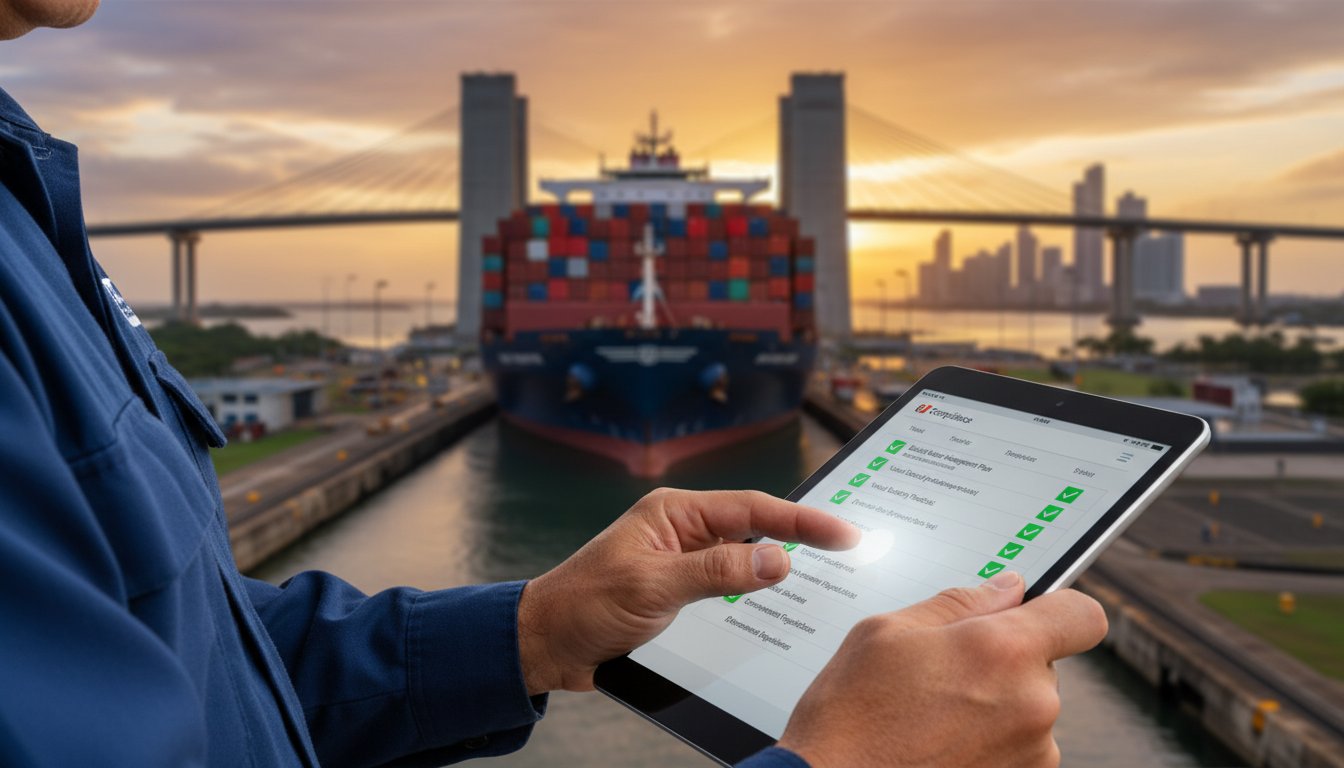
On January 15, 2024, a tanker operator discovered that their standard IMO SOPEP was insufficient for a scheduled transit, resulting in a 48-hour delay and thousands in unexpected port fees. You likely agree that navigating the Panama Canal is a high-stakes operation where even a minor paperwork oversight can halt your schedule. It’s frustrating to manage global standards while meeting the specific, rigid mandates of the Panama Canal Authority (ACP). We understand that time is money, and the pressure to get everything right is immense.
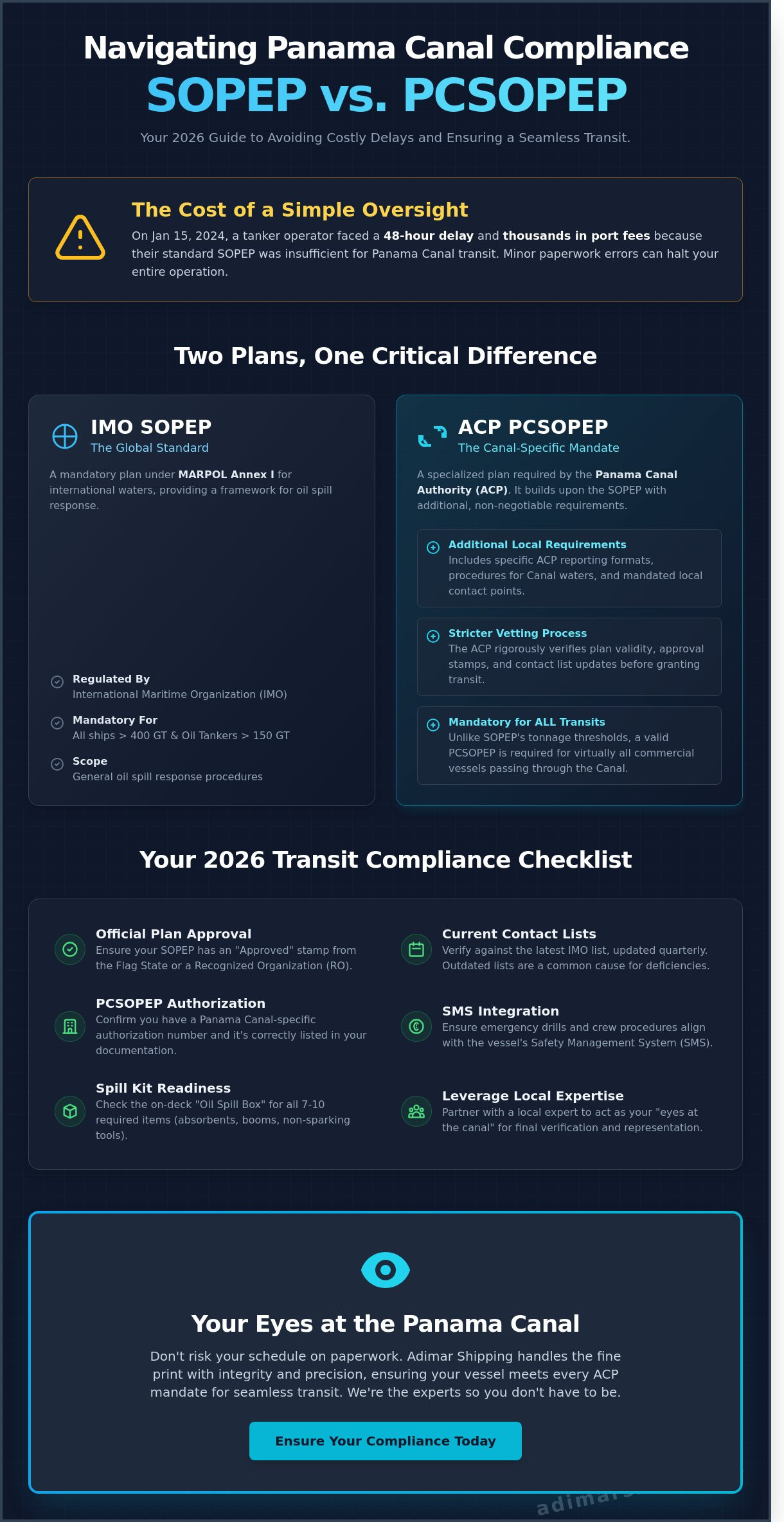
This 2026 guide will help you master the complexities of both SOPEP and PCSOPEP compliance. You’ll ensure your vessel meets every mandate to avoid costly fines or transit denials. We’ll break down the critical differences between international and local plans, provide a 2026 compliance checklist, and show you how a local partner acts as your eyes at the Canal. We’re experts so you don’t have to be, allowing you to focus on your business while we handle the fine print with integrity and precision.
Key Takeaways
- Understand why MARPOL Annex I makes an approved SOPEP mandatory for vessels over 400 GT to maintain international compliance and safety.
- Discover why a standard emergency plan is insufficient for the Panama Canal and which specific PCSOPEP mandates are required by the ACP.
- Learn the essential reporting procedures and discharge control steps your crew must take to manage pollution incidents efficiently.
- Identify the specific validity dates and contact lists you must verify before every 2026 transit to avoid costly fines and scheduling delays.
- See how leveraging local expertise acts as your “eyes at the canal” to ensure seamless compliance and professional representation.
What is SOPEP? Understanding MARPOL Annex I Requirements
The Shipboard Oil Pollution Emergency Plan (SOPEP) is a mandatory document required for vessels to mitigate the environmental impact of oil spills. Regulated under MARPOL Annex I, Regulation 37, this plan provides the Master and crew with a systematic set of procedures to follow when an oil discharge occurs or is likely to occur. It’s not just a binder on a shelf; it’s a living document that bridges the gap between a crisis and a coordinated response. We are experts in these requirements so you don’t have to be, ensuring your vessel remains compliant before it reaches the locks.
Specific tonnage thresholds determine which vessels must carry this plan. Under international law, all ships over 400 GT and all oil tankers over 150 GT are required to have an approved SOPEP on board. The manual includes detailed reporting requirements, lists of authorities to contact, and specific steps to control the discharge. It’s vital to distinguish this from the Shipboard Marine Pollution Emergency Plan (SMPEP). While SOPEP focuses strictly on oil, the SMPEP covers noxious liquid substances. Vessels carrying both types of cargo must often maintain an integrated plan to meet all MARPOL standards.
The Legal Framework of MARPOL 73/78
The International Maritime Organization (IMO) enforces these pollution prevention standards to protect global waterways. If your vessel’s documentation is incomplete, the consequences are swift. Port State Control (PSC) officers frequently cite SOPEP deficiencies as a primary reason for vessel detentions. In 2023, PSC inspections globally resulted in thousands of deficiencies related to emergency systems and pollution prevention. Fines for non-compliance can reach hundreds of thousands of dollars depending on the jurisdiction. The SOPEP serves as the primary defense against maritime environmental litigation.
Who Approves the SOPEP?
The Flag State Administration or a recognized organization (RO) acting on its behalf must certify the plan. You cannot simply use a generic template found online. Every plan needs an official “Approved” stamp from the administration to be valid. An outdated or unapproved plan is a significant liability during a Panama Canal transit. As your trusted partner at the Panama Canal, we’ve seen how critical it is to integrate this plan with the vessel’s Safety Management System (SMS). This integration ensures that the crew’s emergency drills align with the specific technical layout of the ship. Regular reviews are necessary, especially when there are changes in the ship’s equipment or contact information for coastal state authorities.
Essential Contents of a Standard SOPEP Manual
A SOPEP (Shipboard Oil Pollution Emergency Plan) manual isn’t just a regulatory requirement; it’s the crew’s lifeline during an environmental crisis. Under MARPOL Annex I, Regulation 37, every vessel over 400 gross tons must carry a ship-specific plan that outlines exactly how to handle an oil discharge. The most vital component is the Initial Report. This document must be sent to the nearest coastal state without delay. It provides specific data including the vessel’s position, the type of oil spilled, and an estimate of the quantity lost. Accuracy here is paramount because local authorities base their entire mobilization strategy on these first details.
Beyond the initial report, the manual must list National and Local Contact Points. The IMO updates this list of “National Contact Points” every three months. Many Port State Control deficiencies arise simply because a vessel’s list is outdated. For those heading toward the Isthmus, aligning your manual with the Panama Canal Authority’s PCSOPEP Requirements is mandatory for a successful vetting process. We ensure our clients stay ahead of these administrative hurdles by verifying all contact lists before the vessel reaches the pilot station.
Emergency Response Scenarios
The manual categorizes spills into two main types: operational and casualty-related. Operational spills often involve pipe leakage, tank overflows, or hull damage during bunkering. In these cases, the crew must immediately stop the pumps and close all scuppers. Casualty-related spills involve more severe events like grounding, collision, or fire. These require complex coordination with shore-based response teams and salvage experts. Every vessel must maintain a dedicated “Oil Spill Box” on deck. This locker should contain at least 7 to 10 specific items, including absorbent pads, booms, non-sparking shovels, and portable pumps to mitigate the flow before it reaches the water.
Reporting and Communication Flow
The hierarchy of notification follows a strict path: the Master informs the Company Security Officer or the DPA, who then coordinates with the Coastal State and the P&I Club. Standardized formats, such as those found in IMO Resolution A.851(20), ensure that no critical data is missed during high-stress events. Smooth Panama Canal transits require flawless communication between the bridge, the ship agent, and the ACP. If you’re concerned about your current documentation, you can consult with our team to ensure your SOPEP is fully compliant with 2026 standards. We act as your local office, making sure your communication flow remains unbroken during the entire transit process.
PCSOPEP: The Specialized Panama Canal Requirement
The Panama Canal is a unique maritime environment that requires more than just standard international compliance. While a global SOPEP meets MARPOL Annex I requirements, it’s insufficient for the Panama Canal Authority (ACP). The ACP mandates a specialized Panama Canal Shipboard Oil Pollution Emergency Plan (PCSOPEP) because the Canal serves as the primary freshwater source for the local population. Protecting this ecosystem is a top priority for the authorities.
Vessels carrying a capacity of 400 metric tons or more of oil, whether as fuel or cargo, must have an ACP-approved PCSOPEP on board. This requirement applies to almost all commercial vessels transiting the waterway. The ACP doesn’t accept generic plans. Your documentation must be vessel-specific and tailored to the unique operational risks of the Canal’s locks and channels.
The ACP organizes spill responses into three tiered levels based on the volume of the discharge:
- Tier 1: Spills of less than 1,000 barrels.
- Tier 2: Spills ranging from 1,000 to 10,000 barrels.
- Tier 3: Major spills exceeding 10,000 barrels.
Your plan must identify the specific Oil Spill Response Organization (OSRO) contracted to handle these scenarios. We are experts so you don’t have to be. We ensure your documentation aligns with these tiers to avoid costly delays during the vetting process.
The Role of the Authorized Person (AP)
A critical component of PCSOPEP compliance is the designation of a Panama-based Authorized Person (AP). This is a legal requirement. The AP acts as the essential liaison between the vessel and the ACP in the event of an oil spill. They don’t just relay messages. The AP has the authority to initiate the response plan and must provide a financial guarantee for all cleanup costs. You can learn more about PCSOPEP Authorized Person services to understand how this role protects your interests and ensures legal transit.
Submission and Approval Timelines
The ACP enforces a strict 96-hour rule for plan submissions. You must submit your PCSOPEP at least 96 hours before your vessel arrives in Canal waters. Failure to meet this deadline often results in the vessel losing its transit slot. The Panama Canal Authority (ACP) rejects many plans due to minor clerical errors, such as outdated crew lists or expired OSRO contracts. We serve as your eyes at the Panama Canal, working with local ship agents to verify every detail. This coordination ensures your plan is approved the first time, keeping your transit on schedule and within budget.
Compliance Checklist for 2026: Avoiding Fines and Delays
The Panama Canal Authority (ACP) doesn’t tolerate administrative oversights. In 2026, inspectors are focusing heavily on the integration of shipboard response and shore-side coordination. To ensure your vessel moves through the locks without a hitch, follow this pre-arrival checklist before every transit.
- Verify Approval Dates: Check the validity of the SOPEP and PCSOPEP approval dates. Plans must be renewed or re-validated every five years, or whenever significant changes occur to the vessel’s configuration.
- Update Contact Lists: Ensure the “List of National Operational Contact Points” is the most recent quarterly version issued by the IMO. Using an outdated list is one of the fastest ways to trigger a technical deficiency.
- VUMPA Nomination: Confirm the local Authorized Person is correctly nominated in the ACP’s Maritime Service Portal (VUMPA). This link between the vessel and the local shore-side responder must be active before you arrive at the breakwater.
- Logbook Audit: Maintain a detailed log of shipboard pollution drills and crew training sessions. Inspectors look for consistency between the official logbook and the training records kept by the Chief Officer.
- Inventory Check: Open the Oil Spill Box and verify every item against the approved plan list. If the plan says you have 200 meters of absorbent boom, the inspector will expect to see exactly that.
Common Compliance Pitfalls
Technical deficiencies often stem from the simplest errors. Expired contact lists remain a frequent cause of delays during inspections. If your contact directory isn’t the current quarterly version, it’s an automatic red flag for ACP officials. We also see issues where the equipment listed in the SOPEP doesn’t match what is actually found on deck. Discrepancies in the quantity of sorbent pads or the type of non-sparking pumps can lead to fines. Finally, any change in vessel ownership or management requires a full update and re-submission of the plan. If the name on the document doesn’t match the current Registry, your transit will be halted.
Drills and Record Keeping
Under MARPOL and ACP regulations, pollution response drills must occur regularly to ensure crew readiness. For a successful Panama Canal transit, you should conduct at least one specific pollution scenario every month. Documentation is everything. The entries in your bridge logbook and the training records of your crew must be precise, dated, and signed by the Master. A well-documented drill is the best proof of “due diligence” in an investigation. If an incident occurs, these records demonstrate that the ship took every reasonable precaution to prevent environmental damage.
We are your eyes at the Panama Canal, ensuring your paperwork is as ready as your crew. Nominate Adimar as your agent to eliminate the confusion of compliance and keep your transit on schedule.
Adimar Shipping: Your Eyes at the Panama Canal
Local expertise isn’t just a convenience; it’s the most effective insurance policy against transit delays and heavy compliance fines. At Adimar Shipping, we’ve spent more than 20 years acting as an authorized PCSOPEP representative for global fleets navigating these waters. We understand that for ship owners, time is the most expensive commodity in the logistics chain. A single day of delay at the Panama Canal can cost thousands in fuel and lost opportunity. Our team eliminates that risk by serving as your dedicated local office in Panama, watching every detail from the moment you book.
Our team operates with an “Integrity First” approach to husbandry and protective agency services. This means we provide transparent reporting and proactive coordination. We don’t just react to problems; we anticipate them before your vessel reaches the breakwater. By managing the complexities of SOPEP and PCSOPEP documentation, we ensure your vessel meets every ACP requirement without the stress of last-minute corrections.
Personalized Compliance Management
We are experts so you don’t have to be. Managing the ACP bureaucracy involves layers of digital filings and physical inspections that can overwhelm seasoned operators. Having a Panama Canal ships agent who prioritizes your specific timing and budget is essential for a profitable schedule. We protect owner interests through Nominated Agency services, ensuring your SOPEP protocols match local response requirements.
Secure Your Next Transit
The commercial reality of the canal is simple: misjudge your timing and you lose. As we look toward 2026, the regulatory environment is becoming more stringent. Adimar Shipping provides the stability you need in a fast-moving maritime hub. Contact us for a comprehensive compliance review before your next transit. Let us verify your documentation and confirm your PCSOPEP readiness well in advance of your arrival.
- 20+ years of local operational experience in Panama.
- Direct liaison with Panama Canal Authority (ACP) officials.
- 24/7 support for husbandry and technical requirements.
- Authorized and verified PCSOPEP representative status.
Don’t leave your 2026 schedule to chance. Nominate Adimar as your agent and secure your PCSOPEP compliance today.
Secure Your Smooth Panama Canal Transit for 2026
Navigating the complexities of MARPOL Annex I and the specialized PCSOPEP requirements demands absolute precision. Every vessel carrying 400 metric tons or more of oil must have a canal-approved plan to avoid heavy fines or transit denials. We’ve seen how easily minor paperwork errors cause major delays during peak seasons. It’s why maintaining an updated SOPEP manual remains the foundation of global maritime environmental safety. You shouldn’t have to manage these technical burdens alone while trying to run a profitable voyage.
Adimar Shipping brings 20 years of on-the-ground experience to your fleet. As an authorized PCSOPEP representative, we act as your eyes at the Panama Canal to ensure every document meets the strict 2026 standards. We’re trusted by global ship owners and charterers because we treat your vessel like our own local office. We’re the experts so you don’t have to be. Let us handle the coordination and compliance so you can focus on your core business goals. Our team provides the local presence and integrity needed for a stress-free passage through the locks.
Get a Quote for PCSOPEP & Agency Services
Your next successful transit is just a quick message away.
Frequently Asked Questions
Is a standard IMO SOPEP enough for a Panama Canal transit?
No, a standard IMO SOPEP isn’t sufficient for transiting the Panama Canal. While MARPOL Annex I requires a global plan, the Panama Canal Authority mandates a specific PCSOPEP for all vessels over 400 gross tons. This local plan includes specific contact details for Panama based response organizations. We ensure your documentation meets the 2026 ACP requirements so you don’t face delays at the locks.
What happens if my vessel does not have an approved PCSOPEP?
Your vessel will face immediate transit denial and potential fines if it lacks an approved PCSOPEP. The Panama Canal Authority enforces strict compliance under the 2026 Navigation Regulations, with penalties for non-compliance reaching up to 1,000,000 dollars for severe environmental risks. We act as your eyes at the Panama Canal to verify your plan’s status before your arrival, preventing costly scheduling setbacks.
Who can serve as an “Authorized Person” for the Panama Canal?
An Authorized Person must be a resident of Panama who is legally empowered to act as a liaison between the vessel and the authorities. This individual must be available 24 hours a day to coordinate spill response efforts. They serve as the primary contact for the Panama Canal Authority during any pollution incident, ensuring immediate communication and decision-making on behalf of the ship owner.
How often do I need to update the contact list in my SOPEP?
You must update the contact list in your SOPEP at least once every 12 months or whenever a change in personnel occurs. Outdated contact information is a frequent cause of deficiency reports during inspections. Keeping these details current ensures that your crew can reach the correct authorities instantly during an emergency. We recommend a full review of all 2026 emergency contact numbers before every transit.
What is the difference between SOPEP and SMPEP?
The primary difference is the type of cargo; SOPEP covers oil pollution, while SMPEP handles noxious liquid substances. Ships carrying both types of cargo often use a combined Shipboard Marine Pollution Emergency Plan. This single document satisfies MARPOL Annex I and Annex II requirements. It’s vital to identify which plan your specific vessel requires to maintain total compliance with international and local Panama Canal laws.
What equipment must be in an oil spill box for SOPEP compliance?
An oil spill box must contain at least 7 essential items including absorbent pads, non-sparking pumps, brooms, and sawdust. IMO guidelines specify that these materials should be stored in a dedicated, clearly marked locker. Having the correct SOPEP equipment ready for 2026 inspections prevents delays. We help you verify that your inventory meets the exact standards required by the Panama Canal inspectors.
How far in advance must I submit my PCSOPEP to the ACP?
You must submit your PCSOPEP for approval at least 96 hours before the vessel arrives in Panama Canal waters. This 4 day window allows the authorities to review the plan and issue an acknowledgement of receipt. If you miss this deadline, your transit slot might be canceled or rescheduled. We manage this timeline for you to ensure your paperwork is processed without any last minute stress.
Can a ship agent also serve as the PCSOPEP Authorized Person?
Yes, a ship agent can serve as the PCSOPEP Authorized Person, and this is the most common arrangement for efficiency. By choosing a local agent who understands the 2026 regulations, you consolidate your communication. We provide this service to ensure there’s no confusion between different parties during a transit. It’s a practical way to keep your operations streamlined and cost conscious.