

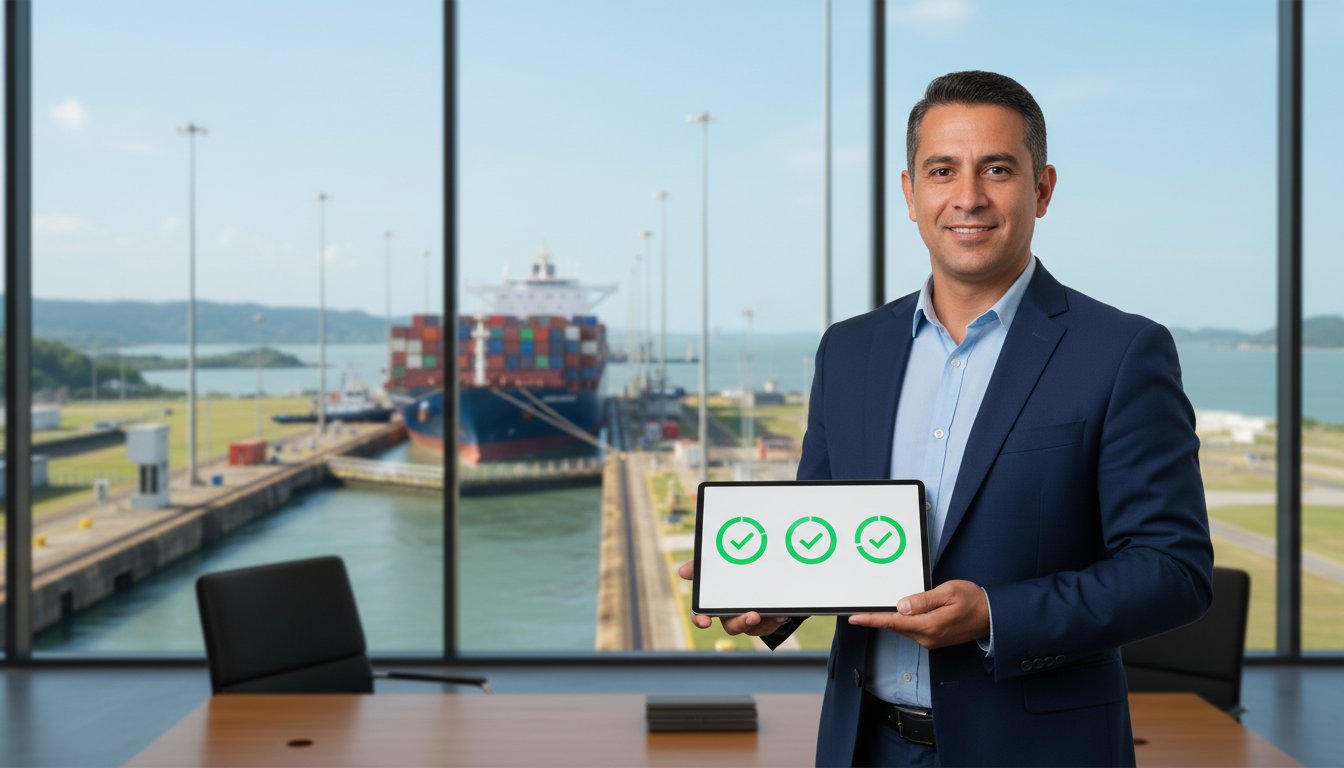
In the high-stakes world of maritime logistics, a Panama Canal transit is a critical junction where timing is everything. A single misstep in pre-arrival preparations-a missed document, a misunderstood ACP regulation-can trigger a cascade of problems, leading to frustrating delays and steep fines that can cost thousands of dollars. For ship owners and charterers already managing complex operations, navigating these specific requirements can be an overwhelming burden. The fear of a minor error causing a major disruption is very real, and the confusion between general maritime rules and specific Canal mandates only adds to the pressure.
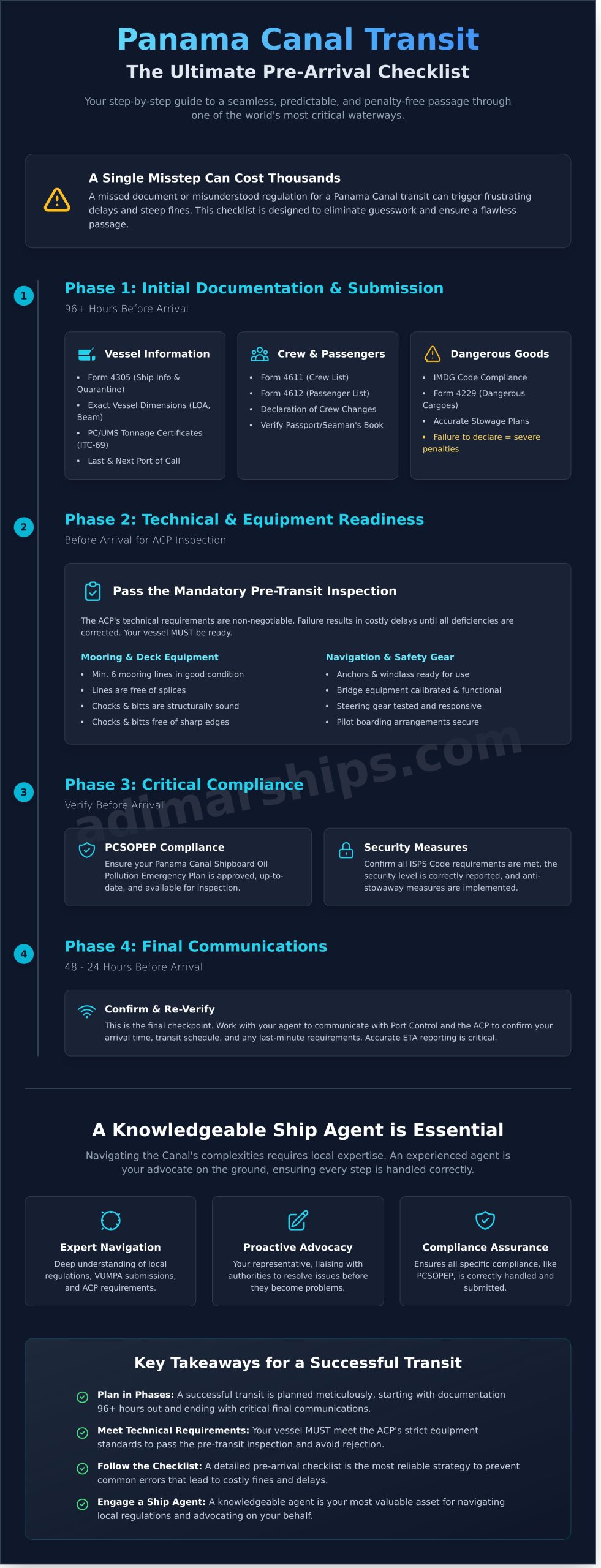
This is precisely why we created the ultimate panama canal transit pre-arrival checklist. As your trusted partner at the Panama Canal, we’ve distilled our decades of experience into a definitive, step-by-step guide. This checklist is designed to eliminate the guesswork and give you a clear, actionable plan. Follow it to ensure your vessel’s preparations are flawless, all documentation is submitted correctly and on time, and your transit is smooth, predictable, and completely free of costly penalties. Let us help you secure a seamless passage through this vital waterway.
Key Takeaways
- A successful transit is planned in phases, starting with accurate documentation 96+ hours out and ending with critical final communications just before arrival.
- Your vessel must meet the ACP’s strict technical and equipment requirements to pass the mandatory pre-transit inspection and avoid being rejected.
- Following a detailed panama canal transit pre-arrival checklist is the most reliable strategy to prevent common errors that lead to costly fines and scheduling delays.
- Engaging a knowledgeable ship agent is essential for navigating complex local regulations, including specific compliance like the PCSOPEP, and advocating on your behalf.
Phase 1: Initial Documentation & Information Submission (96+ Hours Out)
A successful and cost-effective Panama Canal transit begins long before your vessel reaches canal waters. In a place where time is money, accuracy is paramount. This initial phase, starting at least 96 hours before arrival, is the foundation of a smooth passage. It focuses on the first wave of electronic submissions required by the Panama Canal Authority (ACP). Navigating the complex requirements of this waterway, a marvel of engineering with a rich history and significance of the Panama Canal, begins with meticulous digital paperwork. Getting these details right from the start is the most critical step in your panama canal transit pre-arrival checklist, preventing costly delays, re-inspections, and unnecessary frustration upon arrival. All information must be submitted through the official Maritime Single Window of Panama (VUMPA).
Vessel Information & Pre-Arrival Forms Checklist
Your vessel’s core data must be precise and match official records perfectly. Any discrepancy between submitted information and the vessel’s certificates can trigger a full inspection and potential transit delays. As your trusted partner, we ensure these details are flawless.
- Ship Information and Quarantine Declaration (Form 4305): This is the primary form for declaring your vessel’s status and particulars.
- Exact Vessel Dimensions: Ensure the Length Overall (LOA), beam, and tropical fresh water (TFW) draft are submitted exactly as they appear on your certificates.
- Tonnage Certificates (ITC-69): Provide accurate Panama Canal Universal Measurement System (PC/UMS) net tonnage details.
- Port of Call Information: Correctly list the vessel’s last port of call and its intended next port of call.
Crew and Passenger Information
The ACP requires a complete and accurate accounting of every person on board. This information is vital for security, immigration, and safety protocols. Errors or omissions in these lists can lead to significant fines and immigration issues for your crew.
- Crew List (Form 4611): Submit a comprehensive list with all required details for every crew member.
- Passenger List (Form 4612): If carrying passengers, a separate and equally detailed list must be provided.
- Declaration of Crew Changes: Any crew changes planned to occur while in Panamanian waters must be declared in advance.
- Document Verification: Double-check that all passport numbers and seaman’s book details are current and correctly transcribed.
Dangerous Goods Declaration
Transparency regarding hazardous materials is non-negotiable. The ACP enforces strict regulations for the safety of the vessel, its crew, and the Canal itself. Failure to declare dangerous goods is one of the most serious compliance violations and will result in severe penalties.
- IMDG Code Compliance: All dangerous goods must be declared in strict accordance with the International Maritime Dangerous Goods (IMDG) Code.
- Dangerous Cargoes Form (4229): Submit the completed Dangerous, Hazardous, and Noxious Cargoes form for all relevant cargo.
- Stowage Plans: Ensure detailed stowage plans for all declared dangerous goods are accurate and ready for inspection upon request.
Phase 2: Vessel Technical & Equipment Readiness Checklist
The Panama Canal Authority (ACP) enforces strict, non-negotiable technical requirements to ensure vessel safety and maneuverability within the Canal’s confined waters. Upon arrival, your vessel will undergo a rigorous ACP inspection to verify its condition. Failure to meet these standards is not an option; it results in costly delays until all deficiencies are corrected. This section of your panama canal transit pre-arrival checklist is designed to ensure your vessel is physically prepared to pass inspection without issue, protecting your schedule and your budget.
Mooring and Deck Equipment Checklist
Your vessel’s mooring equipment is critical for safe handling within the locks. The ACP requires all components to be in excellent working order to prevent incidents and maintain transit efficiency. Before arrival, your crew must verify the following:
- Mooring Lines: A minimum of six mooring lines are on board, each in good condition, without splices, and of sufficient length and strength for the vessel’s size.
- Chocks and Bitts: All chocks and bitts are structurally sound, free of sharp edges that could damage lines, and clearly marked with their Safe Working Load (SWL).
- Winches: Mooring winches are fully operational, capable of paying out and heaving in lines efficiently, and will be manned by experienced crew during the transit.
- Boarding Facilities: Pilot ladders and any other pilot boarding arrangements meet all current SOLAS standards and are clean and properly rigged for safe use.
Navigation and Safety Systems Checklist
Flawless navigation and communication are paramount for a safe passage. The ACP pilot relies entirely on your vessel’s systems being accurate and fully functional. These standards align with international maritime best practices and are rigorously enforced to ensure safe vessel movement in controlled waterways. Confirm these key systems:
- Bridge Equipment: All primary navigation systems, including AIS, GPS, echo sounders, and both X-band and S-band radars, are tested and fully operational.
- Signaling Devices: The vessel’s whistle, horn, and signaling lamps (like Morse code lights) are tested and in good working order.
- Pilot Amenities: Sanitary facilities and a rest area designated for the pilot are clean, hygienic, and ready for use.
- Charts and Publications: All required and up-to-date navigational charts and publications for the Panama Canal transit are on board and accessible.
Engine Room and Steering Gear
The narrow channels and locks of the Canal demand immediate and reliable response from your vessel’s propulsion and steering systems. There is zero margin for error. A thorough pre-arrival check is essential to demonstrate full maneuverability to the ACP inspectors.
- Main Propulsion: The main engine is tested from the bridge and engine room, responding reliably to both ahead and astern commands.
- Steering Gear: The steering gear is tested for full rudder movement (hard over to hard over) and is confirmed to be in excellent operational condition.
- Power Supply: Generators and backup power systems are checked to ensure a stable and reliable power supply for all critical equipment during transit.
- Critical Systems: All systems vital for maneuvering, such as bow thrusters and engine indicators, are tested and confirmed ready for use in confined waters.
Phase 3: Critical Compliance: PCSOPEP & Security
Navigating the Panama Canal involves more than expert seamanship; it demands strict adherence to the waterway’s unique environmental and security protocols. These regulations are non-negotiable and strictly enforced by the Panama Canal Authority (ACP) to protect this vital global asset. A critical component of any successful panama canal transit pre-arrival checklist is verifying full compliance with the Panama Canal Shipboard Oil Pollution Emergency Plan (PCSOPEP) and all security mandates. Missteps here can lead to costly delays or even denial of transit.
Successfully managing these requirements often hinges on having a trusted local partner. An experienced agent on the ground can streamline communication and ensure all documentation is accurate and submitted on time, eliminating confusion and safeguarding your schedule.
PCSOPEP Compliance Checklist
The PCSOPEP is the Canal’s specific version of the SOPEP/SMPEP, tailored to the unique environment of the waterway. Before arrival, your vessel must have every element in place. We are experts so you don’t have to be; verify the following to ensure a seamless inspection:
- Current PCSOPEP Plan: Confirm your vessel has a current, ACP-approved PCSOPEP on board.
- Authorized OSRO Contract: Verify you have a valid contract with a Panama-authorized Oil Spill Removal Organization (OSRO).
- Designated Authorized Person: Ensure an Authorized Person, who is based in Panama, is officially designated for spill response coordination.
- Crew Briefing: Brief the crew on their specific PCSOPEP responsibilities and drill procedures prior to arrival.
ISPS Code & Pre-Arrival Security
Security is paramount for Canal operations. All vessels must comply with the International Ship and Port Facility Security (ISPS) Code as enforced by the ACP. Timely and accurate reporting is key to avoiding delays during this part of your panama canal transit pre-arrival checklist.
- Submit ISPS Form: The Advance Notification of Vessel Arrival (ISPS Form) must be submitted 96 hours prior to arrival via the VUMPA system.
- Updated Security Plan: Ensure the vessel’s security plan is up-to-date and readily available for inspection.
- Maintain Security Level: Confirm the current ISPS security level is being maintained on board.
- Prepare for Inspection: Be prepared for potential security inspections by ACP officials upon arrival.
Sanitation and Quarantine Requirements
Protecting the health of Canal personnel and the local environment is a top priority. Vessels must provide transparent health declarations and maintain high standards of onboard sanitation to avoid quarantine delays.
- Maritime Declaration of Health: Submit the completed form to the Port Health Authority prior to arrival.
- Report Illness: Immediately report any illness, symptoms, or death on board to the authorities.
- Waste Management: Ensure all waste management and disposal records are accurate and available for review.
Navigating PCSOPEP requirements demands a local expert. Need a PCSOPEP Authorized Person? Adimar provides full compliance services. We ensure your vessel is fully prepared and compliant, eliminating confusion and potential delays.
Phase 4: Final Communications & Confirmation (48-24 Hours Out)
As your vessel closes in on Panamanian waters, communication becomes the most critical component of your operation. This is where meticulous planning transitions into real-time execution. In these final hours, your ship agent is no longer just a planner; they are your single point of contact on the ground, ensuring all parties-your crew, the agent, and the Panama Canal Authority (ACP)-are perfectly synchronized. Completing this final stage of your panama canal transit pre-arrival checklist with precision prevents costly delays and guarantees a smooth entry into the waterway.
Confirming Estimated Time of Arrival (ETA)
Timeliness is everything. The ACP’s Traffic Management Unit operates on a precise schedule, and your adherence to it begins with consistent ETA updates. Your agent manages this vital communication link, relaying your position and intentions to the authorities. This process includes:
- Sending mandatory ETA notices at 96, 72, 48, and 24-hour intervals before arrival.
- Immediately communicating any changes in speed or ETA to your agent to avoid losing your slot.
- Receiving confirmation of your assigned arrival slot, known as the Initial Transit Time (ITT), from the ACP via your agent.
Final Declarations and Requests
With your arrival time confirmed, the last administrative and logistical details must be finalized. Your agent will require final, updated information to clear your vessel with all relevant Panamanian authorities. Before arrival, ensure you have submitted and confirmed all necessary declarations and confirmed that funds for the transit, estimated at around $150,000 to over $400,000 depending on the vessel, have been remitted. Key items to finalize include:
- Final Crew and Stores Declarations: Submitting updated lists to comply with customs and immigration.
- Husbandry Services: Confirming arrangements for crew changes, delivery of provisions, or cash-to-master.
- Special Services: Finalizing requests for bunkering, fresh water supply, or sludge removal.
Clear and timely communication in this phase eliminates confusion and ensures your vessel is fully prepared for an efficient transit. A dedicated agent like Adimar Shipping, Inc. acts as your trusted partner, managing these final details so you can focus on your voyage.
How a Ship Agent Makes Your Pre-Arrival Process Seamless
Navigating the Panama Canal’s requirements alone is a high-risk endeavor where a single mistake can lead to costly delays and fines. Completing the panama canal transit pre-arrival checklist involves complex administrative tasks, constant communication, and deep local knowledge. This is where a dedicated ship agent becomes your most valuable asset. They act as your local expert and advocate, transforming a stressful administrative burden into a streamlined, efficient operation. Their sole focus is to proactively manage every detail to ensure a zero-delay transit.
Proactive Document Review and Submission
A seasoned agent is your first line of defense against common errors. They meticulously review all forms and declarations for accuracy before they are ever sent to the Panama Canal Authority (ACP). They manage all communications and submissions through the official VUMPA system, ensuring every requirement is met on time. This proactive approach prevents the simple mistakes that often lead to fines, re-inspections, and disruptions to your schedule. Your agent serves as your single source of truth, eliminating confusion and providing peace of mind.
Coordination with Canal Authorities and Vendors
Effective coordination is critical, and an agent’s established relationships are invaluable. They are in constant contact with ACP officials to secure your transit slot and manage any changes. More than just paperwork, they handle the critical operational logistics, including:
- Coordinating pilots, tugboats, and line handlers for your vessel.
- Arranging all necessary husbandry services, from delivering spare parts and provisions to coordinating crew changes or medical attention.
- Liaising with local vendors to ensure timely and cost-effective service delivery.
This local expertise allows for swift and efficient problem-solving should any issues arise.
Your Eyes and Ears on the Ground
With an agent, you have a trusted partner in Panama 24/7. They provide real-time updates on canal conditions, weather, and transit schedules, allowing you to make informed decisions. They also manage all financial aspects with complete transparency, from pre-funding transit tolls to providing a detailed final disbursement account. When unexpected challenges occur, your agent is on the ground, ready to act immediately on your behalf. This constant vigilance ensures your interests are always protected, turning your panama canal transit pre-arrival checklist into a predictable, seamless process.
Let Adimar handle the details. Get a quote for your next transit.
Your Partner for a Seamless Panama Canal Transit
Navigating the Panama Canal successfully hinges on meticulous preparation. From early documentation and vessel readiness to critical compliance with ACP and PCSOPEP regulations, every step matters. Mastering your panama canal transit pre-arrival checklist is the difference between a smooth, cost-effective passage and frustrating, expensive delays. The complexity can be overwhelming, but you don’t have to manage it alone.
Put your transit in the hands of a proven expert. With over 20 years of specialized experience, Adimar Shipping is your proactive, 24/7 partner on the ground in Panama. We are your eyes at the Canal, offering deep expertise in all ACP regulations, husbandry services, and PCSOPEP compliance to eliminate confusion and protect your interests. We handle the complexities with integrity so you can focus on your business.
Ensure a flawless transit. Nominate Adimar as your trusted Panama Canal agent today.
Frequently Asked Questions About Your Panama Canal Transit
What is the most common and costly pre-arrival mistake vessels make?
The most frequent and expensive pre-arrival mistake is the late or inaccurate submission of required documentation. Discrepancies in vessel information, cargo declarations, or crew lists can lead to significant delays and costly fines imposed by the Panama Canal Authority (ACP). A thorough review of all documents by a trusted ship agent is a critical step in any Panama Canal transit pre-arrival checklist to avoid these preventable setbacks and ensure a smooth, timely passage.
How far in advance do I need to nominate a ship agent for a Panama Canal transit?
While the Panama Canal Authority (ACP) requires pre-arrival information at least 96 hours in advance, we strongly recommend nominating your ship agent much earlier. Appointing your agent 10 to 15 days before arrival allows for proper planning, securing necessary resources, and identifying potential cost-saving opportunities. Early nomination ensures all paperwork is meticulously prepared and submitted on time, eliminating last-minute stress and potential delays for your vessel’s transit.
What happens if there is a discrepancy in my vessel’s declared dimensions?
Any discrepancy between your vessel’s declared dimensions and the official measurements taken by the Panama Canal Authority (ACP) will trigger an immediate re-measurement. This process halts your transit schedule, leading to significant delays and incurring additional admeasurement fees. In some cases, the vessel may lose its transit slot entirely. Accurate, verified dimensions are a non-negotiable part of the pre-arrival process to guarantee a predictable and efficient passage through the Canal.
Can my ship agent handle all PCSOPEP compliance on our behalf?
A knowledgeable ship agent acts as your expert coordinator for all Panama Canal Shipboard Oil Pollution Emergency Plan (PCSOPEP) requirements. We manage the submission of your approved plan, coordinate with authorized response organizations, and ensure all paperwork is compliant with ACP regulations. While the ultimate responsibility for having a valid plan rests with the vessel owner, your agent executes all the necessary on-the-ground steps to ensure your vessel meets these critical environmental requirements without issue.
What is VUMPA and is it mandatory for all vessels?
VUMPA stands for Ventanilla Única Marítima de Panamá (Panama’s Maritime Single Window). It is a mandatory electronic system used to centralize the submission of all official information required for vessels arriving at, transiting, or departing from Panamanian waters. Your ship agent uses VUMPA to submit documentation to all relevant authorities-including customs, immigration, and quarantine-streamlining the clearance process and ensuring full regulatory compliance for every single vessel.
How are transit fees calculated and when do they need to be paid?
Panama Canal transit fees are calculated based on several factors, primarily the vessel’s PC/UMS net tonnage, its type (e.g., container, tanker, passenger), and its cargo status (laden or in ballast). All transit tolls and related service fees must be paid in full to the Panama Canal Authority (ACP) in US Dollars at least 48 hours before the vessel commences its transit. Your agent will provide a detailed proforma and handle the timely remittance of these funds.