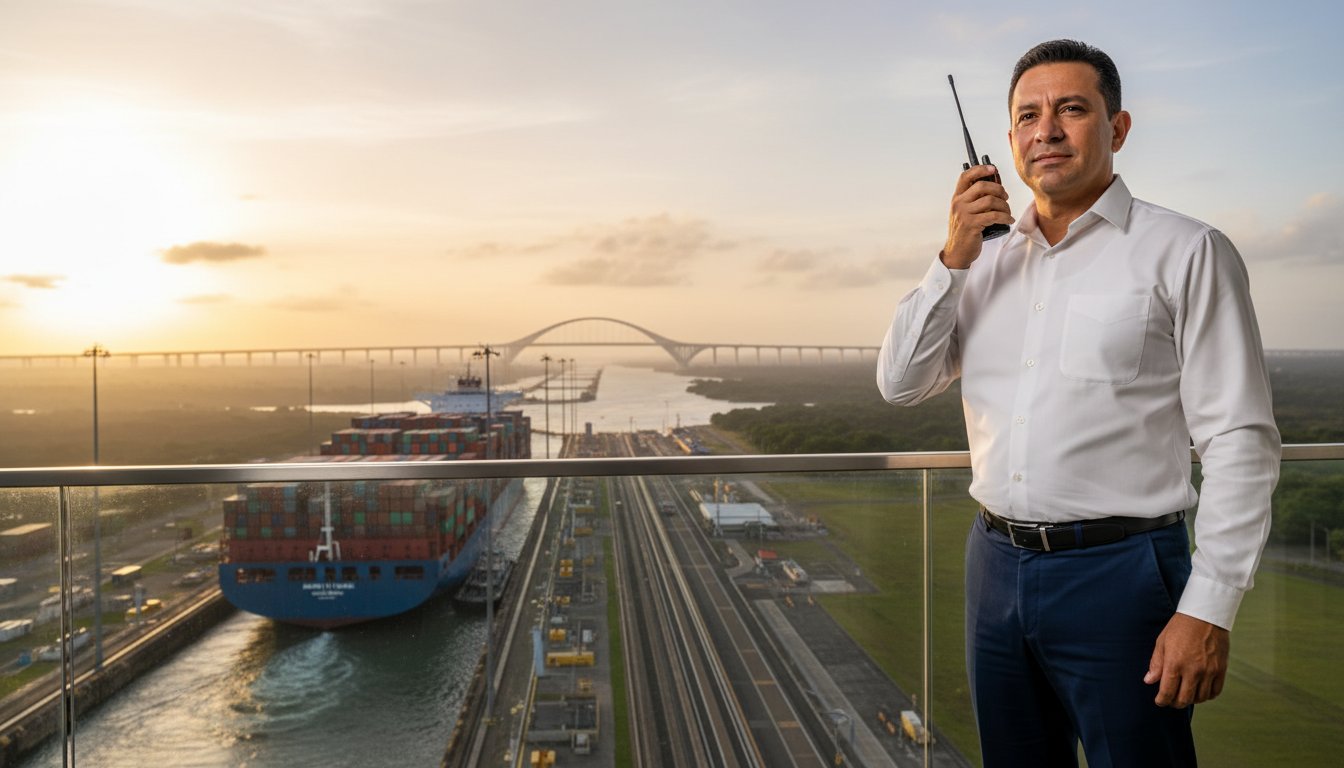

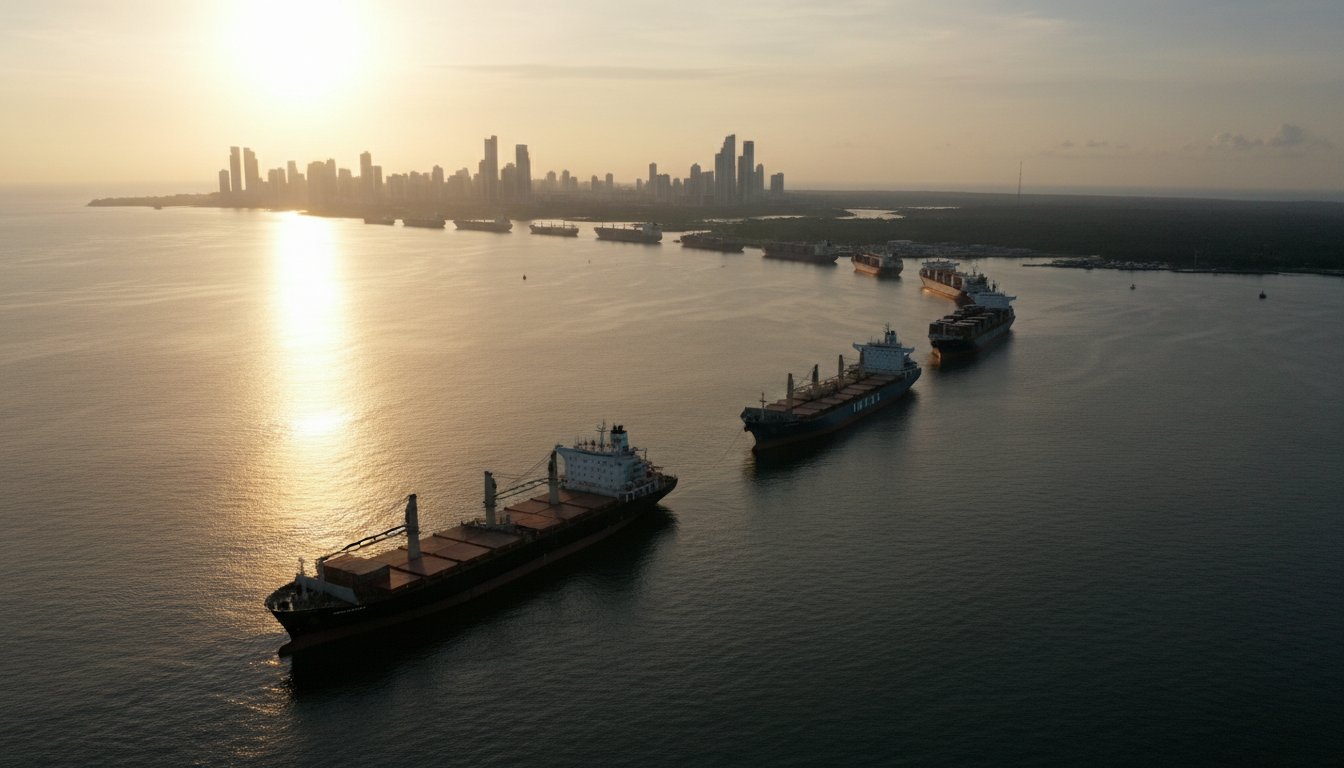
Time is money-a truth never more apparent than when your vessel is anchored, waiting for a slot at the Canal. The unpredictable nature of panama canal transit delays can disrupt the most carefully planned schedules, leaving charterers and ship owners with mounting costs and a frustrating lack of clear information. The fear of getting stuck in a multi-week queue is a constant source of stress, turning profitable voyages into logistical nightmares.
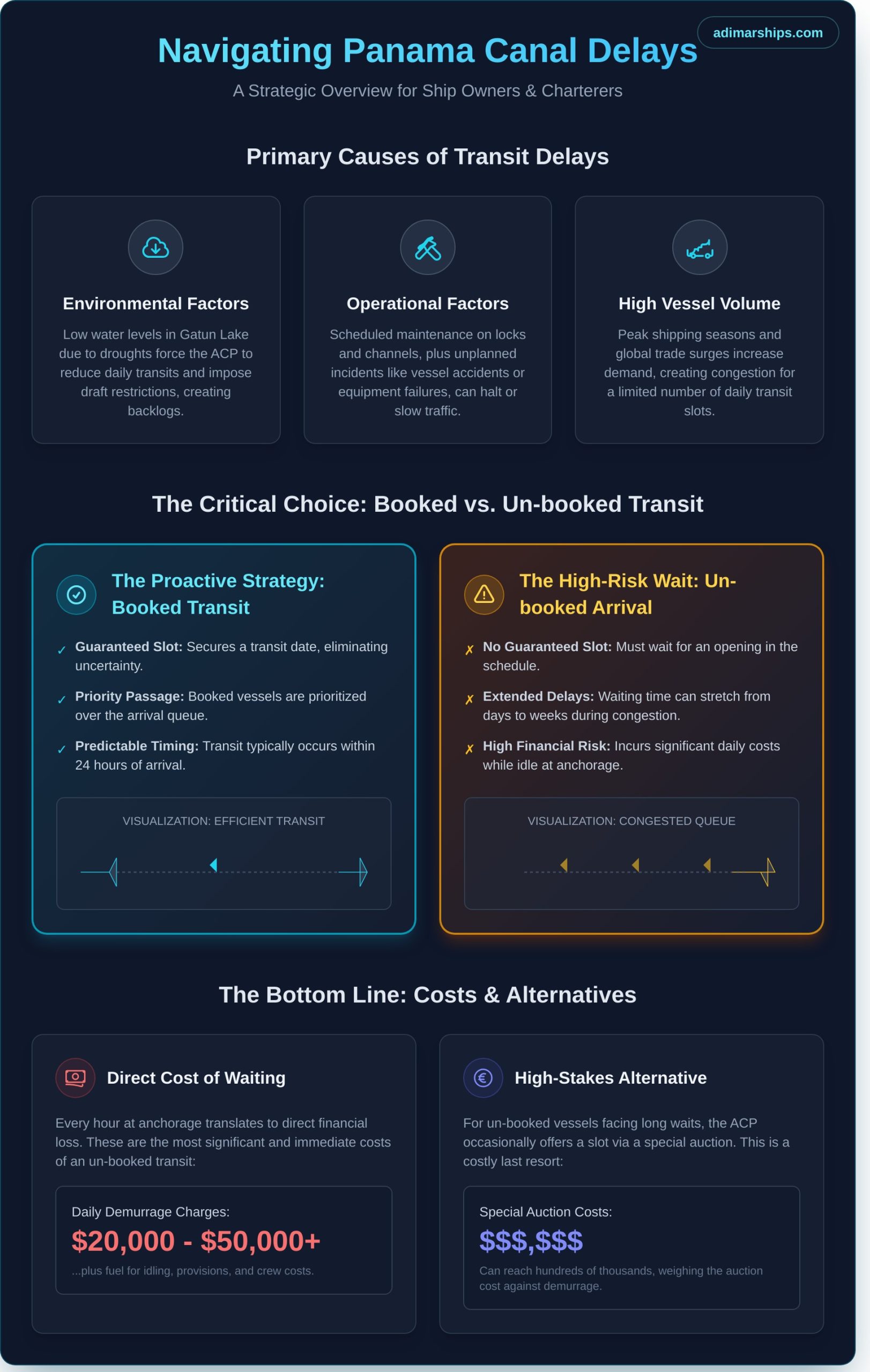
This guide is designed to eliminate that confusion. As your trusted partner at the Panama Canal, we’ve created this expert breakdown to give you the clarity you need. You’ll understand the root causes of the current delays, from water level challenges to operational changes, and learn their true impact on your bottom line. More importantly, you will discover actionable strategies to navigate these challenges effectively, forecast your transit times and costs with greater accuracy, and manage your voyages with integrity and foresight.
The Primary Causes of Panama Canal Transit Delays
For ship owners and charterers, time is money. Navigating the Panama Canal efficiently is critical, but delays are a frustrating and costly reality. Understanding the root causes of panama canal transit delays is the first step toward effective planning. These issues are rarely simple, stemming from a complex interplay of environmental conditions, operational realities, and sheer traffic volume. The situation is constantly evolving, demanding constant monitoring and expert local knowledge to mitigate risks.
Environmental Factors: The Critical Role of Water Levels
The Canal’s operation is fundamentally tied to nature. Unlike sea-level canals, it relies on an enormous amount of fresh water from Gatun Lake to operate its locks. The intricate history and function of the Panama Canal show its dependency on this artificial lake. During periods of drought and low rainfall, water levels drop, forcing the Panama Canal Authority (ACP) to take action. This often includes reducing the number of daily transit slots and imposing draft restrictions, which limit how deep a vessel can sit in the water. These necessary water-saving measures directly contribute to backlogs and delays.
Operational Factors: Maintenance and Incidents
Even a marvel of engineering requires constant upkeep. The Canal is a 24/7 operation, but scheduled maintenance on locks, channels, and tugboats is essential for safety and long-term reliability. While planned, these activities can temporarily reduce transit capacity. More disruptive are unplanned incidents. A vessel accident, equipment failure, or even heavy fog (known locally as cayucos) in the narrow Culebra Cut can create an immediate bottleneck, causing a ripple effect of delays for waiting ships. Occasionally, factors like labor disputes or the implementation of new regulations can also slow operations.
Traffic and Vessel Volume
Global commerce flows through the Canal, and when demand surges, congestion follows. Peak shipping seasons, shifts in international trade routes, or even downstream port issues can lead to a higher-than-usual number of vessels arriving simultaneously. This creates a backlog, particularly for non-booked vessels waiting for an open transit slot. The scheduling process is further complicated by the mix of vessel sizes, from traditional Panamax ships to the larger Neopanamax vessels, each requiring specific handling and lockage procedures. This high-stakes logistical puzzle means that even minor increases in traffic can lengthen waiting times.
How the Panama Canal Authority (ACP) Manages Congestion
To prevent chaos at one of the world’s most critical maritime chokepoints, the Panama Canal Authority (ACP) operates a sophisticated traffic management system. Rather than a simple first-come, first-served queue, the ACP uses a structured reservation process that prioritizes efficiency and predictability. For ship owners and charterers, understanding this system is the first and most critical step in strategically avoiding costly panama canal transit delays.
Navigating this system effectively requires expertise and foresight. Put your transit in our hands, and we will eliminate the confusion, ensuring your vessel is positioned for the most timely and cost-effective passage possible.
The Transit Reservation (Booking) System Explained
The core of the ACP’s system is the distinction between a “booked” vessel and an un-booked “arrival” vessel. A booked vessel has secured a guaranteed transit slot for a specific date, while an arrival vessel must wait for an opening. Booked vessels receive significant priority, often transiting within 24 hours of arrival. In contrast, un-booked vessels can wait for days or even weeks during periods of high congestion. Slots are offered in three booking periods, starting as early as 365 days in advance. With a limited number of slots available daily-especially for the larger Neopanamax vessels-advance booking is paramount.
Special Auctions for Transit Slots
For vessels that could not secure a reservation, the ACP occasionally offers a last-minute opportunity through special auctions. These auctions occur when a booked slot becomes available due to a cancellation. While they provide a chance to bypass the long arrival queue, the costs can be substantial, often reaching hundreds of thousands of dollars. Winning an auction requires a swift and strategic financial decision, weighing the high cost against the even higher cost of idle time. However, these auctions are not guaranteed and depend entirely on daily operational changes.
Official Advisories and Communications
The ACP communicates all operational changes through official “Advisories to Shipping.” These critical updates announce changes to maximum draft allowances, reductions in daily transit slots, and other new procedures that directly impact passage. These advisories are critical, as they announce changes like draft restrictions or slot reductions, often in response to environmental factors like the recent drought. In fact, comprehensive data on drought-related disruptions highlights the direct impact these conditions have on canal capacity. A diligent ship agent acts as your eyes at the Canal, constantly monitoring and interpreting these advisories to provide the timely guidance needed to prevent unexpected panama canal transit delays.
The Financial and Operational Impact of Delays on Your Business
In the maritime industry, time is money. For ship owners and charterers, unexpected panama canal transit delays translate directly into significant financial losses that extend far beyond the frustration of waiting at anchorage. These costs are not just line items on a balance sheet; their ripple effects can disrupt entire supply chains, strain client relationships, and erode your bottom line. Understanding and quantifying these risks is the first step toward justifying a proactive mitigation strategy.
Direct Costs: Demurrage, Fuel, and Fees
The most immediate financial hits are often the most painful. These tangible costs accumulate with every passing hour of delay:
- Demurrage Charges: Under a charter party agreement, any delay beyond the agreed laytime results in daily demurrage fees. Depending on the vessel type and market conditions, these charges can easily range from $20,000 to over $50,000 per day.
- Fuel Consumption: An idling vessel is still a consuming vessel. Burning fuel while waiting at anchorage represents a pure operational loss, adding thousands of dollars in daily costs with no progress to show for it.
- Auction Slot Fees: To bypass a long queue, vessels can bid for limited transit slots in auctions held by the Panama Canal Authority. These auctions become fiercely competitive, especially when external factors like the recent Panama Canal drought conditions reduce daily transit capacity, driving auction prices into hundreds of thousands of dollars above standard tolls.
Indirect Costs: Supply Chain and Reputational Damage
Beyond the direct cash burn, the secondary impacts of a delay can cause even greater long-term damage. A delayed transit creates a domino effect, impacting everything from cargo delivery to your company’s standing in the market. This includes missed berthing windows at subsequent ports, throwing off tightly calibrated schedules and incurring further waiting times. Ultimately, consistent delays damage your most valuable asset: your reputation. Failing to deliver cargo on time erodes client trust and can jeopardize future contracts, positioning you as an unreliable partner in a highly competitive industry.
Proactive Strategies to Mitigate Panama Canal Delay Risks
While factors like weather and unexpected operational issues are uncontrollable, ship owners and charterers are not powerless. Strategic planning can significantly reduce your vessel’s exposure to costly hold-ups. The key is to shift from a reactive mindset-dealing with problems as they arise-to a proactive approach that anticipates challenges. This involves meticulous voyage planning and, most importantly, leveraging expert local knowledge to navigate the complexities of the waterway and minimize the risk of panama canal transit delays.
Advanced Voyage Planning and Booking
In a system where timing is everything, foresight is your greatest asset. Effective planning goes beyond simply setting a course; it involves securing your position and ensuring all logistical elements are perfectly aligned. A comprehensive plan includes:
- Early Slot Reservation: Booking a transit slot with the Panama Canal Authority (ACP) as early as the system allows is the single most effective way to secure a passage date and avoid waiting for an open slot upon arrival.
- Precise ETA Alignment: Your vessel’s arrival must be carefully managed to match the booked transit date. Arriving too early or too late can result in penalties or forfeiture of your slot, creating new delays.
- Contingency Planning: Develop clear contingency plans for potential disruptions and maintain open communication with all stakeholders, including charterers and port authorities, to manage expectations.
Considering Alternative Routes
During periods of severe congestion or prolonged drought restrictions, it becomes prudent to evaluate all options. While the Panama Canal is the most efficient path for many trade routes, a thorough cost-benefit analysis might reveal that rerouting via the Suez Canal or Cape Horn is more economical than facing an extended wait time. This strategic decision depends entirely on cargo deadlines, fuel costs, and charter rates, but for most voyages, the Canal remains the superior choice.
The Critical Role of a Local Ship Agent
Navigating the intricacies of the Canal is a full-time job. A trusted partner on the ground is your greatest advantage. An experienced local ship agent provides more than just data; they deliver real-time, actionable intelligence. They are your eyes and ears, managing all communications with the ACP, interpreting advisories, and navigating the booking system to find opportunities that automated systems miss.
This on-the-ground expertise is invaluable for anticipating and responding to the dynamic conditions that cause panama canal transit delays. An agent acts as an extension of your team, ensuring every detail is handled with integrity and efficiency. Put our expertise to work for your next transit.
How Adimar Shipping Acts as Your Eyes and Ears at the Canal
Navigating the complexities of the Panama Canal requires more than just a booking; it demands a vigilant, on-the-ground partner. At Adimar Shipping, our mission is to eliminate the confusion and frustration that often accompany panama canal transit delays. We act as an extension of your team, serving as your trusted eyes and ears to protect your interests locally. With over 20 years of dedicated experience, we don’t just report problems-we deliver solutions.
Constant Monitoring and Real-Time Updates
We proactively monitor every factor that can impact your schedule. Our team operates 24/7, tracking critical information sources to keep you ahead of potential issues. This includes:
- Panama Canal Authority (ACP) advisories and new regulations
- Real-time vessel queues and slot availability
- Local weather conditions and lake water levels
Instead of overwhelming you with raw data, we provide clear, concise updates tailored to your vessel’s voyage. Our expert analysis explains exactly how changing conditions affect your transit, allowing you to make timely, informed decisions.
Expert Coordination and Problem-Solving
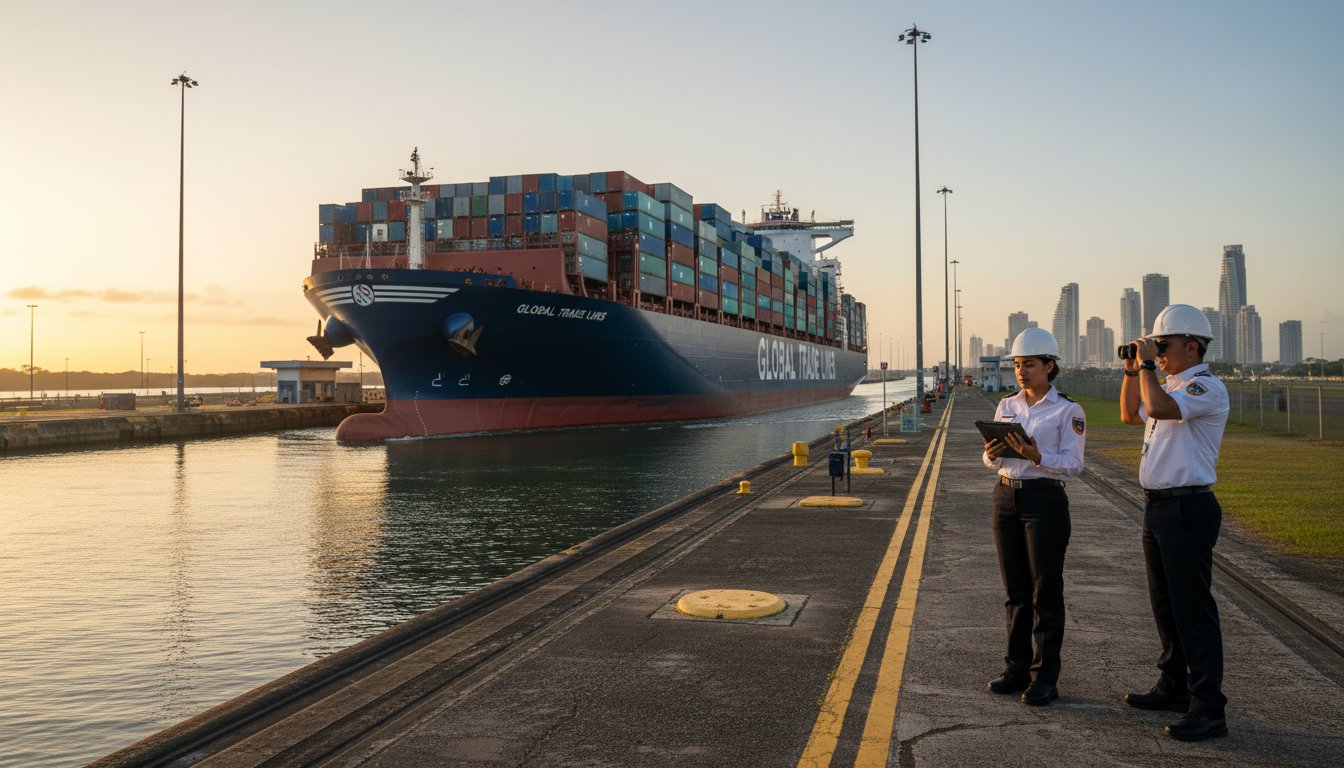
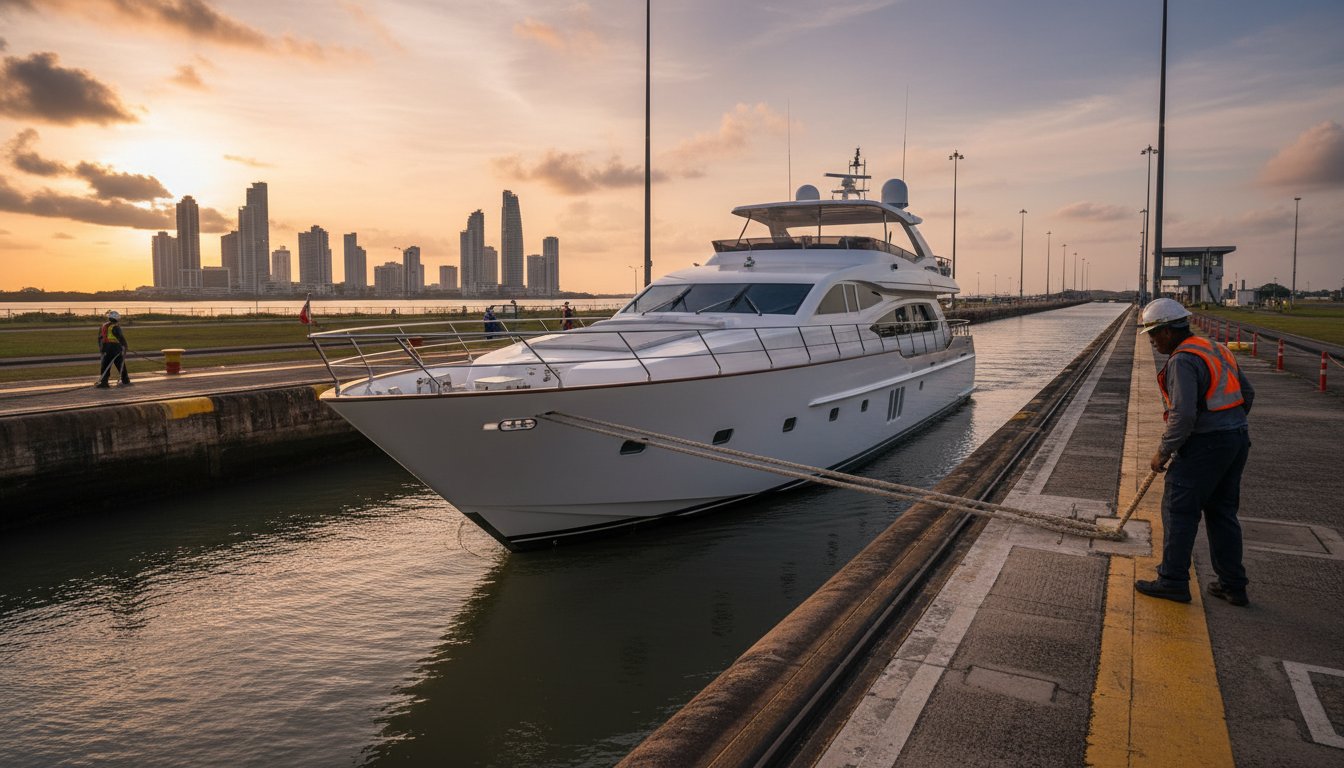
A smooth transit depends on flawless coordination. We manage the entire process, from arrival to departure, handling all critical documentation and liaising directly with pilots, tugboat operators, and Canal authorities. Should an issue arise-from a documentation discrepancy to a last-minute operational change-our team is on-site to resolve it swiftly. This hands-on approach is crucial for minimizing disruptions and keeping your voyage on track.
Cost-Conscious and Transparent Service
Unexpected costs can be as damaging as delays. Our meticulous planning is designed to safeguard your budget by avoiding unnecessary fees. We provide completely transparent accounting with clear, upfront communication on all anticipated costs, from tolls to husbandry services. Our goal is simple: to ensure your transit is as smooth and economical as possible, protecting your bottom line with integrity.
Don’t let uncertainty dictate your schedule. Put our two decades of specialized expertise to work for you. We believe proactive communication and expert management are the keys to successfully navigating the Canal. Request a quote and experience the Adimar difference.
Navigate Uncertainty with a Trusted Partner at the Canal
Navigating the Panama Canal requires more than just scheduling a slot; it demands a deep understanding of the dynamic factors at play, from fluctuating water levels to maintenance schedules. As we’ve explored, the financial and operational ripple effects of these disruptions can be significant, impacting your bottom line. The key to success is not just reacting to panama canal transit delays, but proactively managing them with on-the-ground intelligence and foresight.
This is where a dedicated partner makes all the difference. With over 20 years of dedicated experience, Adimar Shipping acts as your eyes and ears at the Canal. We are your on-the-ground team, protecting your interests 24/7. Our expertise in proactive communication and developing cost-efficient solutions transforms uncertainty into a well-managed, transparent process, allowing you to focus on your business.
Don’t let congestion dictate your schedule. Take control of your crossing and protect your investment. Nominate Adimar as your trusted agent for a smooth Panama Canal transit. Let our experience be your advantage.
Frequently Asked Questions About Panama Canal Transits
How long are the current waiting times at the Panama Canal?
Waiting times fluctuate significantly based on seasonal demand, water levels in Gatun Lake, and scheduled maintenance. During periods of high congestion or drought, non-booked vessels can wait for several days or even weeks. To get the most accurate, real-time information and effectively manage potential panama canal transit delays, it is crucial to partner with an experienced local ship agent. We monitor conditions daily to provide the latest advisories from the Panama Canal Authority (ACP) for our clients.
Do delays affect Panamax and Neopanamax vessels differently?
Yes, delays can impact these vessel classes differently. The Neopanamax locks for larger ships and the original Panamax locks operate with separate slot booking systems and face distinct operational challenges. For instance, water-saving measures during a drought might restrict Neopanamax transits more heavily. A high volume of smaller vessels, on the other hand, can create a backlog at the Panamax locks. Your vessel’s specific characteristics determine which conditions and potential delays apply.
Can I transit the Panama Canal without a reservation?
While it is technically possible, transiting without a reservation is not recommended. Vessels without a booking are handled on a first-come, first-served basis after all scheduled traffic has passed. This approach exposes your vessel to unpredictable and often extensive waiting times at anchor, which translates directly into significant, unnecessary operational costs. Securing a booked slot is the most reliable and cost-effective strategy for ensuring a timely and efficient passage through the Canal.
What happens if my vessel misses its booked transit slot?
If a vessel fails to arrive on time for its booked transit slot, the reservation and any associated booking fees are forfeited. The vessel loses its priority status and must then join the queue of non-booked vessels, waiting for the next available opening in the schedule. This is a costly error that results in significant, unplanned delays. Proactive coordination and precise arrival management from a reliable ship agent are essential to prevent this scenario.
How much does it cost to book a Panama Canal transit slot?
The cost to book a transit slot is separate from the actual transit tolls and varies by vessel size and lock type. Standard booking fees set by the Panama Canal Authority can be approximately $35,000 for a regular slot. However, during periods of high demand, a limited number of slots are sold at auction. Bidding in these auctions can be extremely competitive, with prices sometimes escalating to hundreds of thousands of dollars to secure passage.
Does vessel type (e.g., container ship, LNG carrier) affect priority?
The primary factor determining priority is having a confirmed reservation. However, the Panama Canal Authority (ACP) does allocate booking slots based on different vessel categories to manage traffic efficiently. Full container ships on liner services, passenger vessels with fixed itineraries, and LNG carriers often have dedicated slot allocations to accommodate their scheduling needs. While a booking is key for all vessels, these segmentations help ensure a safe and orderly flow of diverse maritime traffic.