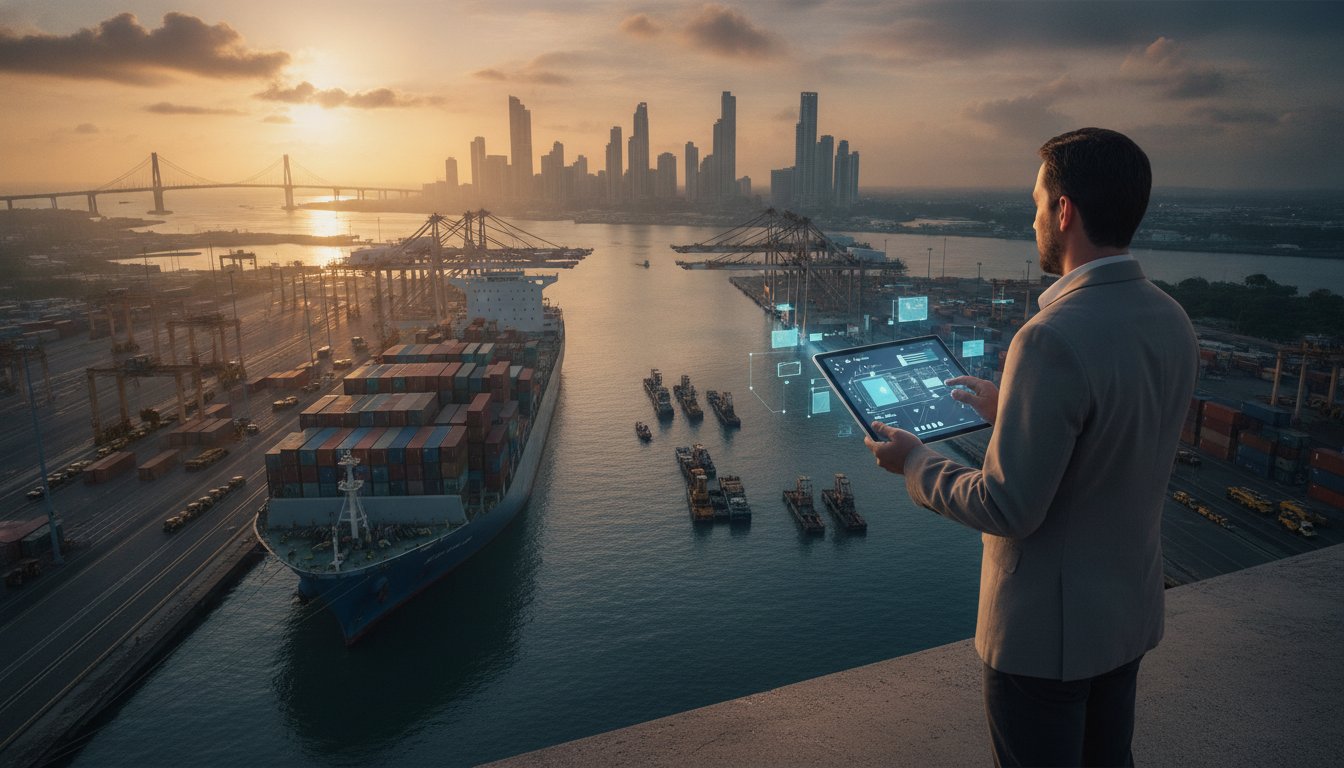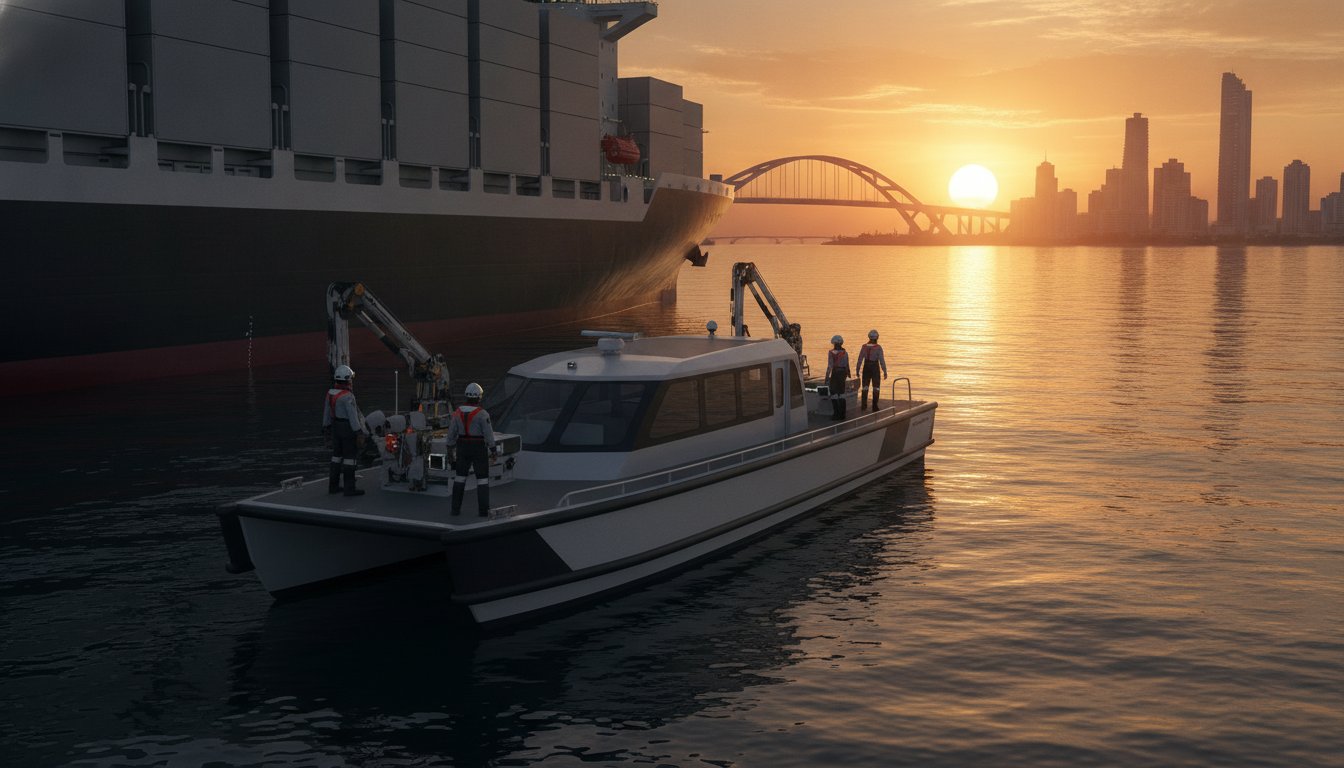


A single typo on a Seaman’s Book or a misfiled visa application can cost a vessel owner upwards of $5,000 in missed transit fees and additional port charges in 2026. You already know that timing is everything at the Canal. Every hour your ship sits idle at the Balboa or Cristobal anchorages, your operational margins shrink. Navigating the ship crew visa panama process should not be the reason your vessel loses its slot. It is frustrating to manage the friction between Panama Maritime Authority (AMP) mandates and the Panama Canal Authority (ACP) scheduling requirements. We are experts so you don’t have to be.
This guide provides the definitive roadmap for securing maritime permits without the traditional administrative headaches. We promise to help you master these visa complexities to ensure your crew changes result in zero-delay transits. You will learn the exact documentation needed for 2026 compliance and how to coordinate cost-efficient husbandry that protects your bottom line. We will break down the latest regulatory shifts and provide the logistics strategy you need to keep your fleet moving through the Isthmus with total confidence.
Key Takeaways
- Understand the 2026 regulatory landscape managed by the AMP and Immigration to prevent administrative bottlenecks during vessel arrival.
- Differentiate between transit and repatriation requirements to streamline the ship crew visa panama application process for joining and signing-off seafarers.
- Learn how to integrate husbandry services and “Cash to Master” (CTM) with your visa strategy to ensure seamless logistical coordination at the port.
- Master the 72-hour pre-arrival documentation and VUMPA filing protocols necessary for achieving a zero-delay Panama Canal transit.
- Discover how partnering with experienced local agents allows you to navigate complex maritime regulations with total confidence and professional integrity.
Understanding the Panama Ship Crew Visa Landscape in 2026
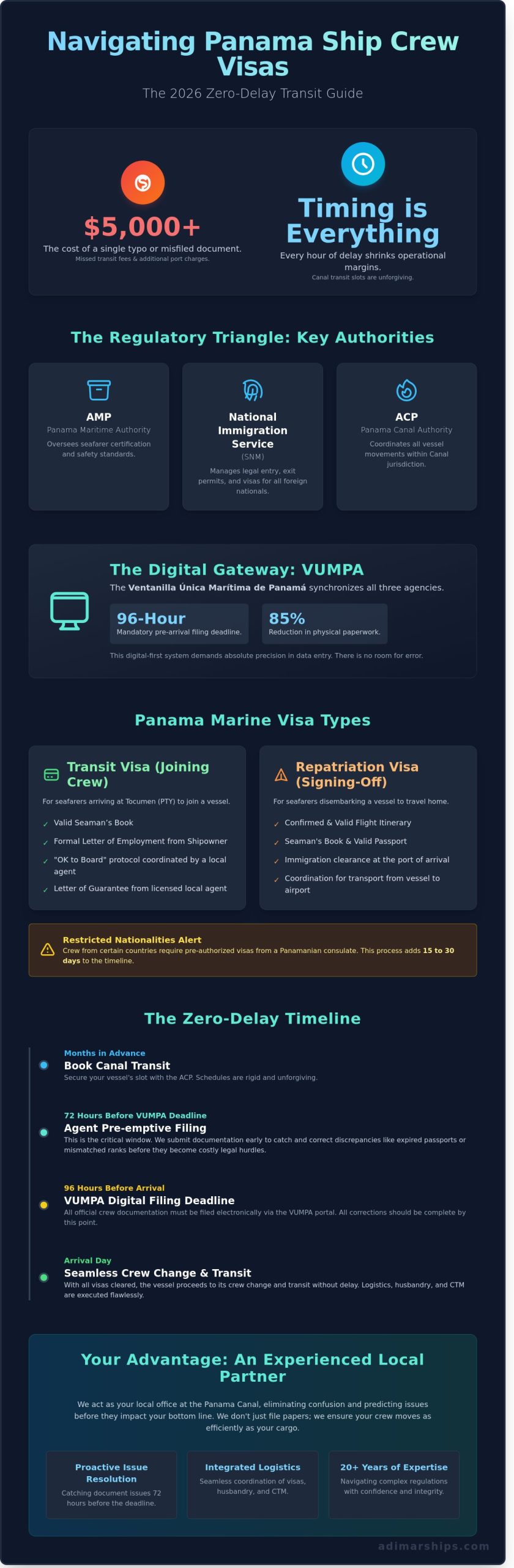
Panama stands as the world’s premier maritime crossroads, facilitating over 14,000 vessel transits through the Canal each year. As the “Bridge of the World,” it serves as a critical junction for global logistics and crew changes. Managing a ship crew visa panama requires navigating a multi-layered regulatory environment involving three primary entities. The Panama Maritime Authority (AMP) oversees seafarer certification and safety standards. The National Immigration Service manages the legal entry and exit permits for all foreign nationals. Finally, the Panama Canal Authority (ACP) coordinates every movement within the waterway’s jurisdiction. In 2026, these agencies have fully synchronized their operations through the Ventanilla Única Marítima de Panamá (VUMPA). This digital platform mandates that all crew documentation be filed electronically at least 96 hours before a vessel’s arrival. This shift to digital-first processing has reduced physical paperwork by 85 percent compared to the previous decade, but it demands absolute precision in data entry. Understanding Panama’s visa policies is the first step in ensuring your vessel remains on schedule and compliant with local laws.
The Commercial vs. Recreational Divide
Commercial seafarers operate under a strict legal framework that’s entirely distinct from private yacht crews. Because Panama remains a prominent fixture on the IMO White List, a status it has maintained since 2001, commercial crew members with valid Seaman’s Books often benefit from expedited processing. However, they must still present a formal Letter of Guarantee from a licensed local agent. Yacht crews face different requirements under the “Mariner’s Visa” category, which often involves higher scrutiny of individual travel histories. A common misconception is that a transit automatically grants shore leave to everyone on board. In reality, shore leave is a separate authorization that requires local agent coordination to ensure the crew member returns to the vessel before the pilot departs. Mismanaging this distinction can lead to administrative holds that stall a ship’s departure from the locks, resulting in unnecessary operational friction.
Why Timing is Your Biggest Risk Factor
In the maritime world, time isn’t just money; it’s the difference between a successful transit and a $5,000 fine for a missed slot. Panama Canal transit windows are booked months in advance, and the schedule is unforgiving. If a ship crew visa panama isn’t cleared by the time the vessel reaches the inner anchorage, the ACP has the authority to cancel the transit slot. This creates a domino effect of port fees, increased fuel consumption, and disrupted downstream schedules. Adimar acts as your “eyes on the ground,” using a preemptive filing approach that begins 72 hours before the VUMPA deadline. This early intervention allows us to catch document discrepancies, such as expired passports or mismatched rank certifications, before they become legal hurdles. We see ourselves as your local office at the Panama Canal. We don’t just file papers; we eliminate the confusion of changing regulations. Our 20 years of experience in the Panamanian market allows us to predict and resolve issues before they impact your bottom line, ensuring your crew moves as efficiently as your cargo.
Types of Marine Visas for Seafarers in Panama
Choosing the right ship crew visa panama depends entirely on whether a seafarer is arriving to join a vessel or preparing to depart for home. Panama’s National Migration Service enforces strict protocols to ensure every movement is tracked and legal. Mismanaging these details leads to costly vessel delays. We act as your eyes at the Panama Canal to ensure every document is in order before the plane even lands. Time is money in this industry; a single missing stamp can stall a crew change for days.
The Transit Visa (Joining Crew)
The Transit Visa is the primary gateway for seafarers arriving at Tocumen International Airport (PTY) to join a vessel. You’ll need a valid Seaman’s Book and a formal Letter of Employment from the shipowner. Logistics must be precise. The “OK to Board” protocol requires the local agent to notify the airline that all Panama entry requirements are met. For 2026, restricted nationalities face additional layers of scrutiny. These crew members often require a pre-authorized visa from a Panamanian consulate, a process that often takes 15 to 30 days. You should also consult the U.S. travel advisory for Panama to understand current entry conditions for international travelers, as these can impact your planning for global crew rotations.
The Repatriation Visa (Leaving Crew)
When a crew member signs off at Balboa or Cristobal ports, the Repatriation Visa process begins. This isn’t just a simple exit; it’s a coordinated hand-over. The agent manages the transition from the vessel to the shore. A “Fit for Travel” health clearance is often required by airlines, especially if the seafarer is leaving due to exhaustion or injury. We handle the direct transfer to PTY airport, ensuring the crew member stays within the supervised chain of custody. This eliminates the risk of “missing” crew members. Such disappearances can result in fines of $1,000 or more per person for the shipowner, according to current maritime regulations.
Specialized contractors or engineers don’t always fit the standard crew profile. For these individuals, a Technical Service Visa is required. This allows experts to perform repairs or inspections while the ship is in Panamanian waters. These visas are usually valid for 15 days, though extensions are possible if the technical work encounters delays. Most standard crew transit visas allow for a 72-hour stay in the country. If the vessel is delayed due to Canal congestion or weather, we apply for an extension to keep your personnel legal. You can nominate Adimar as your agent to see how we manage these complex timelines with integrity.
Understanding the duration and limitations of each visa type is essential for budget accuracy. Here is a quick breakdown of what to expect:
- Transit Visa: Standard 72-hour window for joining crew, requires a verified Seaman’s Book.
- Repatriation Visa: Requires confirmed flight tickets and a port-to-airport escort.
- Technical Visa: Valid for 15 days, specifically for non-crew contractors and surveyors.
- Extensions: Must be filed 24 hours before the current visa expires to avoid penalties.
We are experts so you don’t have to be. Our team manages the communication between the National Migration Service and the vessel to ensure a seamless transition. Whether you are dealing with a routine rotation or an emergency technical repair, having a trusted partner on the ground prevents administrative friction. We provide high quality, timely shipping services because we know that coordination can be difficult and frustrating without local expertise.
The Husbandry Connection: Integrating Visas with Logistics
A valid ship crew visa panama serves no purpose if the seafarer remains stuck at Tocumen International Airport while their vessel clears the Miraflores Locks. Logistics and immigration must move in lockstep. Mismanaging this synchronization leads to “off-hire” periods that cost operators upwards of $25,000 per day in lost charter revenue. We act as your eyes at the Panama Canal, ensuring that the moment a visa is stamped, a driver is waiting. We’re experts so you don’t have to be, taking the weight of coordination off your shoulders.
Managing “Cash to Master” (CTM) requires the same level of precision. We coordinate the delivery of physical USD ($) currency alongside crew movements to maximize efficiency and reduce the number of launch trips. Our operations team maintains 24/7 communication because vessel schedules at the Canal often shift by 6 to 12 hours due to traffic congestion or weather conditions. Clear, constant contact between the ship agent and the vessel’s master is the only way to prevent expensive timing errors. According to UK guidance on sea arrivals, specific entry requirements apply to those arriving by water, making the agent’s role in reporting these movements to the National Migration Service (SNM) vital for compliance. We’ve refined these processes over 20 years to ensure every transition is seamless.
Launch Services and Port Access
Coordination with the Panama Canal Authority (ACP) is mandatory for safe crew transfers. Whether the vessel is at the Pacific or Atlantic anchorage, we use certified launch boats that meet current safety standards. At high-security hubs like the PSA Panama International Terminal, protocols are strict. We handle the pre-clearance of all personnel 48 hours in advance. This prevents delays at the terminal gate and ensures crew members move from the shore to the ship without technical hitches. Our focus on timing and coordination eliminates the confusion that often plagues these transfers.
Emergency Medical and Technical Changes
Emergencies don’t follow office hours. When a seafarer requires an urgent medical evacuation, we secure temporary emergency visas within a 4 to 6 hour window. We also manage visits for technical superintendents who must board during a transit to address critical engine or navigation issues. Adimar Shipping, Inc. navigates “force majeure” scenarios, such as sudden port closures or health quarantine orders, by maintaining direct lines with the Ministry of Health (MINSA). By integrating the ship crew visa panama process with these technical needs, we’ve reduced average crew swap “off-hire” time by 18% for our regular clients. We provide these high-quality, timely services with integrity, ensuring your vessel stays on schedule regardless of the challenges on the ground.
Step-by-Step: Executing a Zero-Delay Crew Change
Timing isn’t just a preference in the maritime industry; it’s a financial imperative. In 2024, a single day of delay for a Handysize vessel can cost upwards of $18,000 in charter hire and additional port fees. To avoid these losses, your execution must start exactly 72 hours before the vessel drops anchor at either the Pacific or Atlantic terminal. You must submit digital copies of the crew’s passports and seaman’s books to us within this window. This lead time allows our team to pre-clear the ship crew visa panama requirements with the National Migration Service before the ship even enters Panamanian waters.
The VUMPA system serves as the digital backbone of this entire operation. It’s a unified platform where the Panama Maritime Authority (AMP) and the Panama Canal Authority (ACP) synchronize their data. If your data isn’t perfectly aligned between these two bodies, the vessel won’t receive its “Free Pratique.” We ensure every name on the crew list matches the VUMPA filing to the letter. Even a minor typo in a passport number can trigger a manual review by authorities, which typically delays boarding by 4 to 6 hours. Our role is to act as your eyes at the Canal, catching these discrepancies before they reach the inspector’s desk.
Once the vessel reaches the anchorage, coordination becomes a three-way dance between the pilot, the launch boat service, and the immigration officer. In Panama, immigration officers must physically verify the identity of off-signing and on-signing crew. We’ve seen roughly 12% of crew changes hit snags because a launch boat was ready but the officer was delayed in port traffic. We mitigate this by maintaining constant radio contact and positioning our transport teams strategically near the ports of Balboa or Cristobal. After the exchange, we finalize the departure records in the VUMPA system. This step is vital because if a departure isn’t logged correctly, the ship might face “ghost crew” issues at its next port of call.
Documentation Checklist for 2026
Regulations for 2026 require strict adherence to digital formatting. You need a valid passport and Seaman’s Book with at least 6 months of validity remaining. The vessel’s Registry and Crew List must follow the latest IMO standard format. Finally, we provide a Letter of Guarantee from Adimar. This document is our formal commitment to the Panamanian government that we take full responsibility for the crew’s transit and welfare while they’re on solid ground.
Common Pitfalls to Avoid
The most frequent error is inconsistent spelling across maritime documents. If a Seaman’s Book uses a middle name but the ship crew visa panama application doesn’t, authorities may reject the entry. You also can’t ignore the Panamanian calendar. During “Mes de la Patria” in November, government offices operate on reduced schedules, which can double processing times. Finally, don’t underestimate the 80km distance between Colon and Panama City. While it looks short on a map, heavy rain or transit traffic can turn a 1-hour drive into a 3-hour delay, causing crew to miss their flights.
We are experts so you don’t have to be. Put your crew logistics in our hands and we’ll eliminate the confusion with personalized, transparent service. Nominate Adimar as your agent to ensure your next transit is handled with total integrity.
Why Adimar Shipping is Your Trusted Partner in Panama
Adimar Shipping, Inc. has spent over 23 years mastering the intricate details of maritime logistics at the Panama Canal. We understand that for ship owners and charterers, time is a currency that loses value with every hour of delay. Our guiding philosophy is simple: We are experts so you don’t have to be. By handling the complex paperwork and regulatory hurdles of the Panama Canal Authority (ACP), we allow your team to focus on the broader commercial aspects of your voyage. You shouldn’t have to spend your day deciphering local maritime law when you have a business to run.
One of the most challenging aspects of a transit involves the ship crew visa panama process. Regulations change frequently, and a single missing document can stall a crew change for days. This often results in thousands of dollars in port fees and lost time. We provide a transparent husbandry service that prioritizes cost-efficiency above all else. Our team manages every dollar with the same care we would use for our own funds. We ensure all local fees are clearly itemized in USD. This approach avoids the hidden surcharges and “administrative padding” that often plague maritime billing in international hubs.
Our commitment to personalized service means we don’t treat your vessel as just another number in the queue. We recognize that a chemical tanker has different requirements than a Panamax bulk carrier. Since our founding in 2001, we’ve developed a deep understanding of how to navigate the specific needs of different vessel classes. We eliminate the confusion of canal transits by providing a single, reliable point of contact who understands your specific operational history. Our goal is to provide a seamless transition from the Atlantic to the Pacific, ensuring your crew and cargo remain on schedule regardless of local congestion.
Integrity is the cornerstone of our operations. In an industry where “hidden costs” are a common complaint, Adimar Shipping, Inc. stands out by offering a clear, upfront look at all expected expenses. We provide detailed proforma disbursement accounts that reflect the actual market conditions in Panama. This level of honesty has allowed us to maintain long-term partnerships with some of the world’s largest shipping lines for over two decades. We don’t just act as your agent; we act as your advocate on the ground.
Your Local Office at the Panama Canal
We act as your “eyes at the canal” to protect your commercial interests. This local presence is vital because communication in Panama requires deep-rooted relationships with local authorities. Adimar Shipping, Inc. operates with absolute integrity, providing timely updates every four hours during critical transit windows. We recently managed a complex crew change where three different nationalities required emergency ship crew visa panama approvals. Our team secured these within 24 hours, preventing a $15,000 delay in the vessel’s departure schedule.
Get a Quote for Your Next Transit
Nominating Adimar Shipping, Inc. as your ship agent is a straightforward process that begins with a request for a customized quote. Whether you’re an owner managing a fleet or a charterer handling a single spot fixture, we provide solutions tailored to your vessel type. Our goal is to eliminate the confusion of canal transits through expert coordination. You can Protect your transit-Get a Quote from Adimar Shipping, Inc. to see how our experience can streamline your next Panama Canal passage.
Master Your 2026 Crew Logistics Today
Navigating the 2026 maritime landscape requires more than just paperwork; it demands a proactive strategy on the ground. You’ve seen how integrating husbandry services with your ship crew visa panama requirements prevents costly idling at the locks. Success in these waters comes down to precision. Coordination between local authorities and vessel schedules must be seamless to ensure your crew changes happen without a single hour of delay.
Adimar Shipping has spent 20 years perfecting these logistics for the global maritime community. We’re experts so you don’t have to be. We serve as your authorized PCSOPEP representative and provide expert coverage whether you’re an owner or a charterer nominated agency. We’re your eyes at the Panama Canal, handling every detail so you can focus on your fleet. Don’t leave your 2026 transits to chance when you can rely on two decades of proven maritime excellence. We’re here to eliminate the confusion and keep your operations cost-conscious and efficient.
Nominate Adimar as your Panama Canal Ship Agent to streamline your next crew change. We’re ready to protect your interests and keep your vessels moving.
Frequently Asked Questions
Do all crew members need a visa to transit the Panama Canal?
Crew members don’t need a visa if they remain on the vessel during a standard transit. However, any seafarer disembarking for a crew change or medical reason must hold a valid ship crew visa panama or a transit permit. Requirements vary by nationality; for example, citizens of 50 countries on Panama’s restricted list must apply for a specialized visa through a licensed agent at least 15 days before arrival.
How long does it take to process a maritime crew visa in Panama?
Standard maritime crew visas typically take 48 hours to process when all documentation is in order. For seafarers from restricted nationalities, the National Immigration Service requires applications to be submitted 15 to 20 business days in advance. We recommend submitting paperwork 72 hours before arrival to account for any local holidays or administrative delays at the Panama Maritime Authority.
Can a crew change be performed while the vessel is in the locks?
No, crew changes are strictly prohibited while a vessel is inside the Panama Canal locks due to safety regulations set by the Panama Canal Authority. All personnel transfers must occur at designated anchorages like Balboa on the Pacific side or Cristobal on the Atlantic side. These operations usually take 2 to 4 hours depending on weather conditions and launch boat availability.
What happens if a crew member arrives in Panama without the correct visa?
A crew member arriving without the proper documentation will be denied entry and faces immediate deportation at the ship owner’s expense. The National Immigration Service often imposes fines ranging from $500 to $1,000 per undocumented individual. This situation also causes vessel delays; the ship cannot sail until the immigration status of every person on the manifest is resolved by the local authorities.
Are there specific COVID-19 or health requirements for crew in 2026?
As of 2026, Panama requires all crew members to present a valid Maritime Declaration of Health and proof of Yellow Fever vaccination if arriving from high-risk zones. While mandatory COVID-19 testing ended in 2023, the Ministry of Health still reserves the right to conduct random inspections. We monitor these health protocols daily to ensure your vessel meets the latest 2026 biological safety standards before reaching the pilot station.
How much does a ship agent charge for crew visa coordination?
Agency fees for coordinating a ship crew visa panama generally range from $150 to $350 per person, excluding government taxes. You should also budget for the $50 immigration fee and $20 for the official stamped permit. Our team provides a transparent breakdown of these costs in our initial proforma to help you manage your husbandry budget without hidden surprises.
Can Adimar handle crew changes at both Balboa and Cristobal ports?
Adimar handles full crew change logistics at both Balboa and Cristobal ports 24 hours a day. With 20 years of experience at the Panama Canal, we coordinate the entire process from launch boat rentals to airport transfers. We act as your eyes on the ground, ensuring seafarers move efficiently between the vessel and Tocumen International Airport without unnecessary downtime.
What is the “OK to Board” letter and why is it mandatory?
An “OK to Board” letter is a formal confirmation from a licensed Panamanian agent stating that the seafarer has all the necessary permits to enter the country. Airlines require this document before allowing crew members to check in for flights to Panama. It’s mandatory because it protects the airline from fines and ensures the seafarer won’t be turned back by immigration officials upon landing at PTY.