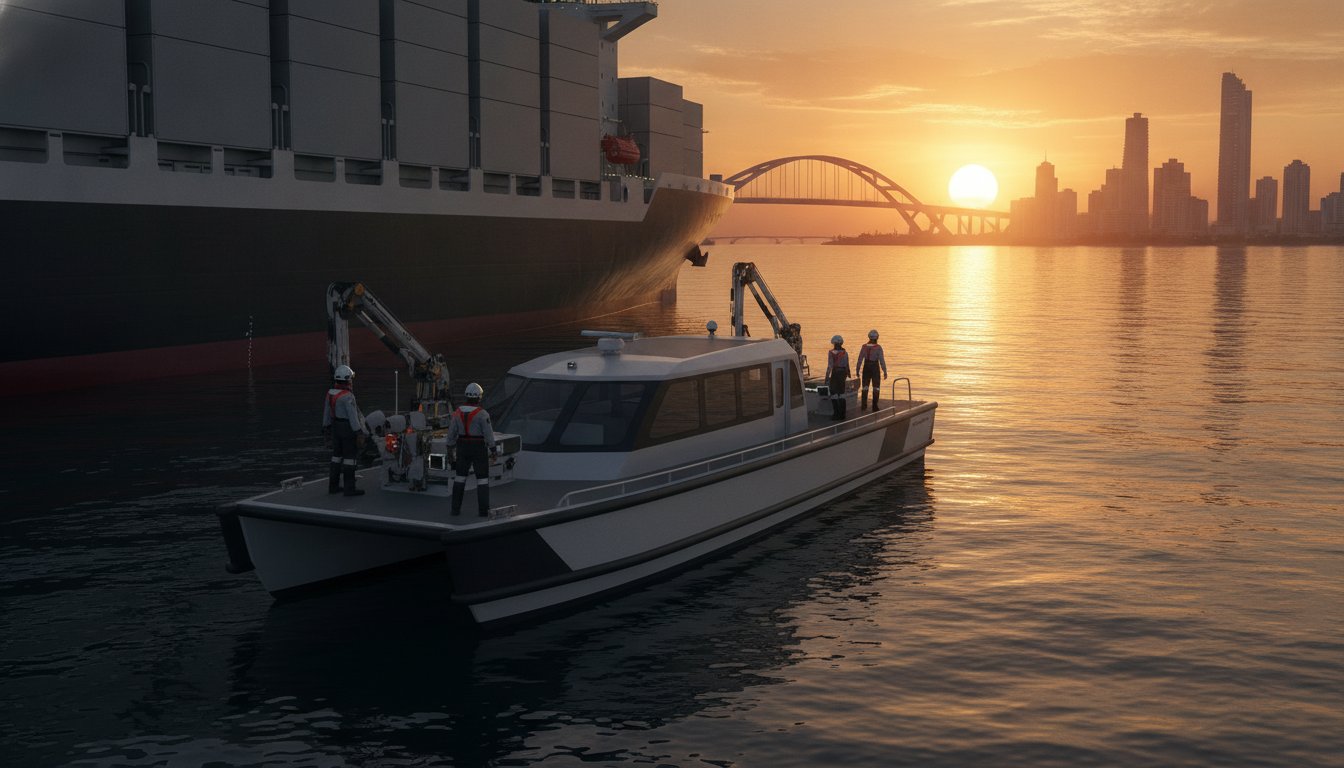

Last Tuesday, a Chief Engineer on a Post-Panamax vessel discovered that a single $450 seal failure could trigger a $50,000 daily delay penalty if the replacement didn’t arrive before their scheduled canal slot. It’s a high-stakes reality where timing is everything. You understand that managing marine spare parts delivery panama is often the most stressful part of a transit, especially when you’re coordinating between Tocumen International Airport and a vessel waiting at the Pacific anchorage.
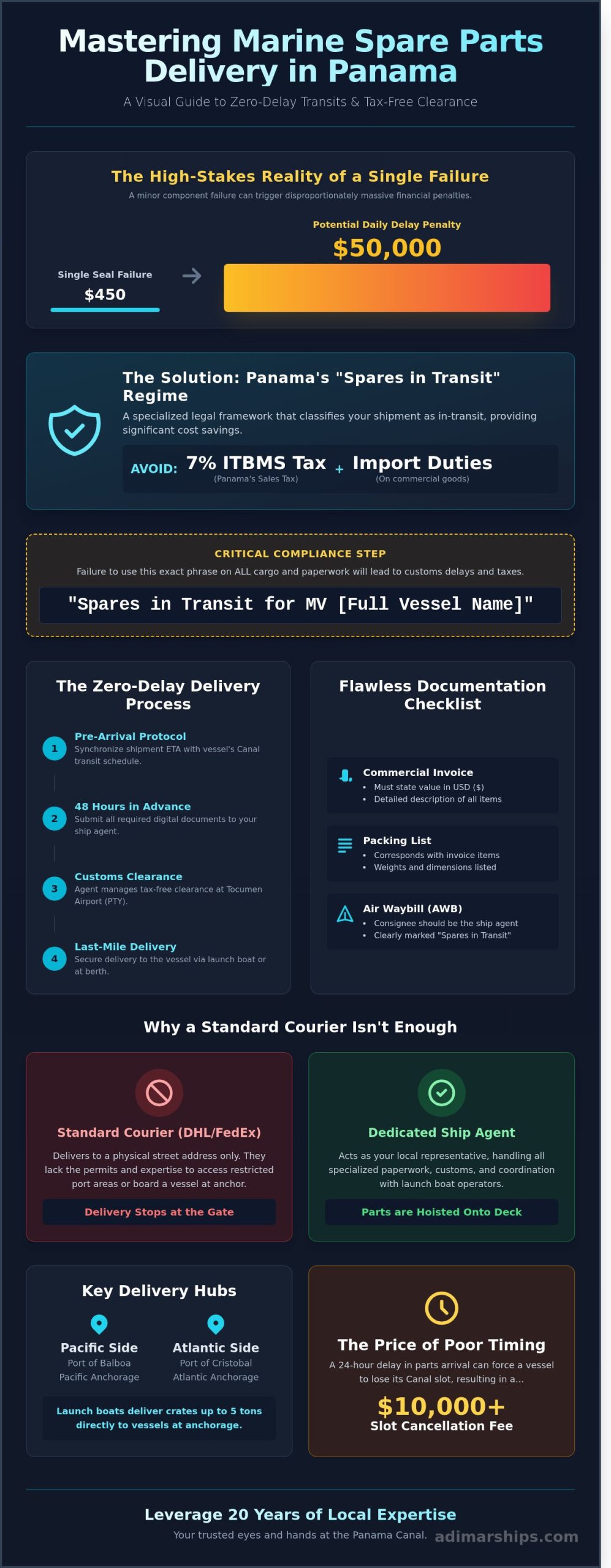
We agree that paying 7% ITBMS or unexpected duties on “Spares in Transit” is a failure of logistics, not a cost of doing business. You deserve a process that’s transparent and predictable. This guide teaches you how to navigate local customs regulations to ensure your critical components reach the deck without a single hour of downtime. You’ll learn the exact steps to secure tax-free clearance, manage last-mile delivery via launch boat, and get the real-time updates you need to stay in control of your schedule. We’ll walk through the specific documentation required to turn a potential logistics nightmare into a seamless, zero-delay delivery.
Key Takeaways
- Understand why Panama is the strategic hub for “Spares in Transit” and how this classification saves your operation from unnecessary taxes and duties.
- Master the marine spare parts delivery panama process by learning the specific documentation required to navigate customs without risking your transit window.
- Discover the “Pre-Arrival” protocol used to synchronize critical parts delivery with the Panama Canal Authority (ACP) schedule for seamless logistics.
- Follow our essential checklist for submitting digital documents 48 hours in advance to avoid costly delays and ensure your vessel stays on schedule.
- Learn how leveraging 20 years of local expertise eliminates the confusion of global logistics, serving as your trusted eyes at the Panama Canal.
The Logistics of Marine Spare Parts Delivery in Panama
Marine spare parts logistics in the Panama Canal hub involves the specialized coordination of customs clearance, secure warehousing, and “last-mile” delivery to vessels. Panama is the primary choice for “Spares in Transit” (SIT) in the Americas because of its unique tax status. Parts arriving at Tocumen International Airport (PTY) marked as SIT avoid the standard 7% ITBMS tax and other import duties usually applied to local goods. This makes marine spare parts delivery panama a cost-effective strategy for fleet managers. When a vessel experiences a mechanical failure, the financial stakes are high. Daily vessel operating costs (OPEX) for a Neo-Panamax container ship can range from $15,000 to $45,000. A delay isn’t just a late box; it’s a massive financial drain on the owner’s bottom line.
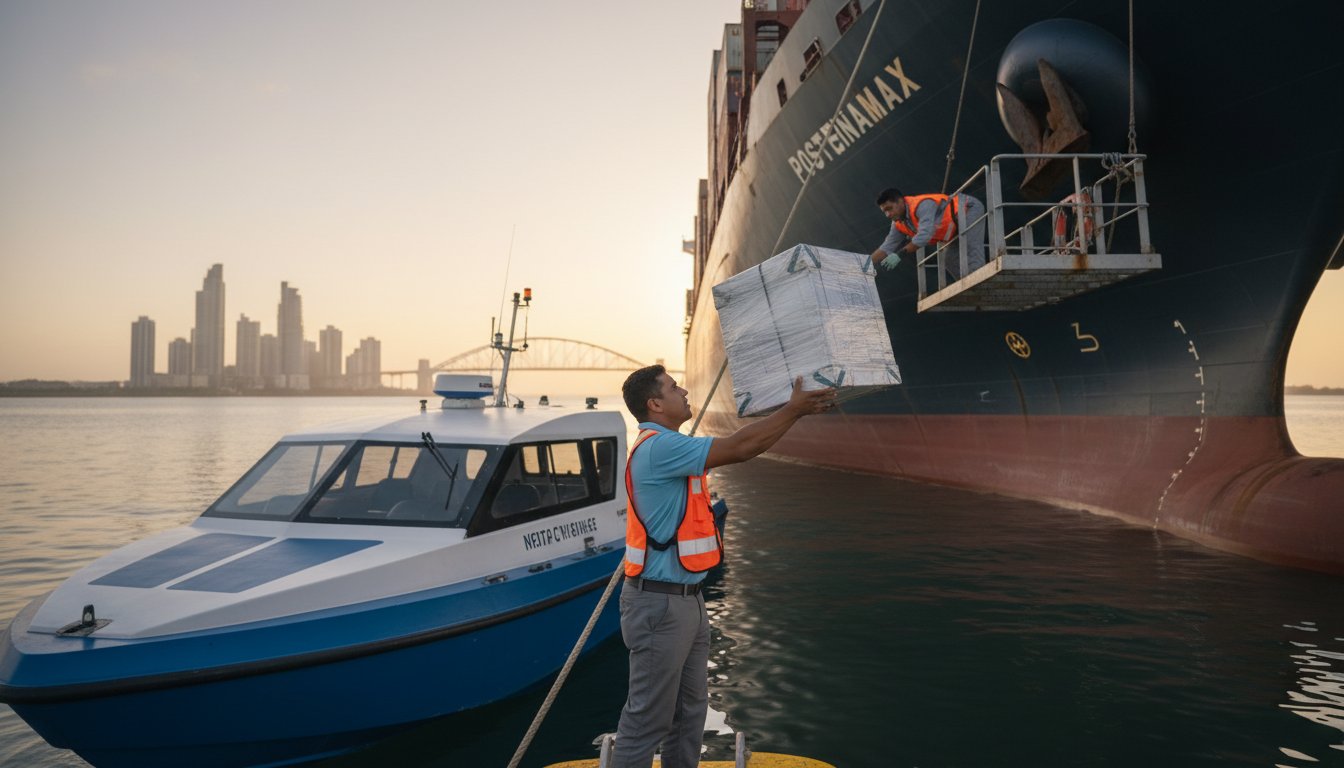
A standard courier service like DHL or FedEx delivers to a physical street address. They don’t have the permits to access restricted port areas or board a vessel at anchor. A dedicated ship agent serves as your local representative and bridges the gap between the warehouse and the engine room. We handle the specialized paperwork required by the Panama Maritime Authority and coordinate with launch boat operators. We’re experts so you don’t have to be. While a courier might leave a package at a gate, a ship agent ensures the part is physically hoisted onto the deck. This distinction is vital for maintaining the vessel’s schedule and ensuring the marine spare parts delivery panama is completed successfully.
Why Timing is Critical at the Panama Canal
Timing is everything when you’re dealing with a scheduled Panama Canal transit. A 24-hour delay in a part’s arrival can force a vessel to lose its position in the convoy. This results in a “slot cancellation fee” which can cost $10,000 or more depending on the vessel size. Adimar Shipping, Inc. integrates logistics with broader husbandry services to ensure synchronization. We act as your eyes at the Panama Canal. We monitor PTY airport arrivals and launch schedules in real-time to prevent these bottlenecks. Misjudge your timing and you lose money. We eliminate the confusion with personalized service that keeps your transit on track.
Key Ports and Delivery Points
Deliveries happen at two main hubs: Balboa on the Pacific side and Cristobal on the Atlantic side. Balboa is often the preferred site for vessels heading northbound. If a ship isn’t docking, we use launch boats for mid-stream supply at the Pacific or Atlantic anchorages. These boats carry crates up to 5 tons directly to the ship’s side while the vessel is waiting for its transit time. For vessels already at the terminal, we coordinate berth-side deliveries during cargo operations or bunkering to maximize efficiency. Our 20 years of experience allows us to navigate these restricted zones without the typical bureaucratic delays that slow down inexperienced providers.
Navigating Panama Customs: The “Spares in Transit” Regime
Panama’s strategic position as a maritime hub relies on its efficiency, yet its customs environment is notoriously strict. The “Spares in Transit” regime is a specialized legal framework designed to facilitate marine spare parts delivery panama without the burden of standard import taxes. Under this law, parts intended for a specific vessel are exempt from the 7% ITBMS (sales tax) and various import duties. This exemption only applies if the cargo is strictly classified as being in transit to a ship currently in Panamanian waters or arriving shortly. Understanding Panama’s customs regulations is vital to avoid the heavy fines that accompany misclassification.
To qualify for this tax-exempt status, your documentation must be flawless. Three primary documents drive the process: the Commercial Invoice, the Packing List, and the Air Waybill (AWB). The Commercial Invoice must clearly state the value in USD ($) and include a detailed description of the items. Perhaps the most critical requirement is the labeling. Every single piece of cargo and all accompanying paperwork must be marked with the specific phrase: “Spares in Transit for MV [Full Vessel Name]”. If this label is missing, customs officials will likely treat the shipment as a standard commercial import, leading to delays and unexpected costs.
Customs pitfalls often result from minor clerical errors. The Autoridad Nacional de Aduanas (National Customs Authority) frequently seizes cargo if the weight on the AWB differs by even 5% from the actual weight upon arrival. Fines for such discrepancies can range from $500 to $5,000 depending on the severity and the cargo’s value. We act as your eyes at the Panama Canal to ensure these details are verified long before the plane touches down at Tocumen International Airport.
Documentation Requirements for 2026
By 2026, the Autoridad Nacional de Aduanas will implement stricter digital pre-clearance protocols. The Master Air Waybill (MAWB) must now include the vessel’s IMO number and the port of delivery (Balboa or Cristobal) in the “Consignee” or “Handling Information” section. For Dangerous Goods (DG), such as lithium batteries or specialized engine chemicals, you must provide a Material Safety Data Sheet (MSDS) in English. Failure to declare DG status results in immediate cargo grounding and potential blacklisting of the shipper.
Avoiding Unnecessary Import Duties
The distinction between “Import” and “Transit” status is the difference between a smooth delivery and a logistical nightmare. You should never ship spares to Panama without a local agent pre-alert sent at least 24 hours before the ETA. If parts arrive without an agent assigned to the “Spares in Transit” manifest, they are automatically moved to a general warehouse where standard duties apply. Utilizing Free Trade Zones like the Colon Free Zone or Albrook allows for the tax-free storage of marine spare parts delivery panama for up to 90 days. This is particularly useful for owners who want to consolidate multiple orders before a vessel’s arrival. If you want to keep your technical management on track, nominating a reliable local partner is the only way to ensure these zones are used effectively to protect your bottom line.
Synchronizing Delivery with Your Panama Canal Transit
Misjudge your timing by just two hours and your vessel could lose its transit slot, resulting in thousands of dollars in idling costs. We serve as your local office and your eyes on the ground to ensure this never happens. Our logistics team monitors the Panama Canal Authority (ACP) schedule in real-time, adjusting delivery windows as the “Long Schedule” shifts. Because we understand that canal transits are dynamic, we don’t rely on static arrival estimates. We synchronize every marine spare parts delivery panama with the specific vessel itinerary, whether you’re slated for a Panamax or Neopanamax lockage.
The “Pre-Arrival” protocol is our standard for all critical machinery. We require parts to be on the ground in Panama at least 48 to 72 hours before the vessel’s arrival at the sea buoy. This buffer accounts for potential flight delays into Tocumen International Airport (PTY) and ensures customs clearance doesn’t conflict with the pilot boarding time. For small-scale, high-value components like engine control sensors or navigation circuit boards, we offer emergency “Hand-Carry” services. This involves a dedicated courier who escorts the part from the manufacturer directly to the pier, bypassing standard freight consolidation to save 12 to 24 hours of transit time.
The Airport-to-Ship Workflow
Clearing cargo at Tocumen (PTY) requires precision. We manage the entire process from the moment the air waybill is cut. Once parts land, our customs brokers expedite the release, moving items to our secure warehouse for staging. If you have multiple shipments arriving from different global vendors, we consolidate them into a single delivery to reduce launch boat fees. We maintain a 24/7 communication loop, providing the Master and the ship owner with status updates every 6 hours until the parts are over the rail. This transparency eliminates the stress of wondering if your spares will make the transit window.
Launch Boat Coordination for Anchorage Deliveries
Transfers at the Pacific or Atlantic anchorages require strict adherence to safety protocols. We coordinate with local launch providers to ensure boats are ready as soon as the vessel drops anchor. Standard supply boats in Panama typically handle dimensions up to 4 meters and weights up to 5,000 kg. If your marine spare parts delivery panama involves oversized items like a tail shaft or a cylinder liner, we arrange specialized cranes and heavy-lift barges. We always time these deliveries to coincide with pilot boarding or bunkering operations to maximize efficiency and minimize the vessel’s time in Panama waters. Our team monitors sea states and wind speeds at the breakwater; if conditions exceed 20 knots, we immediately trigger contingency plans to ensure crew safety and cargo integrity.
Efficiency is the only metric that matters when a ship is in transit. By managing the “Last Mile” from PTY to the port with our own fleet of vehicles, we bypass the delays common with third-party couriers. We treat every package with the urgency it deserves, ensuring that when your ship enters the locks, it has everything it needs for a safe and successful voyage.
Preparing Your Shipment: A Checklist for Owners and Managers
Timing at the Panama Canal is unforgiving. If your vessel misses its scheduled transit slot because a critical engine component is stuck in customs, the financial impact is immediate. You don’t want to find yourself in a situation where a $500 part causes a $50,000 delay. Effective marine spare parts delivery panama requires a proactive approach that begins long before the ship reaches the breakwater. We serve as your local office on the ground, ensuring every logistical detail is handled with precision.
Start by verifying the vessel’s estimated time of arrival (ETA) and specific transit window at least 72 hours in advance. Panama Canal schedules can shift due to weather or traffic volume. A 2-hour discrepancy might mean the difference between an efficient alongside delivery and a more expensive launch service at the anchorage. Once the timing is set, submit all digital copies of commercial invoices and packing lists to your Panama ship agent 48 hours prior to arrival. This window allows for the pre-clearance of goods through Panama Customs, which typically charges storage fees of $50 per day or more if items sit in a bonded warehouse beyond the initial grace period.
Confirm the delivery point based on the direction of transit. Southbound vessels typically receive parts at Cristobal, while Northbound transits utilize Balboa. Misidentifying the port can result in $300 to $500 in unnecessary cross-isthmus trucking fees. Finally, verify that your agent has secured the necessary port entry permits. Access to terminals like Manzanillo International Terminal (MIT) or PSA Panama requires specific security clearances that take 24 hours to process. Without these, your delivery truck will be turned away at the gate.
Labeling and Packaging Best Practices
Panama’s tropical climate is a significant factor in logistics. With an average annual rainfall exceeding 3,000mm, weather-resistant, UV-protected labels are essential for any crates destined for anchorage deliveries. Use high-tack adhesives that won’t peel in 90% humidity. For heavy engine components exceeding 500kg, palletizing is a safety requirement for crane operations. Every package must clearly identify Adimar Shipping as the local consignee. This ensures that port authorities and warehouse staff know exactly who to contact for immediate pickup, preventing your shipment from being lost in a sea of generic cargo.
Communication Protocol
Clear communication prevents the confusion that leads to costly delays. Establish a notification chain that includes the Master, the Agent, and the Logistics Provider. Send a 24-hour pre-alert to the technical team and the agent to trigger the final customs clearance process. We recommend setting up automated tracking alerts so your shore-side team receives real-time updates without having to send manual inquiries. This transparency builds trust and ensures that everyone is prepared for the moment the parts arrive on deck.
Don’t let logistical hurdles slow down your transit. Nominate Adimar Shipping as your agent to ensure your spare parts are delivered on time, every time.
Why Adimar Shipping is Your Trusted Logistics Partner
Since opening our doors in 2004, Adimar Shipping has provided over 20 years of continuous service as a premier ship agency at the Panama Canal. We understand the high stakes involved in maritime logistics. Misjudge your timing by even a few hours and you risk losing your transit slot, which leads to thousands of USD in avoidable expenses. We are experts so you don’t have to be. Our team acts as your eyes at the Panama Canal, eliminating the confusion of global supply chains with a personalized service that prioritizes your vessel’s schedule. We don’t just move boxes; we manage the critical link between your global suppliers and your fleet.
Integrity is the foundation of our business. This is most evident in how we handle Port Disbursement Accounts (PDA). Many owners worry about hidden fees or inflated local costs. At Adimar, we provide transparent, line-item PDAs that reflect the actual costs of your port call. As your Owner’s Nominated Agency (ONA), we protect your interests by auditing every invoice from third-party vendors. Our 20-year reputation is built on the fact that we treat your budget as if it were our own. We focus on being a reliable partner that provides quick solutions and excellent communication, ensuring you never have to guess the status of your cargo or your costs.
Our Local Expertise, Your Peace of Mind
We see ourselves as your local office at the Panama Canal. This isn’t just a slogan; it’s a functional reality of how we operate. Our deep-rooted relationships with the National Customs Authority and the Panama Canal Authority (ACP) allow us to navigate bureaucratic hurdles that often stall less experienced agents. Choosing a specialist for marine spare parts delivery panama means you benefit from our pre-clearance capabilities and our knowledge of local port regulations.
Consider a case from October 2022 involving a Post-Panamax container ship. The vessel required a critical turbocharger component just 10 hours before its scheduled northbound transit. While a standard delivery might have taken 24 hours to clear customs, our team utilized our established “urgent courier” protocols to expedite the paperwork. We coordinated the launch delivery to meet the vessel at the Pacific anchorage, completing the transfer 2 hours before the pilot boarded. This successful marine spare parts delivery panama saved the owner an estimated $52,000 in rescheduling fees and prevented a 48-hour delay in their global rotation.
Beyond Logistics: Full Husbandry Support
Efficiency in Panama is often about consolidation. Adimar provides comprehensive husbandry support that goes far beyond simple logistics. We encourage owners to combine their spare parts deliveries with other essential services to maximize value. By coordinating crew changes, Cash to Master (CTM), and technical spares under one agency umbrella, you significantly reduce launch hire costs and administrative overhead. In fact, consolidating these needs can reduce your total husbandry expenses by up to 18% per port call compared to using multiple specialized vendors.
Our approach is always cost-conscious. We monitor the movement of your vessel in real-time to ensure that our boarding officers and delivery teams are perfectly synchronized with your arrival. This eliminates idle time for launches and technicians. Whether you need a last-minute delivery of engine components or a full crew rotation, we handle the details so you can focus on your core business. If you want a partner who values transparency and local precision, it’s time to reach out. Nominate Adimar as your agent for your next Panama transit and experience the difference that two decades of local expertise makes.
Keep Your Vessel Moving Through the Panama Canal
Managing logistics at the Panama Canal requires precision and deep local knowledge. You don’t want your vessel delayed because a critical component is stuck in customs or missed its transit window. By utilizing the “Spares in Transit” regime, you can avoid local import duties and streamline the entire process. Success depends on synchronizing your marine spare parts delivery panama with your scheduled canal slot, which typically lasts between 8 and 12 hours.
Adimar Shipping brings 20 years of local expertise to every shipment. We’re your eyes at the Panama Canal. As an authorized PCSOPEP person service provider with a proven track record serving global ship owners and charterers, we handle the complex coordination so you don’t have to. We understand that time is money. Our team manages the paperwork and timing to ensure your parts arrive exactly when they’re needed. Put your transit in our hands and eliminate the confusion of maritime logistics.
Get a Quote for Your Marine Spare Parts Delivery
We’re ready to help you navigate your next transit with total confidence.
Frequently Asked Questions
What does “Spares in Transit” mean in the context of the Panama Canal?
Spares in Transit refers to replacement parts arriving from international suppliers that are destined for a vessel currently in Panamanian waters. These items are exempt from local import duties under Law 8 of 1982 if they’re correctly documented. We manage this process by ensuring all air waybills are marked “Spares in Transit for MV [Ship Name]” to avoid the 7% ITBMS tax. This status allows for a seamless transfer from the airport to the anchorage.
How long does it typically take to clear spare parts through Panama customs?
Customs clearance typically takes 24 to 48 hours once the shipment arrives at Tocumen International Airport (PTY). We achieve a 98% success rate for clearing goods within this timeframe when documentation is provided 72 hours before arrival. Efficient coordination is essential; a single day’s delay can result in a vessel missing its scheduled transit slot, which may cost owners upwards of $30,000 in additional fees and lost time.
Can I deliver spare parts to my vessel while it is transiting the locks?
No, you can’t deliver any items while a vessel is physically inside the Panama Canal locks due to strict safety regulations from the Panama Canal Authority. All deliveries must occur at the designated anchorages in Balboa or Cristobal either before or after the transit. Our team coordinates your marine spare parts delivery panama to coincide with the 4 to 6 hour window while your ship is waiting for its transit turn at the Pacific or Atlantic entrance.
What are the main ports in Panama for spare parts delivery?
The primary hubs for delivery are the Port of Balboa on the Pacific side and the Port of Cristobal on the Atlantic side. Balboa handles approximately 65% of our husbandry requests because of its proximity to Panama City’s main logistics centers. Both ports operate 24 hours a day, 365 days a year. We also provide services at the PSA Panama International Terminal and Colon Container Terminal to ensure your cargo reaches the vessel regardless of its docking location.
Are there weight or size restrictions for spare parts delivered via launch boat?
Standard launch boats used for deliveries generally have a weight capacity of 5 metric tons and deck space for items up to 4 meters in length. For heavier components like tail shafts or engine blocks, we utilize specialized crane barges that handle loads exceeding 25 tons. We are experts so you don’t have to be; we always verify your vessel’s crane reach and lifting capacity before dispatching any heavy marine spare parts delivery panama to ensure a safe transfer.
Do I need a local ship agent to receive spare parts in Panama?
Yes, Panamanian law requires a licensed local ship agent to facilitate the movement and customs release of any “Spares in Transit.” We act as your eyes at the Panama Canal, taking legal responsibility for the cargo from the moment it touches the ground at PTY airport. Our team handles the mandatory bonding and documentation required by the National Customs Authority, ensuring 100% compliance with Law 57 of 2008 and preventing costly administrative fines.
What happens if my spare parts arrive after the ship has already transited?
If your parts miss the vessel, we immediately move the cargo to our secure, bonded warehouse where it can stay for up to 30 days. From there, we can arrange to forward the shipment to the ship’s next port of call, such as Cartagena or Buenaventura. Storage fees typically start at $45 per pallet per week. We provide real-time tracking updates so you can make an informed decision 12 hours before the ship departs its anchorage.