
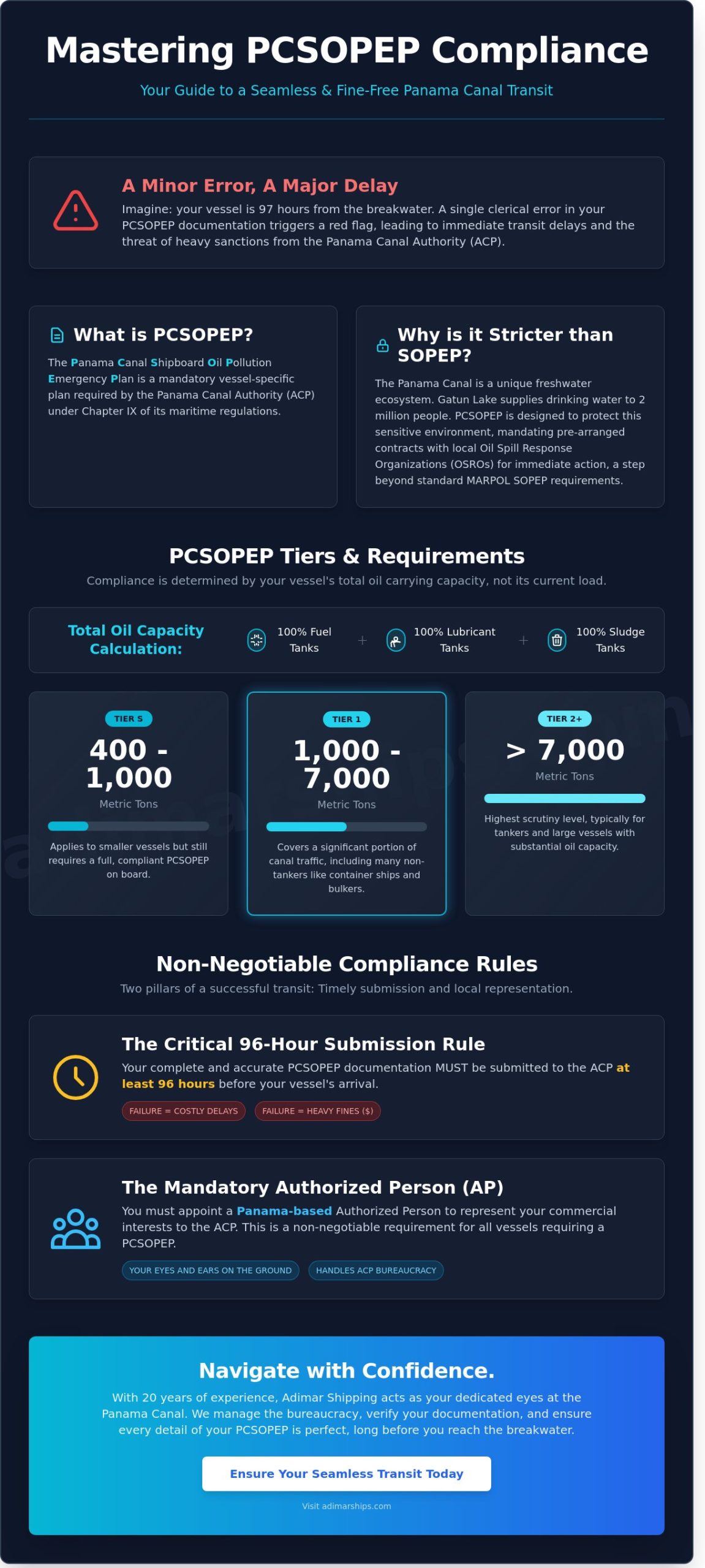
Imagine your vessel is exactly 97 hours from the breakwater when a minor clerical error in your documentation triggers a red flag. For many operators, this single oversight in the Panama Canal Shipboard Oil Pollution Emergency Plan, or PCSOPEP, leads to immediate delays and the threat of heavy ACP sanctions. You shouldn’t have to risk your schedule or your budget over a paperwork technicality.
We understand that the Panama Canal Authority regulations feel increasingly rigid as we move into 2026. It’s frustrating to manage complex local requirements while your crew is already focused on the physical transit. We are experts so you don’t have to be. This guide will help you master every detail of the plan to ensure a seamless, fine-free transit. We’ll preview the critical 2026 regulatory updates, clarify the 96-hour submission window, and show you how a partner with 20 years of experience acts as your eyes at the Panama Canal to handle the bureaucracy for you. By the end of this article, you will have a clear roadmap to maintain full regulatory compliance and eliminate the confusion that often leads to costly transit delays.
Key Takeaways
- Understand the mandatory legal requirements of Chapter IX to ensure your vessel remains fully compliant with Panama Canal maritime regulations.
- Learn to accurately calculate oil carrying capacity to determine your vessel’s specific technical requirements across Tiers S, 1, and 2.
- Discover why appointing a Panama-based Authorized Person (AP) is a non-negotiable step for representing your commercial interests to the ACP.
- Master the critical 96-hour submission deadline to avoid costly transit delays and heavy administrative fines in USD ($).
- Gain the expert insights needed to manage your PCSOPEP efficiently, ensuring all documentation is submitted correctly for a seamless transit.
What is PCSOPEP? Understanding the Panama Canal Shipboard Oil Pollution Emergency Plan
PCSOPEP stands for the Panama Canal Shipboard Oil Pollution Emergency Plan. It is a mandatory requirement for vessels transiting the waterway. While most mariners are familiar with global MARPOL standards, the Canal operates under its own strict legal framework. Specifically, Chapter IX of the Maritime Regulations for the Operation of the Panama Canal dictates these requirements. Every vessel must have an approved plan to ensure rapid response and clear financial responsibility in the event of an incident. We are experts so you don’t have to be; our team ensures your documentation meets every local nuance before you reach the locks.
A standard Panama Canal Ship Oil Pollution Emergency plan goes beyond the basic MARPOL SOPEP found on most ships. The Canal is a unique ecological zone. Gatun Lake provides drinking water for approximately 2 million people in Panama City and Colon. Because this is a freshwater environment, the biological impact of a spill is much higher than in the open sea. The core objective of PCSOPEP is to prevent environmental degradation while maintaining the operational flow of the waterway. It requires vessels to have pre-arranged contracts with local response providers to guarantee immediate action.
The Origin and Evolution of Canal Pollution Regulations
The Panama Canal Authority (ACP) developed these rules to safeguard the Gatun Lake watershed. For over 110 years, the Canal has been the lifeblood of Panama. As we move into 2026, the ACP has tightened enforcement to include more rigorous verification of response contracts. These updates focus on digital reporting and faster activation of local oil spill response organizations (OSROs). We act as your eyes at the Panama Canal, monitoring these regulatory shifts to keep your fleet compliant and your schedule intact.
Who Must Comply? Applicability and Scope
Compliance depends on the vessel’s capacity rather than its current load. The threshold is often lower than many operators expect. If your vessel meets the following criteria, a PCSOPEP is non-negotiable:
- Vessels over 400 MT: Any craft with an oil carrying capacity (including fuel and cargo) of 400 metric tons or more must comply.
- Tankers: All tankers are subject to the highest level of scrutiny due to the nature of their cargo.
- Non-tankers: Container ships, bulkers, and passenger vessels fall under these rules if their bunker capacity exceeds the 400 MT limit.
Exemptions exist for small recreational craft and vessels under the 400 MT limit. However, these vessels still must follow general anti-pollution laws. Misjudging your vessel’s status leads to costly delays and potential fines in USD. We eliminate that confusion with personalized service for every transit, ensuring your paperwork is verified long before you arrive at the breakwater.
Navigating the PCSOPEP Tiers: Technical Requirements and Capacities
Every vessel transiting the canal must understand its specific tier level to avoid costly delays or administrative fines. The Panama Canal Authority (ACP) categorizes ships based on their total oil carrying capacity. This figure isn’t just about the cargo in your hold. It includes the 100 percent volume of all fuel tanks, lubricant tanks, and sludge tanks on board. You calculate this by summing the maximum capacity of every tank used for these liquids, regardless of how much oil is actually inside during the transit. Miscalculating this figure can lead to immediate non-compliance, so precision is vital. You’ll find the specific formulas and reporting standards in the Panama Canal Authority regulations, which serve as the definitive guide for environmental safety.
Tier S and Tier 1: Small to Medium Capacity Requirements
Vessels falling into Tier S and Tier 1 categories represent a significant portion of canal traffic. Tier S is designed for vessels with an oil capacity between 400 MT and 1,000 MT. Tier 1 applies to ships with a capacity ranging from 1,000 MT to 7,000 MT. While these vessels don’t face the same resource demands as massive tankers, they still need a robust PCSOPEP plan. You must maintain updated documentation on the bridge that identifies your Authorized Representative and your contracted Oil Spill Response Organization (OSRO).
Standard requirements for these tiers focus on three core areas:
- Notification Protocols: Immediate contact details for the Canal Operations Captain and local emergency responders.
- On-Board Equipment: Basic containment kits and absorbent materials for small-scale deck spills.
- Local Representation: A designated agent in Panama who can act on behalf of the ship owner 24 hours a day.
We see ourselves as your local office at the Panama Canal, helping you verify that your equipment and notification lists are current before you reach the locks.
Tier 2: High-Capacity and Tanker Requirements
Tier 2 is the most stringent category and is mandatory for any vessel with an oil capacity exceeding 7,000 MT. This tier typically includes large bulk carriers and tankers. Because the potential environmental impact of a spill is much higher, the response strategies must be significantly more advanced. Managing compliance for a Panamax vessel is particularly complex because their dimensions often push them into this high-capacity bracket even when they aren’t carrying oil as cargo.
The relationship between vessel size and response resources is direct. For Tier 2, you aren’t just filing a plan; you’re ensuring that the local OSRO has the physical capacity to deploy heavy-duty booms, skimmers, and storage barges within hours. Technical documentation for Tier 2 must include detailed spill flow modeling and a clear resource allocation table. We are experts so you don’t have to be, and we can help you navigate these complex requirements. We are your eyes at the Panama Canal, ensuring your Tier 2 status is fully documented and approved well in advance of your arrival. If you’re ready to streamline your next transit, you can nominate Adimar as your agent to handle the technical verification.
The Authorized Person (AP): Your Essential Local Representative
Timing is everything at the Canal. The Panama Canal Authority (ACP) mandates that every vessel has a designated Authorized Person (AP) based within the Republic of Panama. This isn’t a suggestion; it’s a strict requirement for transit. The AP acts as your legal representative on the ground. They possess the documented authority to act on your behalf, especially when high-stakes decisions need to be made in seconds.
According to the Panama Canal Authority PCSOPEP Requirements, the AP must have the power to obligate funds for spill response operations. They serve as the critical link between your vessel and the ACP. Without a qualified AP, your ship won’t enter the waterway, ensuring that the authorities have a local point of contact to hold accountable. We are your eyes at the Panama Canal, making sure this legal bridge remains solid and compliant.
Choosing the right AP means looking for local expertise and a 20-year track record of integrity. You need someone who understands the local maritime ecosystem and maintains professional relationships with cleanup contractors. This role is about trust. You are putting your transit in their hands to eliminate confusion and manage risk effectively.
Duties of the AP During a Spill or Emergency
In an emergency, the AP is the primary point of contact for the ACP Emergency Response Team. They operate 24/7 to manage the crisis. Their role includes:
- Immediate notification to local authorities to initiate the response plan.
- Directing Oil Spill Response Organizations (OSROs) to the vessel’s location.
- Handling all financial guarantees required to keep response efforts moving without delay.
- Managing communication between the ship owner and the ACP to minimize legal and operational fallout.
Non-Emergency Responsibilities of the AP
Compliance doesn’t stop when the water is clear. A proactive PCSOPEP authorized person manages the administrative health of your plan throughout the year. This involves regular verification of vessel data and updating the PCSOPEP plan to reflect any changes in the fleet or local regulations. We are experts so you don’t have to be; we keep you informed of regulatory shifts before they impact your schedule. Your AP must remain reachable at all times, ensuring that your vessel’s documentation is always ready for inspection by Canal officials. This proactive oversight prevents administrative delays that could cost thousands in lost transit time.
The 96-Hour Rule: Avoiding Fines and Transit Delays
Timing and coordination at the Panama Canal are difficult and frustrating if you lack a local partner. The Panama Canal Authority (ACP) enforces a strict 96-hour rule for PCSOPEP submission. Your vessel’s plan must be submitted and approved at least 96 hours before arrival at Canal waters. Misjudge this timing and you lose both money and your scheduled slot. The financial consequences are direct. Vessels arriving without a valid, approved plan face administrative fines that typically start at $2,500 USD and can scale higher based on the vessel’s size and the nature of the non-compliance.
Beyond the immediate fines, the operational impact is often more damaging. A delay in approval ripples through your entire schedule. If your plan isn’t cleared, the ACP will not schedule your vessel for transit, leading to costly idle time at the anchorage. We are your eyes at the Panama Canal, and we’ve seen how a simple paperwork delay can cost ship owners tens of thousands of dollars in lost time and fuel consumption. It’s vital to maintain a digital paper trail of every submission and confirmation receipt to protect your interests during port state inspections.
Step-by-Step Submission Roadmap
Success requires a proactive approach rather than waiting for the deadline. Follow this timeline to ensure a smooth Panama Canal transit without regulatory friction:
- 120 Hours Out: Perform an internal audit of vessel data. Verify that your Tier status is correct based on current oil carrying capacity.
- Electronic Submission: Upload all required documentation through the ACP Single Window (VUMPA). This is the only official channel for compliance.
- Immediate Verification: Confirm the ACP has received the file. If they issue a query or request clarification, you must respond immediately to keep the 96-hour clock running.
Common Pitfalls in PCSOPEP Documentation
Small errors lead to major delays. One of the most frequent mistakes is providing outdated contact information for the Authorized Person (AP). The AP must be reachable 24/7; if the ACP finds a disconnected number or an unresponsive email, the plan is rejected. Another common issue is a Tier mismatch. If your oil capacity figures are inaccurate, you might be categorized incorrectly, which triggers an automatic rejection during the VUMPA screening process. Owners must also stay informed on the ACP Panama annual report to stay ahead of minor regulatory shifts that affect documentation standards. We provide high quality service with integrity to ensure these details are never overlooked.
Don’t let a clerical error disrupt your voyage. Put your transit in our hands and we will eliminate the confusion with personalized service. Nominate Adimar as your agent to secure your compliance and your schedule.
Adimar Shipping: Your Eyes at the Panama Canal
Adimar Shipping has spent over 20 years mastering the unique complexities of the Panama Canal. We understand that timing and coordination aren’t just logistical hurdles; they’re significant financial risks. Misjudging your timing at the Canal means you lose money. We provide high quality shipping services with integrity at the core of every operation. This “integrity first” approach ensures your commercial interests remain protected against unnecessary delays or regulatory friction. By serving as your eyes at the Canal, we eliminate the frustration of managing local mandates from a distance. We’re experts so you don’t have to be.
Our team provides a personalized, 24/7/365 Authorized Person (AP) service. This constant availability is vital for maintaining PCSOPEP compliance in a fast-moving maritime environment. We act as a capable problem-solver for ship owners and charterers who need more than just a checklist. We offer a partnership that prioritizes security and reliability. Put your transit in our hands and we will eliminate the confusion with direct, expert coordination.
Comprehensive Compliance Solutions
Our team manages every stage of the PCSOPEP process to ensure your vessel remains in good standing. We handle everything from the initial drafting of your compliance plan to securing final approval from the Panama Canal Authority (ACP). We can seamlessly manage the responsibilities of your owner’s nominated agency alongside your specific pollution compliance roles. This integrated approach removes the communication gaps that often occur when using multiple vendors. You’ll receive proactive updates and benefit from transparent pricing models that respect your budget. We believe in clear, cost-conscious service that keeps your operations efficient and predictable.
The Adimar Advantage: Local Knowledge, Global Standards
We maintain deep, long-standing relationships with ACP officials and local oil spill response organizations (OSROs). These connections allow us to provide quick solutions to complex problems that might stall other agents. We don’t just act as a third-party contractor; we function as your local office in Panama. Our staff understands the local market conditions and regulations inside and out. This proximity allows us to solve problems in real-time before they escalate into costly transit delays. We focus on the details so you can focus on your business.
The Adimar advantage serves as the ultimate safeguard for Canal transits by combining decades of local expertise with a relentless commitment to vessel security and regulatory precision.
Secure Your 2026 Panama Canal Transit Today
Compliance with PCSOPEP regulations isn’t just a paperwork exercise; it’s a critical operational requirement for every vessel over 400 GRT entering Panama Canal waters. The 96-hour notification rule remains the strictest barrier to entry. Missing this window leads to heavy fines and lost revenue from transit delays. Selecting an Authorized Person with deep local roots ensures your vessel meets Tier 1 and Tier 2 requirements without technical hiccups.
Adimar Shipping has served as your eyes at the Panama Canal for over 20 years. We act as your local office to handle the complex paperwork and emergency response planning required by the Panama Canal Authority. We are experts so you don’t have to be. Our team provides 24/7/365 local representation to keep your fleet moving safely through the waterway. Nominate Adimar as your PCSOPEP Authorized Person today to guarantee professional oversight and total compliance. We’ll handle the logistics so you can focus on your business with complete peace of mind.
Frequently Asked Questions
What happens if I fail to submit my PCSOPEP within the 96-hour window?
Your vessel will face immediate transit delays and potential denial of entry into Canal waters if the plan isn’t submitted 96 hours before arrival. The Panama Canal Authority (ACP) won’t grant clearance in the VUMPA system without a verified plan. These delays often result in lost transit slots, which costs operators significant daily hire fees while the ship waits at the Atlantic or Pacific breakwater.
Can my global SOPEP provider act as my Authorized Person in Panama?
No, your global provider cannot serve as your Authorized Person unless they maintain a physical office and legal registration recognized by the ACP. Panama regulations require a local representative who is available 24/7 to coordinate directly with Canal officials. We act as your eyes at the Panama Canal to ensure your PCSOPEP meets these specific local mandates that international plans often overlook.
How often does a vessel need to update its PCSOPEP plan?
A vessel must update its plan every 4 years to stay compliant with Panama Canal regulations. You also need an immediate revision if the vessel changes its name, ownership, or technical specifications. We track these dates for our clients because an expired plan is treated the same as having no plan at all during the ACP inspection process.
What is the specific fine amount for arriving without a valid PCSOPEP?
Arriving without a valid plan typically results in fines ranging from $2,500 to $10,000 USD. The Panama Canal Authority determines the exact penalty based on the vessel’s size and the duration of the non-compliance. These costs are separate from the operational losses your company will suffer while the ship is held at anchor waiting for emergency plan approval.
Does PCSOPEP coverage include the cost of a physical oil spill cleanup?
PCSOPEP coverage doesn’t include the actual costs of physical oil spill cleanup or environmental remediation. The plan serves as a mandatory emergency response framework that designates your local Oil Spill Response Organization (OSRO). Owners must maintain separate P&I club coverage to handle the financial liabilities of a spill, while the plan ensures the logistical response starts within the required 2-hour window.
Can Adimar Shipping handle both ship agency and PCSOPEP services simultaneously?
Adimar Shipping handles both ship agency and compliance services simultaneously to streamline your entire transit process. We are experts so you don’t have to be, managing the documentation and local representation under one roof. This integrated approach reduces communication gaps and ensures that your 96-hour submission window is always met with precision.
Is a PCSOPEP required for vessels transiting in ballast?
A plan is required for vessels transiting in ballast if they have a carrying capacity of 400 metric tons or more of oil, including fuel and lubricants. The ACP focuses on the total potential environmental risk rather than the current cargo status. If your vessel meets this weight threshold, you must have an approved plan and a designated Authorized Person before reaching the Canal.
How do I verify if my Authorized Person is officially recognized by the ACP?
You can verify an Authorized Person’s status by checking the Panama Canal Authority’s official registry of approved providers. This list confirms that the entity meets the strict 24/7 availability and local residency requirements. Working with an established partner like Adimar Shipping ensures your representative is fully vetted and maintains a direct line of communication with Canal inspectors at all times.