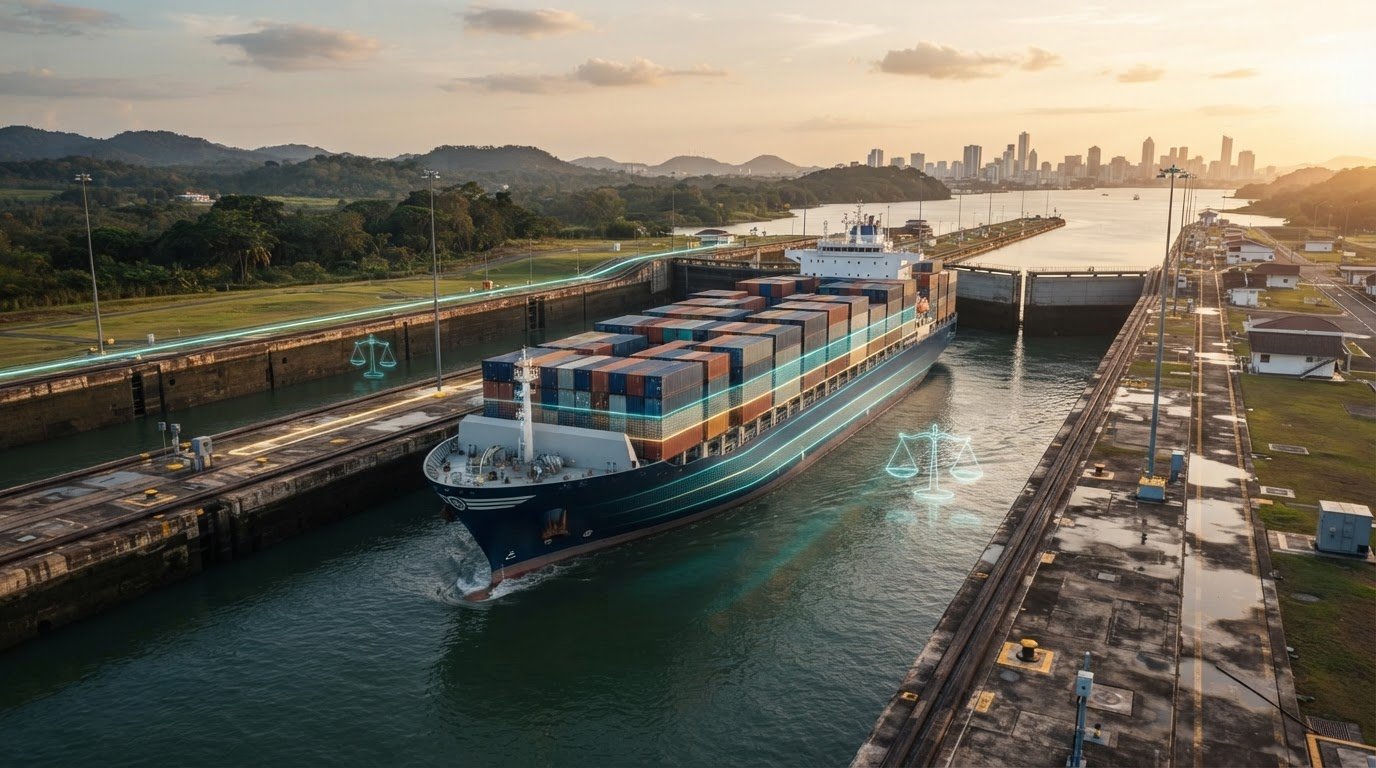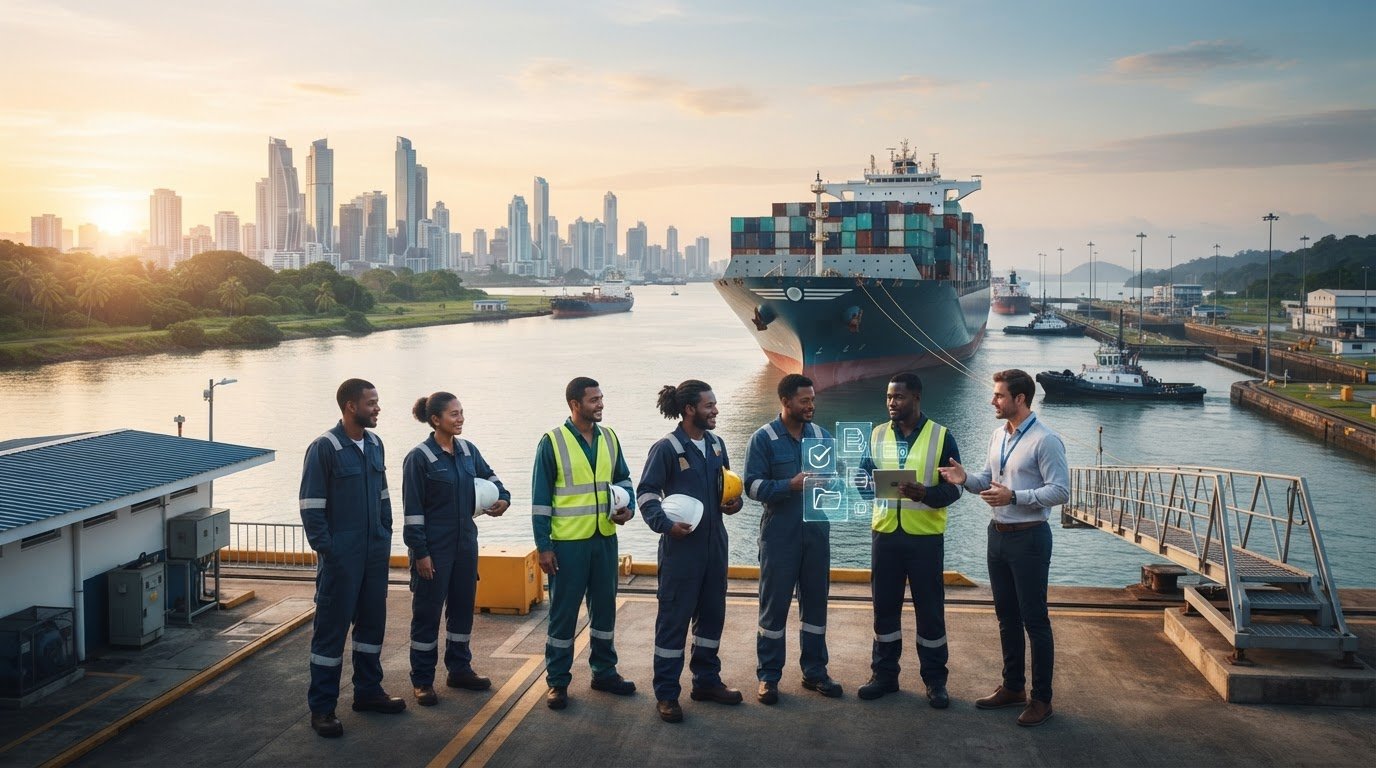


A single data mismatch in your VUMPA submission can now trigger an automatic rejection and a minimum $15,000 fine before your vessel even reaches the locks. You understand that transiting this waterway is a high-stakes balancing act; however, the 2026 digital shift has made the margin for error effectively zero. To succeed, you need a dual-track strategy that addresses both the vessel’s physical compliance and the agent’s legal mandates. This guide provides the definitive roadmap to mastering the 2026 panama canal ship agency requirements, ensuring you meet every technical mandate for a seamless transit.
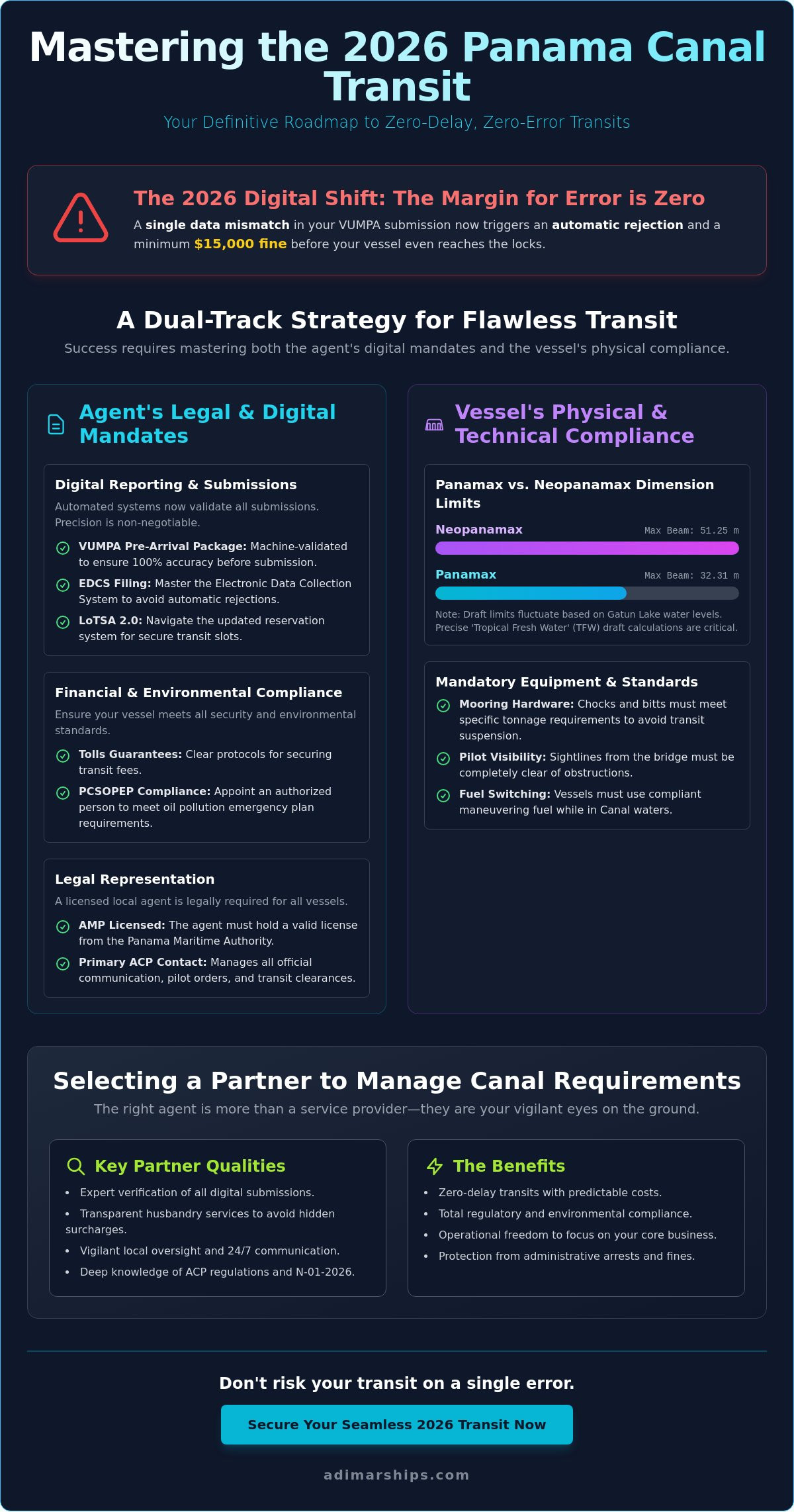
By delegating these intricate logistics to a seasoned expert, you gain the operational freedom to focus on your core business while we act as your vigilant eyes on the ground. We’ll preview the machine-validated VUMPA pre-arrival package, the updated LoTSA 2.0 reservation system, and the essential documentation required by Notice to Shipping N-01-2026. From managing husbandry services to appointing a PCSOPEP authorized person, you’ll learn how to achieve a zero-delay transit with predictable costs and total regulatory compliance.
Key Takeaways
- Understand the legal necessity of a local representative and how to fulfill the specific operational mandates required by the Panama Canal Authority.
- Identify critical technical specifications for 2026, including mandatory mooring equipment and vessel dimensions for both Panamax and Neopanamax locks.
- Streamline your digital reporting by mastering the panama canal ship agency requirements for VUMS registration and EDCS filing to avoid automatic rejections.
- Secure your transit with clear protocols for Tolls Guarantees and PCSOPEP compliance to ensure your vessel meets all environmental and financial security standards.
- Learn how to select a partner who provides transparent husbandry services and vigilant local oversight to eliminate hidden surcharges and transit delays.
What are Panama Canal Ship Agency Requirements?
Transiting the waterway requires more than just a seaworthy vessel and a skilled crew. Under Panamanian law, every ship must have a licensed local representative to interact with the Panama Canal Authority (ACP). These panama canal ship agency requirements represent a strict framework of legal, financial, and operational mandates that ensure a vessel’s right to passage. While the history of the Panama Canal reflects a legacy of engineering marvels, the modern era is defined by administrative precision. In 2026, these requirements have become even more rigorous due to the full implementation of machine-validated Electronic Data Collection System (EDCS) filings.
The scope of an agent’s responsibility is vast. It begins long before the vessel arrives at the locks, involving the coordination of transit clearances, ordering pilots, and managing tugboat schedules. If these steps aren’t handled with expert local knowledge, the vessel faces immediate bottlenecks. The 2026 digital shift means that pre-arrival notifications are no longer just reviewed; they’re validated by automated systems that reject any package with even minor discrepancies.
The Legal Role of the Licensed Ship Agent
To act as an authorized agent, a firm must hold a valid license from the Panama Maritime Authority (AMP). This isn’t just a formality. The agent serves as the primary point of contact for the ACP at all times, assuming significant legal liability for the vessel’s conduct and financial obligations. We prioritize high ethical standards in this role, acting as a vigilant extension of your own team. Our responsibility includes everything from ordering pilots to ensuring that all transit tolls and maritime fees are settled without delay. This partnership provides the security you need when dealing with complex foreign regulations.
Agency Mandates vs. Vessel Requirements
It’s vital to distinguish between the ship’s physical compliance and the agent’s administrative duties. While your crew manages the hardware, such as mooring equipment and visibility standards, the agent manages the clearance. A primary duty of the agent is to verify all vessel documentation before it hits the ACP digital portal. If a submission is incomplete or inaccurate, the vessel risks an administrative arrest or a flat transit denial. By delegating these panama canal ship agency requirements to a specialist, you prevent the friction that leads to costly delays. We act as a protective barrier, ensuring that every data point in the VUMPA pre-arrival package is verified before it is transmitted.
Core Vessel Technical Requirements for 2026
Physical readiness is just as critical as digital paperwork. While our team manages the administrative panama canal ship agency requirements, your vessel must meet the precise mechanical standards set by the ACP. For 2026, the Authority has tightened oversight on propulsion systems and mooring hardware. If your ship’s chocks or bitts don’t match the specific tonnage requirements, you risk immediate transit suspension. We act as your vigilant eyes on the ground, helping you verify these technical details long before the pilot boards.
Visibility remains a non-negotiable safety standard. Pilot sightlines from the bridge must be clear of any obstructions, particularly for Neopanamax vessels where the sheer size makes maneuvering through the locks a high-precision task. Additionally, your vessel must be prepared for fuel switching procedures. ACP regulations mandate that all vessels use compliant maneuvering fuel while in canal waters to protect the local ecosystem. Failure to adhere to these environmental standards can lead to significant Panama Canal transit fees and penalties starting at $15,000.
Panamax and Neopanamax Dimension Limits
Navigating the limits of the locks requires an exact understanding of your vessel’s footprint. For 2026, Neopanamax vessels can utilize a maximum beam of 51.25 meters, though draft limits fluctuate based on water levels in Gatun Lake. We recommend calculating your ‘Tropical Fresh Water’ (TFW) draft with extreme care. For a detailed breakdown of current length and beam charts, refer to our Panama Canal transit guide. Our team can assist with these calculations as part of our comprehensive Ship Agency Services.
Mandatory Safety and Navigational Equipment
Safety equipment must be in peak condition to satisfy panama canal ship agency requirements. This includes your AIS (Automatic Identification System), which must undergo mandatory test procedures before arrival. Pilot boarding facilities, including ladders and platforms, must strictly meet ISO standards to ensure the safety of ACP personnel. A unique requirement for the canal is the ‘Blue Steering Light,’ a specific signal used to indicate the vessel’s steering status to the pilot and tugboat crews. We verify that these signals and your steering gear are fully operational to prevent any ‘administrative arrests’ that could stall your voyage.
Documentation and Digital Reporting Mandates
The administrative burden of a canal transit has shifted from physical paperwork to complex digital workflows. By 2026, the Panama Canal Authority (ACP) has fully integrated machine-validated systems that leave no room for manual correction at the locks. Meeting the panama canal ship agency requirements for documentation means navigating the VUMPA (Ventanilla Única Marítima de Panamá) portal with absolute precision. This pre-arrival package must be submitted at least 96 hours before your vessel reaches the anchorage. Incomplete or late filings don’t just cause delays; they trigger automatic rejections from the system.
The sequence of digital reporting follows a strict timeline. First, your agent ensures the vessel’s registration in the Vessel Traffic Management System (VUMS) is current. Then comes the filing of the Electronic Data Collection System (EDCS) forms. These forms provide the ACP with every detail of your cargo, transit history, and technical specs. We verify your International Tonnage Certificate (ITC-69) against the Official Panama Canal Maritime Regulations to ensure fee calculations are transparent and predictable. Finally, security screening requires a comprehensive crew and passenger list, which is cross-referenced against international databases in real-time.
VUMS and the Digital Transit Workflow
The Vessel Traffic Management System (VUMS) acts as your vessel’s digital passport. It’s our job to maintain this record, ensuring every modification or previous transit detail is accurately reflected. The ACP uses this data to automate the booking process and assign pilots. If your data entry misses a deadline, you’ll likely face late submission surcharges or, worse, lose your allocated transit slot. We manage this timeline proactively so you don’t have to worry about administrative bottlenecks.
Essential Pre-Arrival Documentation
Beyond the digital forms, specific structural plans remain vital for compliance. If your vessel is new to the canal or has undergone modifications, we must submit General Arrangement and Mooring Arrangement plans for technical review. The Panama Canal Tonnage Certificate is another critical document. It’s the only metric the ACP accepts for calculating tolls. We also handle the health and quarantine declarations required by Panamanian authorities, ensuring your crew and vessel are cleared for entry without a hitch. Delegating these panama canal ship agency requirements to our experienced team ensures your digital paper trail is flawless.
Financial and Environmental Compliance Requirements
Financial security is the bedrock of a successful transit. The ACP operates on a strictly prepaid basis, meaning every dollar for tolls, tugboats, and locomotives must be secured before your vessel arrives at the locks. One of the most critical panama canal ship agency requirements is the management of the “Tolls Guarantee.” This is a financial mechanism where the agent provides the ACP with the necessary security to authorize passage. Without this guarantee, the vessel remains at anchorage, accruing idle time costs that can quickly exceed $65,000 per day for Neopanamax ships.
In 2026, the ACP has expanded its Environmental Premium programs to incentivize “Green” vessels. Ships that exceed standard emission metrics or utilize advanced hull efficiency technology may qualify for fee reductions. We help you document these efficiencies to ensure you benefit from these incentives. However, the financial stakes remain high. Common causes for sanctions include inaccurate cargo declarations or failure to comply with fuel switching procedures. Fines for such non-compliance start at $15,000, but these are easily avoided through proactive delegation to a specialist who understands the local fiscal landscape.
PCSOPEP and Authorized Person (AP) Requirements
Environmental protection is a top priority for Panamanian authorities. Every vessel over 400 gross tons (GRT) must have a valid Panama Canal Shipboard Oil Pollution Emergency Plan (PCSOPEP). A key part of this mandate is the designation of a PCSOPEP Authorized Person (AP) based in Panama. As your agent, we serve as this vital link, providing the ACP with a 24/7 point of contact for spill response coordination. We manage the compliance filing and ensure your plan is updated to meet 2026 standards. For a deeper look at these mandates, you can view our complete PCSOPEP guide.
Tolls, Fees, and Financial Guarantees
Managing the “Transit Deposit” requires precision and transparency. This deposit covers the base toll plus a buffer for ad-hoc costs such as additional tugboats, locomotives, or line handlers. We provide clear pro-forma invoices so you understand exactly where your capital is allocated. Our role as a Panama ship agency is to ensure all fees are settled promptly, preventing the risk of vessel arrest or administrative delays. We also handle “Cash to Master” (CTM) requirements, delivering physical funds to the captain for crew needs with total security. If you need to secure your next transit with a reliable partner, contact our ship agency team today for expert representation.
Choosing an Agent to Manage Canal Requirements
Compliance shouldn’t be a source of stress. Selecting the right partner is the final, most critical step in meeting panama canal ship agency requirements. The stakes are too high for guesswork. You need an expert who understands the subtle nuances of the Panama Canal Authority (ACP) and can anticipate regulatory shifts before they impact your schedule. We provide this level of local expertise, acting as a vigilant extension of your team to ensure every technical and financial mandate is satisfied.
Transparency is our core promise. We deliver clear pro-forma invoices with no hidden surcharges, giving you total predictability over your transit costs. Communication is equally vital. Our team provides real-time updates on transit slots, weather delays, and water level changes that might affect your draft. Whether you require an Owner’s Nominated Agency to protect your long-term interests or a Charterer’s Nominated Agency for a specific voyage, we customize our support to fit your operational goals.
The Adimar Advantage in Panama
Our history in the region spans decades. We’ve built our reputation on a foundation of ethical standards and regulatory vigilance. We don’t just process paperwork; we protect your vessel. Every ship under our care is treated as our only priority. This personalized approach allows us to identify potential compliance issues long before they result in fines or delays. By delegating your panama canal ship agency requirements to us, you gain the security of a partner who knows the locks as well as your own crew knows their ship.
Beyond Transit: Husbandry and Logistics
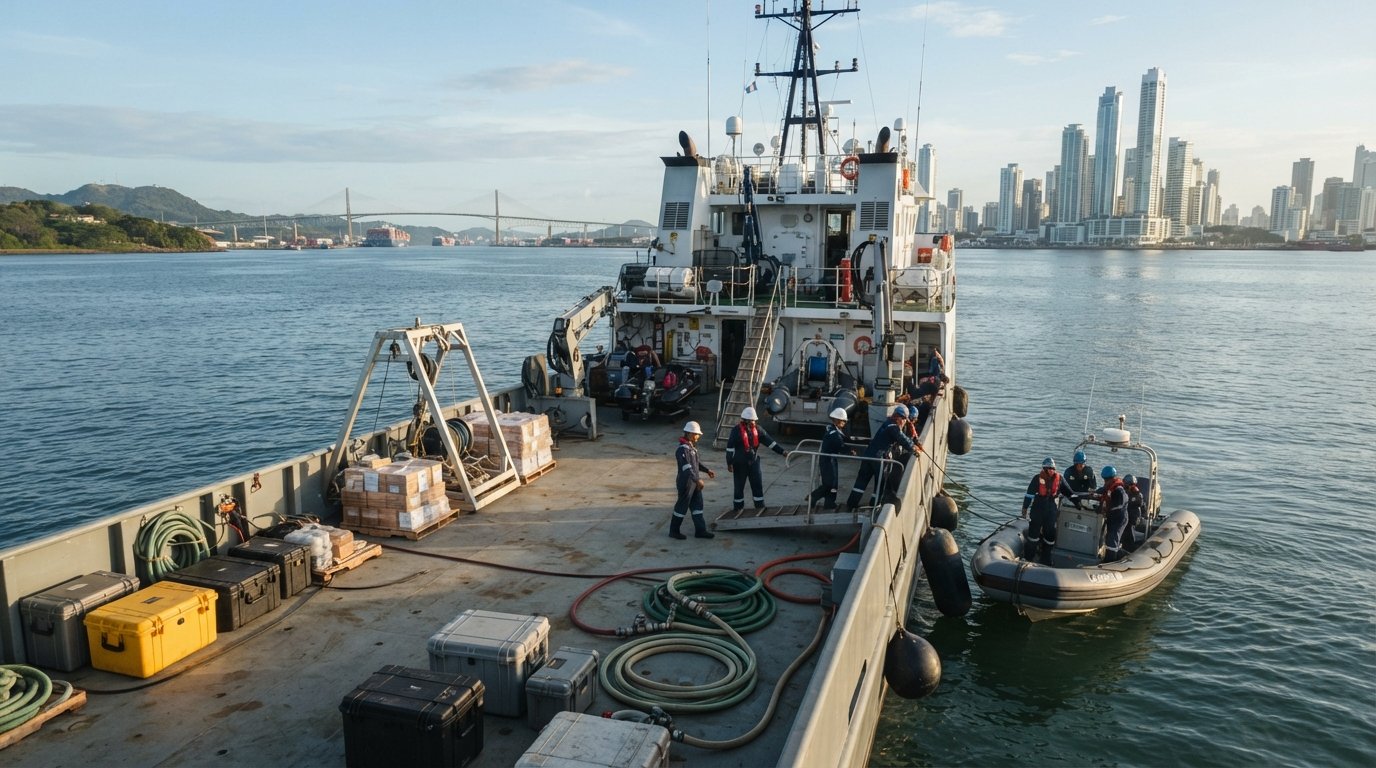
A successful crossing often requires more than just clearance. We manage the complex logistics of husbandry services to keep your operations running smoothly. Our team coordinates crew changes, delivers fresh provisions, and handles physical fund transfers for the captain with absolute security. If your vessel requires spare parts or technical repairs while at the locks, we facilitate the entire process to ensure no time is wasted. We’re your one-stop solution for maritime logistics in Panama. Contact Adimar Shipping for a custom transit quote today.
Mastering Your 2026 Transit Strategy
Successful transit in 2026 hinges on your ability to balance technical vessel readiness with digital administrative precision. You’ve seen how machine-validated VUMPA filings and strict dimension limits leave no room for error. By understanding the core panama canal ship agency requirements, you can transform a high-stress logistical challenge into a predictable, efficient operation. The key is early preparation and the right local expertise to manage your VUMS data and financial guarantees.
Delegate these complexities to a partner who acts as your vigilant on-the-ground representative. As a licensed Panama Canal Ships Agent, we provide the 24/7 local operational support and expert PCSOPEP compliance services you need to eliminate delays. We focus on the details so your crew can focus on the voyage. Our team ensures your documentation is flawless and your financial security is ironclad before you reach the anchorage.
Secure Your Seamless Panama Canal Transit with Adimar Shipping. Let’s work together to ensure your next crossing is defined by speed, transparency, and total regulatory security. Your vessel is in safe hands.
Frequently Asked Questions
Is a ship agent legally required for a Panama Canal transit?
Yes, Panamanian law mandates that every transiting vessel must have a licensed local representative to interact with the Panama Canal Authority (ACP). This agent assumes legal and financial responsibility for the vessel during its time in canal waters. Without an authorized agent, you cannot submit the required VUMPA documentation or clear the necessary security and health protocols for entry.
What is the most common reason for a vessel to be denied transit?
The most frequent cause for transit denial is incomplete or inaccurate data in the digital pre-arrival package. Since the 2026 digital shift, the ACP’s machine-validated systems automatically reject any submission with even minor discrepancies. Technical failures, such as malfunctioning steering gear or mooring equipment that doesn’t meet the specific tonnage requirements, are also primary reasons for immediate transit suspension.
How far in advance do I need to submit my ship’s documentation?
You must submit the complete VUMPA pre-arrival package at least 96 hours before your vessel arrives at the canal anchorage. This timeline allows the ACP to verify your technical specifications, security screening, and health declarations. Missing this window often triggers automatic system rejections and can result in significant late submission surcharges or the total loss of your reserved transit slot.
What is the difference between Panamax and Neopanamax requirements?
The primary difference involves the vessel’s physical dimensions and the specific lock systems they utilize. Panamax vessels are limited to a maximum beam of 32.31 meters for the original locks, while Neopanamax vessels can have a beam up to 51.25 meters for the expanded locks. Each category has distinct standards for mooring hardware, pilotage sightlines, and tugboat assistance that must be strictly followed for compliance.
What is PCSOPEP and does my vessel need an Authorized Person?
PCSOPEP is the Panama Canal Shipboard Oil Pollution Emergency Plan required for all vessels over 400 gross tons (GRT). You must designate a local Authorized Person (AP) who is based in Panama to serve as a 24/7 point of contact for spill response coordination. We provide these expert services to ensure your vessel meets every environmental mandate and avoids the heavy fines associated with plan expiration.
Can a ship agent help reduce my Panama Canal fees?
A ship agent helps you qualify for Environmental Premium programs that offer incentives for “Green” vessels with high efficiency ratings. While we don’t set the tolls, we ensure your tonnage certificates are accurate to prevent overcharging. Navigating the panama canal ship agency requirements with an expert also prevents the $15,000 fines that the ACP issues for non-compliance or inaccurate cargo declarations.
What digital systems are used for reporting to the Panama Canal Authority?
The ACP utilizes the Vessel Traffic Management System (VUMS) and the Electronic Data Collection System (EDCS) for all transit reporting. These platforms are now fully integrated into the VUMPA portal for 2026, requiring machine-validated submissions for every voyage. Our team manages these complex digital workflows to ensure your vessel’s data is verified and transmitted correctly to avoid administrative bottlenecks.
What happens if my vessel fails a technical inspection at the canal?
If your vessel fails a technical inspection, the ACP will issue a transit suspension or an administrative arrest until the deficiency is corrected. This usually requires the ship to move to an anchorage for repairs, leading to expensive delays and potential slot forfeiture costs. We act as your vigilant representative in these cases, coordinating with local technical services to resolve the issue and resume your transit schedule.