
A single hour of delay at a high-traffic transit hub like the Panama Canal can cost a vessel operator thousands of dollars in missed windows and cascading surcharges. You’re likely asking, what does a ship agent do to prevent these financial leaks in such a volatile environment? With July 2026 bringing new challenges like the end of U.S. de minimis exemptions and stricter IMO carbon intensity standards, managing logistical hurdles in foreign ports without expert local oversight is a recipe for expensive fines and operational gridlock.
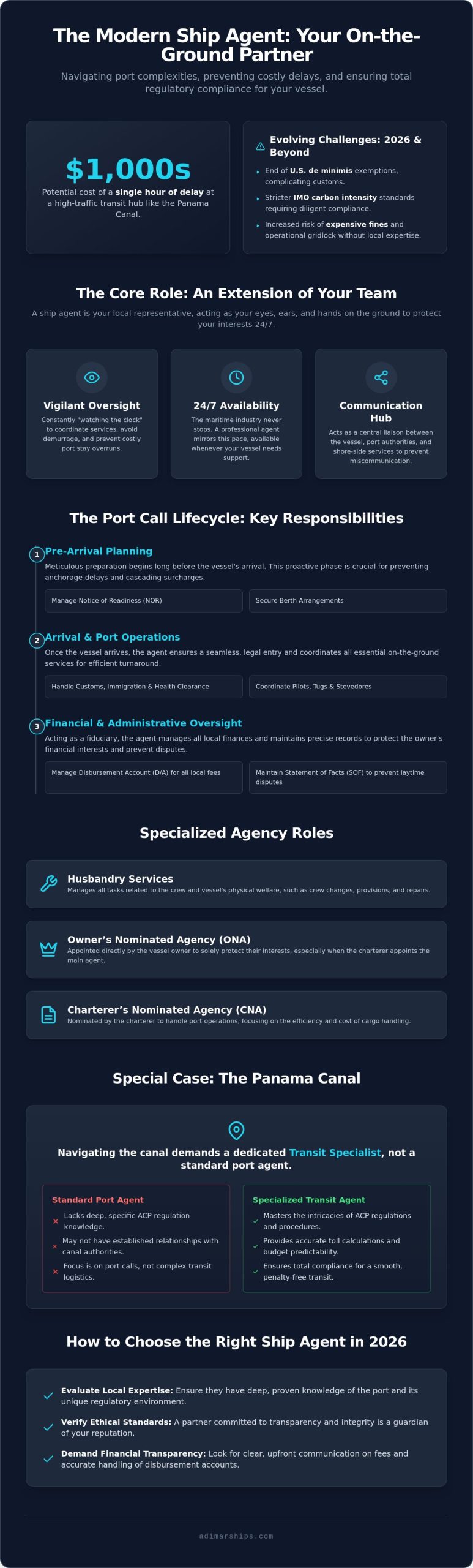
We understand the stress of navigating these shifting regulations and the high stakes of international coordination. This guide explores the vital role of the maritime agent as your vigilant, on-the-ground representative. We’ll break down how delegating tasks like husbandry services and PCSOPEP authorized person duties to a specialist simplifies your operations and provides peace of mind. You’ll discover how an agent’s deep local knowledge justifies their fee by securing your vessel’s interests and ensuring total regulatory compliance during every transit.
Key Takeaways
- Understand the core function of a local representative and exactly what does a ship agent do to serve as your vigilant “on-the-ground” partner in foreign ports.
- Learn how expert coordination of documentation and port clearance prevents the financial bleeding caused by administrative delays and regulatory non-compliance.
- Discover the strategic differences between Husbandry Services, Owner’s Nominated Agency (ONA), and Charterer’s Nominated Agency (CNA) to ensure your vessel’s specific needs are met.
- Gain insights into the specialized requirements of Panama Canal transits, where navigating ACP regulations demands a dedicated transit specialist rather than a standard port agent.
- Master the selection process for a dependable agency partner by evaluating local expertise, ethical standards, and financial transparency in a volatile 2026 market.
Understanding the Core Role: What is a Ship Agent?
A ship agent is the local representative of a ship owner or charterer in a foreign port or transit zone. When asking what does a ship agent do, it is best to view them as a specialized extension of your own team. They act as your eyes, ears, and hands on the ground, ensuring that your vessel’s interests are protected while it is far from your home office. This relationship is built on a “local office” metaphor; the agent provides the physical presence and regional expertise you cannot maintain in every port globally.
The maritime industry operates 24/7, and a professional agent mirrors this pace. Availability is the most critical trait for an agent because ships don’t wait for business hours. They manage the constant flow of information between the vessel, port authorities, and shore-side stakeholders. By acting as a central hub for communication, they ensure that every party is aligned, preventing the miscommunications that lead to expensive delays.
The Legal and Operational Foundation
A professional Shipping agency operates as a fiduciary. This means they have a legal and moral responsibility to protect your financial interests above all else. They serve as the primary liaison with local authorities, managing complex interactions with customs, immigration, and port health officials. The ship agent is a strategic local partner that eliminates operational confusion by streamlining communication between all parties. Without this operational foundation, a vessel remains vulnerable to local regulatory shifts and administrative bottlenecks.
The “Vigilance” Factor
In maritime logistics, time is quite literally money. Vigilance is the hallmark of a seasoned agent. They are constantly “watching the clock” to coordinate services efficiently, which is the most effective way to avoid demurrage and port stay overruns. This constant oversight provides a vital sense of security for crews and owners who are thousands of miles away. Knowing that a dependable expert is monitoring every movement on the pier allows owners to focus on their broader fleet strategy.
Ethical standards are the bedrock of this local representation. In many transit zones, navigating local customs requires a firm commitment to transparency and integrity. A high-quality agent ensures that all transactions and interactions meet international compliance standards. Deeply understanding what does a ship agent do involves recognizing this role as a guardian of your reputation. By delegating these complex tasks to a trusted partner, you gain the operational freedom to navigate the global market with confidence.
Key Responsibilities: From Documentation to Coordination
Effective port calls begin long before the vessel reaches the pilot station. When considering what does a ship agent do during the pre-arrival phase, the primary focus is on meticulous preparation. The agent manages the Notice of Readiness (NOR) and secures berth arrangements, which are the first steps to preventing costly anchorage delays. By coordinating with port authorities and terminal operators well in advance, they ensure that the vessel has a clear path to the pier as soon as it arrives. This proactive planning is the only way to avoid the cascading surcharges and peak season fees that are currently impacting global routes in 2026.
Once the vessel arrives, the agent navigates the mountain of paperwork required for a legal entry. They manage the complex requirements of customs, immigration, and port health officials to ensure immediate clearance. Beyond documentation, the agent coordinates essential port services, including ordering pilots, tugs, and stevedores. Securing these resources at the precise moment they are needed ensures seamless movement and prevents the vessel from idling at the pier. Our team provides professional ship agency services to ensure your operational interests are always prioritized during these critical windows.
Administrative and Financial Oversight
Financial management is a cornerstone of the agency role. The agent handles the Disbursement Account (D/A), acting as a trusted intermediary to pay local vendors, port dues, and canal fees on behalf of the owner. With the Panama Canal Authority (ACP) freezing its toll structure until September 30, 2026, accurate calculation of these expenses is vital for budget predictability. Agents also maintain the Statement of Facts (SOF), a chronological log of all port activities. This document is the primary evidence used to prevent laytime disputes, which can otherwise lead to expensive legal battles between owners and charterers.
Operational Logistics
In the high-stakes environment of a foreign port, real-time reporting is non-negotiable. A dedicated agent provides constant communication, keeping the owner informed of every development. They liaise directly with terminal operators to advocate for the best possible dispatch, ensuring cargo operations remain on schedule. When unexpected shifts occur, such as weather delays or sudden changes in port priority, the agent is the problem-solver on the ground. They quickly adjust schedules and re-coordinate services to minimize the impact on the vessel’s bottom line. Understanding what does a ship agent do in these moments reveals their true value; they are the vigilant protectors of your schedule and your capital.
Specialized Agency Roles: Husbandry, ONA, and CNA
The role of a maritime representative isn’t a one-size-fits-all service. When asking what does a ship agent do in a more nuanced context, it’s essential to look at whose interests they are protecting. While the basic administrative duties remain similar, the specific focus of the agency can shift dramatically depending on whether they are appointed by the ship owner or the charterer. These specialized roles ensure that every aspect of the vessel’s stay is handled by someone with the right priorities.
In many maritime contracts, the charterer has the right to appoint the agent. This creates a Charterer’s Nominated Agency (CNA), whose primary focus is the cargo and the commercial interests of the party renting the ship. However, the ship owner’s interests regarding the vessel’s safety and long-term maintenance often differ from the charterer’s immediate goals. This is why a ship owner needs their own representative through an owner’s nominated agency. An ONA acts as a dedicated guardian for the owner, ensuring that the ship isn’t neglected while the charterer focuses on loading speeds and cargo volumes.
Husbandry: Caring for the Vessel and Crew
A vessel is more than just a cargo carrier; it’s a floating home for its crew and a complex machine that requires constant maintenance. Professional husbandry services focus on these “human” and “mechanical” requirements. This includes managing crew changes, coordinating medical visits, and handling repatriation logistics for sailors finishing their contracts. Agents also manage the delivery of essential spare parts and coordinate “Cash to Master” (CTM) payments to ensure the captain has the funds needed for on-board expenses. By delegating these logistical burdens, owners ensure their crew remains healthy and the vessel stays operational.
The Protective Role
To further prevent conflicts of interest, owners often hire a Protective Agency (OPA). An OPA acts as a second set of eyes to oversee the operations of the agent appointed by the charterer. They verify that port dues are calculated fairly and that the vessel’s stay is handled with the utmost care. This protective role is a vital safety net in foreign ports where local relationships might favor one party over another. Understanding what does a ship agent do in these specific capacities highlights the importance of having a loyal partner on the ground who is committed to your specific financial and operational success. By providing local oversight, the OPA prevents the financial bleeding that occurs when a vessel’s needs are sidelined in favor of cargo speed.
The Panama Canal: A Case for Specialized Transit Agency
Standard port operations focus on the pier; Panama Canal transits focus on the clock. While you might wonder what does a ship agent do differently in this region, the reality is that a transit agent acts as a mandatory regulatory liaison whose involvement is required by law. Handling panama canal authority (ACP) regulations requires specialized knowledge that exceeds the scope of general port agency. With transit costs for a Panamax vessel often ranging between $250,000 and $400,000 in 2026, the financial risk of a scheduling error is immense. A professional agent acts as your vigilant protector, ensuring that every dollar spent on transit fees is optimized through perfect timing.
An experienced transit agent manages the intricate slot booking system and ensures the vessel meets all technical dimensions for safe lockage. They coordinate the specialized pilots and tugs required for the lock systems, preventing the confusion and delays that lead to heavy canal fines. Because the ACP has frozen its toll structure until September 30, 2026, agents must be even more vigilant in calculating fees accurately to protect the owner’s budget. This level of local oversight is the only way to navigate the complex scheduling windows that define canal operations.
Compliance and Environmental Protection
Safety in the canal zone is strictly enforced. Every vessel must have a designated pcsopep authorized person to manage oil pollution emergency planning. This role is a critical component of environmental compliance. It ensures that if an incident occurs, a local expert is ready to coordinate with authorities immediately. This preparation provides a necessary safety net for owners operating thousands of miles away. In 2026, environmental scrutiny has reached new heights. With updated IMO carbon intensity targets and stricter monitoring requirements now in effect, the agent’s role in verifying technical compliance is more vital than ever.
The agent manages the mountain of paperwork required for transit clearance, verifying that all technical requirements are met before the vessel reaches the canal entrance. In Panama, an agent is not just a helper but a mandatory regulatory liaison who ensures your vessel remains in good standing with the ACP. This expertise prevents the administrative bottlenecks that can stall a global supply chain. If you are planning a transit, contact us today for expert ship agency services that prioritize your vessel’s safety and schedule.
How to Choose the Right Ship Agent in 2026
Selecting the right maritime partner is a strategic decision that impacts your entire supply chain. In the volatile market of 2026, you need an agent who provides more than just administrative support. While asking what does a ship agent do, many owners mistakenly prioritize large global networks over local depth. However, in specialized zones like the Panama Canal, “boots on the ground” expertise is far more valuable than a wide global reach. A local specialist understands the nuances of the authorities better than any distant corporate office. Adimar Shipping, Inc. bridges this gap by combining personalized service with deep regional specialization, acting as your vigilant eyes on the ground.
Transparency and financial integrity are non-negotiable traits for a professional agency. You must evaluate an agent’s reporting standards and their management of the Disbursement Account. A dependable agent provides clear, verified invoices and prevents vendor overcharging through rigorous auditing. This is especially vital when managing high-volume expenses, such as bulk fuel and lubricant orders from resellers like Palisa Energy. In 2026, technological capabilities also define the best agencies. You should expect real-time digital updates and proactive communication to eliminate the stress of information blackouts. This level of transparency allows you to make informed decisions with total confidence in your local representative.
Selection Criteria for Ship Owners
Your choice of agency should be based on a proven track record of ethical conduct. A dependable partner acts as a fiduciary, protecting your capital as if it were their own. Consider these factors during your evaluation:
- Authority Relationships: Does the agent have a respected, long-standing standing with local port officials and canal authorities?
- Proactive Problem-Solving: Do they anticipate logistical bottlenecks and offer solutions before they cause delays?
- Regulatory Readiness: Are they fully prepared to manage the latest environmental requirements and PCSOPEP documentation?
Conclusion: Delegating for Success
Navigating international waters requires more than a capable crew; it requires a vigilant local representative. We have explored what does a ship agent do to safeguard your vessel, from managing complex documentation to coordinating essential husbandry services. Delegating these specialized tasks to a seasoned partner is the only way to ensure operational freedom and financial security in a changing industry. A dedicated panama canal ships agent is a vessel’s most valuable asset when crossing this critical waterway.
Adimar Shipping, Inc. provides the personalized service and deep specialization your fleet deserves. We act as an extension of your team, providing the vigilance and local oversight necessary to prevent expensive delays. Our commitment to ethical standards and transparency ensures your interests are always the priority. Contact Adimar Shipping, Inc. today for professional canal representation and the peace of mind that comes from a truly dependable partnership.
Secure Your Vessel’s Future in Global Transit
The maritime landscape of 2026 requires a partner who acts with absolute vigilance. We have detailed what does a ship agent do to protect your interests, from managing technical husbandry needs to serving as your primary liaison with port and canal authorities. Delegating these specialized tasks to a professional partner ensures operational freedom and prevents the financial bleeding caused by administrative delays or regulatory non-compliance in foreign zones.
Success in complex transit areas depends on deep local expertise and uncompromising ethical standards. As an authorized PCSOPEP representative with decades of experience, Adimar Shipping, Inc. provides the specialized oversight your vessel needs to navigate shifting regulations without friction. Our team serves as a dedicated extension of your home office, ensuring every port call is handled with transparency and speed. We prioritize your vessel’s safety and your budget above all else.
Ensure a seamless Panama Canal transit—Contact Adimar Shipping, Inc. today. We are ready to safeguard your vessel’s schedule and your bottom line. Navigate the challenges of tomorrow with a partner you can trust.
Frequently Asked Questions
Is a ship agent the same as a freight forwarder?
Why is a ship agent mandatory in many ports?
Most port authorities and canal zones require a local representative for legal and accountability reasons. Authorities need a physical entity on the ground that can be held responsible for the vessel’s compliance and financial obligations. Without a local agent, a ship cannot easily settle port dues or navigate the complex administrative requirements of customs and immigration in a foreign jurisdiction.
How much does a ship agent typically cost?
Agency fees vary based on the vessel type, the duration of the port stay, and the specific services requested. Factors like the complexity of the transit or the volume of husbandry tasks required will influence the final cost. Most professional agencies provide a detailed pro-forma disbursement account before the vessel arrives to ensure financial transparency and budget predictability for the ship owner.
What is the difference between a port agent and a transit agent?
A port agent focuses on cargo operations, such as loading and discharging at a specific terminal. A transit agent specializes in the continuous passage through a waterway, such as the Panama Canal. Transit agency requires deep knowledge of specific authority scheduling and technical requirements for lock systems, ensuring the vessel moves through the zone without stopping for cargo handling.
Can a ship captain perform the duties of a ship agent?
No, a captain cannot effectively perform these duties while managing the vessel. Most ports legally mandate a local representative who is registered with the authorities. Additionally, a captain lacks the local network and physical presence on shore needed to coordinate with vendors, pay port dues, and navigate the bureaucratic hurdles of a foreign administrative system in real time.
What happens if a ship agent makes a mistake in documentation?
Documentation errors can lead to immediate vessel arrests, heavy fines, or significant delays at the pier. If an agent fails to file accurate customs or immigration paperwork, the vessel may be denied entry or clearance. This is why choosing an agent with a proven track record of accuracy and deep regulatory knowledge is vital to protecting the owner’s financial interests and vessel reputation.
How do ship agents handle emergency situations at sea?
Ship agents act as the primary shore-side coordinator during emergencies. If a crew member requires urgent medical evacuation or the vessel suffers a mechanical failure, the agent arranges for tugs, ambulances, and specialized technicians. They manage the communication between the captain and local emergency services to ensure a swift response that minimizes risk to life and property.
What is a disbursement account in ship agency?
A disbursement account (D/A) is a comprehensive financial record of all expenses incurred by the vessel during its stay. It includes port dues, pilotage, tug fees, and any husbandry services provided. Understanding what does a ship agent do involves recognizing their role as a fiduciary who manages these funds, ensuring all local vendors are paid accurately and on time on behalf of the owner.