
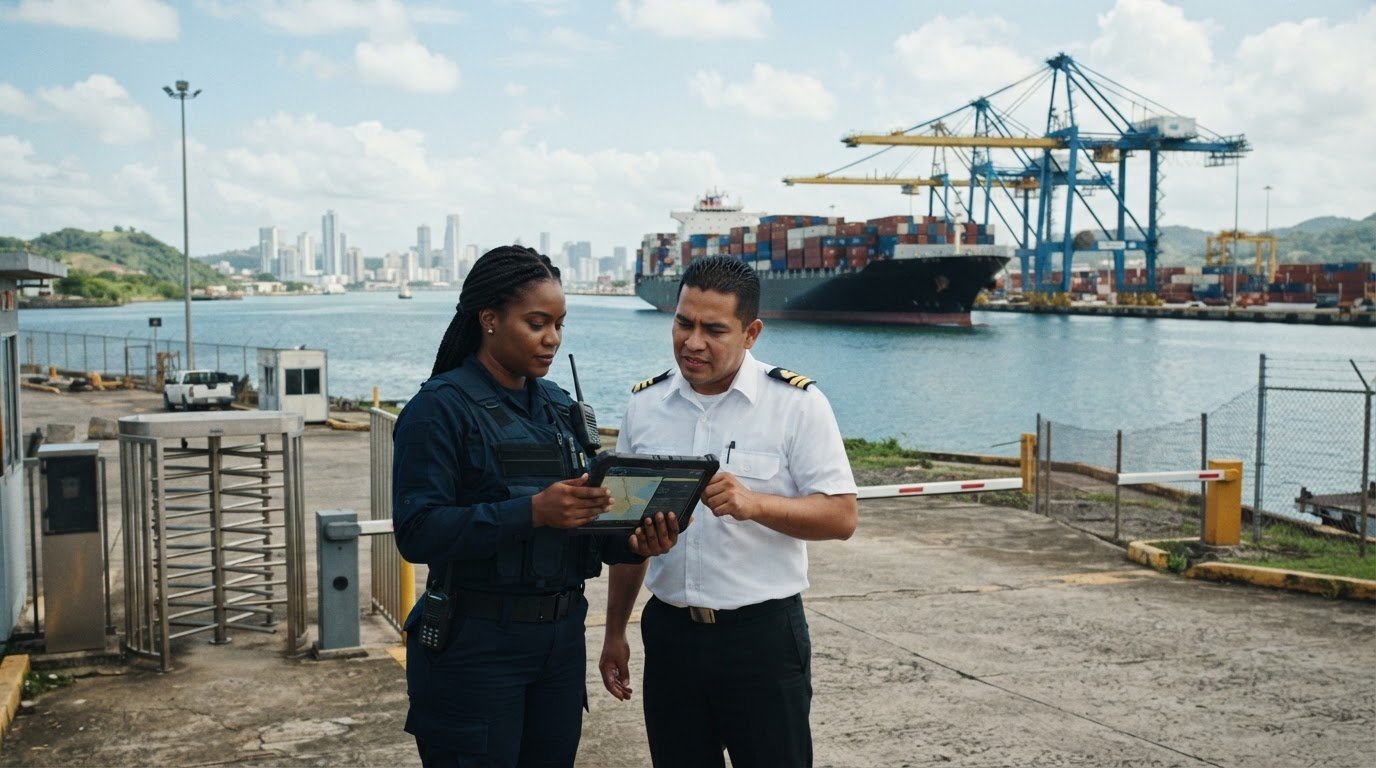
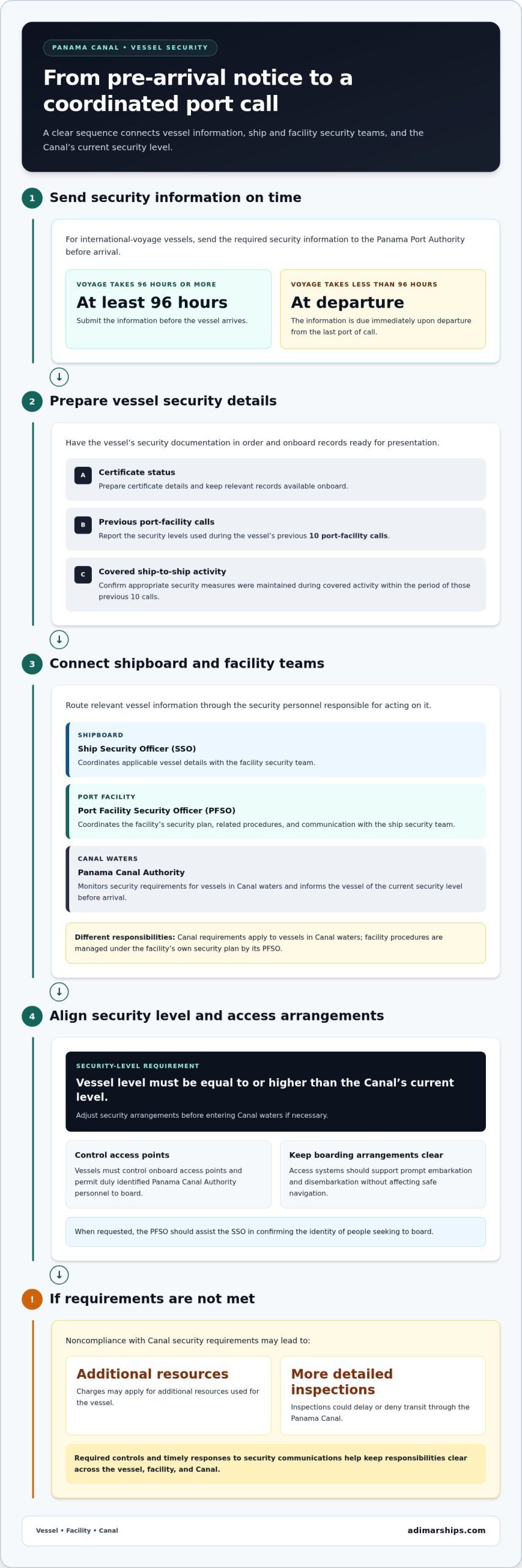
Security coordination begins before a vessel reaches Panama Canal waters. For international-voyage vessels, coordinating with Panama Port Authority security means sending the required security information at least 96 hours before arrival; if the voyage from the last port of call takes less than 96 hours, the information is due immediately upon departure. Vessels must also maintain a security level equal to or higher than the Canal’s current level.
That communication can feel like one more moving part in an already complex port call. Clear procedures connect the ship’s security team, port facility personnel, and the Panama Canal Authority, so everyone understands the relevant information, access controls, and security measures.
This article explains the main requirements for vessels approaching Canal waters, how security responsibilities are coordinated at the ship-port interface, and what the ISPS Code means for port facilities in Panama. It also covers how local ship agency support can help organize vessel communications and port-call operations.
Key Takeaways
- Prepare vessel security information and certificate details before arrival, and keep onboard records ready for presentation.
- Coordinate access control and security-level updates between the vessel, port facility, and Canal personnel to support safe operations.
- Understand how Panama’s maritime authorities and the ISPS Code shape security responsibilities at port facilities.
- Use local ship agency support to organize vessel communications and port-call coordination when operational requirements overlap.
Security communication and procedures
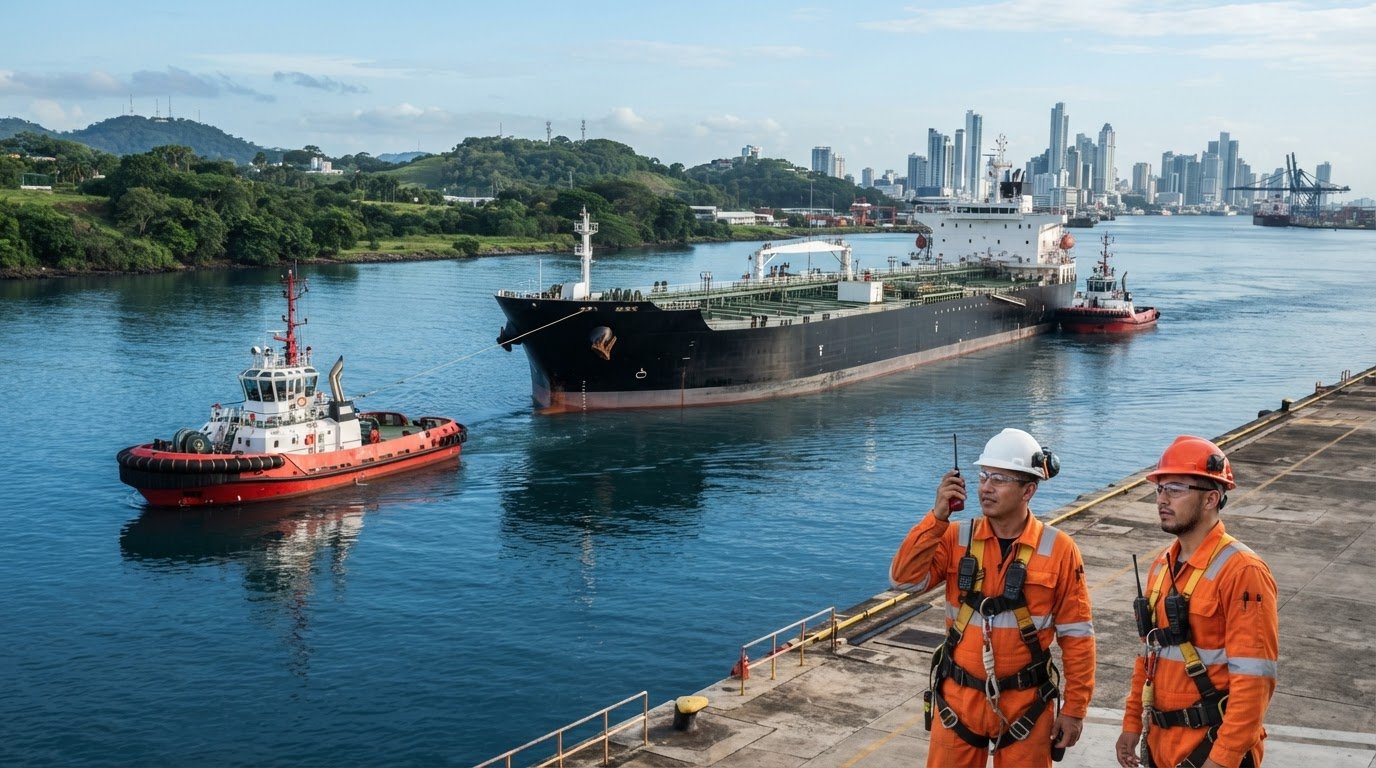
In Panama, maritime security coordination involves both Canal waters and individual port facilities. The Panama Canal Authority monitors security requirements in Canal waters, while a Port Facility Security Officer (PFSO) oversees security procedures at a facility. These roles connect vessel operations with port-side measures, but they are not interchangeable.
Vessels arriving in Canal waters must control onboard access points and allow duly identified Panama Canal Authority personnel to board. Their access-control systems must also support prompt embarkation and disembarkation without affecting safe navigation. Keep boarding arrangements clear for the ship’s security team and personnel boarding under Authority procedures.
How do Panama Canal security procedures differ from port authority requirements? Canal procedures apply to vessels in Canal waters, including those heading to anchorages or ports, transiting, or conducting commercial activities. Port facility procedures are managed under the facility’s security plan and the PFSO’s responsibilities.
What are the port access and visitor identification requirements in Panama? A vessel must control its access points and permit properly identified Canal Authority personnel to board. When requested, the PFSO should assist the Ship Security Officer in confirming the identity of people seeking to board.
Security coordination also involves documenting concerns. A PFSO should report and keep records of occurrences that threaten port facility security. The officer coordinates the Port Facility Security Plan and communicates with the Company Security Officer and Ship Security Officer, linking facility procedures with shipboard security arrangements.
What security fees or costs apply at ports in Panama? Noncompliance with Canal security requirements may lead to charges for additional resources used for the vessel. It may also result in more detailed inspections that could delay or deny transit. Maintain required controls and respond to security communications to help avoid these consequences.
Security coordination with ships and port facilities
Coordination connects shipboard security personnel with the port facility’s security team. Vessels heading to the Panama Canal should ensure their security documentation is in order. They must also report the security levels used during their previous ten port-facility calls. This information gives the Panama Canal Authority and facility personnel useful context about the vessel’s security arrangements.
Ship-to-ship activity also requires attention. Vessels must confirm that appropriate security measures were maintained during covered activity within the period of their previous ten port-facility calls. The Ship Security Officer and Company Security Officer can coordinate vessel information with the PFSO, who implements the facility’s security plan and coordinates with security services. A clear process for coordinating with Panama Port Authority security connects these communications to vessel operations.
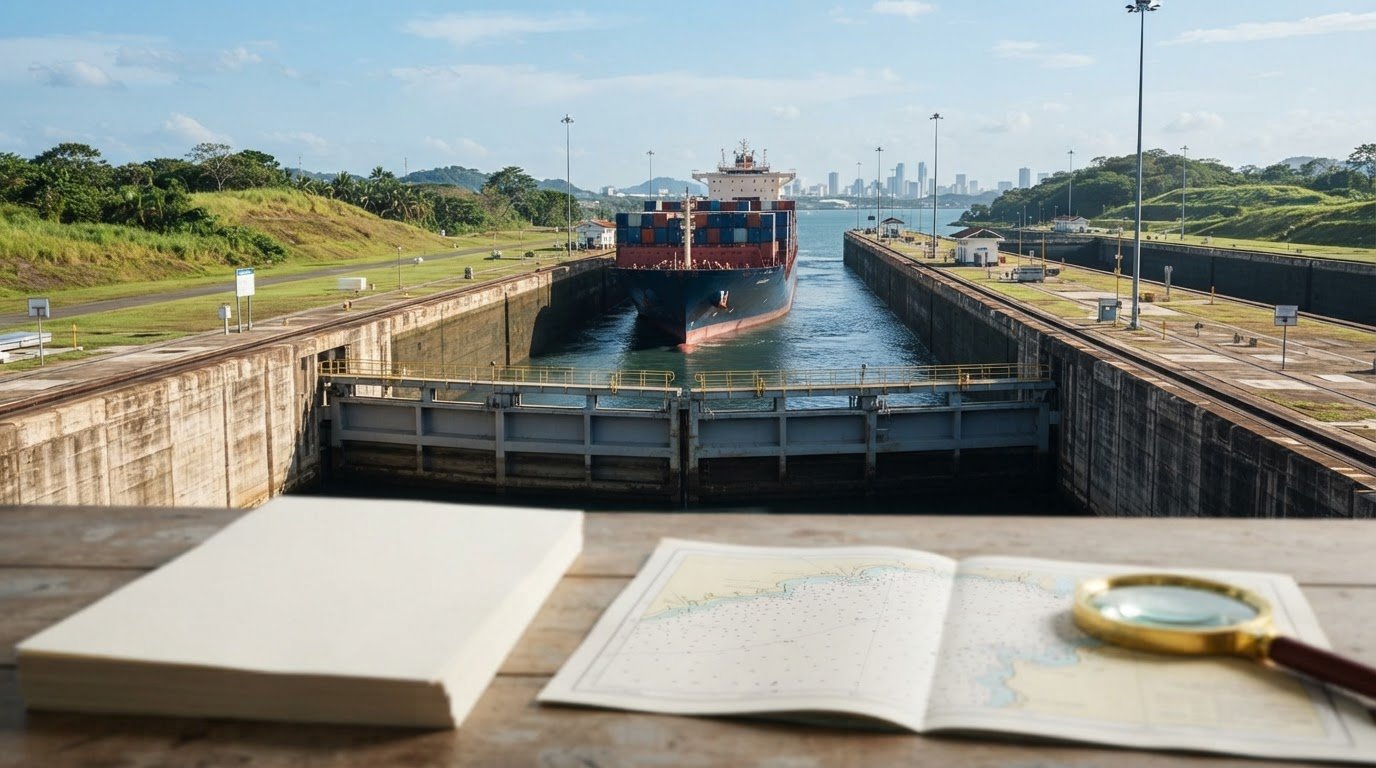
Before arrival, the Panama Canal Authority informs the vessel of the Canal’s current security level. A vessel in Canal waters must maintain a level equal to or higher than that level, adjusting its security arrangements before entering Canal waters if necessary. At the ship-port interface, the facility’s procedures and the shipboard plan guide security measures during the call. Coordinating with Panama Port Authority security also means routing updates to personnel responsible for acting on them.
A practical coordination sequence helps keep responsibilities clear:
- The vessel prepares its certificate status, previous-call security levels, and relevant ship-to-ship security information.
- The ship security team coordinates applicable details with the facility’s Port Facility Security Officer.
- The vessel and facility align their security procedures with the applicable plans and current security level.
Noncompliant vessels may incur charges for additional resources used and face more detailed inspections. These inspections could delay or deny transit through the Panama Canal.
For vessel calls involving local PCSOPEP coordination, a PCSOPEP Authorized Person in Panama can provide a local point of coordination.
Which authority is responsible for port security in Panama?
Responsibility depends on whether an operation involves Canal waters or a port facility. The Panama Canal Authority monitors security requirements for vessels arriving in Canal waters, and ACP Security Officers monitor those Authority requirements. At an individual facility, the Port Facility Security Officer (PFSO) coordinates the facility’s security plan and related procedures.
This distinction matters because a vessel can interact with both systems during one call. A ship bound for a Panamanian port may also enter Canal waters, transit the Canal, or conduct commercial activities there. The Panama Canal Authority’s requirements apply to vessels arriving in Canal waters, including those heading to anchorages or ports. Facility security procedures are set out in the facility’s own Port Facility Security Plan.
Panama’s national framework also includes international maritime obligations. The ISPS Code forms part of the international maritime-security framework for ships and port facilities. Panama’s port security operations must comply with national and international maritime and port rules.
For a vessel call, identify the responsible security contact at each operational layer:
- Canal waters: Coordinate vessel security communications with the Panama Canal Authority.
- Port facility: Direct facility-plan coordination to the facility’s PFSO.
- Shipboard arrangements: Keep the Ship Security Officer involved in communications with the PFSO and Company Security Officer.
- Security occurrences: The PFSO reports threats to facility security to relevant authorities and maintains records.
The Panama Canal Authority voluntarily sought ISPS certification, but this does not make it solely responsible for every facility’s procedures. Operationally, Canal requirements concern vessels in Canal waters, while each port facility organizes its own security plan through its designated officer. Identify the relevant contacts before arrival to direct ship and facility communications to the right people.
What are the ISPS Code requirements for ports in Panama?
The International Ship and Port Facility Security (ISPS) Code sets maritime security requirements for ships and port facilities. It is part of the Safety of Life at Sea Convention (SOLAS), and Panama is a signatory. The Code was adopted in December 2002 at an International Maritime Organization conference. Its requirements became mandatory for ships and port facilities on July 1, 2004.
A key requirement for a port facility is maintaining a Port Facility Security Plan. The plan must be implemented when the facility faces a security threat. The Port Facility Security Officer (PFSO) should ensure the plan is developed and maintained, then coordinate its implementation with relevant security personnel. This connects documented procedures with the facility’s response to a threat.
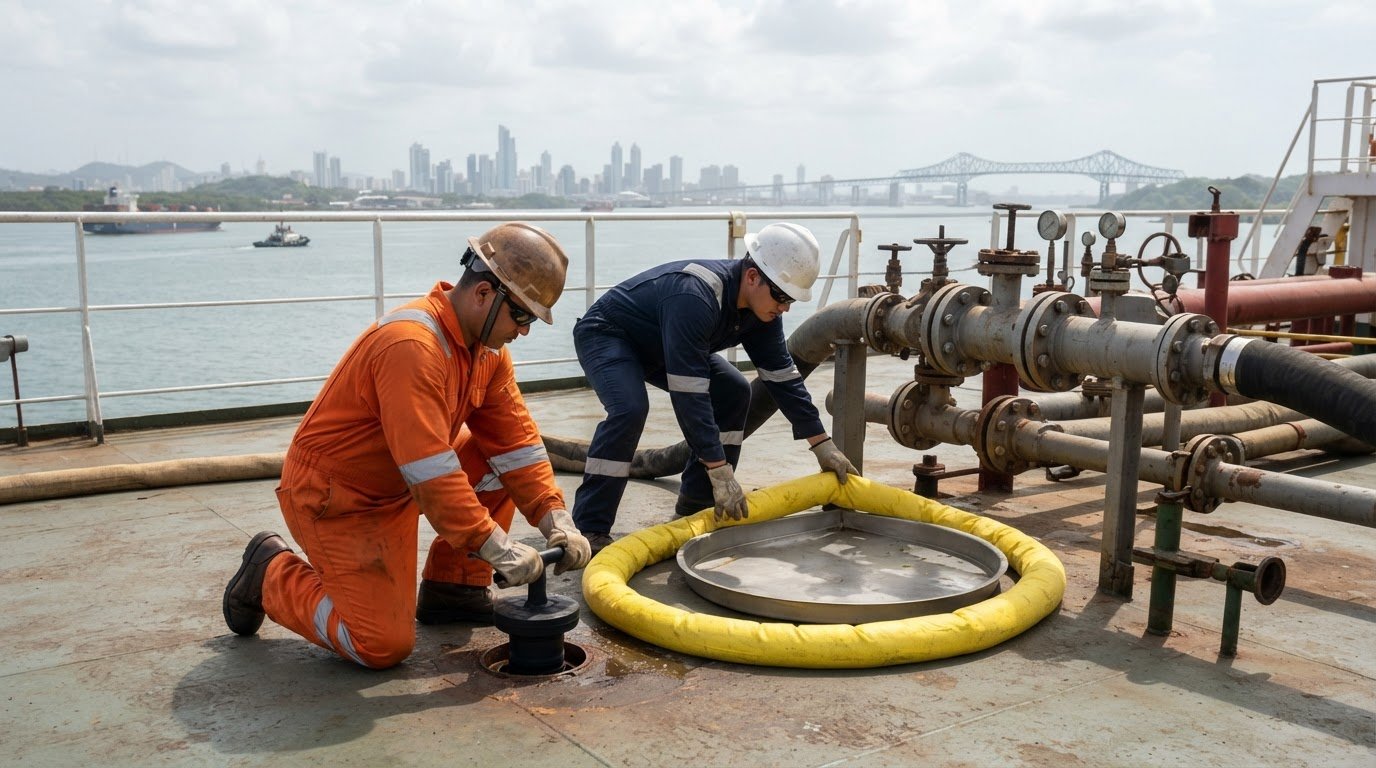
In practice, a PFSO’s responsibilities include reviewing facility protection and maintaining the systems that support security measures. A comprehensive initial inspection should consider relevant security assessment factors. Protective equipment must be properly operated, tested, calibrated, and maintained. These steps help identify operational gaps and keep equipment ready for its intended security role.
The ISPS Code also describes PFSO duties and responsibilities in section A / 17.2. Port facility teams can use that framework to clarify who maintains the plan, coordinates security activity, and communicates with shipboard security officers. The practical review can focus on:
- Plan readiness: Confirm that facility procedures address the security threat and can be implemented.
- Equipment condition: Include testing, calibration, operation, and maintenance in security oversight.
- Ship-facility coordination: Align facility procedures with communications involving the Ship Security Officer.
These requirements make security a coordinated responsibility, not simply a document kept on file. For help organizing vessel-call coordination alongside Panama’s port security procedures, discuss local vessel coordination.
Adimar Shipping: Ship Agency Services
Adimar Shipping, Inc. helps ship owners and charterers coordinate vessel calls through Panama with Ship Agency Services. When security communications, port arrangements, and vessel requirements overlap, local agency support helps organize operational details between the vessel and relevant parties.
Ship owners can appoint Adimar Shipping, Inc. through Owner’s Nominated Agency, and charterers can use Charterer’s Nominated Agency. Husbandry Services support vessel needs during a call, providing a local coordination point alongside the ship’s security responsibilities and the facility’s procedures.
For local agency support with a vessel transiting the Panama Canal or calling at port, contact Adimar Shipping, Inc. to discuss your vessel’s requirements.
Make the Next Port Call Easier to Coordinate
Effective security coordination starts with clear responsibilities before a vessel call. Set up a practical handoff between the vessel’s team and local contacts: identify who manages each communication, keep relevant records accessible, and ensure operational updates reach the people responsible for acting on them. This approach to coordinating with Panama Port Authority security turns requirements into organized steps without confusing agency support with the vessel’s own security duties.
For ship owners and charterers, local agency support brings vessel-call arrangements into a coordinated process. Adimar Shipping, Inc. provides Ship Agency Services, including Owner’s Nominated Agency and Charterer’s Nominated Agency, to support Panama vessel operations.
Take the next step by sharing your vessel’s agency requirements with the team. Contact Adimar Shipping, Inc. to discuss support for an upcoming call, and move forward with a clearer coordination plan.
Frequently Asked Questions
What security rules apply to vessels entering Panama ports?
Vessels arriving in Panama Canal waters must follow applicable Canal security measures, including those bound for anchorages or ports. International-voyage ships need a valid International Ship Security Certificate and security-level records for their previous ten port-facility calls. Yachts and small craft have a separate reporting detail: they provide required information through Flamenco or Cristobal Signal Stations when at least 12 nautical miles from the sea buoys at either end of the Canal.
How do ships submit security declarations and pre-arrival notices in Panama?
International-voyage vessels heading to the Panama Canal provide required security information to the Panama Canal Authority at least 96 hours before arrival. If the voyage from the last port takes less than 96 hours, submit the information immediately upon departure. Prepare certificate status and security details for the previous ten port-facility calls. Use the vessel’s actual departure time to manage the shorter notice window.
How do I coordinate security for cargo, crews, and contractors at Panama ports?
Coordinate each group’s access with the port facility’s security procedures and keep the PFSO informed about relevant movements. For example, organize crew and contractor arrival details so the ship’s security team can identify people seeking to board. If requested, the PFSO can assist the Ship Security Officer in confirming identities. Align cargo activity with the facility’s established security arrangements.
What are the procedures for reporting a security incident at a Panama port?
Notify the PFSO about any occurrence that threatens port facility security. The PFSO should report such occurrences to relevant authorities and keep records. For a clear account, share the location, time, people or areas involved, and actions already taken. Preserve related records and pass factual updates through the facility’s security communication chain as the situation develops.