
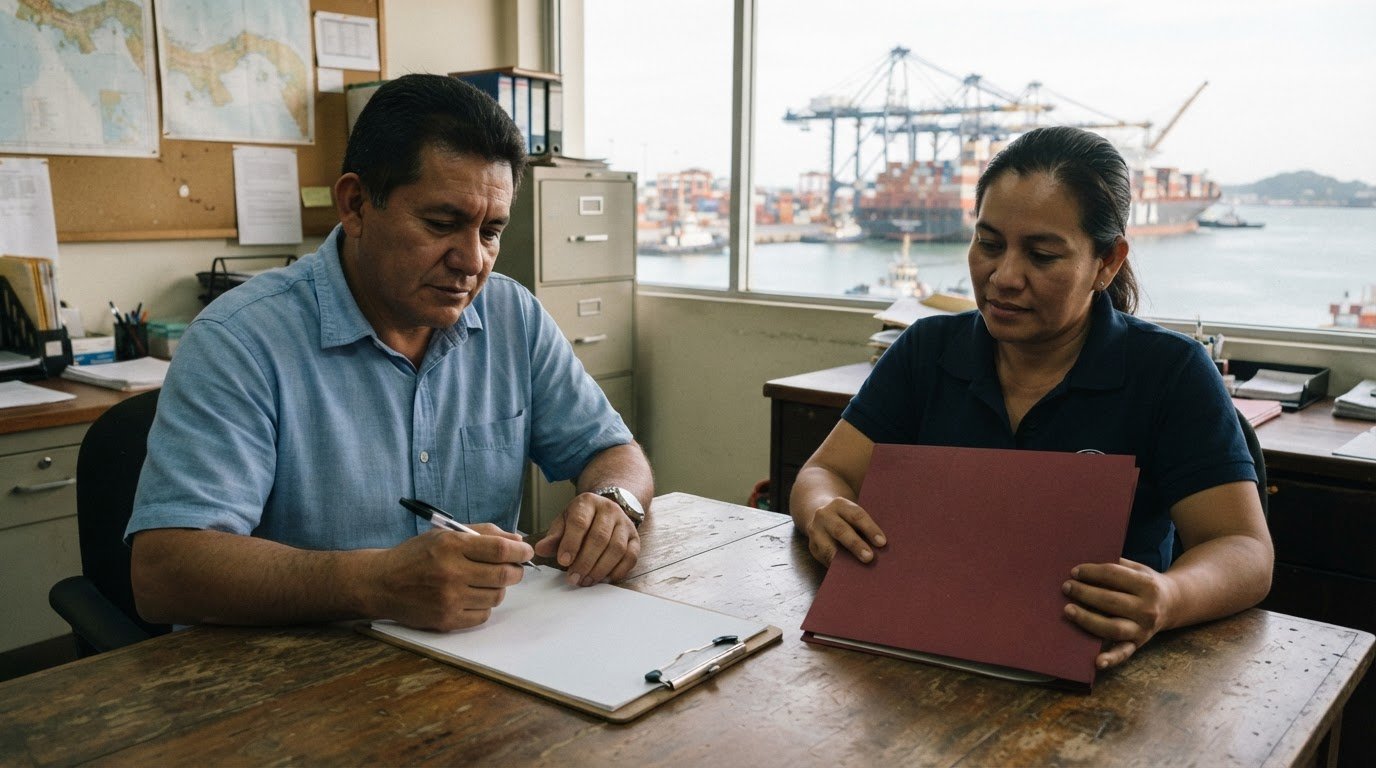
A signed appointment does not, by itself, complete a handover. For an owner’s representative in Panama, whether a signature is needed depends on the document and the authority it grants. If a company changes its resident agent, beneficial-ownership information does not transfer automatically: the incoming agent requests current details and supporting due diligence, then updates the registry record. Outstanding professional fees with the current agent should generally be resolved before the change is completed.
It’s easy to treat the signature as the final step, especially when timing matters. But authority to act and the transfer of records are separate parts of the process, and pending obligations can affect when the handover is ready to proceed.
This article explains how to approach notarization, what happens to beneficial-ownership information when a resident agent changes, and why outstanding obligations can affect timing. You’ll see the key distinctions to help prepare the authorization and handover with fewer surprises.
Key Takeaways
- Whether an owner’s signature needs notarization depends on the document and the authority it grants, so distinguish the authorization from the handover itself.
- A change of resident agent does not automatically transfer beneficial-ownership information; the incoming agent requests the current details and supporting due diligence.
- Resolve outstanding professional fees with the current agent as part of planning the transfer, since pending obligations can affect handover timing.
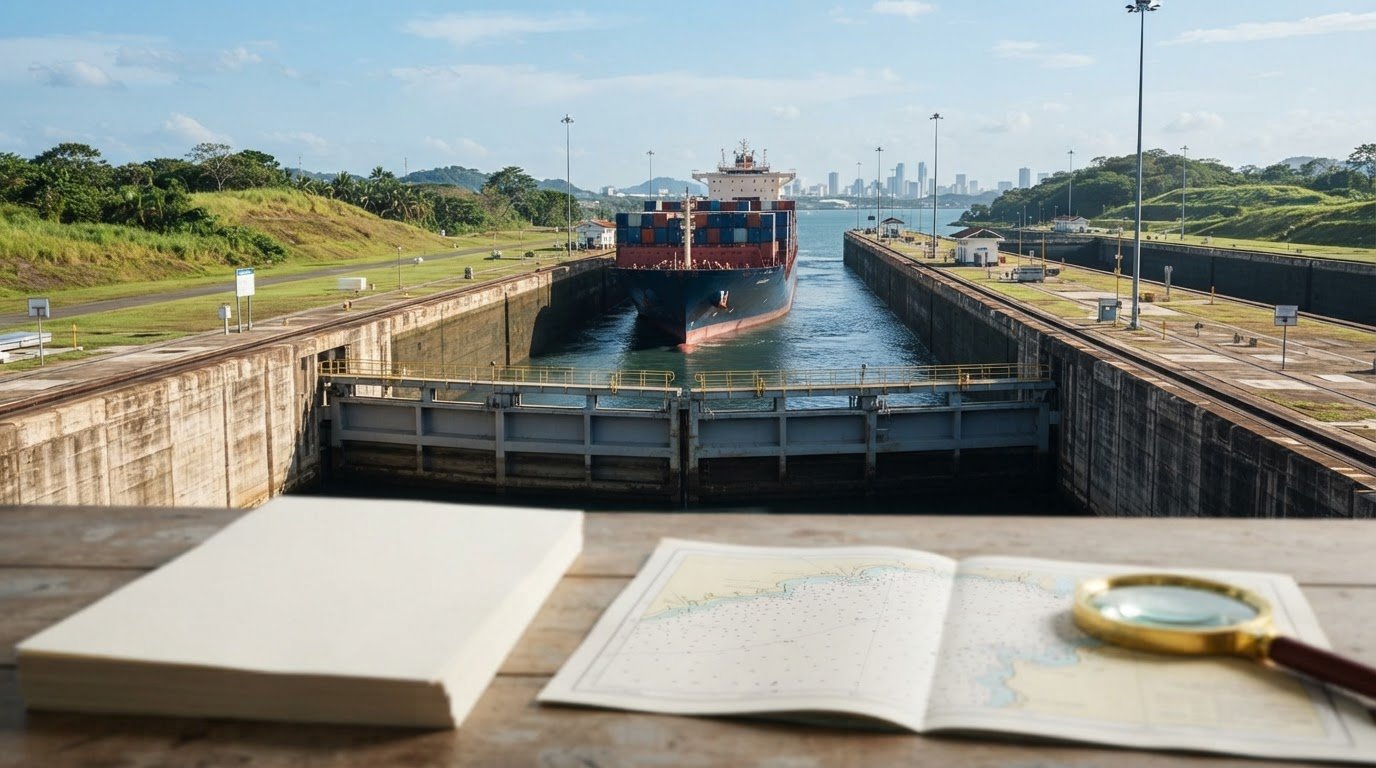
- For vessel-related coordination in Panama, understand how an owner’s nominated agency can support communication and ship agency needs during a Canal transit.
How are owner’s representative fees structured in Panama?
In Panama, an owner’s representative’s fee depends on the authority and work assigned, not simply the title. A representative coordinating a vessel call has a different scope from a professional resident agent handling a company’s corporate records. Define the engagement first: identify the entity or vessel, the decisions delegated, and the expected deliverables. A written scope helps distinguish representation from legal, registry, and operational tasks.
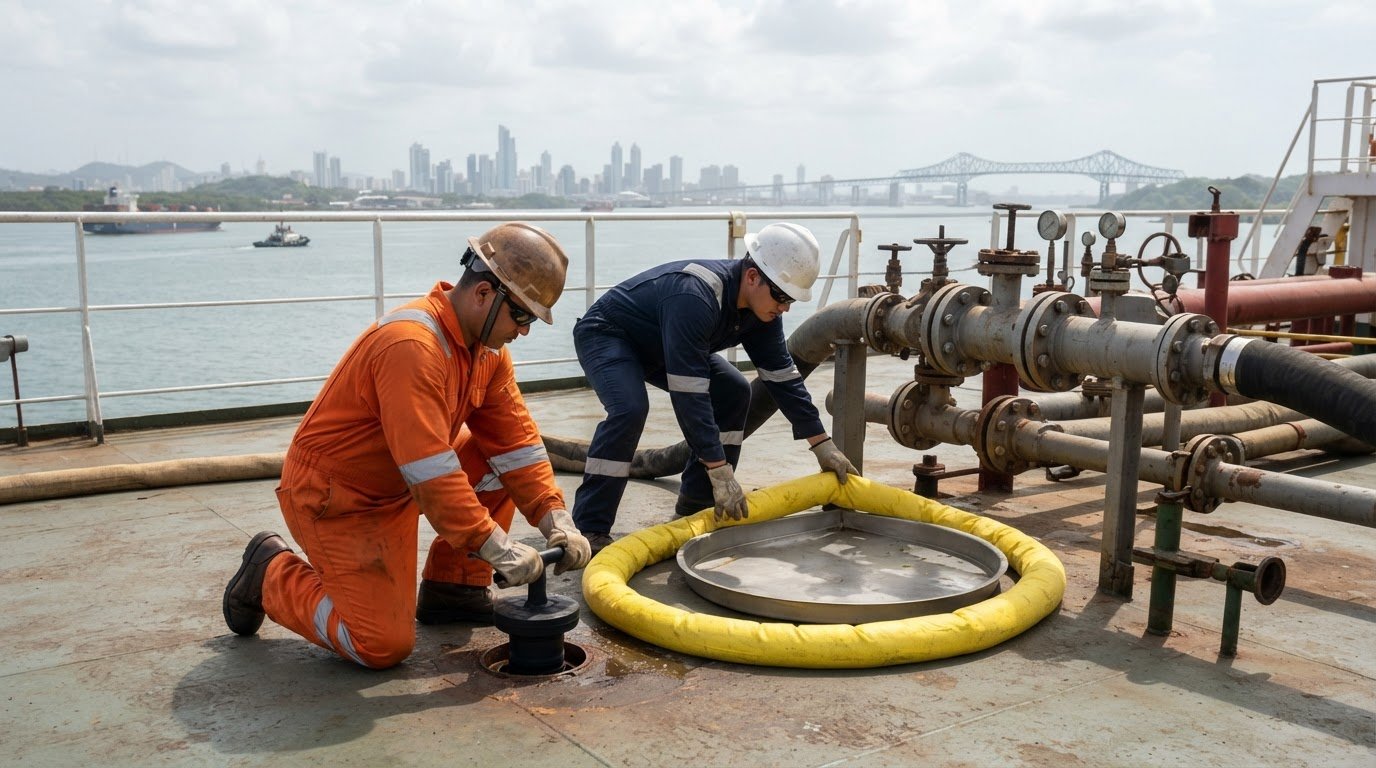
For a vessel call, the main cost drivers are the services requested and the coordination involved. A defined assignment might cover communication with local parties and oversight of agreed call arrangements. Additional requests, such as crew support or coordination across several moving parts, change the work involved. Specify which tasks are included, who approves extra work, and how expenses are documented. This lets the owner compare proposals by scope, not just headline fee.
Corporate representation has a different cost structure. Under Law 129 of 2020, beneficial-owner information is maintained through a registry process involving a resident agent. That agent receives and verifies supporting information supplied by the client and completes the required submission. This administrative role is separate from corporate decision-making. When a representative change is planned, account for information gathering and handover work, as well as any outstanding professional fees with the current agent.
The fee depends on the assignment and is provided in a quote; key factors include scope, duration, coordination needs, documentation, and any additional services requested. Ask the proposal to distinguish professional fees from reimbursable expenses and explain how additional tasks are approved and recorded. A single, clearly defined vessel call, for example, differs from ongoing support as operational requirements change.
Before accepting terms, match the fee basis to the work: a fixed assignment suits a defined deliverable, while ongoing representation needs a clear description of included tasks and expense approval. Appoint an owner’s representative in Panama under written authority that sets out the role’s limits. Clear boundaries help prevent duplicated work and make the eventual handover easier to manage.
How do you find and vet an owner’s representative in Panama?
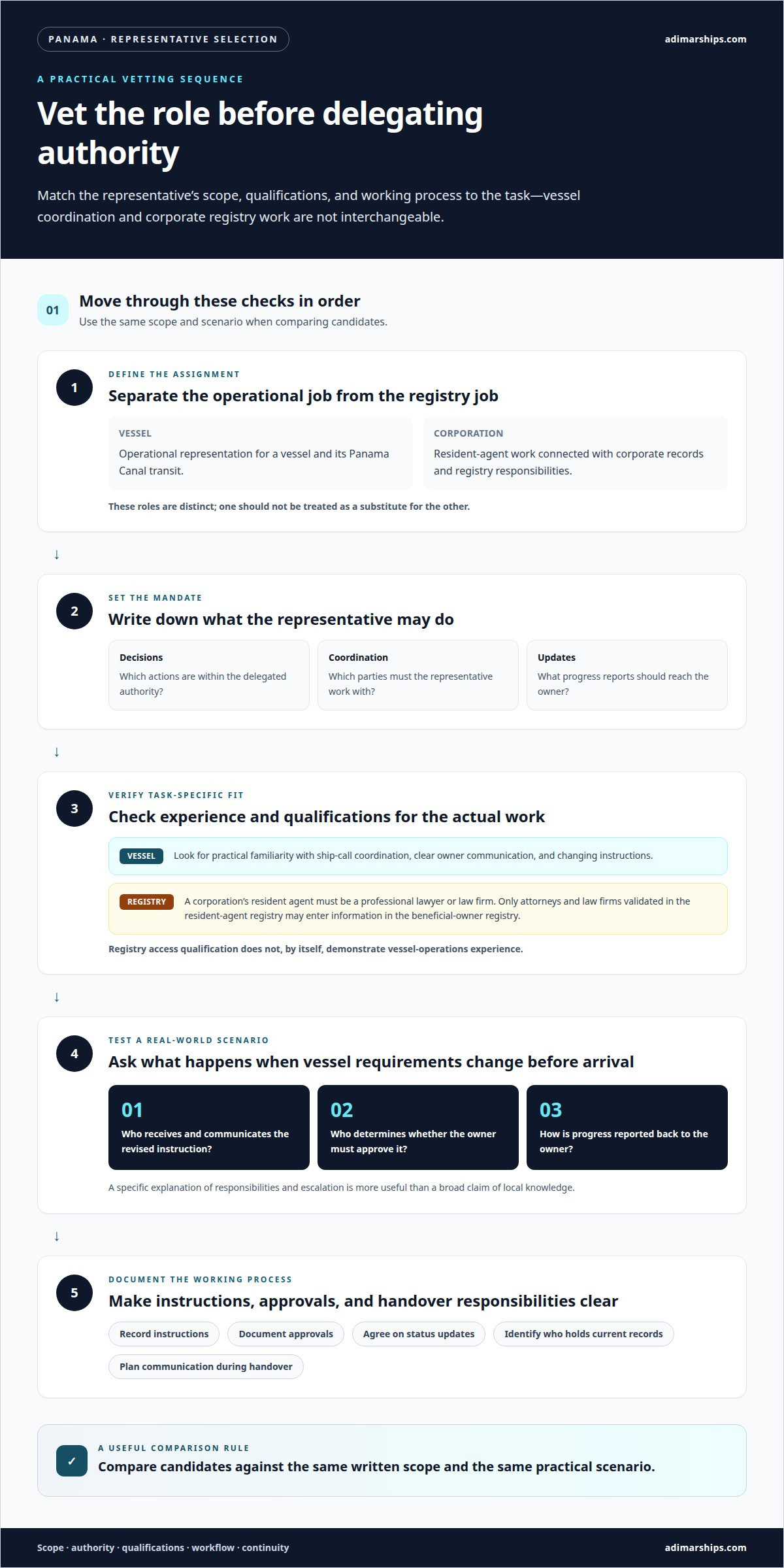
Start by defining the work. A vessel owner coordinating a Panama Canal transit needs operational representation, while a corporation changing its resident agent faces a separate registry handover. These roles are not interchangeable. Write down the decisions the representative may make, the parties they must coordinate with, and the updates you expect. A clear scope gives you a practical basis for comparing candidates.
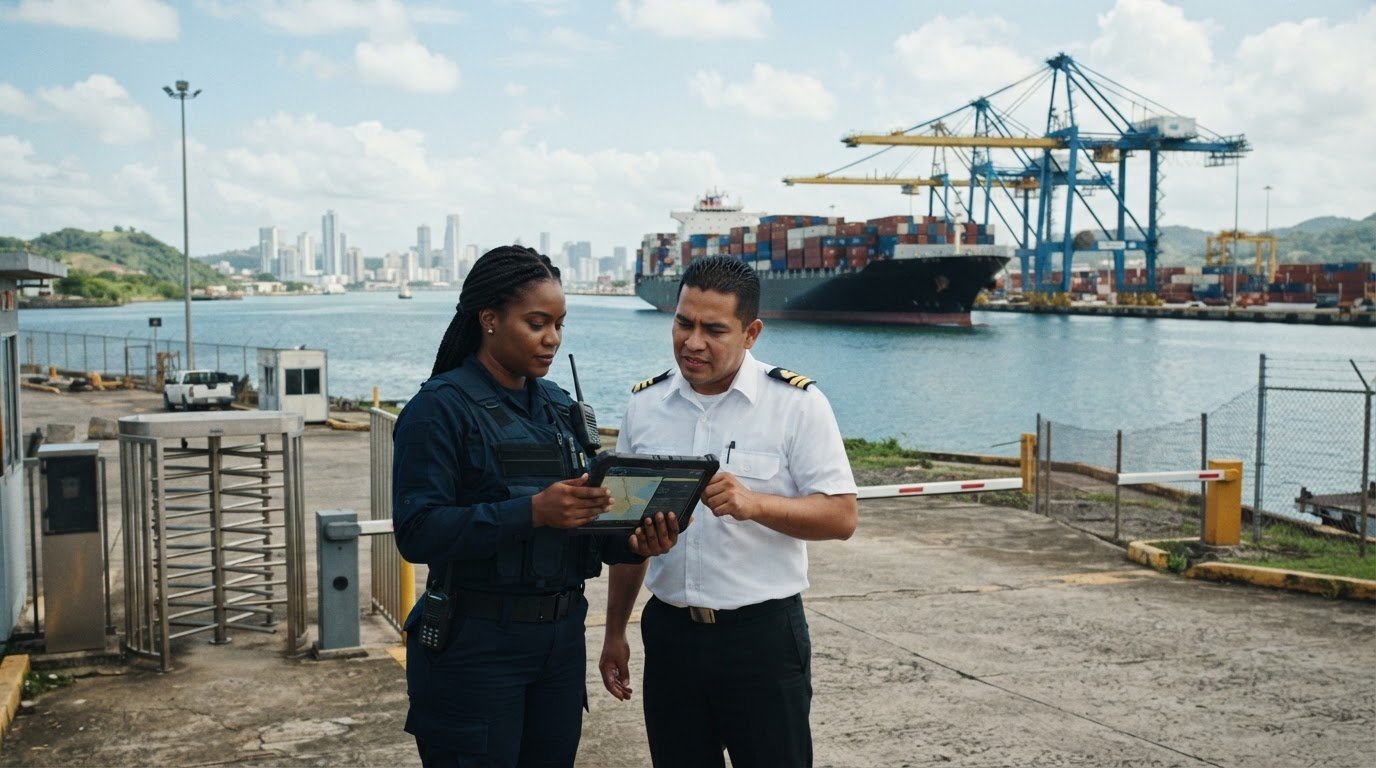
Then assess local fit. Ask how the representative handles vessel-call communications, changing schedules, and coordination among the owner, charterer, and local service contacts. Use a concrete scenario: if a vessel’s requirements change before arrival, who receives and communicates the update, and who reports progress to the owner? Look for a clear explanation of responsibilities, escalation, and recordkeeping, not broad claims of expertise.
For corporate registry work, confirm that the role matches the task. In Panama, a corporation’s resident agent must be a professional lawyer or law firm. Only attorneys and law firms validated in the resident-agent registry may enter information in the beneficial-owner registry. That qualification applies to registry access; it does not, by itself, demonstrate experience coordinating vessel operations.
- Confirm the mandate: Match written authority to the actions the representative may take.
- Review the workflow: Identify how instructions, approvals, and status updates will be documented.
- Separate functions: Distinguish vessel coordination from corporate registry responsibilities.
- Plan continuity: Establish who holds current records and communicates during a handover.
Compare candidates against the same scenario and scope. A representative who explains how they would handle a transit update gives you more useful evidence than a general promise of local knowledge. For owners arranging vessel representation in Panama, local vessel agency coordination is a relevant option to consider when the need is operational rather than corporate.
What experience and qualifications should an owner’s representative have in Panama?
Choose experience that matches the authority you plan to delegate. For a vessel transiting the Panama Canal, look for practical familiarity with ship-call coordination, clear communication with the owner, and the sequence of operational decisions. A representative handling a vessel’s arrival and changing instructions needs to organize updates without confusing the owner’s authority with the representative’s delegated role.
Corporate registry work has a different qualification threshold. In Panama, a corporation’s resident agent must be a professional lawyer or law firm. Registry duties and vessel operations are distinct, so one qualification does not automatically demonstrate experience in the other. Match the representative’s professional capacity to the specific legal or operational task, rather than relying on a broad title.
Evaluate experience with a concrete scenario. Ask, for example, how the representative would relay a revised vessel instruction, determine who must approve it, and keep the owner informed. A clear explanation should outline the communication chain and distinguish facts, pending decisions, and actions already taken, giving the owner a reliable view of the operation.
- Local operational understanding: Ask how Panama Canal transit coordination fits into the representative’s work.
- Defined authority: Compare the proposed responsibilities with the owner’s written instructions.
- Communication discipline: Look for concise updates that identify decisions and responsible parties.
- Relevant professional standing: Match legal qualifications to registry work, and operational experience to vessel coordination.
For a corporate handover, assess whether the incoming representative can accurately manage ownership information and supporting records. For a vessel assignment, focus on communication, coordination, and keeping instructions traceable. These are different forms of readiness. An owner’s representative in Panama should explain which decisions remain with the owner and how delegated tasks will be reported. Use that distinction to assess fit before granting authority.
What permits and regulations must an owner’s representative handle in Panama
An owner’s representative in Panama handles only the responsibilities assigned in the appointment. For a vessel call, the owner may delegate local coordination and document handling, but the appointment alone does not define every permit or regulatory duty. Specify which documents the representative prepares, submits, or tracks, and which decisions remain with the owner. Corporate beneficial-ownership registry duties are a separate process with distinct responsibilities.
Under Law 129 of 2020, a resident agent registers a new entity and its beneficial owner or owners within 15 business days of incorporation or registration. After a beneficial-owner change, the person must notify the resident agent within 15 business days. The agent then has 5 business days after notification to update the registry. Law 254 modified Law 129 on November 11, 2021. These deadlines concern registry administration, not vessel permits.
Keep the roles distinct. A Panamanian corporation’s resident agent must be a professional lawyer or law firm. The agent receives and verifies supporting information supplied by the client and completes the required registry submission. A vessel representative’s operational mandate does not replace that corporate role. For example, a vessel-call appointment should describe local coordination, while a corporate registry filing belongs within the resident agent’s responsibilities.
- Define the mandate: Record which documents and communications the representative handles.
- Separate obligations: Distinguish vessel-call coordination from corporate registry filings.
- Track changes: For beneficial-owner updates, note the notification and registry deadlines.
- Keep records: Retain instructions, submitted information, and status updates together.
For an owner’s representative in Panama, a written scope can identify delegated tasks and reporting lines. For vessel-related coordination, discuss Panama vessel-call coordination as part of planning the owner’s local representation.
For an addressing request, the City of Panama City Development Services Department may take up to 30 days to review it, so allow time in planning.
Adimar Shipping: Ship Agency Services
Adimar Shipping, Inc. provides ship agency support for owners and charterers coordinating vessel transits through the Panama Canal. If you need local representation to manage communications and coordinate a vessel call, Adimar’s Owner’s Nominated Agency aligns local coordination with the owner’s instructions. Charterers can use the Charterer’s Nominated Agency for representation aligned with their role. Husbandry Services support vessel needs connected with a call.
The right scope depends on who appoints the agent and what coordination the vessel requires. Clear instructions help organize responsibilities, approvals, and operational updates between the owner or charterer and local contacts. This is a practical next step when your immediate need is vessel representation rather than corporate registry work.
Contact Adimar Shipping, Inc. or visit adimarships.com to discuss your vessel’s agency needs.
Prepare the Handover for Confident Decisions
Before appointing an owner’s representative in Panama, align the people, instructions, and records involved in the transition. A concise handover brief can identify who may act, which decisions stay with the owner, where operational updates should go, and what information the incoming representative needs. This gives everyone a shared reference point when schedules or instructions change.
For vessel-related coordination, Adimar Shipping, Inc. provides Ship Agency Services, Owner’s Nominated Agency, and Charterer’s Nominated Agency. These services meet the need for local representation during a vessel call. A clear appointment helps distinguish the delegated role from decisions reserved for the principal.
Move forward with a defined scope and a practical communication plan. Contact Adimar Shipping, Inc. for guidance on vessel agency needs in Panama. With responsibilities clearly understood, you can approach the next handover with greater confidence.
Frequently Asked Questions
What does an owner’s representative do in Panama?
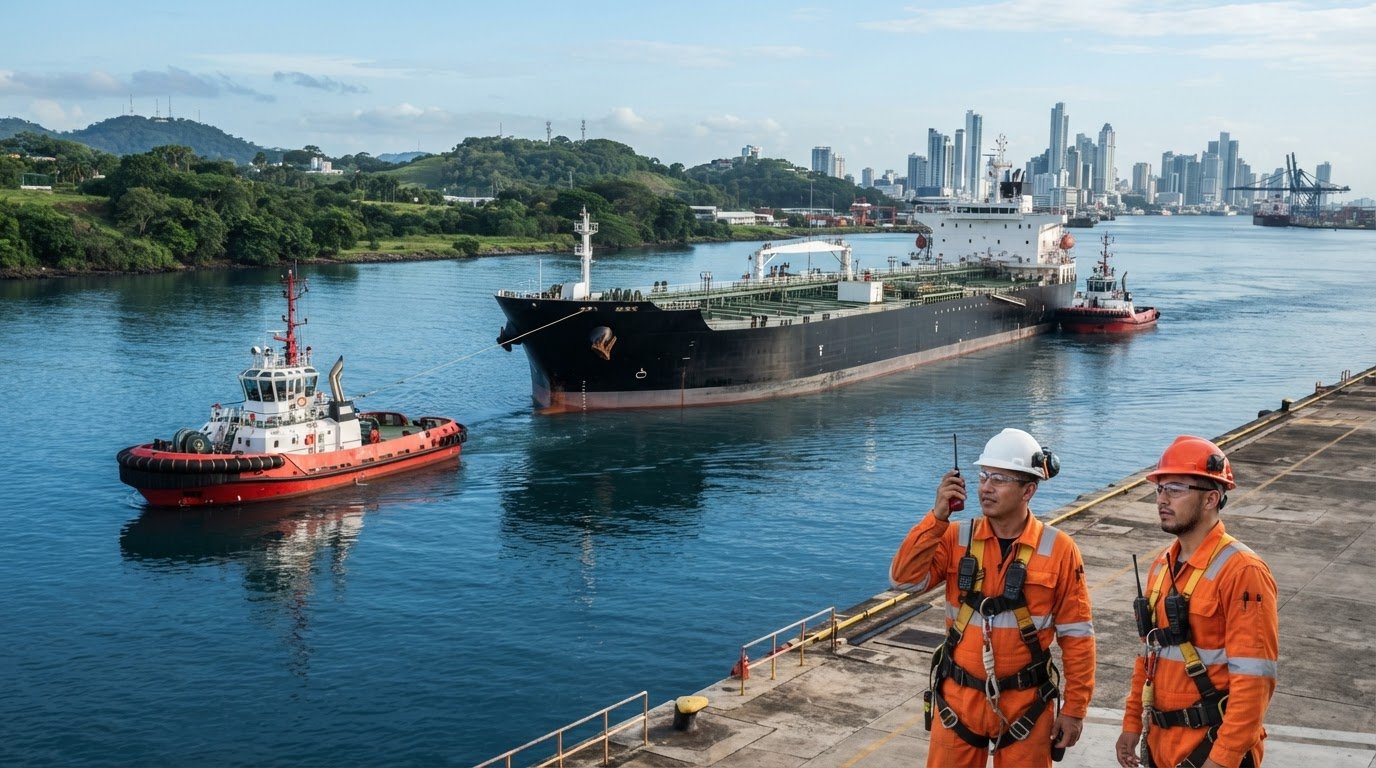
An owner’s representative coordinates local tasks and communicates the owner’s instructions during a vessel’s Panama Canal transit. Depending on the appointment, ship agency work can include transit clearance, ordering pilots and tugs, and preparing required transit documentation. For example, the representative can organize operational updates between the vessel’s captain and the owner. The appointment defines the delegated work; it does not make the representative the vessel’s owner or Canal operator.
What are the risks of hiring an owner’s representative in Panama?
Unclear written authority can lead to duplicated work or confusion about which decisions remain with the owner. During a handover, missing records or unresolved professional fees can also delay the transfer.
How do owner’s representatives manage contractors, budgets, and schedules in Panama?
A representative can coordinate communication among the owner, charterer, and local service contacts, relay schedule changes, and report progress. The written scope should define included tasks, approval for extra work, and how expenses are documented.