
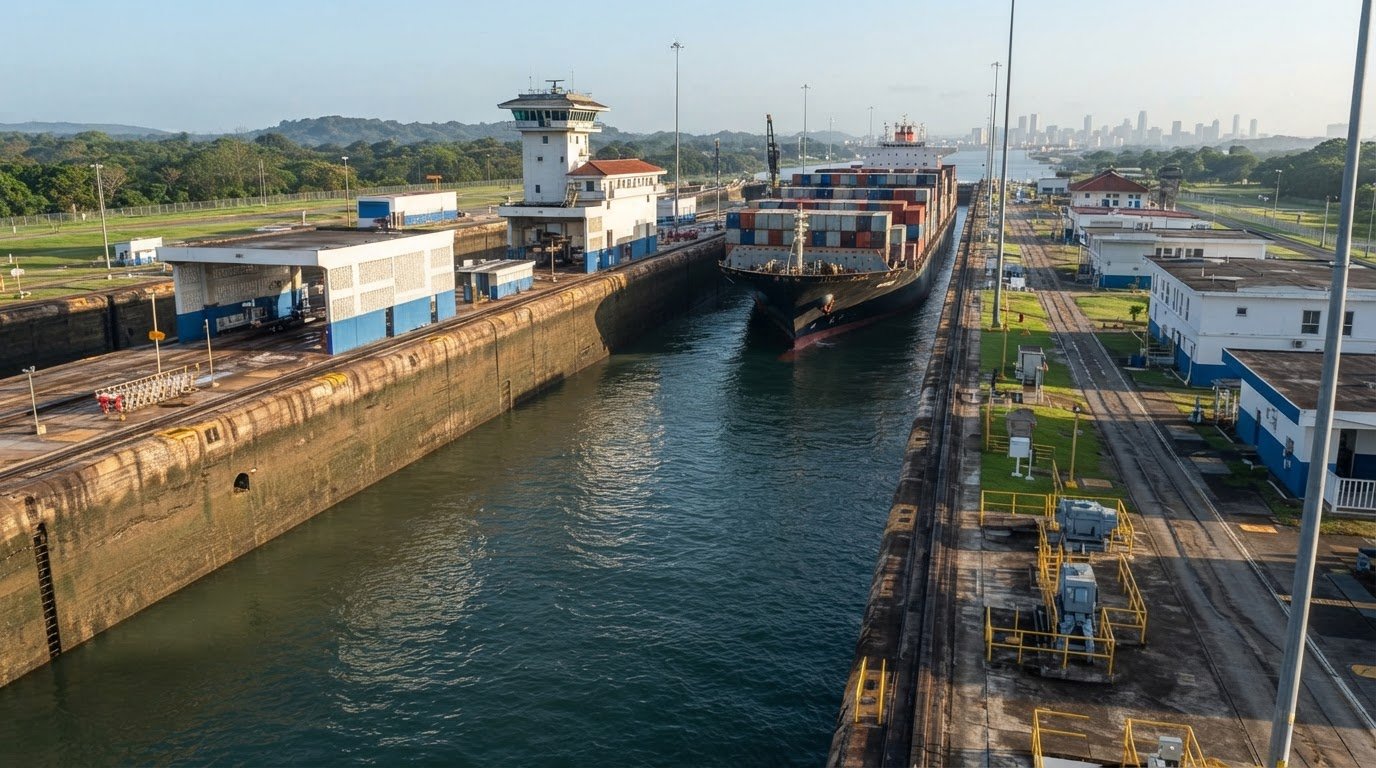
A booked transit is more than a calendar entry. Panama Canal transit slot booking runs through the Panama Canal Authority’s reservation system, where slots are allocated on a first-come, first-served basis or through auctions when demand is high. All transit requests must be submitted through VUMPA, and Notice to Shipping N-07 sets out the reservation-system rules.
For vessel operators, panama canal transit slot booking means coordinating the reservation with vessel details, arrival timing, and Panama Canal Authority communications. A slot helps with planning, but the process also depends on meeting booking requirements and keeping transit arrangements aligned as the voyage develops.
This guide explains how panama canal transit slot booking works, how advance reservations compare with later options, and what to consider when scheduling a transit. It also covers where agency coordination fits, so you can prepare for a more organized passage through the Canal.
Key Takeaways
- Submit transit requests through VUMPA and understand how first-come allocation and auctions shape access to available slots.
- Compare advance reservations with last-minute options to plan around your vessel’s timing and booking needs.
- Align arrival planning and communications with the Authority’s scheduling process to help keep the transit arrangement on track.
- Use local ship agency support when coordinating vessel passage, nominated agency arrangements, or related husbandry needs.
Booking transit slots through the Panama Canal Authority
The Panama Canal transit slot booking process runs through the Authority’s VUMPA system, with rules set out in Notice to Shipping N-07. Vessel category, booking period, requested direction and demand all influence which dates operators can pursue.
Slot Availability and Checks
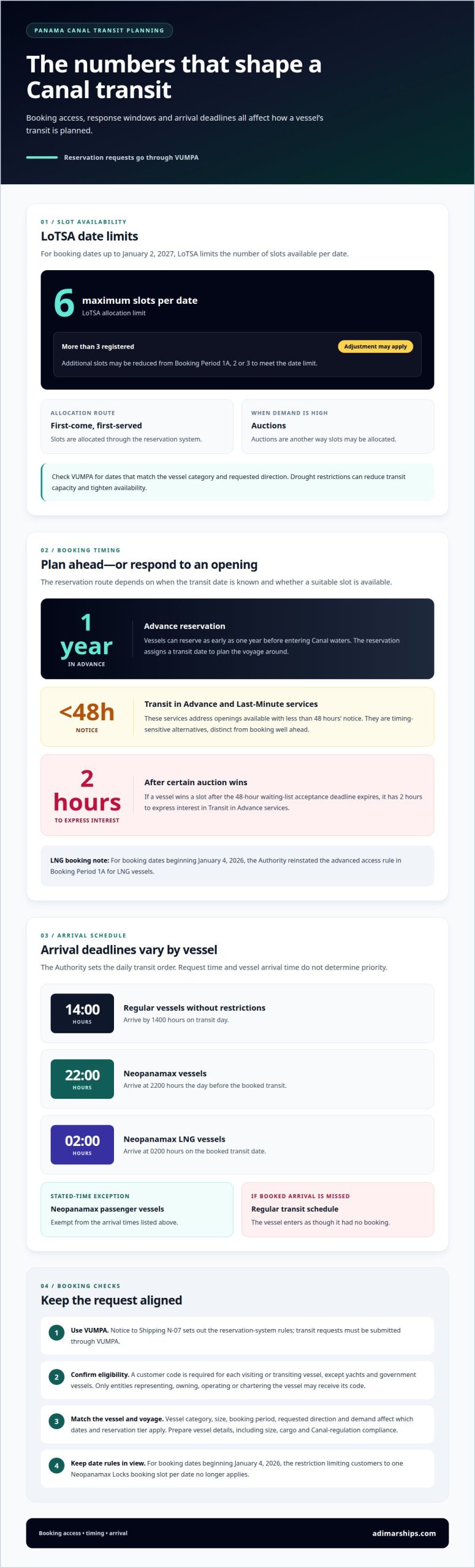
Use VUMPA to review available dates and submit a reservation request. Slots are allocated first-come, first-served or through auctions during high demand, so compare dates before selecting a transit. For booking dates up to January 2, 2027, LoTSA allocations have a maximum of six slots per date. If more than 3 slots are registered, additional slots may be reduced from Booking Period 1A, 2 or 3 to meet that limit.
Vessel Eligibility and Required Information
Only entities that represent, own, operate, or charter a transiting vessel may receive its customer code. A code is required for each visiting or transiting vessel, except yachts and government vessels. Prepare vessel details, including size, cargo, and compliance with Canal regulations. These details help identify the applicable booking category and support review of the proposed transit request.
Booking Procedures by Vessel Type and Direction
The Authority accepts requests through VUMPA for passages in either direction, between the Atlantic and Pacific entrances. Vessel type and size affect the applicable reservation tier; direction identifies the passage requested. Booking dates beginning January 4, 2026 no longer carry the restriction limiting customers to one Neopanamax Locks booking slot per date. Compare the vessel’s category and date when planning its transit slot booking.
Restrictions on Multiple Vessel Slots
For booking dates up to January 2, 2027, LoTSA allows a maximum of six slots per date. If more than 3 are registered, additional slots may be reduced from Booking Period 1A, 2 or 3. Drought restrictions can reduce transit capacity, tightening availability and potentially increasing waits. Check VUMPA for open dates matching the vessel category and direction, then align the requested date with the voyage plan.
Transit in Advance and Last-Minute Reservation services
The Panama Canal Transit Reservation System supports advance planning and provides options when a slot becomes available closer to transit. The right approach depends on when the vessel’s date is known and whether a suitable opening is available.
Advance Transit Slot Reservations
Vessels can reserve transit slots as early as one year in advance, before entering Canal waters. The reservation assigns a transit date, helping operators plan the voyage around a scheduled passage. Match the requested date to the vessel’s expected arrival and operational plan, then submit the request through the reservation system. Advance booking gives the operator a planned date to work toward instead of relying solely on an opening near arrival.
Advance access rules can also depend on vessel category and booking period. For LNG vessels, the Panama Canal Authority reinstated the advanced access rule in Booking Period 1A for booking dates beginning January 4, 2026. Operators planning an LNG transit should account for this period-specific access when timing a reservation. The booking date, vessel type and applicable period shape which reservation route is relevant.
Advance Access to Transit Dates
Transit in Advance and Last-Minute Reservation services address openings with less than 48 hours’ notice. These options can help operators respond when a slot becomes available close to the intended transit, but they are distinct from planning a date well ahead. Treat them as timing-sensitive alternatives, not as substitutes for an advance reservation when the voyage schedule is already known.
A specific response window applies after some auctions: if a vessel wins a slot after the 48-hour waiting-list acceptance deadline expires, it has 2 hours to express interest in Transit in Advance services. That short interval makes prompt internal communication important. Keep the vessel’s schedule and decision authority aligned so the operator can act within the stated window. For practical local vessel coordination, keep transit timing and voyage updates moving between the relevant parties.
Transit scheduling and communications
The Panama Canal Authority sets the daily transit order for booked vessels. Neither the time of the request nor the vessel’s arrival time determines priority, so operators should treat the booked date and actual transit sequence as separate details.
Plan arrival against the vessel’s category and booked date. Regular vessels without restrictions must arrive by 1400 hours on transit day. Neopanamax vessels must arrive at 2200 hours the day before; Neopanamax LNG vessels must arrive at 0200 hours on their booked date. Neopanamax passenger vessels are exempt from these stated arrival times. A vessel that misses its booked arrival time enters the regular transit schedule as though it had no booking.
For LNG vessels, the advanced access rule applies in Booking Period 1A for booking dates beginning January 4, 2026. Keep the booking period and requested transit date aligned when organizing the reservation. This helps operators coordinate the access arrangement with the LNG vessel’s arrival schedule.
The Vessel Scheduling Fee does not apply to passenger vessels over 300 feet, intra-maritime cluster vessels, or U.S. and Panamanian warships and auxiliary vessels. For other vessels, the applicable charge depends on the relevant booking and vessel category. Slot reservations and auctions follow their own allocation processes, so distinguish those costs from the Vessel Scheduling Fee when reviewing transit expenses.
For daily planning, consult the Panama Canal’s published transit times for Miraflores and Agua Clara. The times are updated daily and provide schedule information, not a guarantee of a booked vessel’s place in the transit order. Share schedule changes promptly with the parties coordinating the voyage, and keep the booked date, arrival time, and vessel category consistent across communications. This matters especially when a missed arrival time may move a vessel into the regular schedule.
Coordination with the Panama Canal Authority
Transit arrangements involve more than submitting a reservation. A ship agency can coordinate a vessel’s passage with the Panama Canal Authority, helping keep booking information, schedule changes, and arrival planning aligned. Clear communication is essential because the Authority determines the daily transit order; vessels are not prioritized by request or arrival time.
For Transit in Advance, treat waiting-list placement as tentative until the Panama Canal Authority formally confirms it by email. Keep the vessel’s authorized decision-makers informed, and distinguish a waiting-list notice from formal confirmation. This helps prevent a provisional status from being mistaken for a finalized transit arrangement.
Keep a consistent communication record for the vessel and requested transit date. Align the booking status, intended arrival, and any changes in messages shared with the relevant parties. If the estimated arrival changes, promptly communicate the revised information so coordination reflects the vessel’s current plan. For a time-sensitive slot, identify who can respond to the Authority and approve operational decisions.
Use ship agency coordination when the vessel’s booking, arrival planning, and Authority communications need to stay aligned. An agency supports transit arrangements but does not operate the Canal or determine slot allocation. Treat the Authority’s formal messages as the reference for booking status, especially when a waiting-list placement remains tentative. A clear handoff between vessel representatives and the agency helps keep the request and schedule details consistent.
For support with coordinating Panama Canal transit arrangements, bring together the vessel’s booking status, expected arrival and current communications in one operational picture.
Adimar Shipping: Ship Agency Services
Adimar Shipping, Inc. supports vessel operators with local coordination for Panama Canal passages. Its Ship Agency Services coordinate transit arrangements with the vessel’s operational requirements. Owner’s Nominated Agency and Charterer’s Nominated Agency provide representation for the appointing party.
Turn to Adimar Shipping, Inc. when local support would help coordinate Authority communications, arrival planning, or related vessel requirements. Husbandry Services support the vessel’s needs alongside transit coordination. These services complement the operator’s planning, while the Panama Canal Authority retains responsibility for slot allocation and Canal operations.
For ship agency support with a planned transit or vessel requirements, contact Adimar Shipping, Inc. or visit adimarships.com.
Put Your Transit Plan Into Motion
A sound panama canal transit slot booking plan connects the vessel’s schedule with the people responsible for decisions. As the voyage develops, keep ownership, chartering, and operational teams aligned so they can respond clearly to changes in timing or transit arrangements.
Adimar Shipping, Inc. supports this coordination through Ship Agency Services, including Owner’s Nominated Agency and Charterer’s Nominated Agency. Vessel operators gain a local agency partner to organize practical details around a Canal passage, while the Panama Canal Authority retains control of slot allocation and transit operations.
If you’re preparing a passage and want agency support tailored to your role in the voyage, take the next step with Adimar Shipping, Inc. Contact Adimar Shipping, Inc. about your transit to discuss your vessel’s requirements and move forward with a clear plan.
With the right coordination in place, your team can approach the next stage of the voyage with greater clarity and confidence. For operators that also require global cargo movement and corporate travel coordination beyond maritime transit, Aerowave Air Travel and Logistics Ltd provides freight logistics and travel planning services to keep international operations synchronized.
Frequently Asked Questions
How does it work?
The Panama Canal Transit Reservation System lets vessel operators request a transit date before arrival. Submit the request through VUMPA with the vessel details and applicable customer code, then follow the reservation process for the vessel and requested date. Slots may be allocated first-come, first-served or through auctions during periods of high demand. Keep the proposed date aligned with the vessel’s voyage plan and booking requirements.
What happens if I do not arrive to the booked transit date?
A vessel that misses its required arrival time forfeits its booking fee and loses its booked transit. The Authority places it in the regular transit schedule as though it had not booked. For example, a Regular vessel must arrive by 1400 hours on transit day; Neopanamax arrival requirements differ. The booked date and the vessel’s arrival plan therefore need close coordination.
Who determines the order of transit for booked vessels?
The Panama Canal Authority determines the daily order of booked vessels. Neither the time of a request nor the vessel’s arrival time establishes its place in that order. Treat the booked transit date and the sequence of daily movements as separate planning details. Keep the operational team aligned with Authority communications rather than assuming an earlier arrival means an earlier transit.
How do you book a transit slot through the Panama Canal?
Submit the transit request through VUMPA using the vessel’s customer code and accurate vessel information. A code is required for each visiting or transiting vessel, except yachts and government vessels. Eligible code holders are entities that represent, own, operate, or charter the vessel. Include details such as vessel size, cargo, and regulatory compliance so the request reflects the intended transit.
How far in advance can vessels reserve Panama Canal transit slots?
Vessels can reserve transit slots as early as one year in advance. This lets operators include a Canal passage in a longer voyage plan rather than waiting until the vessel approaches Panama. Choose the requested date with the vessel’s expected arrival and schedule in mind, then follow the applicable reservation process for that date and vessel category.
How does the Panama Canal auction process work for transit slots?
Auctions provide a route to compete for slots during periods of high demand. The auction period runs from 2 days before transit at 14:00 hours to 1 day before transit at 13:00 hours. Operators should prepare their bid and decision authority within that window. An auctioned slot is a booking outcome, not a change to the vessel’s arrival requirements.