
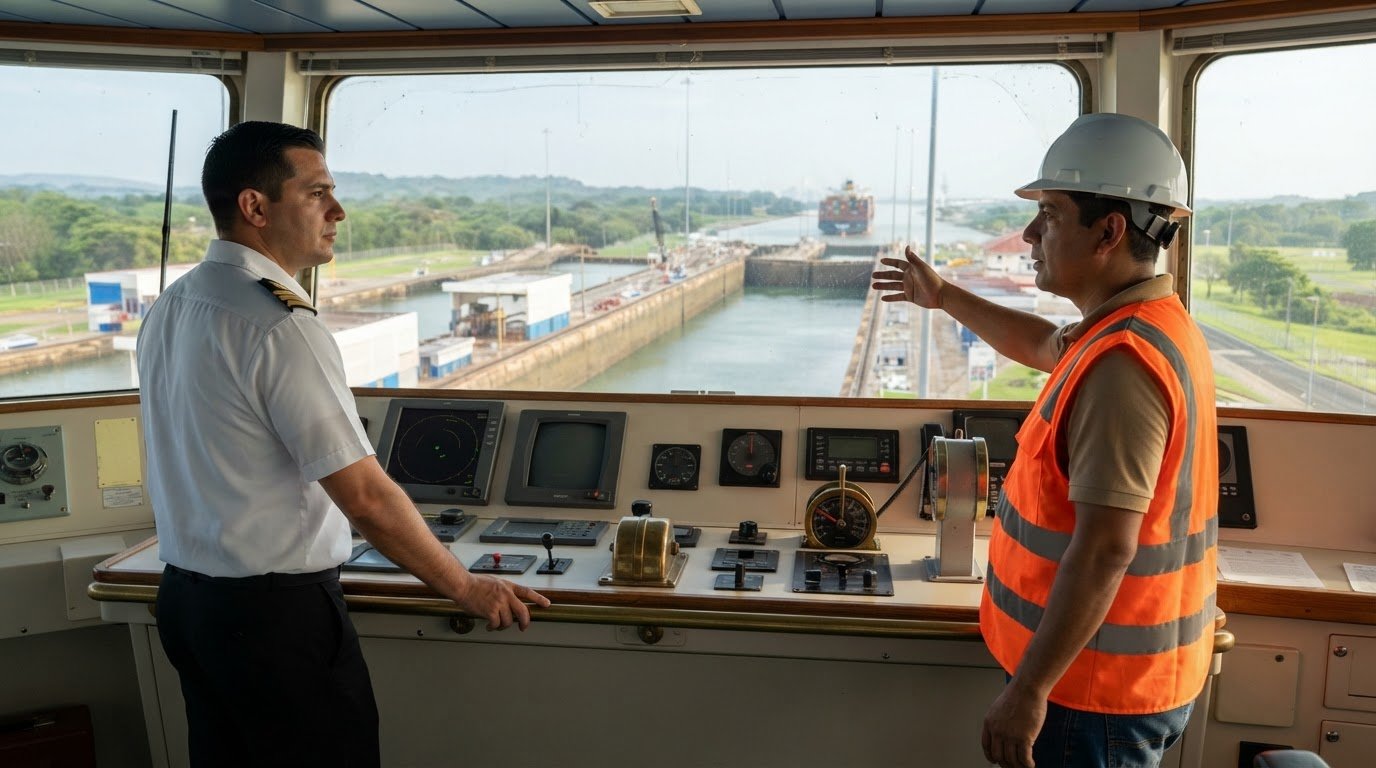
A global network can widen coverage, but it does not automatically provide the local coordination a Panama Canal transit requires. The global vs. local ship agent decision for a Panama Canal transit comes down to how effectively the agent combines broad reach with local coordination and support at both canal terminals. Choose an arrangement that keeps communication and vessel operations coordinated throughout the passage.
It is understandable to value an established international network when a vessel is moving between ports and parties across borders. Local knowledge matters too, especially when transit arrangements require close coordination in Panama. This article explains how global and local agents differ in coverage, relationships, and on-the-ground presence, and what to consider when choosing ship agency support for a Panama Canal transit.
Key Takeaways
- Assess whether your transit needs broad network coordination, dedicated local representation, or a combination of both.
- Consider how local stakeholder relationships can support communication and coordination around a canal passage.
- Look at how an agent’s presence at both canal ends may help connect port-side arrangements across the transit.
- Understand the appointment and operational requirements involved so agency support can be aligned with your vessel’s transit needs.
Ship agency coverage at Panamanian ports and the Panama Canal
Coverage means coordinating a vessel’s port calls and canal transit, not simply having an international office network. The Panama Canal connects 180 maritime routes, so agents need clear arrangements for local coordination and passage details.
Agent Appointment and Transit Arrangements
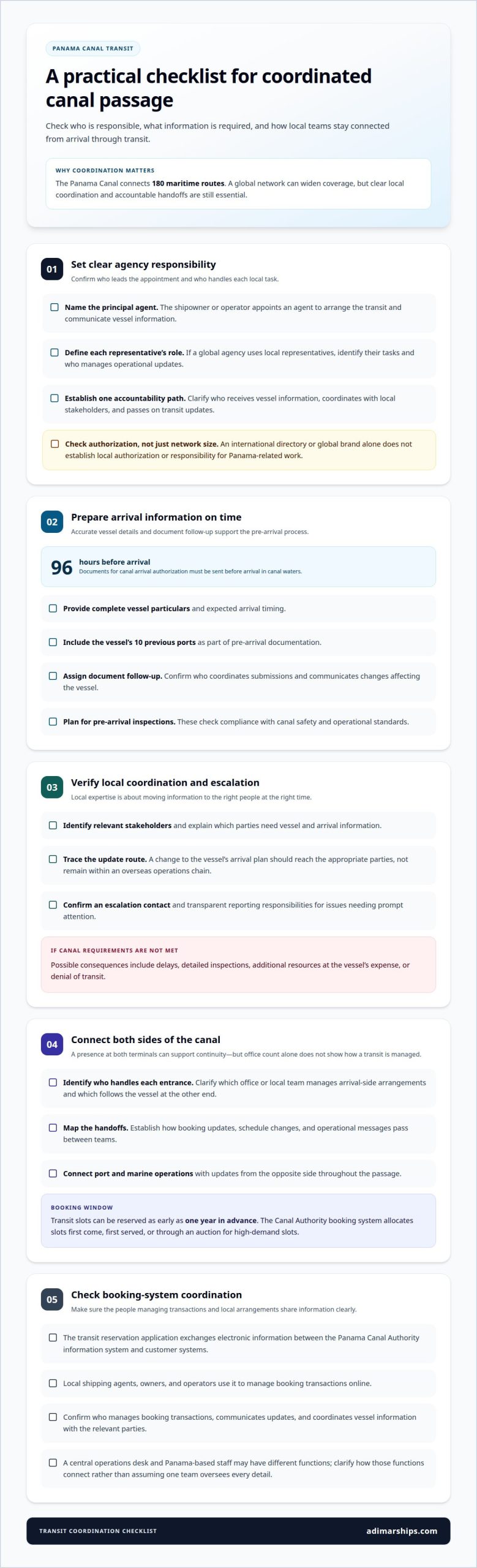
For a global vs local ship agent choice in a Panama Canal transit, focus on who coordinates each step. The shipowner or operator appoints an agent to arrange the transit and communicate vessel information. Owners should provide accurate vessel particulars, expected arrival timing, and the vessel’s 10 previous ports, which form part of pre-arrival documentation.
Documents for Panama Canal arrival authorization must be sent 96 hours prior to arrival in canal waters. The agent coordinates submissions and arrangements, while pre-arrival inspections check compliance with canal safety and operational standards. Clarify who handles document follow-up and communicates changes affecting the vessel.
When reviewing a list of authorized shipping agencies, distinguish authorization from network size. An international directory alone does not establish an agency’s local role or authorization for Panama-related work. Look for a clear explanation of the agent’s relevant authorization, experience with canal transits, and local coordination responsibilities. These points help assess operational capability rather than relying on a global brand name alone.
Global Networks and Local Subagent Accountability
A global vs local ship agent comparison for Panama Canal operations should examine how local representatives fit into the appointment. A global agency may coordinate through local agents, connecting an overseas operations team with people handling arrangements in Panama. The appointment should identify the principal agent, each representative’s tasks, and who manages operational updates.
Clarify who receives vessel information, coordinates with local stakeholders, and passes on transit-related updates. The named agent should maintain a clear accountability path, even when a local representative handles specific tasks. This division of responsibility helps owners and operators understand who manages each handoff during the transit.
Local expertise and stakeholder relationships
Local coordination connects vessel operators with the Panama Canal and relevant port stakeholders. It helps keep arrival details and operational communication aligned.
An agent unfamiliar with local coordination may overlook operational needs or mishandle information, increasing the risk of disruption. Panama Canal requirements matter: noncompliance may lead to delays, detailed inspections, additional resources at the vessel’s expense, or denial of transit.
Local Stakeholder Relationships
Local expertise means knowing how to coordinate with stakeholders involved in a vessel’s Panama transit. The agent should understand which parties need information, how updates move between them, and who handles each operational handoff. For example, a change to the vessel’s arrival plan needs to reach the appropriate parties promptly, not remain within an overseas operations chain.
Panama Canal transits involve mandatory pre-arrival inspections for safety and operational compliance. A locally connected agent can coordinate communication around these requirements and clarify the status of vessel arrangements. Evaluate whether the agent can explain its local role, stakeholder coordination, and escalation path rather than relying on the size of its global network alone.
Risks of Non-Local or Inexperienced Agents
The key risk is a coordination gap, not an agent’s passport or company footprint. An agent unfamiliar with local operations may fail to route an update to the right party or recognize an issue that needs prompt attention. If vessel information or arrangements do not meet canal requirements, the consequences can include delays or denial of transit.
In 2025, the Panama Canal recorded 13404 transits, illustrating the operational setting in which agents coordinate. Shipowners can assess relevant experience by asking for a clear account of how the agent handles arrival updates, local communications, and inspection coordination. A defined escalation contact and transparent reporting responsibilities help keep the vessel’s representative accountable throughout the process.
Offices at both ends of the Panama Canal
An agency with a presence at both canal terminals can support coordination on the Atlantic and Pacific sides, but office count alone does not show how it manages a transit. If a vessel calls at a port near one entrance before crossing, examine how the agent connects local port arrangements, marine operations, and updates from the opposite side. What matters is continuity of representation throughout the passage.
Booking is another practical test. Ships can reserve Panama Canal transit slots as early as one year in advance. The Panama Canal Authority booking system allocates slots first come, first served, or through an auction for high-demand slots. A capable agency should explain who manages booking transactions, communicates updates, and coordinates the vessel’s information with the relevant parties.
The transit reservation application exchanges electronic information between the Panama Canal Authority information system and customer systems. Local shipping agents, owners, and operators use it to manage booking transactions online. A global agency may provide a central operations desk, while local staff handle Panama-specific coordination. Ask how those functions connect rather than assuming that an office at each end means the same people oversee every operational detail.
- Coverage: Identify which office or local team handles arrival-side arrangements and which follows the vessel at the other entrance.
- Handoffs: Establish how booking updates, schedule changes, and operational messages pass between teams.
- Accountability: Clarify which named agent coordinates the full transit and provides the vessel operator with status updates.
A global network can combine central coordination with local representation, while a local agency can focus on Panama-specific operations. Compare the arrangements by checking how the agency maintains a clear communication chain from booking through transit. That structure matters more than an office address alone when timing or vessel plans change.
What are the Panama Canal Authority requirements for appointing a ship agent?
For a Panama Canal transit, an appointed agent coordinates vessel information and required submissions. Documents for Panama Canal arrival authorization must be sent 96 hours prior to arrival in canal waters. Shipowners should give the agent accurate vessel particulars, arrival details, and voyage information early enough for coordination.
Pre-arrival documentation includes the vessel’s 10 previous ports. Boarding officers must receive two copies of the Ship’s Information and Quarantine Declaration (4398), one copy of the visibility form 1746, and one copy of the vessel’s 10 port calls. The agent can coordinate these documents, track their submission, and communicate any missing information to the responsible vessel representative.
- Vessel history: Provide the 10 previous ports for pre-arrival documentation and the port-call information required by boarding officers.
- Specified forms: Arrange the two copies of declaration 4398 and one copy of visibility form 1746.
- Submission timing: Coordinate the arrival authorization documents for the 96-hour deadline.
Noncompliance with Panama Canal requirements may result in additional resources assigned at the vessel’s expense, a more detailed inspection, delays, or denial of transit. An agent coordinates accurate information and clear communication but does not replace the owner’s responsibility for vessel data. The appointment should identify who supplies each document and who manages follow-up if details change.
Choose a representative who can explain the document flow, submission timing, and escalation process in plain terms. For coordinated support with Panama Canal transit arrangements, request ship agency assistance.
Adimar Shipping, Inc.: Ship Agency Services
Adimar Shipping, Inc. supports shipowners and charterers arranging vessel transits through the Panama Canal with Ship Agency Services. Turn to a local agent when you need coordinated communication and transit arrangements in Panama.
Through Owner’s Nominated Agency or Charterer’s Nominated Agency, Adimar Shipping, Inc. represents the appointing party’s interests and coordinates the vessel’s agency requirements. Husbandry Services can support related vessel needs during a Panama call. The right arrangement depends on who appoints the agent and which responsibilities need coordination.
When a transit involves multiple parties, clear communication helps keep responsibilities visible and reduce confusion around arrangements. Adimar Shipping, Inc. coordinates vessel passage details as a local partner for shipowners and charterers.
Contact Adimar Shipping, Inc. to discuss ship agency support for your Panama Canal transit.
Make your agency appointment the next operational decision
Choose a global or local ship agent for a Panama Canal transit based on how you want coordination and representation managed. Before making an appointment, align the owner, charterer, and vessel operator on who will lead communications and represent their interests. A clear mandate helps keep decisions connected as the voyage progresses.
Adimar Shipping, Inc. offers Ship Agency Services, including Owner’s Nominated Agency and Charterer’s Nominated Agency. These options support the appointing party’s need for coordinated local representation in Panama. Share your vessel’s transit requirements and the role you need the agent to fulfil, so the discussion can focus on the right agency arrangement.
For a direct discussion about your Panama Canal transit, contact Adimar Shipping, Inc. A clear next step can help your team move ahead with confidence.
Frequently Asked Questions
What is the difference between a global and local ship agent for a Panama Canal transit?
A global agent coordinates through an international network, while a local agent focuses on Panama-specific arrangements and relationships. A global provider may work with a local representative, so the key distinction is how responsibilities and communication are managed. Clarify who handles local vessel updates and who remains accountable to the owner or charterer throughout the transit.
What services does a Panama Canal ship agent provide?
A Panama Canal ship agent coordinates transit arrangements, which can include transit clearance, pilot and tug orders, and required documentation. The appointment may represent the owner or charterer, depending on who nominates the agent. Husbandry support can address vessel and crew needs, including crew changes and provisioning. The scope depends on the appointment and the vessel’s requirements.
What are the advantages of using a global ship agency for Panama Canal transits?
A global agency can offer an operator a familiar coordination structure across multiple regions. For vessels moving between international ports, that network may help connect communication between the ship, its operator, and local representatives. The benefit depends on clear handoffs: the global office should identify who receives Panama-related updates and how those updates reach decision-makers.
What are the advantages of using a local Panama ship agent?
A local agent focuses on Panama operations and can coordinate directly with relevant local parties. This is useful when a vessel’s arrival information or arrangements change and the operator needs updates routed within Panama. A local representative can also provide a defined point of contact for the owner or charterer, helping keep communication and responsibilities clear during the port call.
How do ship agents support vessels at Balboa, Cristobal, and Panama Canal anchorages?
At Balboa and Cristóbal, agents coordinate vessel arrangements and communicate with the parties involved in the call. At anchorages, husbandry support may cover needs such as crew changes or provisioning. The Panama Maritime Authority issues departure port clearance only to vessels berthed alongside; that clearance does not apply to canal transits or husbandry activities at anchorage.