
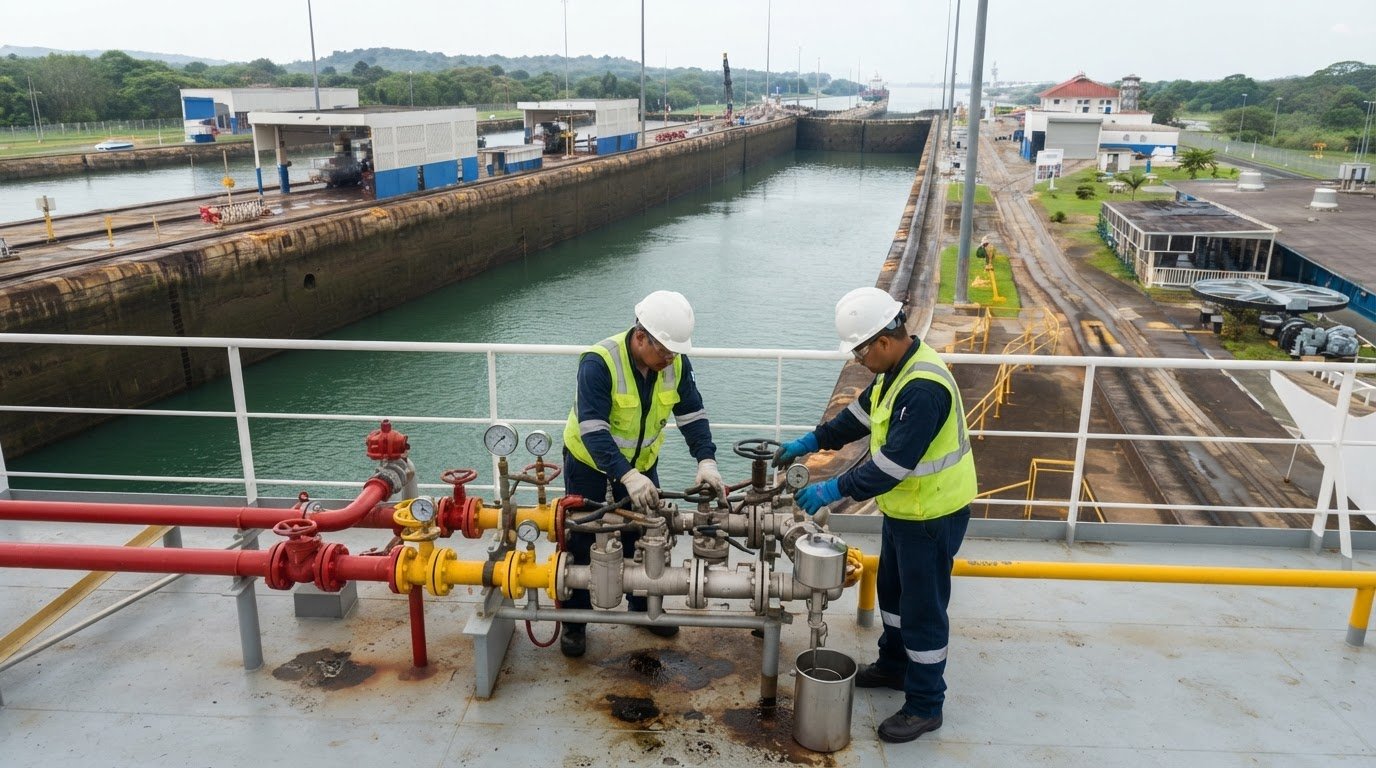
EEXI is only one part of the compliance picture for ships transiting the Panama Canal. The impact of IMO 2027 regulations on Panama transit needs to be considered alongside MARPOL-related fuel requirements and the Canal’s own operating rules. Vessels entering Canal waters must change from residual fuel to marine distillate unless an allowed alternative applies; residual fuel is an alternative when its sulfur concentration is no more than 0.5%.
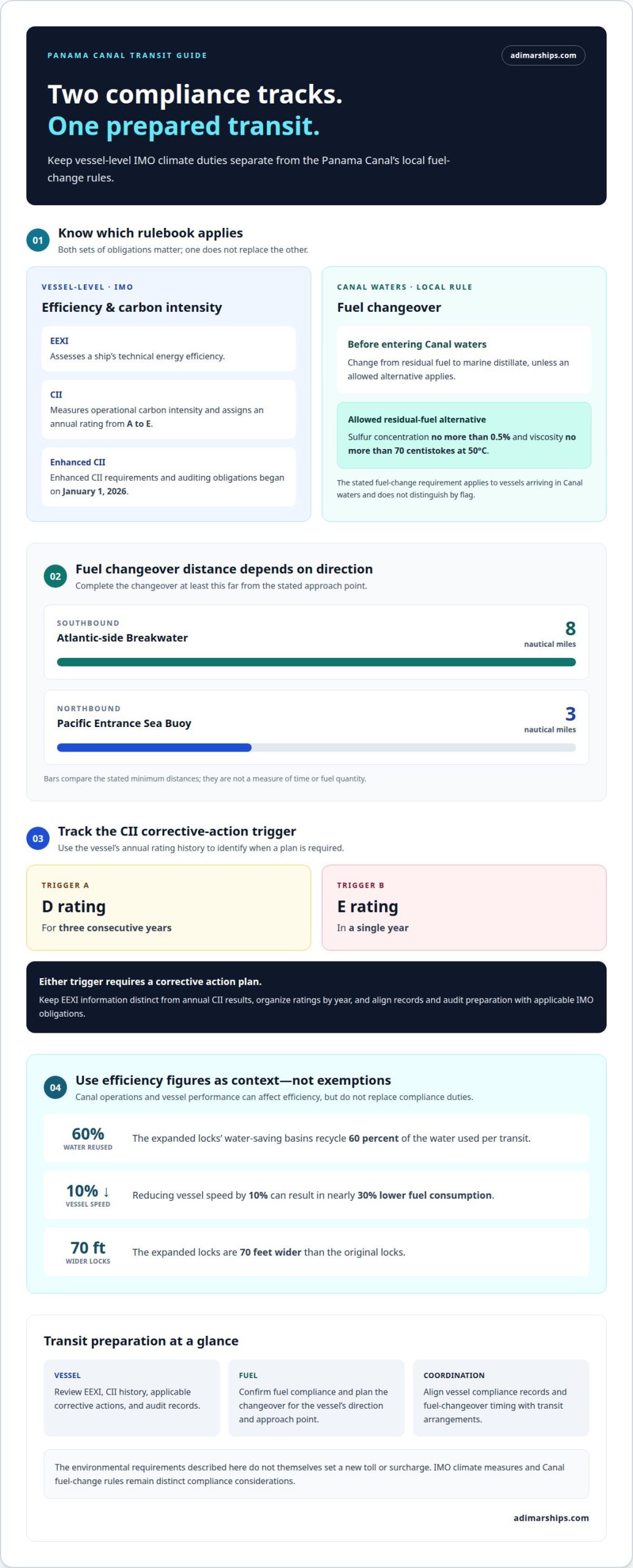
It’s understandable to want a clear answer on whether an efficiency requirement could disrupt a planned passage. The practical point is to distinguish vessel-level climate compliance from fuel-change requirements that apply in Panama Canal waters. IMO climate rules also include enhanced CII requirements introduced on January 1, 2026, while a vessel with a D CII rating for three consecutive years or an E rating in a single year must implement a corrective action plan.
This article explains how EEXI fits into the wider compliance picture, what Panama’s fuel-change rule means, and how to coordinate a transit with these obligations in mind. The aim is to make the path from regulatory preparation to passage through Panama clearer and more dependable.
Key Takeaways
- Separate a vessel’s EEXI and CII obligations from Panama Canal-specific environmental and transit requirements.
- Understand how MARPOL-related fuel compliance connects with the Canal’s local operating rules before a passage.
- Assess whether IMO measures scheduled for 2027 change vessel compliance duties, transit procedures, or fees.
- See how ship agency coordination can help align vessel preparations and transit arrangements in Panama.
MARPOL and Panama Canal Authority environmental compliance
IMO Secretary-General Kitack Lim said the expanded Panama Canal could help reduce climate-change impacts and CO2 emissions. That role connects global shipping efficiency with vessel-level obligations, including MARPOL-related fuel compliance. For a vessel transiting Panama, distinguish international efficiency requirements from the Canal’s fuel-change rules.
The expanded locks are 70 feet wider than the original locks. Their water-saving basins recycle 60 percent of the water used per transit. Fuel efficiency also matters: reducing vessel speed by 10% can result in nearly 30% lower fuel consumption. These figures describe operational efficiency, not a separate transit exemption from environmental requirements.
Vessels entering Panama Canal waters must change from residual fuels to marine distillate fuels, unless an allowed alternative applies. Southbound vessels must complete changeover at least 8 nautical miles from the Atlantic-side Breakwater. Northbound vessels must complete it at least 3 nautical miles from the Pacific Entrance Sea Buoy. Residual marine fuel is an allowed alternative when its sulfur concentration is no more than 0.5% and its viscosity does not exceed 70 centistokes at 50°C.
Which ship types and flag states are most affected? The Canal fuel-change rule applies to vessels arriving in Canal waters, and the stated requirement does not distinguish by flag. IMO requirements depend on the vessel and the applicable rule, not on its Panama route alone.
How do the impacts compare with other major routes? The fuel-change distances and Canal water-saving basins described here are specific to the Panama Canal; they do not establish a comparison with other routes.
Will Canal authorities adopt or enforce new IMO regulations in 2027? Apply applicable IMO obligations alongside the Canal’s stated fuel requirements; the two are distinct compliance considerations. For transit preparation, coordinate fuel-changeover timing with the vessel’s route and maintain a practical record of the planned changeover and applicable vessel compliance. The environmental requirements described here do not themselves set a new toll or surcharge. Complete the required fuel changeover at the stated approach points to reduce avoidable operational disruption; no specific penalty is identified here.
What IMO regulations are scheduled to take effect in 2027?
For 2027 planning, separate a newly dated rule from the wider move toward maritime net-zero targets. The industry is moving toward those targets in 2027 and beyond, but that direction alone does not identify a single regulation starting that year. Understanding the IMO 2027 regulations’ impact on Panama transit starts with distinguishing technical efficiency requirements, annual operational ratings, and compliance records.
EEXI and CII address different aspects of vessel efficiency. EEXI concerns a ship’s technical energy efficiency, while CII measures operational carbon intensity and assigns an annual rating from A to E. A vessel’s technical profile and operational performance therefore need separate reviews. Treating one assessment as a substitute for the other can leave important compliance questions unanswered.
The corrective-action trigger for a poor CII rating matters to planning around 2027. A D rating for three consecutive years or an E rating in a single year requires a corrective action plan. Operators can use annual rating history to identify whether that threshold applies and connect the plan to measures intended to improve vessel performance. IMO climate requirements also include enhanced CII requirements and auditing obligations. Assessing how IMO 2027 regulations impact Panama transit means including these vessel-level duties in voyage planning.
- Review technical efficiency: Keep the vessel’s EEXI information distinct from its annual CII result, so each measure receives the right assessment.
- Track yearly ratings: Organize CII results by year and identify any D or E rating that could trigger corrective action.
- Prepare evidence: Align relevant vessel records and audit preparation with applicable IMO obligations and the vessel’s performance history.
For vessels scheduled to transit Panama, 2027 preparation means integrating IMO climate measures into voyage planning, not treating net-zero targets as a standalone Canal transit rule. Separating EEXI, CII, and audit records helps operators identify applicable work and coordinate compliance with the vessel’s operating schedule.
Separately, under Panama Canal booking condition 5, Panamax plus vessels are not allowed to transit while the condition is in effect. The Panama Canal’s revised criteria for reallocating available transit slots took effect immediately after the advisory was issued.
Which 2027 IMO rules apply to ships transiting the Panama Canal?
For a Panama Canal passage, distinguish IMO vessel-efficiency obligations from Panama Canal Authority transit requirements. IMO measures address a vessel’s energy efficiency and carbon intensity; they do not replace local operational rules. Prepare for both sets of requirements without treating the Canal route as a separate IMO emissions category.
EEXI concerns a vessel’s technical energy efficiency, while CII tracks operational carbon intensity through an annual A-to-E rating. These measures assess different aspects of performance. For a ship transiting Panama, its technical efficiency status and operating record remain relevant alongside fuel and transit preparations. The route itself does not make the assessments interchangeable.
The IMO implemented enhanced CII requirements and new auditing obligations on January 1, 2026. Those requirements are relevant to voyage planning in 2027. A vessel’s rating history also matters: a D CII rating for three consecutive years or an E rating in a single year requires a corrective action plan. The plan connects a poor rating to documented corrective measures.
- Separate the assessments: Keep technical EEXI considerations distinct from the vessel’s annual CII rating and operating record.
- Review CII history: Identify whether a D rating has persisted for three consecutive years or an E rating occurred in a single year.
- Prepare corrective action: Where the rating trigger applies, implement a corrective action plan and align relevant records with audit obligations.
- Coordinate the passage: Include IMO compliance preparation in voyage planning, while keeping Panama Canal operational requirements as a separate workstream.
In practice, the relevant rule depends on the vessel’s efficiency status, annual CII results, and applicable audit obligations. A transit schedule does not replace these vessel-level considerations. Likewise, meeting IMO efficiency requirements does not, by itself, address every Panama Canal operational requirement.
For 2027 planning, treat EEXI, CII, corrective action, and auditing as distinct compliance items. This approach helps owners and operators map vessel responsibilities against the planned Panama passage without assuming that one efficiency rating covers every requirement.
Will IMO 2027 emissions rules change Panama Canal transit requirements or fees?
IMO emissions obligations and Panama Canal transit charges are separate planning questions. EEXI and CII concern vessel efficiency, while the Canal’s transit arrangements govern passage through Panama. Assess emissions compliance separately from the transit budget. The rules covered here do not establish that IMO requirements automatically change Canal tolls or add a transit surcharge.
For 2027 budgeting, separate vessel actions from Canal charges. A CII corrective action plan may require operational changes, while the Canal fuel-change requirements involve fuel choice and completion points. These can affect voyage preparation in different ways. Keep the compliance plan, transit arrangements, and cost forecast as distinct workstreams rather than treating an IMO rating as a Canal fee category.
- Track vessel compliance: Record EEXI and annual CII matters separately from Canal passage planning.
- Account for fuel preparation: Include the required fuel changeover in the voyage plan and coordinate it with the vessel’s approach.
- Separate cost items: Distinguish Canal transit charges from vessel operating decisions associated with emissions compliance.
- Review Canal notices: The Panama Canal Authority issued Advisory to Shipping No. A-40-2026 on October 30, 2026. Treat that advisory as a Canal-specific operational notice, not as an IMO emissions rule.
Start with the vessel’s IMO compliance status, then review the Canal’s applicable transit arrangements and current charges. This helps distinguish changes to vessel operations from changes to tolls. It also gives owners and operators a clearer basis for comparing a planned transit budget with the vessel’s emissions-related operating plan.
For a Panama passage, coordinate local transit arrangements alongside the vessel’s compliance planning. Coordinate Panama transit arrangements with a local ship agency representative.
Reservation rules bar substitutions, swaps, or date changes when a booking period is unavailable. Panama Canal Advisory No. A-43-2023 sets November 1st, 2023 as the effective date for reservation-system rule changes; daily transit capacity will be adjusted to 31 vessels per day.
Once new Period 1 is in effect, Panama Canal reservations will not be allowed for booking dates between 365 and 91 days before the transit date. Slots cancelled or released for unavailable dates will be blocked until new Period 1 opens 90 days before the booking date. Booking Period 3 slots for Panamax and Neopanamax vessels will be offered through auctions only, seven days before the booking date.
Adimar Shipping, Inc.
Adimar Shipping, Inc. helps owners and charterers coordinate vessel passages through the Panama Canal. Its Ship Agency Services provide local coordination for passage planning and vessel requirements. Owners and charterers can also appoint Adimar Shipping, Inc. through Owner’s Nominated Agency or Charterer’s Nominated Agency.
For vessels needing port-call support alongside transit coordination, Husbandry Services can address related vessel requirements. This local agency support helps align communication and practical arrangements with a planned Canal passage, while keeping IMO efficiency compliance distinct from Canal transit procedures.
Contact Adimar Shipping, Inc. to discuss agency support for a Panama Canal transit.
Make your next transit plan compliance-ready
Bring regulatory review and local transit coordination into the same voyage-planning process. Assign clear responsibility for vessel-efficiency records, operational decisions, and Panama passage arrangements. This helps owners and charterers keep separate obligations visible without allowing one workstream to obscure another.
The IMO 2027 regulations’ impact on Panama transit is best managed through early coordination between the people responsible for vessel compliance and those arranging the passage. Adimar Shipping, Inc. can support that local coordination through Ship Agency Services, Owner’s Nominated Agency, and Charterer’s Nominated Agency, helping connect vessel teams with the practical requirements of a Canal transit.
Set the next step around your vessel’s role, planned passage, and agency arrangements. A focused discussion with Adimar Shipping, Inc. can clarify how local ship agency support fits into your planning, while your team retains oversight of its IMO compliance responsibilities.
Contact Adimar Shipping, Inc. for transit support and take the next step toward a well-coordinated Panama passage.