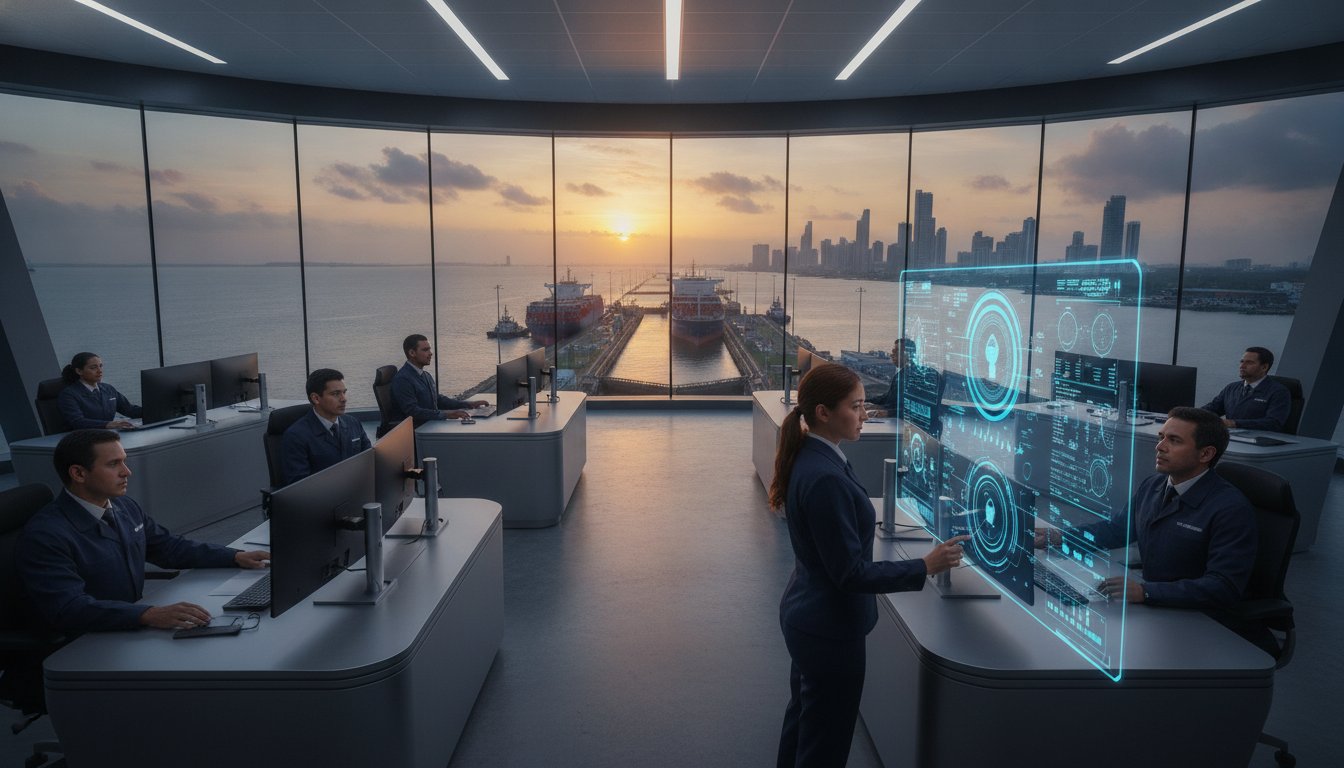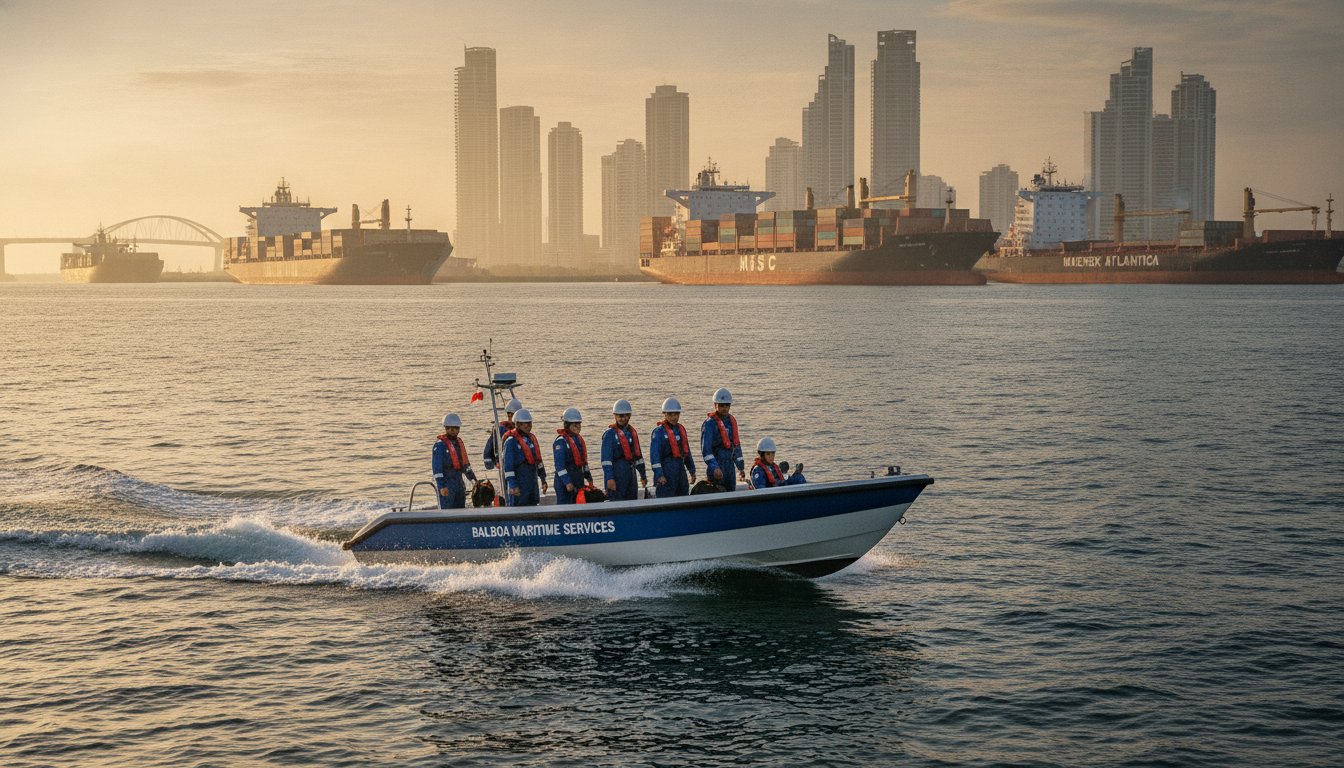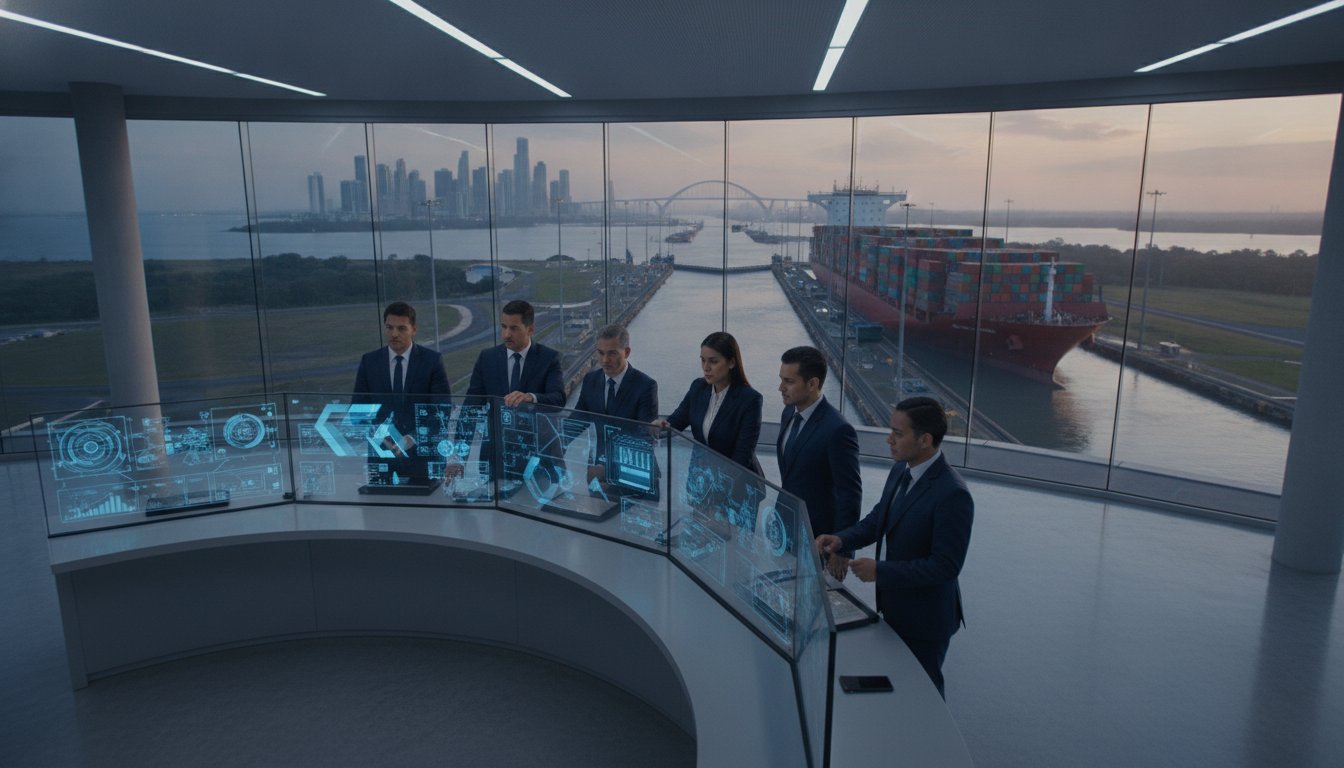

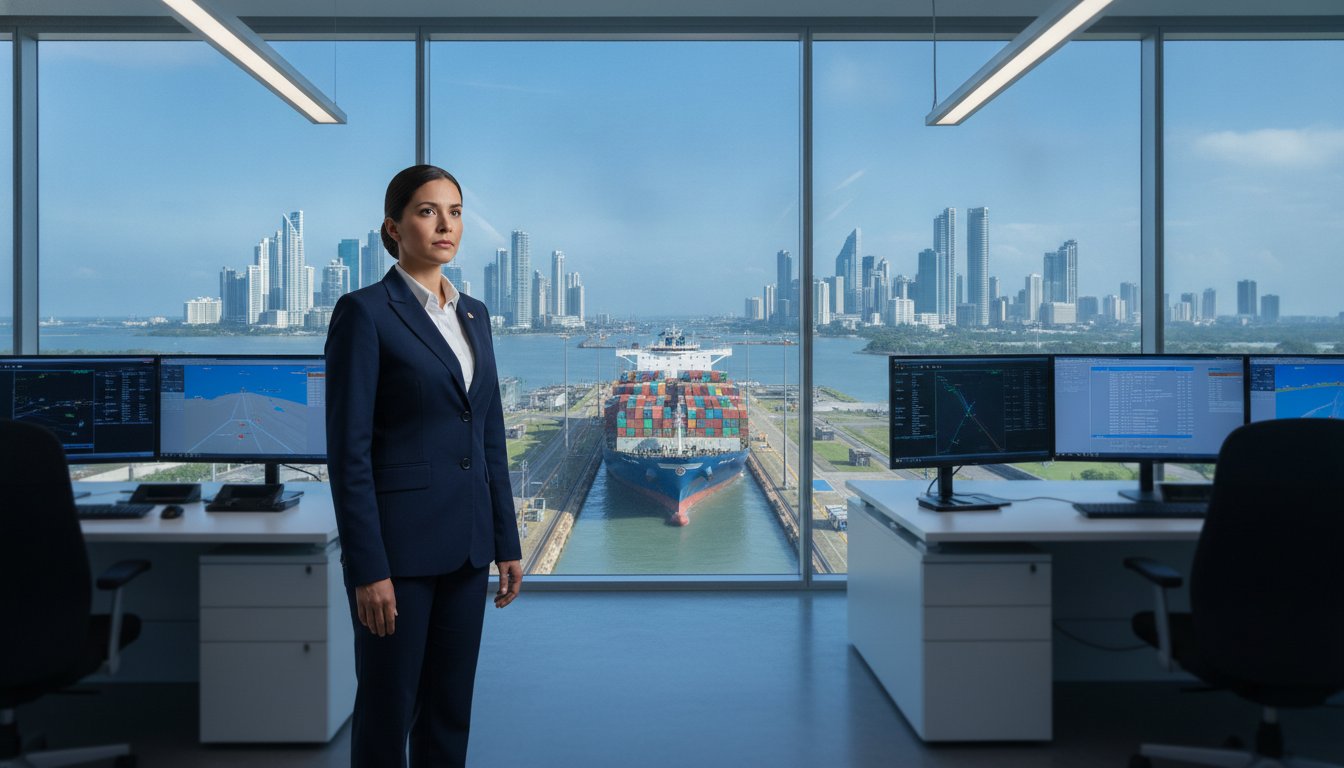
What if your “local representative” at the Panama Canal is actually prioritizing someone else’s bottom line? It’s a valid concern for shipowners when a charterer nominates the primary port agent. You already understand that a single administrative slip in a VUMPA filing or a delay in crew logistics can trigger an idling fee of $5,000 per hour. It’s exhausting to manage the fear that hidden costs are buried within your Disbursement Accounts because no one is strictly auditing the expenses on your behalf.
This article clarifies the confusion by analyzing the roles of a husbandry agent vs protective agent. You’ll discover how to safeguard your vessel’s interests and budget by establishing clear reporting lines and dedicated oversight. We’ll show you how to separate cargo responsibilities from essential ship services like crew changes and spare parts delivery. By the end, you’ll have a roadmap for reducing port expenses and ensuring your interests remain protected, even when you’re not the one nominating the main agent. We will also examine how these roles interact with strict 2026 regulations, including PCSOPEP requirements and the latest Neopanamax draft restrictions of 14.78 meters.
Key Takeaways
- Distinguish between the physical support of a husbandry agent vs protective agent to ensure every aspect of your port call is managed with precision.
- Discover how an independent auditor can identify hidden costs in Disbursement Accounts (DAs) and prevent unnecessary financial leaks.
- Streamline complex logistics in Panama, such as crew changes and spare parts delivery, through specialized husbandry coordination.
- Understand the critical reporting lines that guarantee your vessel’s interests remain the top priority when the charterer nominates the primary agent.
- Ensure total compliance with strict Panama Canal Authority requirements, including PCSOPEP authorized person mandates and VUMPA deadlines.
Defining the Roles: Husbandry Agent vs. Protective Agent
Port calls are high-risk operations where financial stakes and logistical timelines collide. When your vessel enters the Panama Canal, you face a complex web of administrative and physical requirements. The distinction between a husbandry agent vs protective agent often blurs because both roles provide essential support, yet they serve different objectives and reporting lines. Understanding these boundaries isn’t just an academic exercise. It’s a matter of financial security and operational efficiency for every shipowner.
A Shipping agency typically manages the vessel’s needs, but when a charterer nominates the primary agent, the shipowner’s interests can become secondary. This is where the specific roles of husbandry and protection diverge to ensure the owner isn’t left vulnerable to hidden costs or operational oversights.
What is a Husbandry Agent?
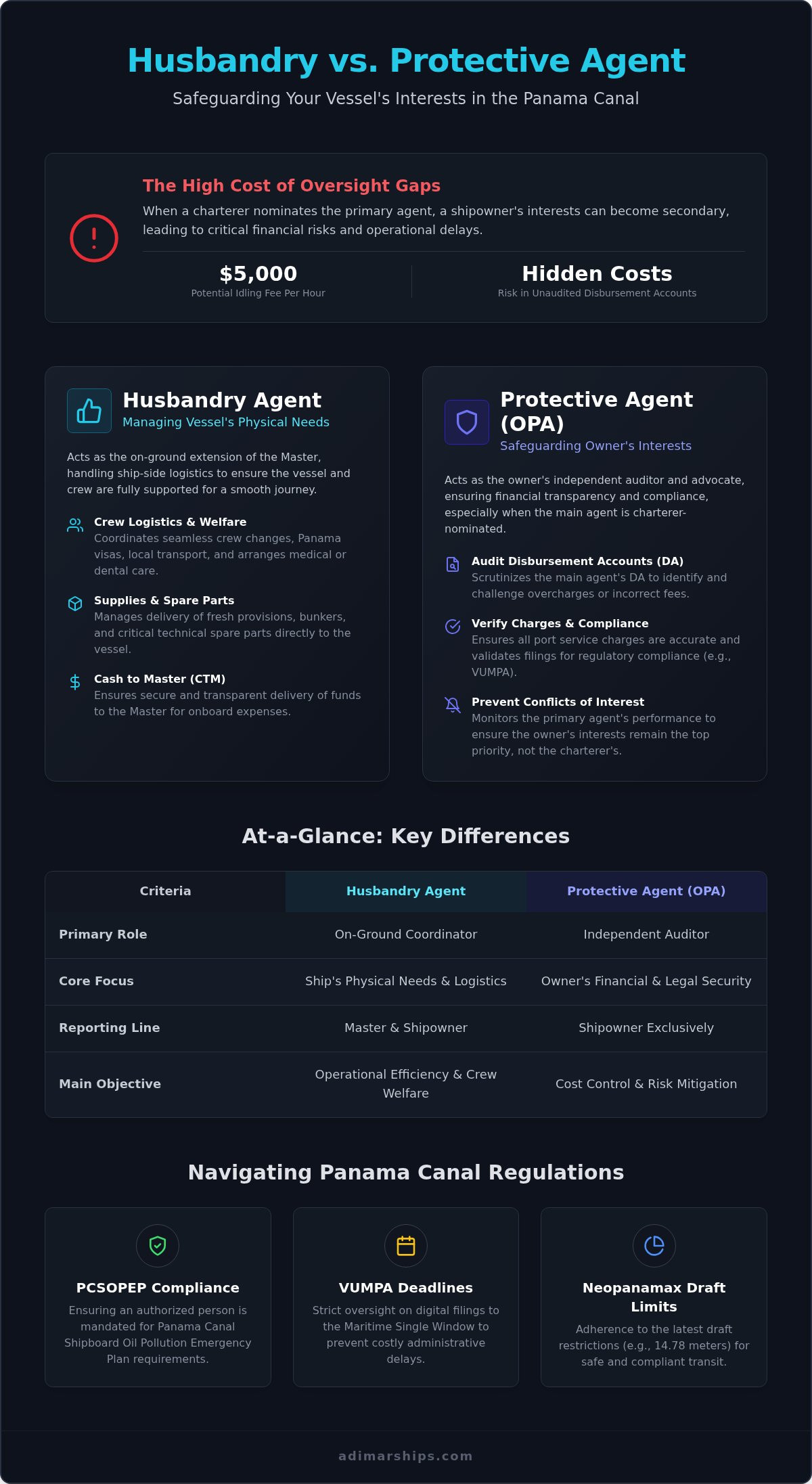
A husbandry agent manages the vessel’s physical requirements. They act as the on-ground extension of the Master and the shipowner, handling everything from crew welfare to technical logistics. Their primary focus remains ship-side rather than cargo-side. They’re the proactive problem-solvers who ensure the vessel has what it needs to continue its journey without delay.
Common tasks include:
- Arranging medical assistance and dental care for crew members.
- Coordinating seamless crew changes, including Panama visas and local transport.
- Delivering fresh provisions, bunkers, and technical spare parts.
- Managing Cash to Master (CTM) deliveries securely and transparently.
In Panama, these tasks require deep local knowledge to navigate specific transit zones. A husbandry agent ensures the ship stays moving while the crew remains healthy and the vessel stays equipped.
What is a Protective Agent (OPA)?
A Protective Agent, often called an Owner’s Protective Agent (OPA), serves as an independent auditor. If the charterer has nominated the primary port agent, that agent’s loyalty naturally leans toward the party paying for the cargo operations. The OPA acts as your vigilant representative to monitor the primary agent’s performance and protect your interests.
The OPA focuses on financial transparency and legal compliance. They audit the Disbursement Account (DA) to ensure every charge is accurate. Since the Panama Canal Authority enforces strict digital validation, having a second set of eyes on filings is a critical safeguard. They verify that the owner isn’t overcharged for port services or burdened with fees that should fall under the charterer’s responsibility.
The core difference in the husbandry agent vs protective agent dynamic is the reporting line. While the husbandry agent executes operational tasks, the protective agent provides strategic oversight. One keeps the ship running; the other keeps the owner’s budget safe.
The Husbandry Agent: Managing the Vessel’s Physical Requirements
Husbandry services are the engine room of a successful port call. While a protective agent guards the books, the husbandry agent manages the deck. In the high-pressure environment of the Panama Canal, where administrative oversights trigger an idling fee of $5,000 per hour, physical coordination must be flawless. A husbandry agent takes responsibility for the vessel’s internal ecosystem, ensuring that every transition from sea to shore happens without friction.
This operational focus is a key part of the husbandry agent vs protective agent distinction. While the protective agent verifies the invoices for these services, the husbandry agent is the one on the ground making sure the parts actually arrive and the crew is cared for. Speed and transparency are vital when the vessel is on a tight transit schedule.
Crew Logistics and Seafarer Welfare
Managing seafarer rotations in Panama involves more than just booking a flight. It requires a deep understanding of local immigration laws and the logistics of moving personnel between Tocumen International Airport and the ports of Balboa or Cristobal. A dedicated agent handles the complexities of Panama transit visas and ensures that crew members meet all health and safety protocols before boarding.
Seafarer welfare often extends to urgent medical care. Whether it’s a routine dental appointment or an emergency medical evacuation, the agent coordinates with local clinics to prioritize the crew’s health. They act as a bridge between the ship’s Master and local authorities, ensuring that the vessel remains compliant with all maritime regulations while in Panamanian waters.
Technical Support and Spares Handling
Maintaining a vessel’s technical integrity during a canal transit is a logistical feat. Ship spares often arrive via air freight and must clear customs rapidly to reach the vessel before it enters the scheduling queue. A husbandry agent manages this entire chain, from the warehouse to the deck. They also facilitate the boarding of specialized technicians who may need to perform critical repairs while the vessel is at anchor or in transit. For a deeper look at these operational workflows, consult our comprehensive guide to ship husbandry services in Panama.
Replenishment of provisions and bunkers requires coordination with a network of trusted local suppliers. By delegating these tasks to a local expert, owners gain the peace of mind that their vessel is fully equipped for the journey ahead. You can contact a local ship agency to see how specialized husbandry support simplifies your next Panama Canal transit.
The Protective Agent: Safeguarding the Owner’s Interests
When a charterer nominates the primary port agent, the shipowner often finds themselves in a vulnerable position. The primary agent’s loyalty naturally aligns with the party paying for the cargo operations, which can lead to the owner’s interests being sidelined. This conflict of interest is the primary reason why owners appoint a protective agent. While the husbandry agent vs protective agent choice depends on your specific needs, the latter serves as your dedicated advocate, ensuring that cargo-related activities don’t compromise your vessel’s schedule or your budget.
A protective agent acts as a vigilant watchdog. They monitor the primary agent’s performance, verify that vessel timing is optimized, and step in as a local representative during disputes with port authorities. Their presence ensures that you aren’t just another number in the port’s queue, but a priority with a dedicated expert looking out for your bottom line.
Financial Oversight and DA Auditing
Financial transparency is the cornerstone of protective agency services. Auditing the Disbursement Account (DA) requires a deep understanding of current tariffs to prevent inflated “miscellaneous” expenses. Your protective agent verifies all Panama Canal fees against official ACP rates. This includes checking specific charges like the $1,250 Vessel Security Charge or the $1,100 First-Time Transit Admeasurement Service Fee.
This oversight prevents the primary agent from overestimating costs or misallocating funds. By auditing every line item, the protective agent ensures that your funds are used exclusively for authorized expenses, providing a level of financial security that a charterer-nominated agent simply cannot guarantee.
Operational Vigilance and Risk Mitigation
The Panama Canal Authority (ACP) has shifted to aggressive digital validation in 2026. A single error in the VUMPA submission, which must be completed at least 96 hours before arrival, can result in transit suspension or non-compliance fines that start at $15,000. Your protective agent provides an independent review of these filings to catch typos or documentation gaps before they become costly liabilities.
Beyond paperwork, they provide real-time status reports directly to your office. This direct line of communication bypasses the charterer’s reporting chain, giving you an unfiltered view of your vessel’s progress. Whether it’s navigating the 14.78-meter draft restrictions for Neopanamax vessels or ensuring compliance with PCSOPEP mandates, the protective agent mitigates risk by serving as your expert on-site representative.
Key Differences in Operations, Authority, and Reporting
Authority is the primary differentiator when comparing a husbandry agent vs protective agent. While both roles support the shipowner, their operational triggers and reporting structures diverge. The husbandry agent takes orders from the Master to resolve immediate ship-side issues. In contrast, the protective agent reports to the owner’s headquarters to ensure the charterer’s agent is performing as promised. This distinction ensures that operational execution doesn’t happen in a vacuum without strategic oversight.
Financial liability also shifts between these roles. A husbandry agent manages expenses by paying local suppliers and handling cash deliveries. The protective agent audits these same expenses. They verify that the primary agent isn’t padding the Disbursement Account with unauthorized fees. This system of checks and balances prevents the owner from bearing costs that the charterer should legally cover under the terms of the charter party.
Comparison Table: Husbandry vs. Protective Agency
- Primary Client: The husbandry agent serves the Master and crew directly on-site. The protective agent serves the shipowner or operator as an independent auditor.
- Core Goal: Husbandry focuses on operational efficiency and physical logistics. Protective agency focuses on financial protection and legal compliance.
- Typical Trigger: Husbandry is a routine requirement for every port call. Protective agency is triggered specifically when the charterer nominates the primary agent.
- Reporting Line: Husbandry reports to the Master/Owner. Protective reports to the Owner/Head Office.
Decision Matrix: When to Appoint Each Role
Determining which service you need depends on the specific risks of your port call. You should appoint a protective agent whenever you don’t have full trust in the charterer’s nominated agent. This is common in complex transit zones like Panama, where local fees can be opaque. If your vessel is facing high crew turnover or requires urgent technical repairs, a dedicated husbandry agent is essential to keep the ship moving.
In many cases, owners choose to combine these roles into a single owner’s nominated agency. This approach provides full control over both physical logistics and financial auditing. It eliminates the risk of conflicting interests and ensures that one dedicated partner handles everything from crew welfare to DA verification. You can streamline your operations by appointing a single expert to manage your interests at the Panama Canal.
Choosing separate entities can be beneficial when you want a completely independent audit of a large, complex port stay. However, a combined agency often proves more cost-effective. It simplifies communication channels and ensures that the same team overseeing your crew changes is also protecting your bottom line. Regardless of your choice, transparency remains the most important factor in managing maritime logistics.
Navigating Panama Canal Transits with Integrated Agency Support
The Panama Canal remains one of the most challenging maritime corridors in the world. In 2026, operational pressures have intensified with Neopanamax reservation fees reaching $100,000 and tugboat charges set at $30,000. For shipowners, these high costs mean there’s zero room for error. A single administrative oversight can lead to an idling fee of $5,000 per hour. Successfully managing this environment requires more than just basic representation; it demands a partner who can seamlessly bridge the gap between a husbandry agent vs protective agent.
Integrated support ensures that your vessel doesn’t just arrive, but thrives during its stay. While your husbandry needs might include coordinating with pilots and tugs, your protective interests involve ensuring that the Panama Canal Authority (ACP) regulations are followed to the letter. This is especially critical regarding the 14.78-meter draft restrictions currently in place for Neopanamax vessels. By combining these roles, you eliminate the communication gaps that often lead to costly transit delays.
Compliance is another area where integrated expertise is non-negotiable. Any vessel with an oil-carrying capacity of 400 metric tons or more must appoint a Panama-resident PCSOPEP authorized person. This individual acts as a vital liaison with the ACP in case of environmental emergencies. Since PCSOPEP-related violation fines range from $15,000 to $50,000, having a representative who understands both the technical and legal requirements of the canal is a fundamental safeguard for your fleet.
The Adimar Advantage: Local Expertise and Integrity
Adimar Shipping acts as your vigilant eyes and ears on the ground. We don’t just process paperwork; we provide a proactive presence that anticipates challenges before they impact your budget. Our commitment to ethical standards means you receive transparent financial reporting with no hidden markups on port services. We treat your vessel as if it were our own, providing the personalized service that large, impersonal agencies often fail to deliver. This dedication to integrity ensures that your interests are always the top priority, regardless of who nominated the primary agent.
Next Steps for Ship Owners and Charterers
Preparing for a Panama Canal transit starts long before the vessel reaches the breakwater. To secure your interests, you can nominate Adimar as your dedicated protective or husbandry agent for any upcoming call. We recommend requesting a pro-forma Disbursement Account (DA) early in the planning phase. This allows us to provide an accurate estimate of port dues and canal fees based on the latest 2026 tariffs. By delegating these complex tasks to a regional specialist, you gain the operational freedom to focus on your core business while we handle the intricacies of the canal.
Optimizing Your Next Panama Canal Port Call
Navigating the complex boundary between a husbandry agent vs protective agent is the most effective way to eliminate operational friction and financial risk. You now understand that while husbandry services keep your crew and vessel functioning, protective agency ensures your budget remains intact through rigorous auditing. By establishing these clear reporting lines, you prevent the charterer’s priorities from overshadowing your own. This clarity is essential in a 2026 maritime environment where every hour at anchor carries significant financial weight.
Adimar Shipping provides the vigilant local presence you need to master these logistics. With decades of Panama Canal expertise and a commitment to transparent, auditor-grade financial reporting, we act as a seamless extension of your team. As an authorized PCSOPEP representative, we guarantee compliance with strict environmental mandates while protecting your bottom line from hidden costs. You don’t have to manage these complexities alone. Take the next step toward secure, efficient transits.
Secure your interests at the Panama Canal with Adimar Shipping and gain the operational freedom you deserve. We look forward to supporting your fleet with reliability and local insight.
Frequently Asked Questions
Can the same company act as both husbandry and protective agent?
Yes, a single company can provide both services. When you appoint an owner’s nominated agency, they handle physical logistics and financial oversight simultaneously. This integration eliminates communication gaps and ensures a unified reporting line. It’s often the most cost-effective way to manage the husbandry agent vs protective agent dynamic while maintaining full control over the port call.
Who pays the fees for a protective agent in a charter scenario?
The shipowner pays the fees for the protective agent. In a charter scenario, the charterer usually pays for the primary port agent to manage cargo operations. The owner appoints an OPA as an independent auditor to safeguard their specific interests. This ensures the owner has a dedicated representative whose loyalty isn’t split between two parties with different financial objectives.
Is a protective agent necessary for every Panama Canal transit?
While not legally mandatory, a protective agent is highly recommended for transits where the charterer nominates the primary agent. The Panama Canal Authority has strict digital validation and 2026 draft restrictions of 14.78 meters. An OPA provides a second set of eyes to prevent idling fees of $5,000 per hour caused by administrative errors or scheduling oversights during the transit.
What are the most common husbandry services requested in Panama?
The most frequent requests include crew changes, medical assistance, and spare parts delivery. Coordination between Tocumen International Airport and the canal ports is a major logistical focus. Agents also handle Cash to Master (CTM), bunker replenishment, and fresh provisions. These services ensure the vessel remains technically sound and the crew’s welfare is prioritized throughout the stay in Panamanian waters.
How does a protective agent save money for the ship owner?
A protective agent saves money by auditing the Disbursement Account (DA) for inflated charges. They verify that official Panama Canal fees, such as the $1,250 Vessel Security Charge, are billed correctly. By monitoring vessel timing, they also prevent unnecessary tugboat charges or non-compliance fines that start at $15,000. This vigilance ensures you only pay for authorized, accurate services.
What happens if the husbandry agent and charterer’s agent disagree?
The protective agent acts as the owner’s advocate to resolve the conflict. If a disagreement arises over vessel timing or port dues, the OPA intervenes with the charterer’s agent to protect the owner’s interests. This oversight is a core benefit in the husbandry agent vs protective agent relationship, ensuring the vessel isn’t unfairly delayed or billed for expenses that belong to the charterer.
Does the Master of the vessel work directly with the protective agent?
The Master works primarily with the husbandry agent for daily operations but remains in contact with the protective agent for strategic issues. While the husbandry agent handles the physical needs of the ship, the protective agent provides high-level oversight. The Master relies on the OPA to verify that the charterer’s agent is following the owner’s instructions and respecting the vessel’s safety limits.
What legal authority does a protective agent have in Panama?
A protective agent has the authority to represent the owner in administrative and financial matters with local authorities. They can sign documentation, verify VUMPA filings, and act as a liaison with the Panama Canal Authority. In Panama, every vessel must have local representation to guarantee tolls and maritime fees, making the agent’s legal standing essential for entering the scheduling queue.