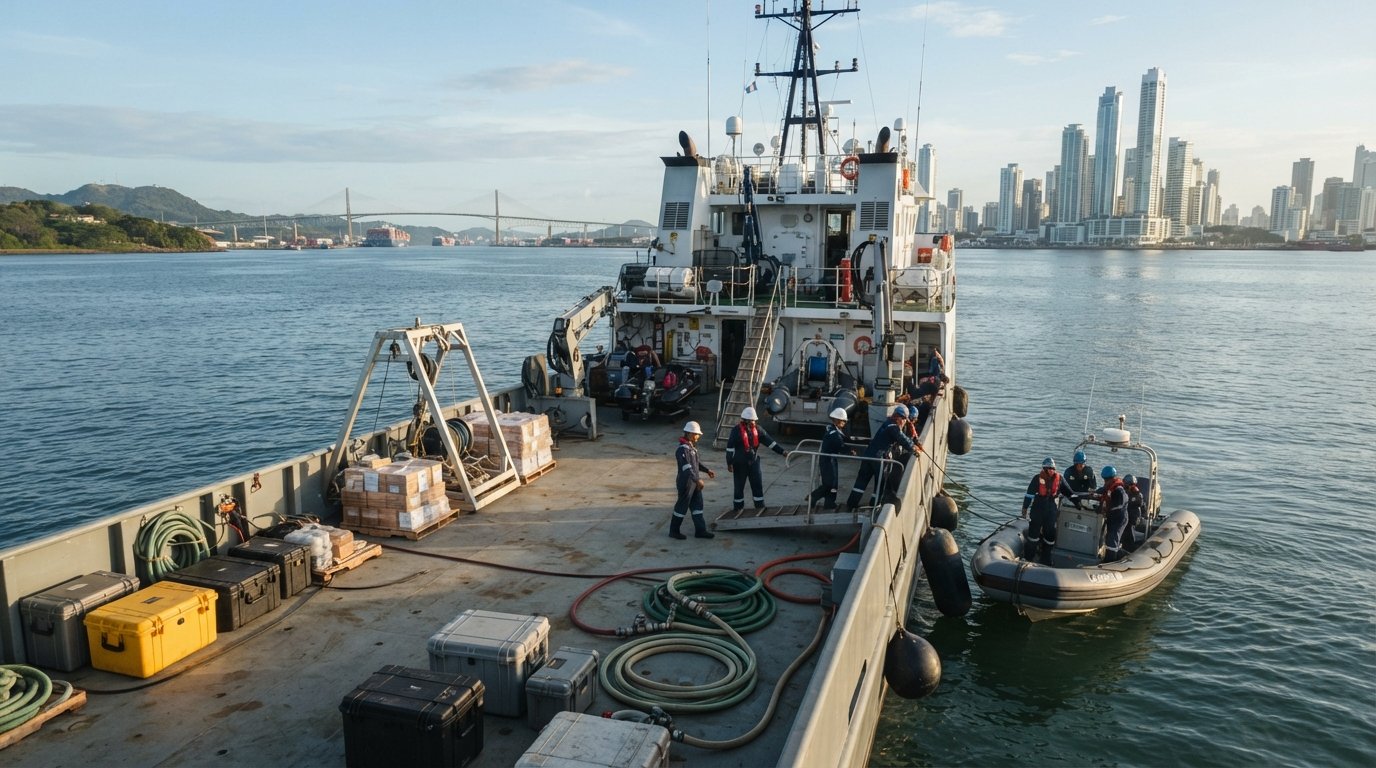

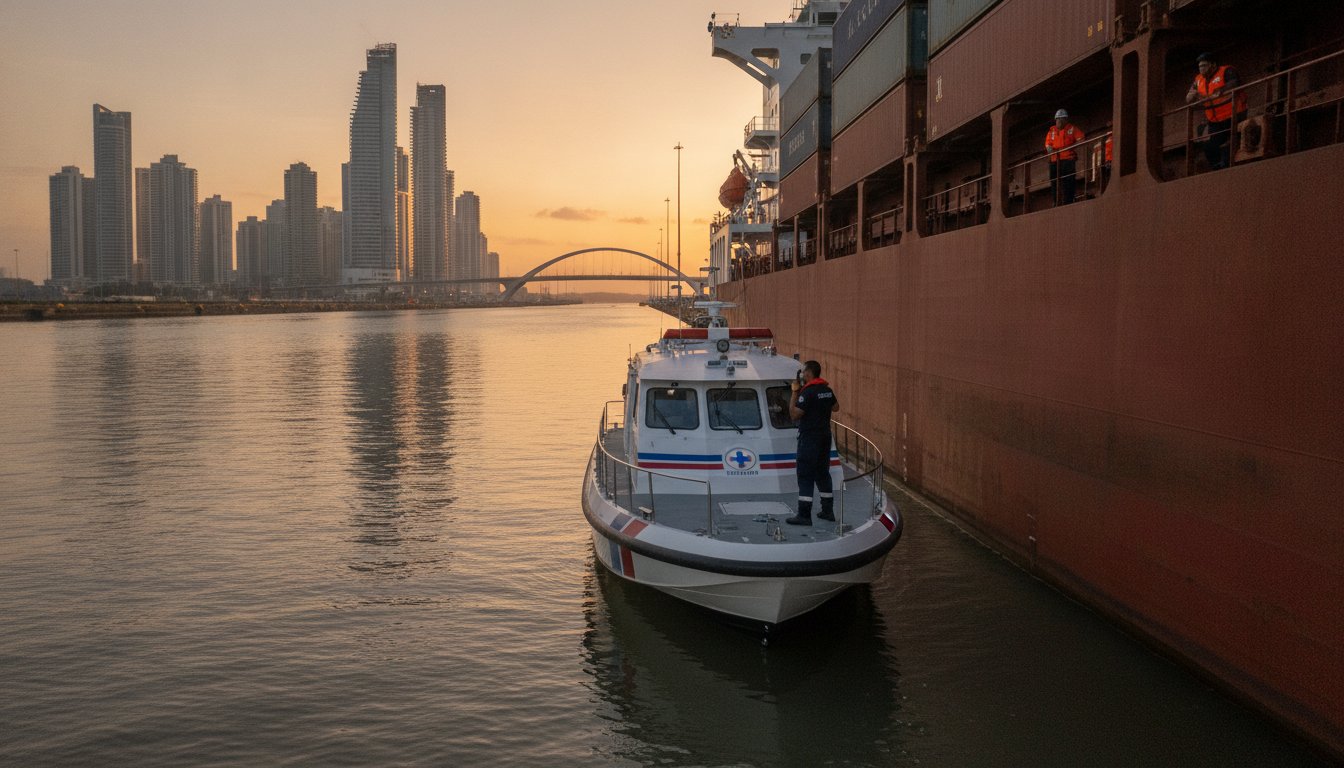
A single two-hour delay in reporting a medical issue can push your vessel back by 12 hours in the transit sequence, potentially costing you upwards of $35,000 per day in charter hire and fuel. When a crew member falls ill, the priority is their health, but the reality of the Panama Canal is that logistical precision determines whether your vessel maintains its slot or faces a costly forfeiture. Managing maritime crew medical assistance in Panama requires more than just a doctor; it demands a deep understanding of the 96-hour VUMPA deadline and local immigration protocols.
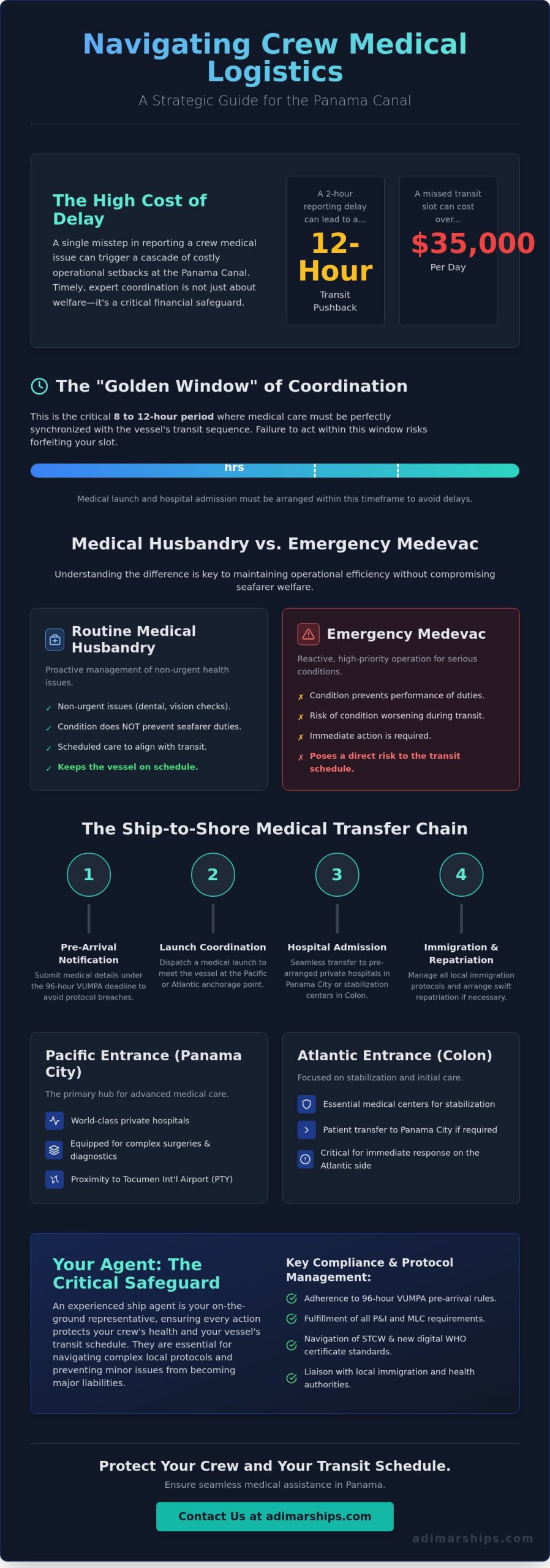
We understand that navigating the complexities of private hospitals and launch transfers at the Pacific or Atlantic entrances can be overwhelming. You shouldn’t have to choose between your crew’s welfare and your operational timeline. This guide provides a strategic roadmap to ensure your vessel remains on schedule while fulfilling every P&I and MLC requirement. We’ll explore the latest 2026 STCW amendments, digital WHO certificate standards, and the logistical steps needed for a seamless ship-to-shore transfer that protects both your people and your bottom line.
Key Takeaways
- Identify the “Golden Window” for medical coordination to prevent a $35,000+ daily loss from missed transit slots.
- Learn to navigate 2026 digital health requirements to ensure your maritime crew medical assistance panama remains fully compliant with ACP and MLC standards.
- Streamline the logistical chain for ship-to-shore transfers by coordinating medical launches and private hospital admissions at both the Pacific and Atlantic entrances.
- Differentiate routine medical husbandry from emergency medevacs to maintain operational efficiency without compromising seafarer welfare.
- Discover how proactive ship agency representation acts as a safeguard against local immigration delays and complex health authority protocols.
The Operational Risk of Medical Emergencies at the Panama Canal
Managing a medical crisis during a canal transit is fundamentally different from a standard port call. In a typical port, a vessel might remain at anchor while a crew member receives care. At the Panama Canal, you’re working against a rigid, high-stakes schedule where every minute is accounted for by the Panama Canal Authority (ACP). Efficiency is the only way to protect your vessel’s operational freedom. When an emergency happens, the priority is the seafarer’s health, but the logistical reality is that a single misstep can halt a multi-million dollar transit sequence.
We call it the “Golden Window.” This is the 8 to 12 hour period where medical care must be perfectly synchronized with the transit sequence. If a medical launch isn’t ready the moment a vessel reaches the anchorage, the entire transit can be compromised. According to industry data, a two-hour delay in reporting or coordinating care can trigger a 12-hour pushback in the transit sequence. This ripple effect creates logistical chaos for fleet managers who are already balancing tight margins and strict delivery windows.
The True Cost of a Missed Transit Slot
Missing a slot isn’t just a minor inconvenience; it’s a financial disaster. A “vessel not ready” status can lead to the automatic forfeiture of a transit slot. With missed transit slots costing upwards of $35,000 per day in charter hire and fuel, the stakes are incredibly high. These delays also impact your following-port ETA and can lead to missed cargo windows. Delegating these high-pressure tasks to an experienced husbandry services team isn’t just a matter of convenience. It’s a critical financial safeguard that ensures your vessel maintains its position in the queue while the crew receives necessary attention.
Panama’s Strategic Medical Infrastructure
Panama offers some of the most advanced medical facilities in the region, which is a significant advantage for ship operators. Panama’s healthcare system is divided between robust public and private sectors, with world-class private hospitals located primarily on the Pacific side in Panama City. These facilities are equipped for complex surgeries and specialized diagnostics. On the Atlantic side, Colon provides essential medical centers for stabilizing patients before transfer. Proximity to Tocumen International Airport ensures that if repatriation is necessary, the logistics are handled swiftly and professionally.
Your ship agent acts as a vigilant on-the-ground representative, protecting your interests at every turn. They ensure that maritime crew medical assistance panama follows the strict 96-hour VUMPA pre-arrival notification rules. Without this local oversight, a small medical issue can escalate into a major breach of Panama Canal transit protocols. By delegating the coordination to experts, you ensure that your crew gets the care they need without compromising the integrity of your transit schedule.
Differentiating Medical Husbandry: Routine Care vs. Emergency Medevac
Effective maritime crew medical assistance panama requires a clear distinction between routine husbandry and emergency medical evacuations. Medical husbandry is the comprehensive management of a seafarer’s health while the vessel is in port or transiting the Canal. It’s a proactive logistical service. On the other hand, a medevac is a reactive, high-priority operation. Understanding the difference helps ship operators make critical decisions that align with international maritime health standards without causing unnecessary ship delays.
Operators often face a difficult choice: should they evacuate a crew member now or wait until the next port? To simplify this, we suggest a simple decision matrix. If the condition prevents the seafarer from performing their duties or if there’s a risk of the condition worsening during the 8-12 hour transit, immediate action is required. For non-urgent issues like dental pain or non-urgent vision checks, routine care is the better path. This keeps the vessel moving while still addressing the crew’s welfare as mandated by the Maritime Labour Convention. It’s about balancing clinical needs with the integrity of the transit schedule.
Routine Medical Shore Leave Logistics
Scheduling routine care is an exercise in timing. You don’t want a doctor’s visit to conflict with bunkering or cargo operations. Our ship agency Panama team coordinates these visits by securing temporary shore passes and arranging secure transport from the pier. We ensure that the crew member has their digital WHO-approved medical certificate ready for inspection. This level of preparation prevents immigration delays and keeps your port stay efficient. It’s a seamless process that treats medical care as a standard logistical line item rather than a disruption.
Life-Safety Medical Evacuations (Medevac)
When a life-safety situation arises, the protocol shifts instantly. We immediately notify the Panama Canal pilots and ACP controllers to coordinate a safe extraction point. These operations often require specialized launch boats designed for stretcher-bound patients. In Panama, a medical launch typically costs between $450 and $950, depending on the distance from the pier and sea conditions. We also maintain direct contact with P&I Club correspondents to ensure emergency funding is in place, so treatment starts without financial friction. This rapid response is the core of reliable maritime crew medical assistance panama.
Managing these two very different scenarios requires a partner who understands the local landscape. If you’re unsure how to handle a specific medical case, consulting with a team that specializes in husbandry services can provide the clarity you need to protect your crew and your schedule.
Navigating the Logistics of Ship-to-Shore Medical Transfers
Moving a patient from a vessel at the Panama Canal isn’t a simple transport task. It is a multi-stage logistical operation that begins on the vessel deck and only ends once the seafarer is admitted to a hospital bed. Success depends on a seamless chain of custody between the Master, the launch operator, and the medical facility. To maintain this chain, our husbandry services team provides 24/7 oversight, acting as a vigilant, on-the-ground extension of your own team. We serve as your local sentinels, ensuring that every detail of the maritime crew medical assistance panama process is handled with the precision your schedule requires.
The geography of the Canal dictates the strategy. Transfers at the Pacific anchorage (Balboa) provide faster access to Panama City’s specialized private clinics. Conversely, transfers at the Atlantic entrance (Cristobal) often require more complex coordination if the patient needs to be moved across the isthmus for high-level care. Throughout this process, we maintain constant communication with the vessel to ensure the patient is stabilized according to the International Medical Guide for Ships standards before the launch arrives. This proactive observation prevents surprises at the pier that could lead to costly delays.
Anchorage vs. In-Transit Transfers
Most medical transfers occur at the Pacific or Atlantic anchorages before the vessel enters the canal waters. This is the safest and most cost-effective approach. While “lock-side” transfers during the actual transit are possible, the Panama Canal Authority (ACP) only allows them in extreme life-safety emergencies. Weather is a constant variable in Panama. Heavy tropical swells can make ladder transfers dangerous, so we prioritize using launch boats with specialized safety protocols and experienced crews. Our role is to monitor these conditions in real-time, providing the local oversight necessary to protect your crew during the transition from ship to shore.
Managing Immigration and Port Authorities
The National Immigration Service maintains strict control over seafarers entering Panamanian territory for medical care. You’ll need to provide the crew member’s passport, a formal letter of guarantee from the agent, and the digital WHO-approved medical certificate. As of 2026, Panama has reinforced its vigilance regarding vaccination records, specifically for Yellow Fever, depending on the vessel’s previous ports of call. We manage these bureaucratic hurdles on your behalf, ensuring all documentation is filed correctly through the VUMPA portal. This expertise delegation removes the administrative burden from your officers, allowing them to focus on the safe navigation of the vessel while we handle the local authorities.
Compliance and Documentation: Meeting ACP and International Standards
Compliance is the bedrock of a successful transit. It’s not just about ticking boxes; it’s about protecting your vessel from the rigid enforcement of the Panama Canal Authority (ACP). As of 2026, the regulatory environment has shifted toward total digitalization. If your documentation isn’t aligned with these new standards, you risk more than just a fine. You risk the integrity of your entire transit schedule. Providing maritime crew medical assistance panama now requires a sophisticated understanding of both the Maritime Labour Convention (MLC 2006) and the ACP’s digital ecosystem.
The 2026 Digital Health Declaration is a significant update for ship operators. All seafarers must now present digital WHO-approved medical certificates. These aren’t just scanned PDFs; they are verified digital assets that must be uploaded to the ACP Maritime Service Portal. Our team acts as your digital sentinels, ensuring every file is recognized by the system before your vessel reaches the breakwater. This proactive oversight is your best defense against a “vessel not ready” status that could cost you $35,000 or more in daily delays.
The 48-Hour Pre-Arrival Protocol
While the initial VUMPA package is due 96 hours before arrival, the 48-hour window is when the final Maritime Declaration of Health (MDH) must be confirmed. If you have a crew member requiring attention, we must communicate this to the authorities immediately. Delaying this report by even two hours can push your transit back by 12 hours. We ensure your owner’s nominated agency has all P&I details and Letters of Guarantee ready to present to the National Immigration Service. This coordination ensures that when the launch arrives, the paperwork is already cleared.
The Panama Medical Certificate
For vessels flying the Panama flag, compliance is even stricter. The 2024 amendments to the STCW Code, which took full effect on January 1, 2026, mandate specific fitness standards. Certificates are valid for two years, but they must be issued by recognized practitioners in the PTY region if a renewal is needed during your stay. We maintain a network of approved clinics in Balboa and Cristobal to handle these renewals without disrupting your operations. If you’re facing a compliance hurdle, our Ship Agency Services can manage the entire certification process on your behalf.
To ensure a seamless disembarkation, keep this documentation checklist ready:
- Digital WHO-approved medical certificate for the affected crew.
- Updated Maritime Declaration of Health (MDH) filed via the VUMPA portal.
- P&I Club Letter of Guarantee for medical expenses.
- Clear digital copies of the Seaman’s Book and Passport.
- Verified vaccination records, specifically checking for 2026 Yellow Fever requirements.
Adimar Shipping: Protecting Your Crew and Your Transit Schedule
Experience is your most reliable shield against the unpredictable nature of maritime logistics. With over 20 years of local expertise, we provide the vigilance required to manage maritime crew medical assistance panama without jeopardizing your vessel’s position in the transit queue. We don’t just act as a third party; we function as a proactive extension of your technical team on the ground. Our deep-rooted history at the Canal allows us to anticipate regulatory hurdles before they become operational delays, ensuring your Panama Canal transit remains on track and on budget.
Transparency and ethical conduct are the pillars of our service. We manage medical fees with absolute clarity, ensuring that every dollar spent is accounted for and justified by the level of care provided. Our role is to provide operational freedom for ship owners and managers. By delegating the complex coordination of health authorities and immigration protocols to us, you gain the peace of mind that comes from professional local oversight. We protect your crew’s welfare while safeguarding your bottom line from the $35,000 daily costs associated with missed slots.
The Adimar Shipping, Inc. Medical Response Team
Our response team is available 24/7 to handle emergency coordination at a moment’s notice. We’ve spent decades building established relationships with the top private hospitals in Panama City, ensuring your seafarers receive priority attention in world-class facilities. Every step of the ship-to-shore transfer is documented with real-time reporting to the Master and the Technical Manager. You’ll never be in the dark about a crew member’s clinical status or the potential impact on your transit sequence. This vigilant oversight is what differentiates a standard agency from a dedicated logistical partner that prioritizes your vessel’s integrity.
Nominate Adimar Shipping, Inc. for Your Next Transit
Integrating medical husbandry into your standard agency appointment is the most efficient way to prepare for the unexpected. Whether you need a quote for routine dental services or help renewing a Panama medical certificate under the 2026 STCW standards, we’re ready to assist. You can request a comprehensive PDA that includes all potential medical line items to avoid budget surprises during the transit. Our team is standing by to serve as your local sentinels at both the Pacific and Atlantic entrances. Contact our operations desk today to discuss how we can support your next transit with our specialized maritime crew medical assistance panama services.
Strategic Oversight for Your Next Panama Transit
Maintaining your vessel’s schedule while ensuring seafarer welfare is a logistical balancing act that leaves no room for error. We’ve explored how the “Golden Window” of transit timing and the shift toward 2026 digital health standards make local expertise more critical than ever. Success at the Canal depends on distinguishing routine husbandry from high-stakes evacuations and ensuring every document is filed correctly within the mandatory pre-arrival window. Precision isn’t just a goal; it’s the only way to protect your bottom line from the high costs of missed slots.
Adimar Shipping provides the vigilant oversight you need to handle these complexities. With over 20 years of local expertise and our status as an authorized PCSOPEP representative, we act as a dependable extension of your team. Our 24/7 emergency response team is always ready to manage maritime crew medical assistance panama with the transparency and speed your operations demand. Don’t let a medical emergency derail your transit slot or compromise your crew’s care. Contact Adimar Shipping for Expert Medical Husbandry in Panama today to secure your vessel’s operational freedom. We’re here to ensure your crew stays healthy and your schedule stays intact.
Frequently Asked Questions
Can a crew member receive medical care without the vessel stopping its transit?
Yes, crew members can receive medical care at the Pacific or Atlantic anchorages before the transit begins. While “lock-side” transfers are technically possible in emergencies, the ACP generally prohibits stopping a vessel once it enters the canal waters. Coordinating the transfer at the anchorage ensures the vessel maintains its transit slot without interruption.
What are the requirements for a medical sign-off in Panama in 2026?
A medical sign-off in 2026 requires a digital WHO-approved medical certificate and a formal Letter of Guarantee from your ship agent. You must also provide the seafarer’s passport and Seaman’s Book to the National Immigration Service. All health data must be filed through the VUMPA portal at least 48 hours before the transfer to avoid administrative delays.
Which hospitals in Panama are best suited for international seafarers?
Private hospitals in Panama City are the preferred choice for international seafarers due to their advanced diagnostic equipment and English-speaking staff. Facilities on the Pacific side offer world-class care comparable to North American standards. On the Atlantic side, we utilize specialized private clinics in Colon for immediate stabilization before transferring patients to the capital if necessary.
How does the Panama Canal Authority (ACP) handle emergency medevacs?
The ACP manages emergency medevacs through a strict protocol involving the pilot on board and the canal controllers. Once an emergency is declared, the ACP coordinates a safe extraction point, often near the locks or specific mooring stations. This process requires immediate notification to minimize the ripple effect on the canal’s transit sequence and avoid the forfeiture of your slot.
Do I need a special visa for a crew member to receive medical treatment on shore?
You don’t need a special visa for a crew member to receive medical treatment on shore. The National Immigration Service issues a temporary medical shore pass based on the vessel’s documentation and our guarantee as your agent. We manage the entire immigration clearance process, ensuring the seafarer has legal status while receiving maritime crew medical assistance panama in local facilities.
Can Adimar Shipping coordinate with my P&I Club directly?
Yes, Adimar Shipping coordinates directly with your P&I Club and their local correspondents to streamline funding and reporting. We ensure that all medical reports and invoices meet the Club’s specific requirements for claim processing. This direct communication prevents financial friction and ensures the crew member receives immediate care without waiting for manual wire transfers.
What happens if a crew member is hospitalized and the vessel must depart?
If a crew member is hospitalized and the vessel must depart, we take full responsibility for their local care and eventual repatriation. As your agent, we manage their hospital stay, provide regular updates to your technical team, and coordinate with the airline for their return home once they are fit for travel. This allows your vessel to continue its voyage without logistical complications.
Is medical care in Panama compliant with MLC 2006 standards?
Medical care in Panama is fully compliant with MLC 2006 standards, ensuring seafarers receive treatment at no cost to themselves. Panama’s status as a major maritime hub means its private healthcare infrastructure is specifically designed to meet maritime crew medical assistance panama requirements. These facilities provide the high standard of care mandated by international conventions and shipowner obligations.