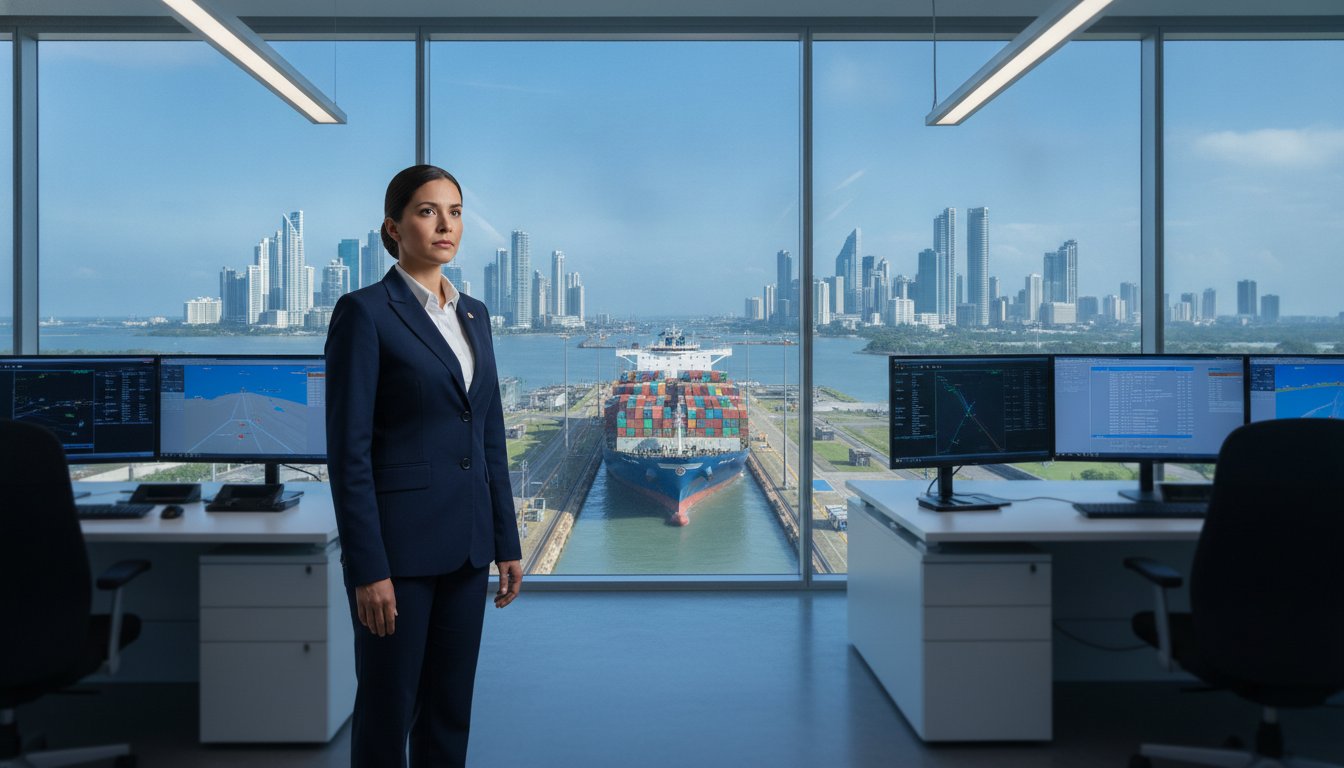

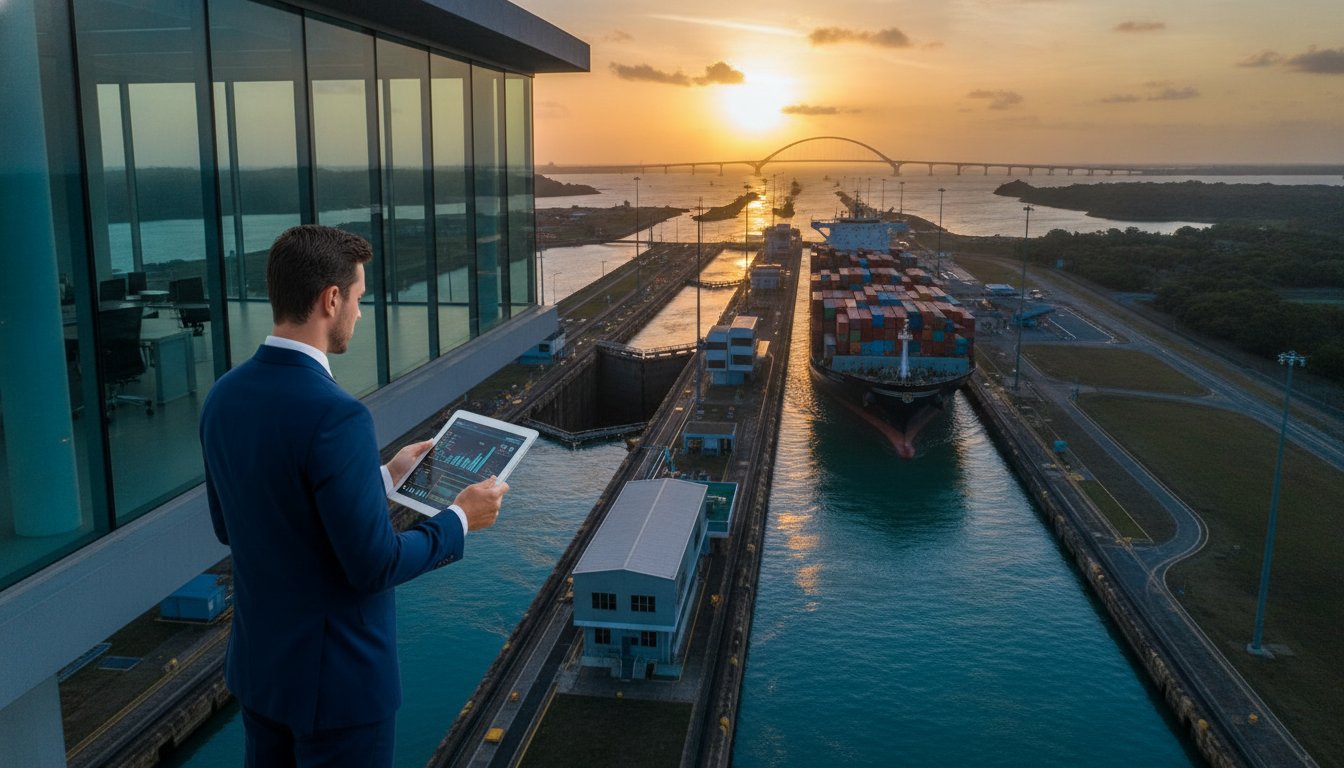
Why does a successful Panama Canal transit so often result in a $10,000 “surprise” invoice landing on your desk months after the vessel has cleared the locks? For many owners and operators, managing vessel disbursement accounts Panama feels like staring into a six-week black hole where transparency vanishes and husbandry markups escalate without warning. You’ve likely experienced the headache of trying to reconcile official ACP fees against an agent’s billing, only to find discrepancies that erode your voyage margins.
We understand that predictable financial outcomes are just as critical as the transit itself. This 2026 guide provides a roadmap to eliminate accounting delays and hidden costs by treating your disbursement accounts as tactical financial pulses rather than mere invoices. You’ll learn how to secure audit-ready final accounts within 30 days and maintain zero-delay operations through expert local oversight. We’ll examine the latest freshwater surcharge calculations and show you how a vigilant, on-the-ground partner acts as a fiduciary extension of your own office to protect your bottom line.
Key Takeaways
- Understand why Panama Canal DAs require a specialized approach compared to standard port records to manage their unique technical complexities.
- Navigate the critical 96-hour ACP payment window to secure your transit slot and maintain operational momentum without funding delays.
- Apply strict KPIs, such as the 5% variance rule, to audit vessel disbursement accounts Panama and eliminate unexpected post-transit billing surprises.
- Prepare for 2026 financial requirements, including the latest freshwater surcharge components and high-value Neopanamax booking fees.
- Learn how a local fiduciary partner provides the vigilant oversight needed to close the “six-week black hole” in maritime accounting.
What is a Vessel Disbursement Account (DA) in Panama?
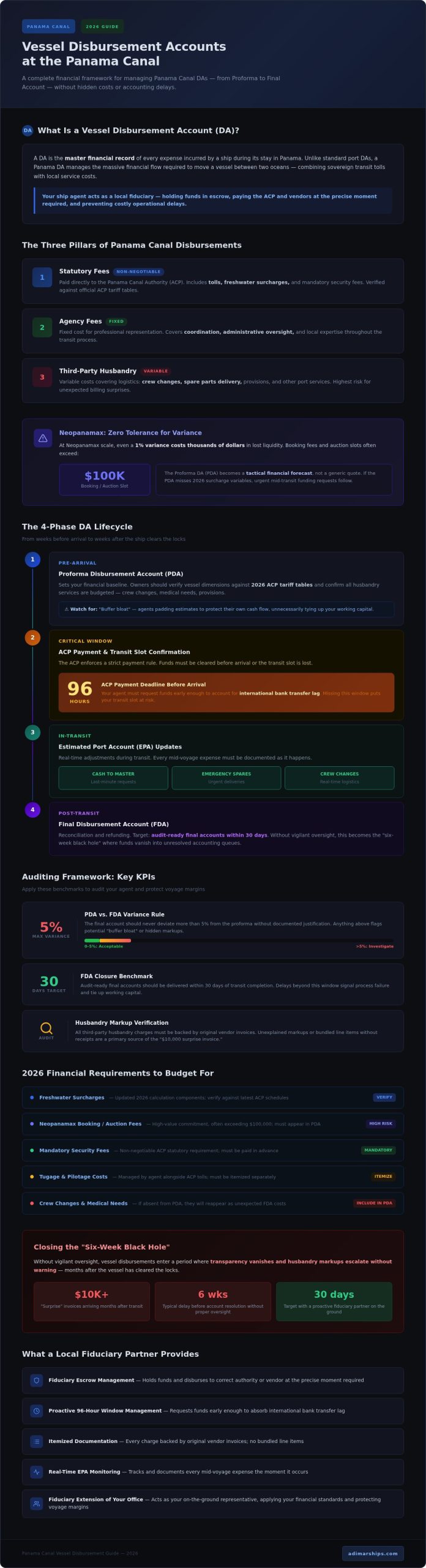
A Disbursement Account is the master financial record of every expense incurred by a ship during its stay in a specific jurisdiction. In this region, vessel disbursement accounts Panama act as more than just a ledger; they’re a high-stakes reconciliation of sovereign transit tolls and local service costs. Unlike standard port DAs, which might focus on simple berthing and stevedoring, a Panama DA manages the massive financial flow required to move a vessel between two oceans. Precision is non-negotiable.
Your ship agent serves as a local fiduciary. They hold your funds in escrow, ensuring that every dollar is allocated to the correct authority or vendor at the precise moment required. This role requires vigilant oversight. The agent manages the heavy lifting of ACP tolls, tugage, and pilotage, alongside the smaller but equally vital husbandry fees. Because the Panama Canal Authority (ACP) requires payments in advance, your agent must act as a proactive partner to prevent operational delays.
The Three Pillars of Panama Canal Disbursements
Managing these accounts involves balancing three distinct categories of expenditure. Each requires a different level of verification to ensure transparency.
- Statutory Fees: These are non-negotiable costs paid directly to the Panama Canal Authority (ACP). They include tolls, freshwater surcharges, and mandatory security fees.
- Agency Fees: This is the fixed cost for professional representation. It covers coordination, administrative oversight, and local expertise.
- Third-Party Husbandry: These variable costs cover logistics such as crew changes, spare parts delivery, and provisions.
Why Precision Matters for Neopanamax Transits
The financial scale of Neopanamax operations leaves no room for clerical oversight. A minor 1% variance on a large-scale transit doesn’t just result in a rounding error; it costs thousands of dollars in lost liquidity. When you factor in the high-value commitment of booking fees or auction slots, which often exceed $100,000, the initial Proforma Disbursement Account (PDA) becomes critical. The PDA is a tactical financial forecast designed to protect your voyage margins, not just a generic price quote.
Errors in the early stages of a vessel disbursement accounts Panama filing can lead to significant funding gaps. If the PDA fails to account for the latest 2026 surcharge variables, you might face urgent requests for additional funds while the vessel is already in transit. We prioritize accuracy in these forecasts to ensure your capital remains working for you rather than sitting in an unresolved accounting “black hole.”
The Lifecycle of Panama Canal Disbursements
Managing vessel disbursement accounts Panama is a four-stage process that requires constant vigilance. It isn’t a set and forget administrative task. It’s a dynamic financial cycle that begins weeks before arrival and concludes long after the ship has cleared the locks. Efficiency at each stage prevents the dreaded six-week black hole where funds vanish into unresolved accounting queues. Each phase demands specific documentation to ensure your voyage margins remain protected.
Phase 1 starts with the Proforma Disbursement Account (PDA), which sets your financial baseline. Phase 2 is the most critical for operational continuity. The ACP enforces a strict 96-hour payment rule. If your funds aren’t cleared four days before arrival, your transit slot is at risk. This requires your agent to be proactive in requesting funds early enough to account for international bank lag. Phase 3 covers real-time adjustments during the transit itself. These are often categorized as Estimated Port Account (EPA) updates. Whether it’s a last-minute Cash to Master request or the urgent delivery of emergency spares, these mid-voyage expenses must be documented as they happen. Finally, Phase 4 is the Final Disbursement Account (FDA) where reconciliation and refunding occur.
Auditing the Proforma (PDA) Before Funding
Owners shouldn’t accept a PDA at face value. Some agents include buffer bloat in their estimates to protect their own cash flow, which unnecessarily ties up your working capital. We recommend verifying vessel dimensions directly against the 2026 ACP tariff tables to ensure accuracy. It’s also vital to confirm your agent has budgeted for all necessary husbandry services. If crew changes or medical needs aren’t in the initial PDA, they’ll inevitably reappear as unexpected costs in the final bill. Precision at this stage prevents the frustration of mid-transit funding requests.
Reconciling the Final Account (FDA)
The industry standard for delivering a final account is 30 days. If you’re waiting 60 or 90 days for a reconciliation, your agent’s accounting process is failing you. Reconciling the FDA requires a line-by-line comparison of official ACP invoices against the agent’s summary. You must watch for surprise surcharges that weren’t in the PDA. A vigilant agent will explain these variances immediately and provide the necessary proof of payment for every third-party vendor. If you’re looking for a partner to manage this process with total transparency, an experienced Panama ship agency can act as a reliable extension of your own office to protect your interests.
Auditing Framework: KPIs for Panama Ship Agents
Establishing clear Key Performance Indicators (KPIs) is the only way to move beyond guesswork in maritime accounting. When managing vessel disbursement accounts Panama, we advocate for the 5% Variance Rule. This means the final invoice shouldn’t deviate from the initial Proforma by more than 5% unless a specific, documented operational change occurred. If your agent consistently misses this mark, it indicates poor local knowledge or a lack of financial discipline. Precision helps you maintain liquidity and avoid the friction of unbudgeted expenses.
Communication speed is another critical metric for financial oversight. We maintain a “4-hour update” standard for all financial inquiries. In the fast-moving environment of the Canal, waiting 24 hours for a clarification on a surcharge is unacceptable. Appointing a professional Owner’s Nominated Agency ensures that your financial interests are safeguarded by a partner who prioritizes your budget over the charterer’s convenience. They act as your eyes and ears, ensuring that every dollar spent is justified by a corresponding service.
The Role of the Owners Protective Agent (OPA)
When a charterer appoints the lead agent, the ship owner often loses visibility into the accounting process. This is when you should appoint an OPA to audit the lead agent’s filings and protect your interests. An OPA prevents “double-billing” in shared husbandry scenarios, where both parties might be charged for the same launch service or administrative task. An OPA acts as a vigilant local auditor for the ship owner, ensuring that every expense attributed to the vessel is legitimate and fairly priced. This layer of protection is essential for maintaining the integrity of vessel disbursement accounts Panama.
Financial Transparency Checklist
To maintain control over your voyage finances, your team should use a structured auditing checklist. Transparency isn’t just about seeing a total; it’s about verifying the source of every charge. Use the following points to evaluate your agent’s reporting:
- Demand original vouchers for all port and pilotage expenses; digital summaries aren’t enough to satisfy strict audit requirements.
- Scrutinize “administrative” or “miscellaneous” fees that weren’t disclosed in the PDA to ensure they aren’t hidden markups.
- Verify that currency exchange rates for local Panamanian transactions match the market rate at the time of the service to prevent exchange loss.
- Ensure accurate reporting of ACP official fees by comparing them directly against the Canal Authority’s published tariffs for 2026.
Navigating 2026 Surcharges and Compliance Requirements
The financial landscape of the Panama Canal in 2026 demands a higher level of accounting precision than ever before. Owners must account for a multi-layered fee structure that includes the Freshwater Surcharge, which combines a fixed fee with a variable component tied to Gatun Lake levels. When managing vessel disbursement accounts Panama, these fluctuations can create significant budgeting gaps if not monitored daily. For Neopanamax vessels, the stakes are even higher. Booking fees and auction slots now represent a commitment often exceeding $100,000 per transit. These aren’t just administrative line items; they’re major capital outlays that require immediate funding and precise reconciliation.
Compliance isn’t just a regulatory hurdle. It’s a financial necessity. Appointing a PCSOPEP authorized person is a mandatory requirement that carries its own set of professional fees. However, failing to have this representation in place can lead to transit delays that cost far more in lost charter time. Documentation errors are another common pitfall. The ACP imposes strict penalties, often starting at $5,000, for late or inaccurate Electronic Data Declarations (EDD). A vigilant agent ensures these documents are filed well before the deadline, protecting your disbursement account from avoidable fines.
ACP Fee Structure Updates for 2026
The Panama Canal Authority has refined its “Disruption Charge” for vessels that fail to meet their scheduled transit time. This charge is designed to recover the operational costs of rescheduling resources. Managing Transit Reservation System (TRS) costs requires a deep understanding of current auction slot price ranges. In 2026, we’ve seen auction slots for Neopanamax vessels frequently trade between $55,000 and $150,000 depending on seasonal demand. These figures must be accurately reflected in your PDA to prevent urgent mid-transit funding requests.
Compliance as Cost-Control
Security costs are another essential component of the modern DA. ISPS and port security fees are often fixed, but they must be verified against official tariffs to prevent agent markups. Choosing an authorized ship agency Panama is the most effective way to ensure compliance. Low-cost agents often cut corners on documentation oversight, leading to ACP penalties that far outweigh any initial savings on agency fees. We believe that ethical, transparent representation is the most reliable form of cost control. If you need a partner to navigate these 2026 surcharges without surprises, contact Adimar Shipping to review your upcoming transit requirements.
Choosing Adimar: Your Local Fiduciary at the Panama Canal
Selecting a ship agent is a decision that impacts your voyage liquidity more than any other operational choice. We’ve built our reputation on a commitment to zero-surprise financial management, ensuring that vessel disbursement accounts Panama remain transparent from the first PDA to the final reconciliation. Our “Extension of Your Office” philosophy means we don’t just act as a vendor; we function as your vigilant local representative. We protect your interests against inflated third-party costs and clerical errors that often plague maritime accounting.
Ethical conduct is our primary service. In an industry where hidden markups can quietly erode profit margins, we provide a clear, fiduciary-level view of every transaction. This transparency prevents the financial confusion that typically follows a canal transit. By delegating these complex tasks to a partner with deep local roots, you gain the operational freedom to focus on your fleet’s broader goals while we handle the local oversight.
Personalized Service vs. Global Aggregators
Global aggregators often rely on a middle-man accounting structure that delays communication and obscures detail. We offer a different path. Our team maintains a direct presence at the ACP headquarters, allowing us to resolve billing discrepancies in real-time. You’ll have direct communication with our principals, ensuring that your accounting queries are answered by experts who know your vessel’s specific situation. In one recent bulk carrier transit, our rigorous auditing of third-party husbandry charges saved a client 12% compared to their previous agent’s estimates. We achieved this by verifying every voucher against local market rates and eliminating unauthorized administrative fees.
Getting Started with Your Next Transit
Transitioning your fleet to a more transparent model is a straightforward process. We start by providing a competitive, data-driven PDA for your upcoming canal passage. Our onboarding process for new ship owners and charterers is designed for speed and clarity, requiring minimal administrative overhead from your team. We’ll walk you through the 2026 requirements and establish the communication protocols that fit your reporting needs. Contact Adimar Shipping, Inc. for a transparent Panama Canal PDA and experience the security of having a dependable fiduciary on the ground.
Secure Your Voyage Margins for 2026 and Beyond
Managing vessel disbursement accounts Panama doesn’t have to be a source of financial stress. By implementing a strict auditing framework and respecting the lifecycle of the disbursement process, you can eliminate the “six-week black hole” that often follows a canal transit. You’ve seen how precise PDA forecasting and vigilant local oversight prevent the $10,000 surprises that erode voyage profitability. In the high-stakes environment of 2026, where freshwater surcharges and Neopanamax booking fees demand significant capital, having a dependable fiduciary on the ground is your best defense against margin erosion.
As authorized PCSOPEP persons and specialists in Neopanamax transit coordination, we provide the protection your fleet deserves. Our zero-hidden-fee transparency policy ensures that your funds are managed with ethical precision. We act as a vigilant extension of your own office, handling the technical complexities so you can focus on global operations. You’ll gain peace of mind knowing that every dollar is accounted for and every regulatory deadline is met.
Secure Your Vessel’s Financial Success – Contact Adimar Shipping Today. We look forward to ensuring your next Panama Canal transit is as predictable as it is profitable.
Frequently Asked Questions
What is the difference between a PDA and an FDA in Panama?
The Proforma Disbursement Account (PDA) is the initial financial forecast used to secure funding 96 hours before transit. In contrast, the Final Disbursement Account (FDA) is the reconciled record of actual costs incurred. While the PDA relies on estimated tariffs, the FDA includes original vouchers for every service. It’s the final accounting step where we verify all ACP invoices against the funds you’ve already provided.
How much should I expect to pay in agency fees at the Panama Canal?
Agency fees are typically structured as a flat rate based on the type of representation you require. These fees cover the professional coordination of your transit, administrative oversight, and local fiduciary responsibility. You should verify whether the fee includes husbandry coordination or if those services are billed separately. We recommend requesting a detailed breakdown to ensure there aren’t hidden markups disguised as “administrative” costs.
Why is my final disbursement account higher than the proforma estimate?
Variances often occur due to operational changes during the transit, such as a “Disruption Charge” for schedule delays or variable freshwater surcharges. If Gatun Lake levels drop between the time of the PDA and the actual transit, the variable component of the fee increases. Unexpected husbandry needs, like emergency medical assistance or last-minute spares delivery, also contribute to these discrepancies in vessel disbursement accounts Panama.
Can I pay the Panama Canal Authority (ACP) tolls directly?
The ACP requires funds to be deposited through an authorized ship agent’s established line of credit. This system ensures that all statutory fees are cleared before the vessel arrives at the locks. Your agent acts as the financial conduit, managing the transfer of tolls, pilotage, and tugage fees. This centralized payment method prevents delays and ensures your transit slot remains secure under the 96-hour rule.
What happens to the excess funds after the final account is reconciled?
Any surplus funds remaining after the FDA is finalized are returned to your account or credited toward a future transit. We prioritize a 30-day reconciliation window to ensure your capital isn’t tied up in an accounting queue. Once the ACP issues the final official invoices and all third-party vouchers are verified, the remaining balance is promptly settled according to your specific instructions.
Is an Owners Protective Agent (OPA) necessary for all transits?
An OPA is highly recommended whenever a charterer appoints the lead agent. This independent representative audits the lead agent’s filings to protect your financial interests. They prevent double-billing on shared services and ensure that husbandry costs are allocated fairly. While not legally mandatory, an OPA acts as a vigilant auditor who safeguards your voyage margins from unnecessary “buffer bloat” in the lead agent’s reporting.
How does the 2026 Freshwater Surcharge affect my disbursement account?
The 2026 surcharge includes a fixed component and a variable component based on Gatun Lake’s daily water levels. This creates a moving target for your PDA that requires constant monitoring by your local agent. We use the latest ACP hydrological data to forecast these costs as accurately as possible. It’s one of the primary reasons why final vessel disbursement accounts Panama might differ from the initial estimates.
What is the standard timeframe for receiving a Final Disbursement Account in Panama?
The professional standard for delivering a reconciled FDA is 30 days after the vessel clears the canal. Waiting 60 or 90 days for a final bill is a sign of poor agency management. A proactive agent gathers all third-party vouchers and official ACP invoices immediately after transit. This efficiency allows you to close your voyage accounts and maintain an accurate picture of your fleet’s financial performance.