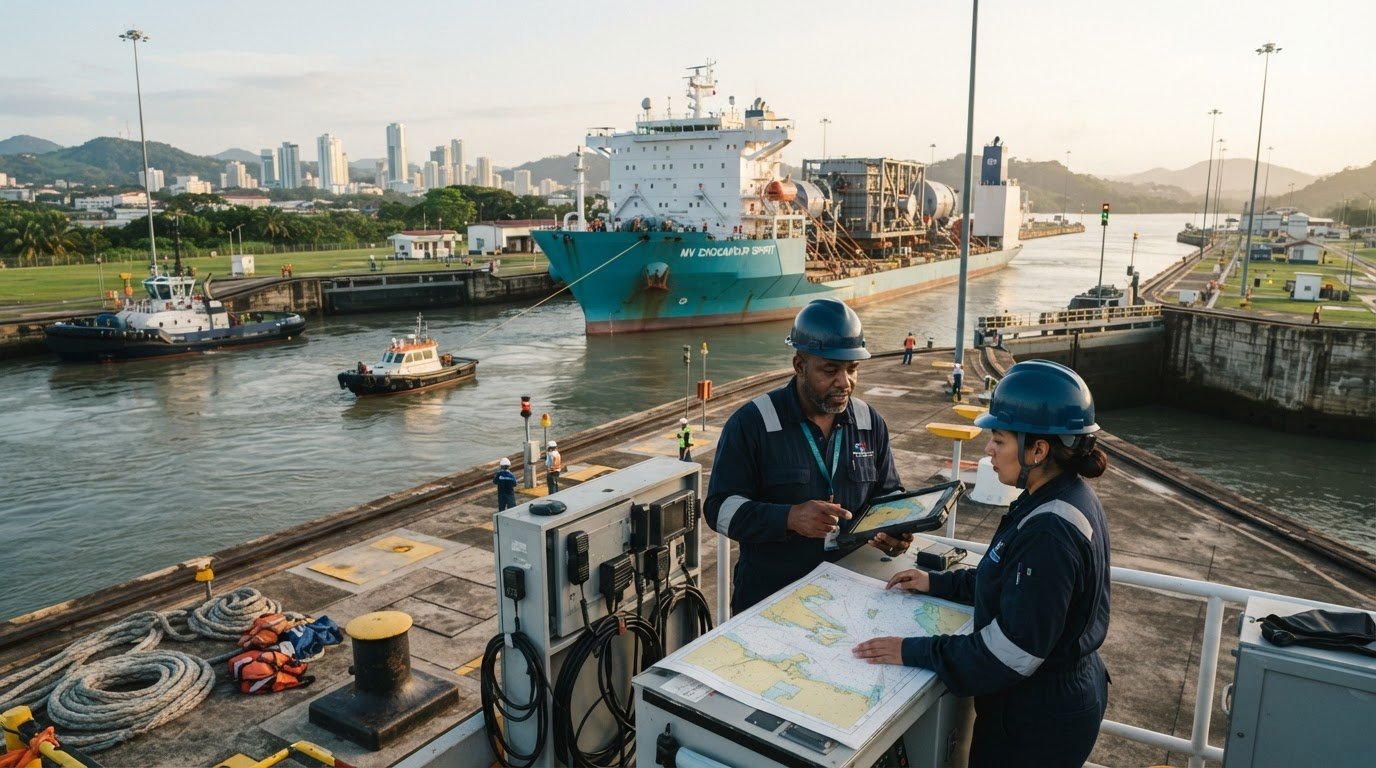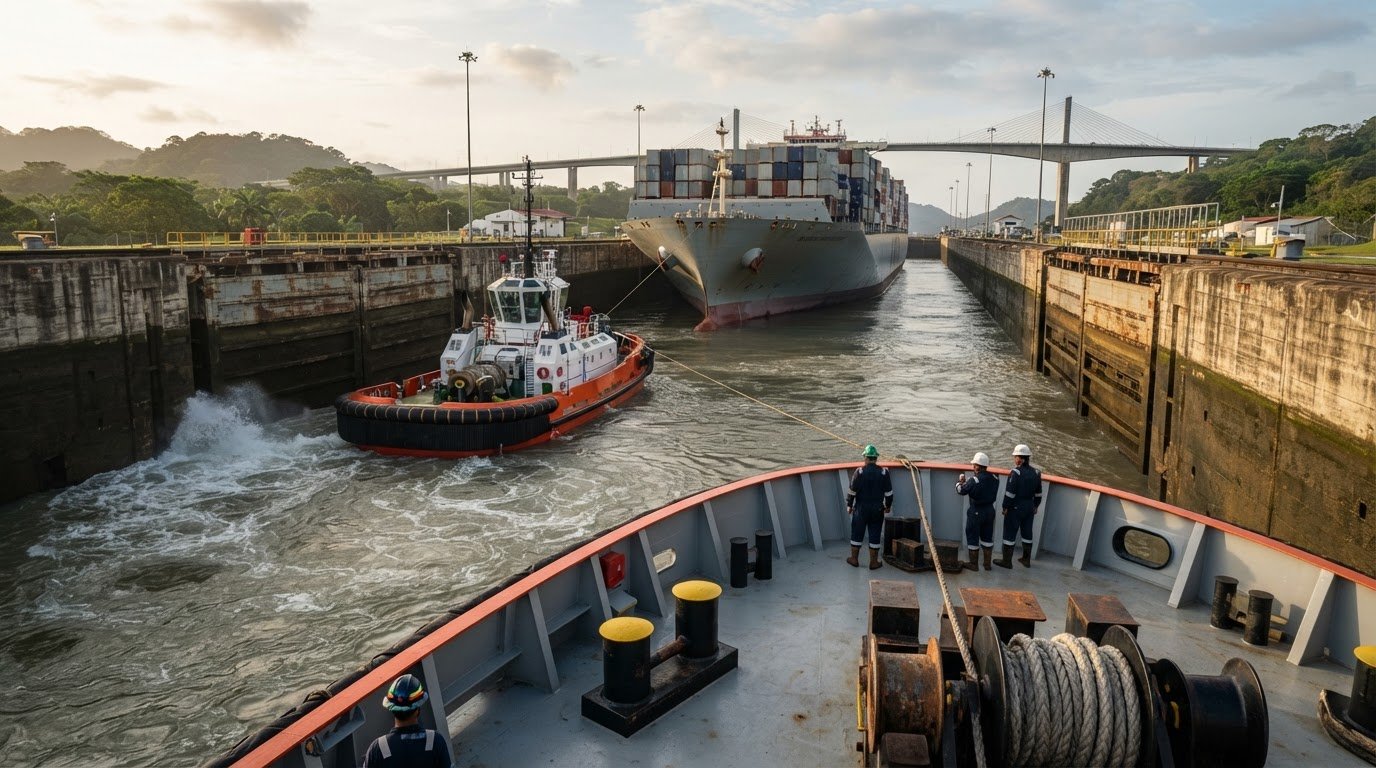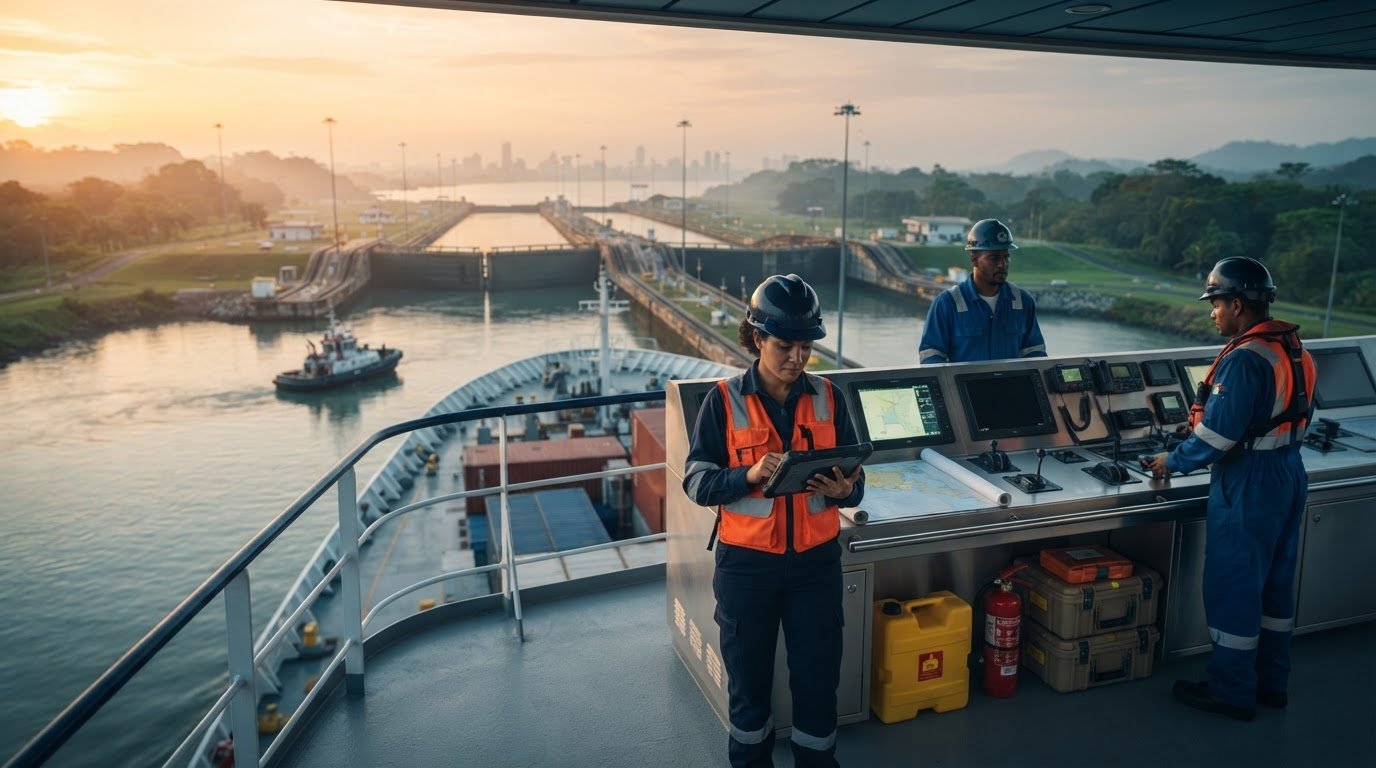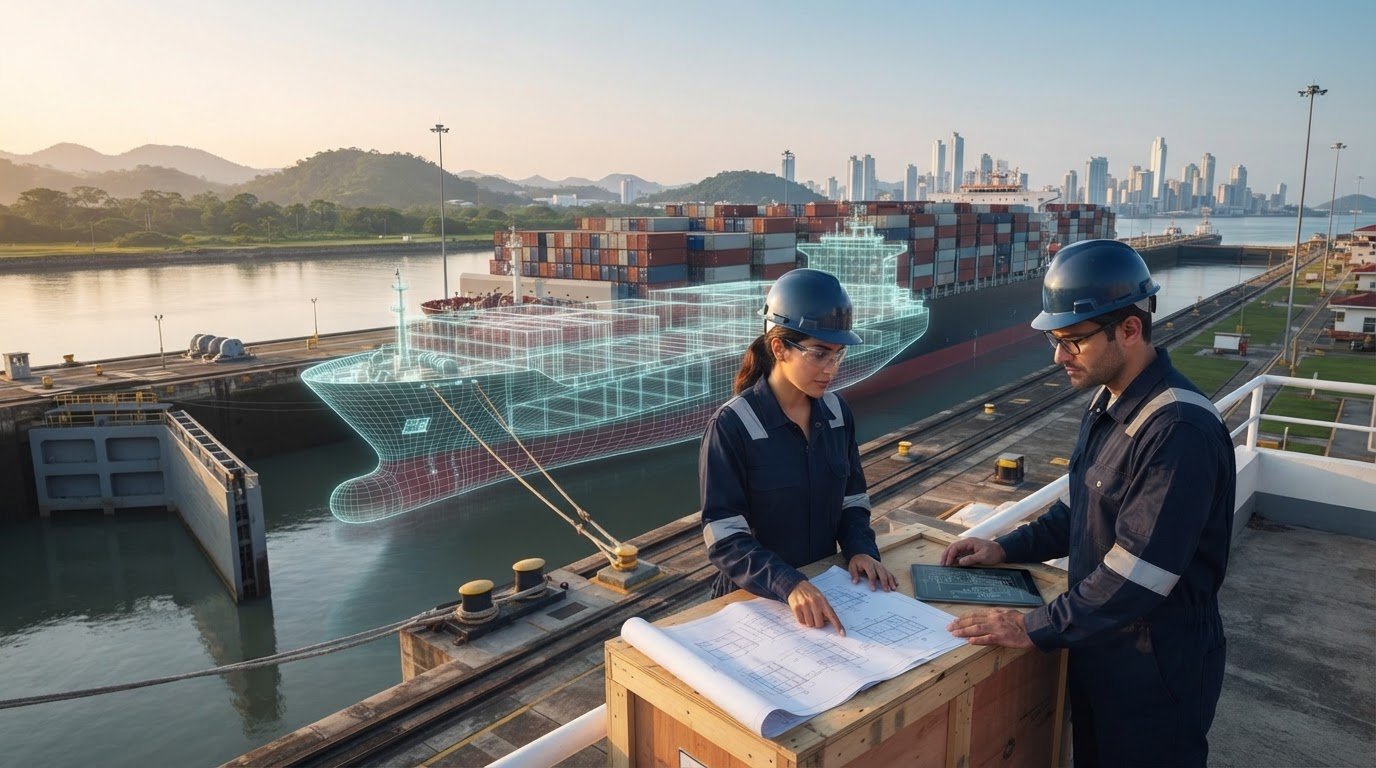

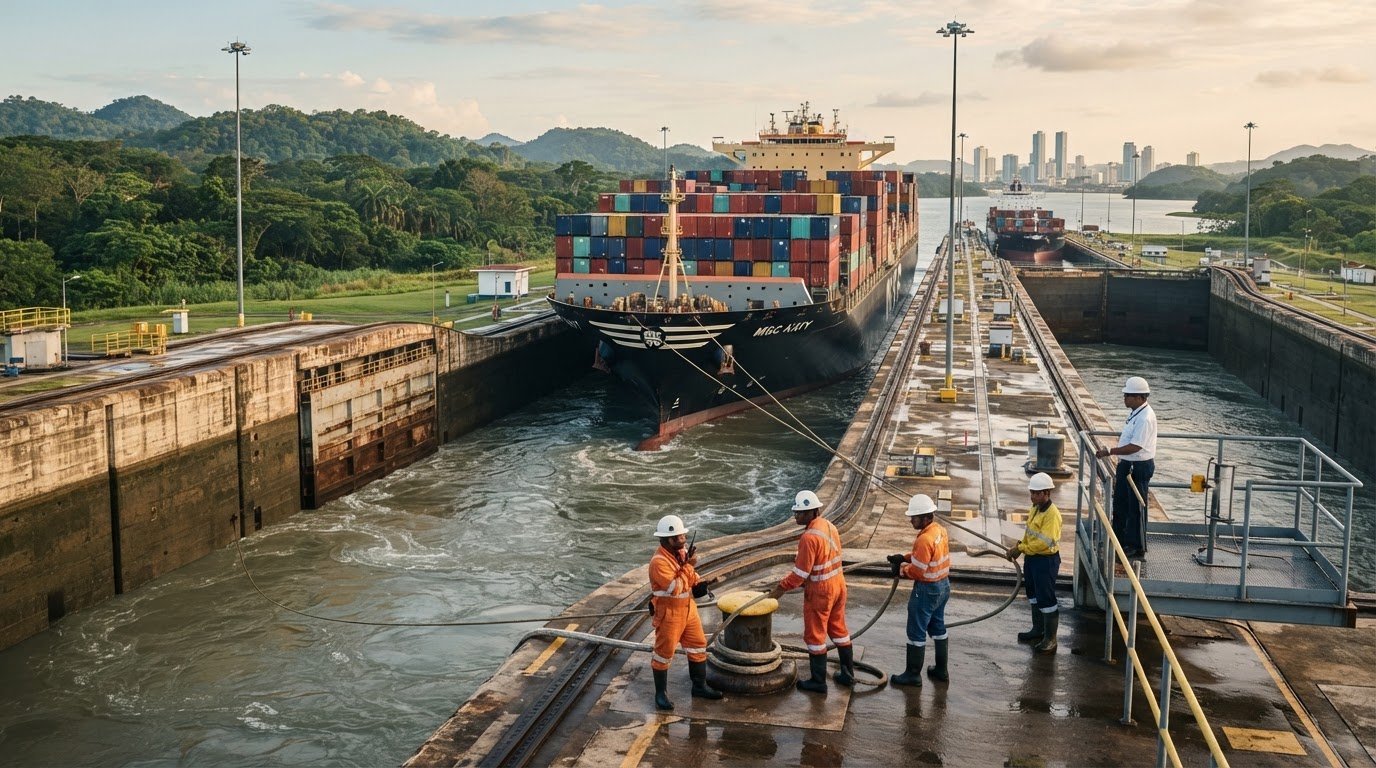
A ship doesn’t simply sail through the Panama Canal. It rises inside a lock chamber, crosses the continental divide, then descends on the other side. The panama canal locks procedure for ships is easier to picture when you follow each movement in sequence.
The basic process is coordinated, but vessel teams can’t assume every transit follows the same schedule or requirements. The original Panamax locks and the larger Neopanamax locks use different chambers. Current water levels and Panama Canal Authority rules can also affect transit availability and vessel limits. Operational details may change, so this overview explains the process rather than replacing current ACP instructions.
This guide explains what happens as a vessel approaches, enters, rises or lowers, and clears the locks. It also covers the main differences between the two lock systems and the coordination that supports transit readiness, including clearance, pilot and tug orders, and documentation. The aim is to clarify the sequence and help vessel teams prepare for a coordinated passage.
Key Takeaways
- Follow the panama canal locks procedure for ships, from approaching a chamber to continuing the wider canal transit.
- Understand how the original Panamax and Neopanamax lock systems differ, and where Gatun, Pedro Miguel, Miraflores, Agua Clara, and Cocoli fit.
- Trace the main lockage stages in order to picture how a vessel moves through successive chambers.
- Identify the coordination among the vessel team, pilot, authority, and service providers that supports transit readiness.
- See why communication and coordination remain important after a vessel clears the locks.
Panama Canal locks procedure for ships: what lockage involves
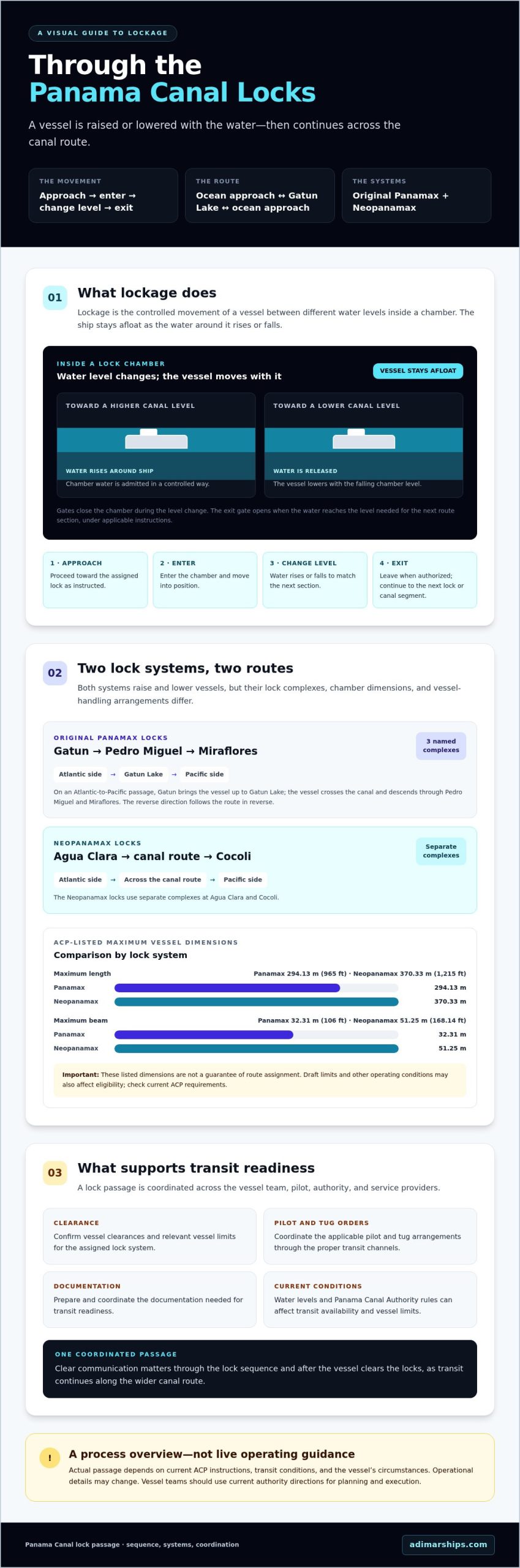
A lock passage is a controlled change in elevation, not simply a stretch of canal navigation. The panama canal locks procedure for ships follows a general sequence: approach the chamber, enter as directed, move into position, wait while the water level changes, then exit when authorized. A vessel may pass through more than one chamber on its route.
Lockage is the process of moving a vessel between different water levels inside a lock chamber. This overview describes the basic mechanics for orientation. Panama Canal Authority (ACP) instructions, transit conditions, and the vessel’s circumstances govern each actual passage.
How a ship lock chamber changes water level
A lock chamber is a watertight space with gates at its ends. Once a vessel enters and is positioned as instructed, the chamber is closed off. Water is admitted or released through controlled passages, raising or lowering the level around the vessel. When the water reaches the level needed for the next section of the route, the exit gate can open under the applicable instructions.
The vessel stays afloat throughout the change. It doesn’t climb a ramp or pass through a fixed-height opening. Instead, the surrounding water rises or falls with it. A ship traveling toward a higher canal level is raised, while one moving toward a lower level is lowered.
Why the Panama Canal uses locks
The canal route crosses the Isthmus of Panama and includes Gatun Lake, which sits above sea level. Locks connect the ocean approaches to this elevated waterway, then bring vessels back down toward the opposite ocean. That differs from sailing through a sea-level channel, where the water surface remains at approximately the same elevation along the route.
The original locks and the newer Neopanamax locks use the same fundamental principle, although they differ in design and capacity. The Panama Canal lock system overview provides additional context on their history and operation. For the broader route and transit context beyond the chambers, see the complete Panama Canal transit guide.
For a first-time reader, the sequence can be pictured in four stages:
- Approach: The vessel proceeds toward the assigned lock under applicable transit instructions.
- Entry and positioning: It enters the chamber and is positioned as directed.
- Water-level change: The chamber level changes to match the next section of the route.
- Exit: The vessel leaves when authorized and continues toward the next lock or canal segment.
These stages describe the concept, not a maneuvering checklist. Vessel teams should follow current ACP directions and coordinate through the appropriate transit channels. A general guide is not live operational guidance.
Panama Canal lock systems: original locks and Neopanamax locks
The Panama Canal has two lock systems, and a vessel’s route depends on which system it is assigned to use. The original Panamax locks connect Gatun Lake with the ocean approaches through Gatun, Pedro Miguel, and Miraflores. The Neopanamax locks use separate complexes at Agua Clara and Cocoli. Both systems raise or lower vessels, but their chamber dimensions and vessel-handling arrangements differ.
| Comparison | Original Panamax locks | Neopanamax locks |
|---|---|---|
| Lock complexes | Gatun, Pedro Miguel, Miraflores | Agua Clara, Cocoli |
| Atlantic-to-Pacific sequence | Gatun, Pedro Miguel, Miraflores | Agua Clara, then across the canal route to Cocoli |
| Maximum vessel length listed in ACP Notice to Shipping N-01-2026 | 294.13 m (965 ft) | 370.33 m (1,215 ft) |
| Maximum vessel beam listed in ACP Notice to Shipping N-01-2026 | 32.31 m (106 ft) | 51.25 m (168.14 ft) |
These figures are vessel requirements, not a guarantee that a particular ship will be assigned to either route. Draft limits and other operating conditions can also affect eligibility. Check the ACP’s current official vessel requirements before planning a transit.
What distinguishes the original Panama Canal locks?
On an Atlantic-to-Pacific passage through the original system, a vessel moves through Gatun’s lock stages to reach Gatun Lake. It then crosses the canal and descends through Pedro Miguel and Miraflores. The Pacific-to-Atlantic passage follows the route in reverse. The three complexes form one route, not interchangeable options that a vessel chooses independently.
Locomotives and tugs are vessel-handling resources, but their use and role shouldn’t be assumed from a general description. The applicable arrangement depends on current ACP instructions and the circumstances of the transit. Vessel eligibility and routing also depend on current canal requirements.
How the Neopanamax locks differ
Agua Clara serves the Atlantic side of the expanded route, while Cocoli serves the Pacific side. Their larger listed vessel dimensions distinguish them from the original locks, but that doesn’t mean every large ship automatically uses them. Assignment and handling depend on ACP requirements and operational instructions. Teams should confirm the applicable plan rather than infer it from vessel size alone.
The lock complexes are part of a broader system overseen by the Panama Canal Authority. For agency support with transit clearance, pilot and tug orders, and required documentation, vessel teams can review Panama Canal ship agency coordination with Adimar Shipping, Inc. as one part of transit preparation.
What happens during a Panama Canal locks transit, step by step?
A lock transit is a coordinated progression, not a single maneuver. The panama canal locks procedure for ships can be pictured in stages, but the assigned route, vessel-handling arrangements, and timing depend on current Panama Canal Authority (ACP) instructions and the ship’s circumstances. The outline below is for understanding, not an operational checklist.
- Approach and pilotage: The vessel approaches the assigned lock area and follows applicable transit directions, including pilotage instructions.
- Entry: The ship enters the chamber as directed. Its handling arrangement depends on the vessel and the applicable lock system.
- Positioning: The vessel is brought into the position required for that transit. The crew follows instructions from the responsible canal personnel.
- Water-level change: The chamber’s water level is raised or lowered to connect with the next part of the route. Britannica explains how the canal locks operate, including the role of controlled water movement.
- Exit and continuation: Once authorized, the ship leaves the chamber and continues toward the next lock stage or canal segment.
Pacific-to-Atlantic lock sequence
For a vessel using the original lock system, the general Pacific-to-Atlantic route reverses the Atlantic-to-Pacific progression. The ship ascends from the Pacific side through Miraflores and Pedro Miguel to Gatun Lake, crosses the lake, then descends through Gatun Locks toward the Atlantic.
- Pacific approach → Miraflores Locks, ascending
- Miraflores → Pedro Miguel Locks, ascending toward Gatun Lake
- Pedro Miguel → Gatun Lake crossing
- Gatun Locks, descending → Atlantic approach
Atlantic-to-Pacific lock sequence
In the opposite direction, a vessel using the original locks first rises through Gatun Locks to Gatun Lake. After crossing the lake, it descends through Pedro Miguel and Miraflores toward the Pacific. This sequence describes the route, not a guaranteed transit duration.
- Atlantic approach → Gatun Locks, ascending
- Gatun Locks → Gatun Lake crossing
- Gatun Lake → Pedro Miguel Locks, descending
- Pedro Miguel → Miraflores Locks, descending → Pacific approach
These examples describe the original-lock route. A Neopanamax transit uses the applicable expanded lock complexes, and the route and sequence must be confirmed for the vessel rather than inferred from these examples. Transit clearance, pilot and tug orders, and required documentation are among the details vessel teams and their agents coordinate around the assigned passage. Follow current ACP directions throughout. A general guide can clarify the sequence, but it can’t replace vessel-specific instructions.
How vessel teams prepare for Panama Canal lock passage
Preparing for lock passage is a shared coordination task. Vessel personnel, the pilot, Panama Canal Authority (ACP) representatives, and relevant service providers each have distinct roles. Knowing the assigned route and current requirements helps the team prepare, but a general guide to the panama canal locks procedure for ships can’t replace vessel-specific ACP instructions.
What should the vessel team confirm before lockage?
Use this as an overview, not an official checklist. Confirm current ACP instructions and the requirements that apply to the vessel and its transit. Vessel particulars such as dimensions and draft can affect eligibility and preparation. Check documentation, equipment, communications, and timing details against current ACP guidance and the ship’s circumstances rather than assuming a generic list applies.
- Requirements and routing: Verify the applicable vessel criteria, assigned lock system, route, and any current transit instructions.
- Transit clearance and documents: Confirm that required information and documentation are being handled through the appropriate channels. Check the exact items and procedures for the specific transit.
- Readiness and communications: Ensure relevant vessel personnel understand how they will receive instructions and coordinate with the pilot and other parties.
- Service coordination: Confirm which transit arrangements, such as pilot and tug orders, apply and who is coordinating them.
This overview intentionally avoids maneuvering directions and fixed timing. Those details are operational and must come from current ACP instructions and the vessel’s authorized transit coordination.
Where a local ship agent supports transit coordination
A local ship agent can help organize the administrative and service details around a transit, keep relevant parties informed, and move required information through the proper channels. The agent does not operate the locks, direct the pilot, or control ACP clearance or lockage decisions. Those responsibilities remain with the appropriate canal authorities and personnel.
In Panama, Adimar Shipping, Inc. coordinates transit clearance, pilot and tug orders, and required documentation for inbound and outbound passages. Owners and charterers can also appoint the agency representation suited to their transit. For more context on the coordination role, see the Panama Canal ship agency guide.
Agency coordination can help organize transit arrangements, but it can’t guarantee a particular lockage time or outcome.
After the locks: completing a coordinated Panama Canal transit
Clearing a lock chamber is a milestone, not the end of a Panama Canal transit. The vessel continues along the canal route toward its destination ocean, with the direction of travel determining which route segments remain. Exiting a lock doesn’t by itself confirm that every transit requirement has been completed or that the vessel can proceed without further instructions.
What follows a ship’s passage through the locks?
After leaving a chamber, the vessel proceeds under the applicable transit directions. Depending on its route and lock system, it may have further canal segments to navigate before reaching the ocean approach. Communication continues so the vessel team and relevant parties stay aligned as the transit progresses. The pilot and canal authorities provide operational direction. An agent may coordinate administrative and service-related details, but doesn’t control canal decisions.
For an overview of the wider route and transit considerations beyond lockage, read the Panama Canal transit overview. This article explains the general lock sequence, not a vessel-specific schedule or a substitute for current Panama Canal Authority (ACP) instructions.
When to seek Panama-based transit coordination
Owners or charterers may want local agency support when they need help organizing transit clearance, pilot and tug orders, or required documentation for an inbound or outbound passage. Coordination can keep relevant information and parties connected as arrangements develop. It doesn’t guarantee a particular transit time, lockage slot, or outcome, and it doesn’t replace ACP authority or instructions.
Keep related planning questions distinct. Booking and transit availability, potential delays, vessel dimensions, and compliance requirements each depend on current information and the ship’s circumstances. Check the latest ACP notices and applicable requirements for operational decisions. A general explanation of the panama canal locks procedure for ships can make the sequence easier to understand, but it can’t confirm whether a specific vessel is eligible, which instructions apply, or when it will transit.
Adimar Shipping, Inc. provides ship agency support focused on Panama Canal transit coordination, including clearance, pilot and tug orders, and documentation. The agency’s role is to support the vessel’s arrangements, not to operate the canal or determine ACP lockage decisions.
Prepare for your next Panama Canal transit with clarity
Understanding the panama canal locks procedure for ships helps vessel teams picture the passage: a ship enters a chamber, moves with its changing water level, and continues along the route. The original and Neopanamax systems have different lock complexes, and the vessel’s applicable route and preparation depend on its particulars and current Panama Canal Authority instructions.
Use this guide to understand the general sequence, not as a substitute for vessel-specific operational directions. Transit clearance, pilot and tug orders, and required documentation also need clear coordination among the relevant parties. A Panama-based ship agent can help organize those transit details without replacing the canal authority or its decisions.
With the right information and coordinated preparation, your team can approach the transit with a clearer understanding of what to expect. To discuss ship agency support for Panama Canal transit coordination, including clearance, pilot and tug orders, and documentation, contact Adimar Shipping, Inc.
Frequently Asked Questions
How do ships pass through the Panama Canal locks?
A ship enters an assigned lock chamber, is positioned as directed, and rises or descends as the water level changes. Once the chamber reaches the required level and the gates are operated under Panama Canal Authority (ACP) instructions, the vessel proceeds to the next stage or exits. The panama canal locks procedure for ships varies with the vessel, lock system, direction of travel, and current requirements, so follow vessel-specific directions.
Which locks does a ship use when travelling from the Pacific to the Atlantic?
On the original-lock route, a vessel generally passes through Miraflores and Pedro Miguel to reach Gatun Lake, then uses Gatun Locks toward the Atlantic. This describes the broad route, not a dispatch plan. The assigned route and operating details depend on the ship and current canal instructions. Confirm the passage plan with current ACP guidance and the vessel’s appointed representatives before relying on a route description.
Does every ship use the same Panama Canal locks?
No. A vessel’s route and lock system depend on its dimensions, transit direction, current ACP requirements, and operational arrangements. The original locks and Neopanamax locks serve different vessel profiles, but a class name alone doesn’t confirm the assigned route or eligibility. Check the current official vessel requirements and confirm transit details with the appropriate canal contacts and the vessel’s representatives.
How long does it take a ship to pass through the Panama Canal locks?
There isn’t one reliable duration for every ship. Lockage time depends on the vessel, route, operating conditions, and canal scheduling. Time inside lock chambers is also only one part of the full canal transit, which includes other route segments and coordination. For a vessel-specific schedule or current transit information, consult the ACP and relevant transit contacts rather than treating a general estimate as a commitment.
Do ships use locomotives or tugboats in the Panama Canal locks?
Handling arrangements depend on the lock system and the transit. The original locks are associated with locomotive assistance, while Neopanamax operations use tug assistance, but teams should confirm current arrangements through ACP guidance. These are general distinctions, not ship-handling instructions. During an actual passage, the pilot and canal authorities direct the operation according to the vessel and applicable requirements.
Who controls the Panama Canal locks during a ship transit?
The Panama Canal Authority manages canal operations and sets the applicable procedures and requirements. Vessel operators and their representatives coordinate transit information and services, but a ship agent doesn’t operate the locks, direct canal decisions, or determine lockage timing. For current procedures, schedules, and vessel-specific instructions, consult official ACP guidance and the appropriate transit contacts.
What should a ship prepare before entering the Panama Canal locks?
Preparation depends on the vessel and current ACP requirements. At a high level, the vessel team should confirm applicable transit instructions, readiness, communications, and required documentation with the appropriate operational contacts. A general checklist can’t replace official or vessel-specific guidance. A local ship agent can coordinate transit clearance, pilot and tug orders, and required documentation as part of ship agency services, without controlling ACP decisions.