
A single inch of draft can be the difference between a profitable voyage and a four million dollar auction bid just to stay on schedule. You’re likely feeling the pressure of unpredictable water levels and the fear of incurring costly fines for technical non-compliance. Navigating the latest Panama Canal vessel restrictions requires more than just a standard manual; it demands real-time awareness of a dynamic operational environment. We understand that the confusion between Panamax and Neopanamax requirements can lead to logistical bottlenecks that your schedule simply can’t afford.
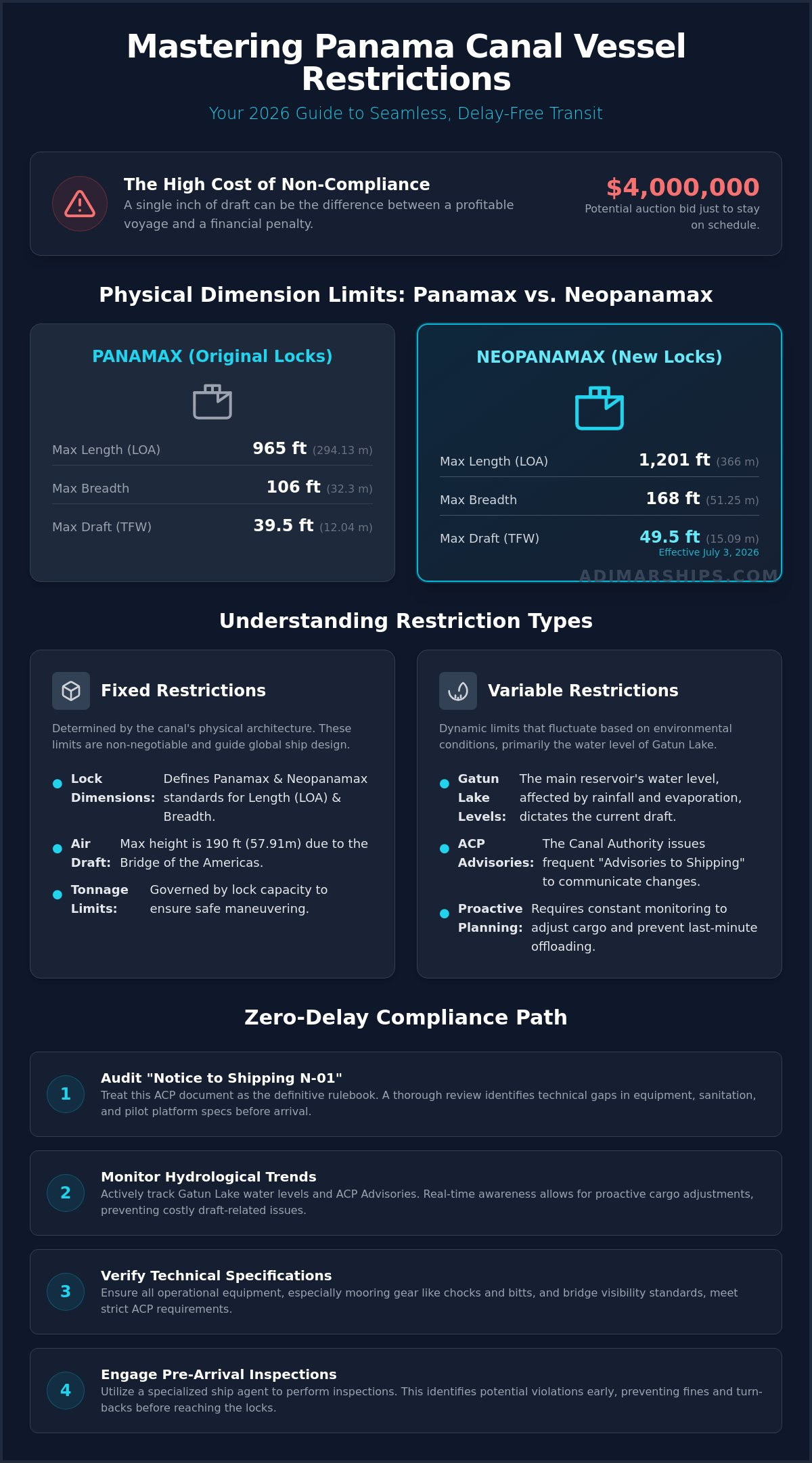
You’ve worked hard to build a reputation for reliability, and we’re here to help you protect it. This guide will allow you to master the 2026 Panama Canal vessel restrictions so you can ensure a seamless, delay-free transit for your entire fleet. We’ll provide a clear breakdown of the 49.5-foot Neopanamax draft limits effective July 3, 2026, explain the transition to the LoTSA 2.0 reservation system, and detail the specific physical requirements necessary for zero-delay operations.
Key Takeaways
- Distinguish between Panamax and Neopanamax physical limits, including specific Maximum Length Overall (LOA) and “Extreme Breadth” requirements for each lock set.
- Understand how to monitor Gatun Lake hydrological trends to anticipate draft changes and prevent the need for last-minute cargo offloading.
- Identify critical Panama Canal vessel restrictions regarding bridge visibility and technical specifications for mooring equipment like chocks and bitts.
- Learn how pre-arrival inspections by a specialized ship agent can identify potential violations and prevent costly fines before your vessel reaches the locks.
Understanding the Framework of Panama Canal Vessel Restrictions
Panama Canal vessel restrictions are more than a simple list of measurements. They represent a complex, overlapping framework of physical dimensions, operational requirements, and environmental variables. The Panama Canal Authority (ACP) manages these standards with absolute authority to ensure the safety of the waterway and the efficiency of every passage. For ship operators, these rules aren’t just bureaucratic hurdles; they’re the parameters that dictate your vessel’s earning potential and operational safety.
In 2026, the framework has evolved significantly. The ACP has shifted toward a more data-driven approach, using high-resolution hydrological modeling and real-time atmospheric data to adjust limits. This means restrictions are no longer static. They’re responsive to the immediate environment, particularly the water levels of Gatun Lake. Ignoring even a minor technical requirement isn’t just an oversight. It’s a high-stakes financial risk. Non-compliance can lead to massive delays, additional tugboat fees, or even the loss of a transit slot that may have cost millions at auction. Precision in compliance is the only way to protect your ROI.
The ACP N-01 Notice: Your Primary Compliance Reference
Every successful Panama Canal transit begins with a meticulous audit of the “Notice to Shipping N-01.” This document serves as the definitive rulebook for 2026. It outlines everything from required navigation equipment to specific sanitary regulations and pilot platform specifications. Interpreting ACP terminology correctly is vital for your crew. When the ACP lists “vessel requirements,” they’re stating strict prerequisites for entry. We’ve seen that a thorough N-01 audit identifies technical gaps well before your ship reaches the breakwater, allowing for corrections that prevent costly turn-backs.
Fixed vs. Variable Restrictions
Understanding the difference between fixed and variable limits is essential for long-term fleet planning and daily scheduling. Fixed restrictions are dictated by the physical architecture of the locks. These structural limits define the Panamax and Neopanamax standards that guide global ship design and determine which lane your vessel must use. While the concrete walls of the locks don’t move, the water within them is a different story.
Variable restrictions are seasonal and dynamic. They fluctuate based on the water levels of Gatun Lake, which acts as the canal’s primary reservoir. While the lock’s physical width stays the same, the maximum authorized draft changes based on rainfall and evaporation rates. The ACP communicates these shifts through “Advisories to Shipping.” In 2026, these Panama Canal vessel restrictions are issued with greater frequency to mitigate the impacts of anticipated El Niño conditions. Relying on a vigilant local partner ensures you receive these updates in real-time, allowing for proactive cargo adjustments before your vessel is even loaded at the port of origin.
Physical Dimension Limits: Panamax vs. Neopanamax Standards
Physical dimensions are the non-negotiable bedrock of any transit plan. While environmental factors like water levels fluctuate, the concrete walls of the locks provide a definitive boundary for every voyage. Understanding Panama Canal vessel restrictions begins with a precise calculation of your ship’s footprint against these architectural limits. This involves more than just length and width; it requires a deep dive into “Extreme Breadth,” which measures the widest point of the hull including any permanent protrusions. Displacement also plays a critical role, as the locks have specific tonnage limits to ensure safe maneuvering and prevent damage to the lock mitre gates.
Beyond the locks, the Bridge of the Americas imposes a fixed height restriction known as air draft. At mean high water, the maximum allowable height is 190 feet (57.91 meters). If your vessel exceeds this limit, transit is physically impossible regardless of lock capacity. Our team at Adimar Shipping assists operators by verifying your vessel’s specific technical data against these fixed landmarks to ensure your fleet meets every criteria before arriving at the canal entrance.
Panamax Locks: The Original Dimensions
The original locks remain a vital artery for niche carriers and smaller bulk vessels. Understanding Panamax vessel dimensions is essential for ships utilizing these 110-foot wide chambers. The maximum authorized length is typically 965 feet (294.13 meters), with a maximum beam of 106 feet (32.31 meters). Specific attention must be paid to bulbous bows; if they extend too far forward, they can interfere with lock operations. These locks utilize electric locomotives, or “mules,” to guide vessels, which requires specific placement of towing chocks and bitts on your deck.
Neopanamax Locks: The Expanded Capacity
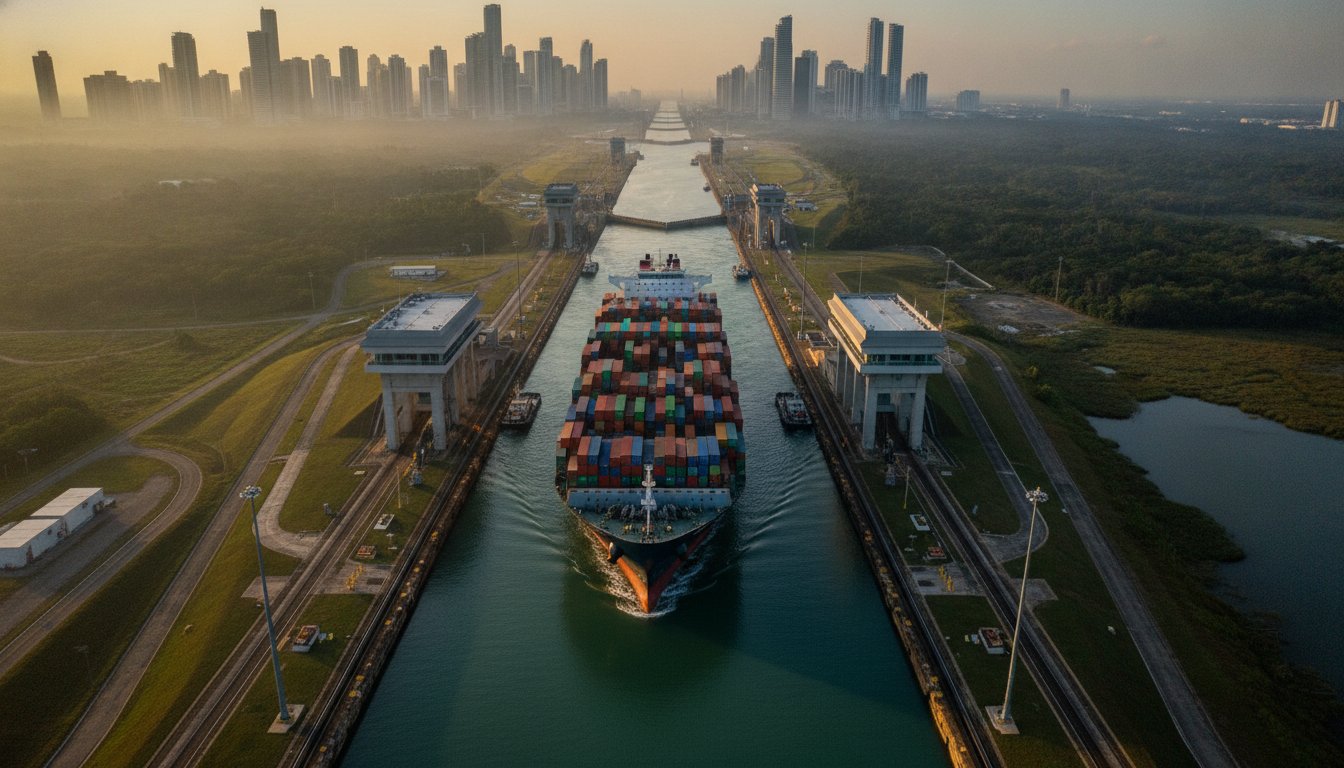
The Neopanamax locks represent the cutting edge of maritime logistics, designed for mega-vessels that dwarf the original fleet. These locks are 1,400 feet long and 180 feet wide, allowing for a maximum vessel length of 1,200 feet (366 meters) and a beam of 168 feet (51.25 meters). This expanded capacity has revolutionized container ship configurations, but it brings new operational complexities. Unlike the smaller locks, Neopanamax transits rely entirely on tugboats for positioning rather than locomotives. This shift makes deck equipment specifications and visibility even more critical. To ensure you have the most current data on these mega-vessel standards, we recommend consulting the official Panama Canal Authority (ACP) Vessel Requirements for the latest technical circulars and dimension updates.
The Impact of Draft Restrictions and Gatun Lake Water Levels
Gatun Lake is the lifeblood of the waterway, and its health directly dictates your vessel’s payload capacity. Unlike the static dimensions of the locks discussed in the previous section, Panama Canal vessel restrictions related to draft are in a constant state of flux. This variability stems from the fact that every lockage consumes millions of gallons of fresh water drawn from Gatun Lake. If the lake isn’t replenished by rainfall, the Panama Canal Authority must reduce the maximum authorized draft to protect the bottom of the channel and ensure safe passage for all users.
The 2026 outlook is particularly challenging due to anticipated El Niño conditions. Historical data suggests that Gatun Lake water levels can drop rapidly during these events, leading to proactive restrictions. As of July 3, 2026, the maximum authorized draft for Neopanamax vessels has already been adjusted to 49.5 feet (15.09 meters) Tropical Fresh Water (TFW). This density factor is crucial; because fresh water is less dense than sea water, your ship will sit deeper in the canal than it did in the open ocean. If your vessel arrives over the limit, the ‘Draft Adjustment’ process begins. This often involves the costly and time-consuming task of offloading cargo or fuel to a lightering vessel before transit is permitted, which can destroy your voyage’s profitability.
Seasonal Variability: Dry Season vs. Rainy Season
The dry season, typically running from January to May, is when draft restrictions are most likely to tighten. During this window, the ACP implements aggressive water conservation measures, such as cross-filling lock chambers, to maintain as many transit slots as possible. For 2026, ship operators should plan for potential draft reductions well in advance. Relying on average rainfall patterns is no longer sufficient in a changing climate. Successful fleet managers now use real-time hydrological forecasts to determine cargo loads weeks before a ship departs its loading port, ensuring they don’t have to leave containers behind at the last minute.
The 50-Foot Myth: Reality of Neopanamax Draft
Many operators believe that Neopanamax locks always offer a 50-foot draft. In reality, 50 feet is a maximum potential depth that’s only available when Gatun Lake is at its peak capacity. The current 49.5-foot limit serves as a reminder that operational reality often falls short of design maximums. To ensure safety, the ACP maintains a strict under-keel clearance, often requiring a 2-foot safety margin to account for vessel squat and pitch during transit. Monitoring these daily updates through a local agent is the only way to avoid the ‘over-draft’ trap. We provide our clients with daily bulletins that translate lake level changes into actionable transit data, giving you the peace of mind that your fleet is always in compliance.
Operational and Equipment Restrictions: Beyond Size
Technical readiness is just as critical as hull dimensions. While draft and beam set the physical boundaries for your voyage, your ship’s equipment determines if the ACP will actually allow you into the locks. These Panama Canal vessel restrictions cover a wide range of “soft” requirements, from the tensile strength of your towing chocks to the precise placement of bridge wing markings. A failure in a single winch or an outdated AIS unit can lead to an immediate suspension of transit, forcing you into expensive repairs at the anchorage or the loss of a multi-million dollar slot.
Regulatory compliance also acts as a gatekeeper for operational freedom. One of the most common hurdles for operators is the PCSOPEP authorized person requirement. For vessels transiting the canal, having a designated local representative for oil spill response is a non-negotiable standard. We act as this vigilant link on the ground, ensuring your paperwork and spill response readiness are as prepared as your engine room. Without this authorized person on file, your transit clearance will be denied regardless of your ship’s physical condition.
Visibility and Bridge Markings
The “Blind Distance” rule is a primary safety restriction that many operators overlook during heavy loading. The ACP requires that the water surface ahead of the bow be visible from the bridge within a distance of one ship length, or 1.5 lengths for certain vessel types. If your cargo configuration or trim creates a larger “blind spot,” you may be required to take on additional tugs for the entire transit. Car carriers and high-profile container ships face even stricter scrutiny due to their windage and unique bridge configurations. Ensuring your trim and list are within ACP tolerances is the only way to avoid these added operational costs.
Communication and Navigation Gear
Modern transit depends on flawless electronic communication and navigation. Your AIS must be programmed with correct static and dynamic data, including your precise Tropical Fresh Water draft. Additionally, the pilot-plug must be located near a power source and be easily accessible for the incoming canal pilot. We recommend a full bridge equipment check 48 hours before arrival, focusing on gyro-compass accuracy and radar redundancy. If you have concerns about your equipment’s current status or need technical support, our team can provide specialized husbandry services to coordinate on-board inspections before you reach the locks.
Navigating Restrictions with a Panama Canal Ship Agent
The complexity of Panama Canal vessel restrictions demands more than just a compliance checklist; it requires a proactive partner who lives and breathes the waterway’s operational rhythm. While the ACP provides the framework, an experienced ship agent translates those dense technicalities into a clear operational plan for your Master and shore-side team. We don’t just relay information; we interpret it based on the specific characteristics of your vessel and the immediate conditions at the locks. This expertise is what transforms a high-risk transit into a predictable, routine passage.
One of the most effective ways to protect your vessel’s interests is through specialized Owner’s Nominated Agency services. By appointing a dedicated representative, you ensure that your ship’s specific needs aren’t lost in the shuffle of charterer requirements. We conduct thorough pre-arrival inspections to identify potential restriction violations, such as incorrect bridge markings or mooring equipment that doesn’t meet the latest 2026 tensile strength standards. Catching these issues while the vessel is still at sea allows for remote troubleshooting or the preparation of local technicians, effectively mitigating the risk of heavy fines or transit denial.
Eliminating Confusion and Delays
Adimar Shipping acts as your local office in Panama, providing a level of vigilance that standard agency services often lack. We maintain a constant watch on ACP advisories, especially regarding the daily fluctuations in Gatun Lake levels. If a sudden draft restriction is announced while your ship is en route, we coordinate immediately with your team to calculate the impact on your Tropical Fresh Water displacement. Our role is to serve as a bridge between your fleet and the Canal’s operational arm, ensuring that pilots and tugboat crews have perfectly accurate data before they step onto your deck. This seamless coordination is what prevents the confusion that leads to costly bottlenecks.
Cost-Efficiency through Compliance
True cost-efficiency in the Panama Canal isn’t about cutting corners; it’s about achieving total compliance before you reach the breakwater. The hidden costs of restriction-related delays, such as missed berthing windows at the next port or additional fuel consumption, can far outweigh the investment in professional agency support. We ensure that every piece of documentation, from your PCSOPEP certification to your technical equipment declarations, is perfect. This meticulous preparation guarantees that your vessel moves through the locks without a second glance from inspectors. To secure your fleet’s schedule and protect your bottom line, contact Adimar Shipping to audit your vessel’s 2026 transit readiness and ensure you meet every Panama Canal vessel restriction with confidence.
Securing Your Fleet’s Success in a Dynamic Waterway
Operating in the Panama Canal in 2026 requires a shift from static planning to real-time responsiveness. You’ve seen how Gatun Lake levels dictate draft and how specific technical requirements like bridge visibility can derail an otherwise perfect schedule. Mastering Panama Canal vessel restrictions isn’t just about knowing the numbers. It’s about having a vigilant partner who monitors every ACP advisory as it happens. By delegating these complexities to a specialized team, you gain the operational freedom to focus on your broader fleet goals.
We provide the security of an authorized PCSOPEP representative and decades of local expertise in Panama City to ensure your documentation is flawless. Whether you’re managing a Panamax bulk carrier or navigating complex Neopanamax compliance for a mega-vessel, we act as your eyes and ears on the ground. Partner with Adimar Shipping for Expert Canal Transit Management and turn logistical challenges into a competitive advantage. Your next delay-free transit starts with the right local representation.
Frequently Asked Questions
What is the maximum allowable draft for the Panama Canal in 2026?
Effective July 3, 2026, the maximum authorized draft for Neopanamax vessels is 49.5 feet (15.09 meters) in Tropical Fresh Water. For vessels using the Panamax locks, the limit is generally 39.5 feet. These levels fluctuate based on the hydrological health of Gatun Lake, so it’s vital to check the latest ACP advisories before loading cargo.
How does the ACP calculate vessel beam restrictions?
The ACP measures “Extreme Breadth,” which is the width of the ship at its widest point, including all permanent hull protrusions. For Neopanamax transits, the limit is 168 feet (51.25 meters), while the Panamax limit is 106 feet (32.31 meters). Any equipment that extends beyond the hull must be declared during the initial registration to avoid transit denial.
Can a vessel exceed the standard length overall (LOA) with a waiver?
Standard LOA limits are 1,200 feet for Neopanamax and 965 feet for Panamax locks, but the ACP occasionally grants exceptions for specific ship types. These waivers are not guaranteed and usually require a formal request supported by technical drawings and a prior trial transit. We recommend starting this approval process through your ship agent at least three months before your arrival date.
What happens if my ship arrives with a draft deeper than the current limit?
Your vessel will be barred from transit until it meets the current Panama Canal vessel restrictions. You’ll be forced to remain at the anchorage to offload cargo or fuel to a lightering vessel, which is a costly and time-consuming process. This delay often results in the loss of your reserved transit slot and can lead to significant financial penalties from charterers.
Are there specific restrictions for LNG or LPG carriers in 2026?
LNG and LPG vessels face unique constraints, including being ineligible for the FlexSlot+ option under the LoTSA 2.0 reservation system. They’re also subject to specific daylight transit requirements and must maintain a high level of cooling equipment readiness. Because these vessels are high-priority, they often compete for the most expensive auction slots during periods of high demand.
How often does the Panama Canal Authority update vessel restrictions?
The ACP updates variable restrictions, such as draft and slot availability, as often as daily through official “Advisories to Shipping.” While physical lock dimensions stay the same, environmental factors like Gatun Lake water levels require constant monitoring. Relying on a local agent ensures you receive these updates in real-time, allowing you to adjust your voyage plan while your ship is still en route.
What are the air draft limits for passing under the Panama Canal bridges?
The maximum allowable air draft is 190 feet (57.91 meters) at mean high water to ensure safe passage under the Bridge of the Americas. This measurement is taken from the waterline to the highest fixed point on the vessel. If your ship’s mast or antennas exceed this height, you must be able to lower them, or transit will be physically impossible.
Do restrictions differ between the Atlantic and Pacific entrances?
Physical lock dimensions are identical at both ends, but local environmental conditions like tidal ranges and wind patterns differ significantly. The Pacific entrance experiences much larger tidal fluctuations, which can influence the timing of your arrival and pilot boarding. Your ship agent coordinates with both port captains to manage these local variables, ensuring your transit remains on schedule regardless of the direction.