
Did you know that a mere 72-hour delay at the Panama Canal can cost your operation over $15,000 in fines and lost time? For ship owners and charterers, the complexity of vessel preparation for panama canal transit often feels like a moving target, especially with the strict enforcement of the ACP Notice to Shipping N-1-2026. We understand that the fear of unexpected technical hold-ups or documentation errors keeps even the most seasoned maritime professionals on edge. It’s a high-stakes environment where a single oversight in your PCSOPEP or a missed VUMPA deadline can trigger significant financial penalties.
This guide provides a definitive roadmap to master the technical, administrative, and environmental requirements necessary for a seamless transit. You’ll gain the clarity needed to handle complex PCSOPEP tiers and the mandatory 96-hour notification window with total confidence. We’ll walk through the essential equipment standards and administrative checkpoints that ensure your vessel achieves a zero-delay crossing in 2026. By the end of this article, you’ll have a clear strategy to navigate the canal’s evolving regulations while protecting your bottom line and ensuring full compliance.
Key Takeaways
- Understand the 2026 ACP regulatory environment to ensure your deck machinery and mooring lines meet the latest structural standards.
- Master the administrative timeline of vessel preparation for panama canal transits, specifically the critical 96-hour pre-arrival notification window.
- Secure environmental compliance by designating an Authorized Person and verifying your PCSOPEP status for vessels carrying 400 metric tons of oil or more.
- Avoid administrative penalties by accurately completing the Maritime Declaration of Health and following updated quarantine protocols.
- Delegate complex coordination to a local ship agency to guarantee a zero-delay transit through expert oversight and ACP liaison.
The Core Pillars of Panama Canal Vessel Readiness in 2026
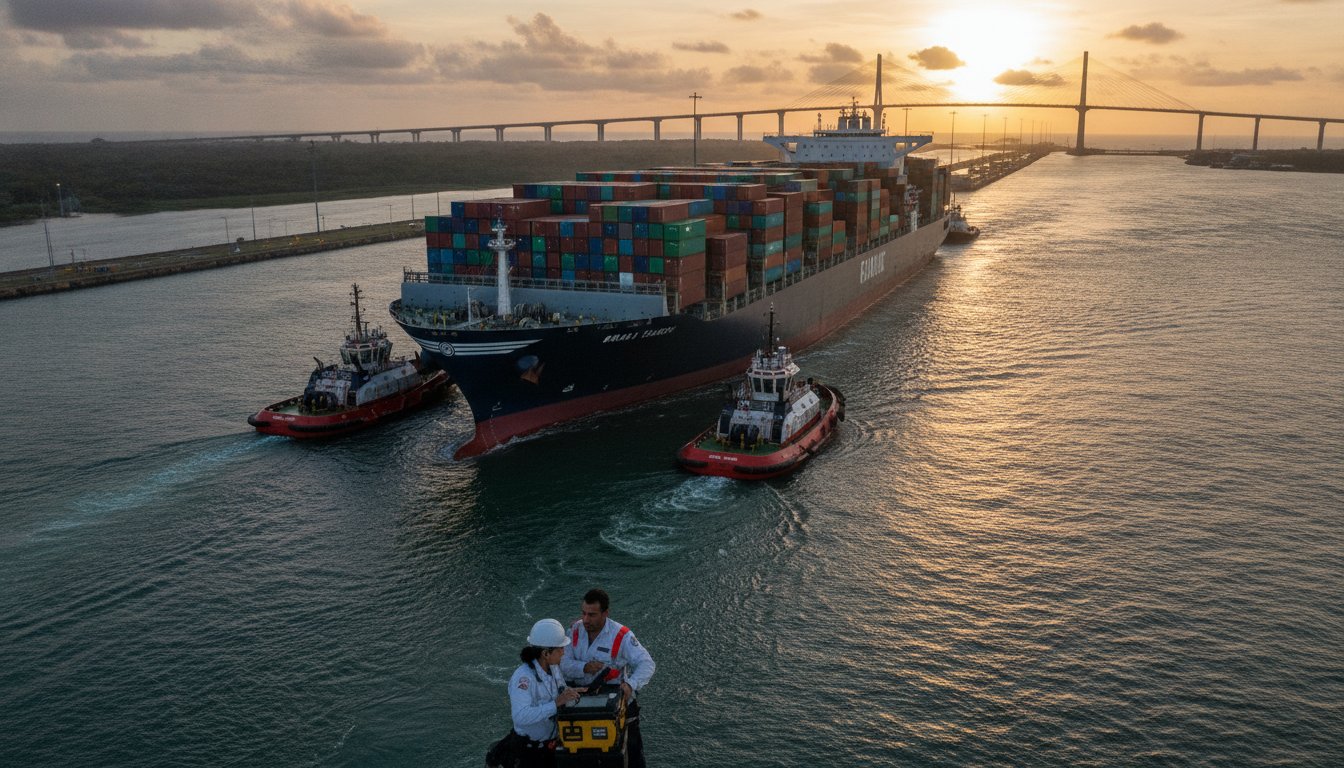
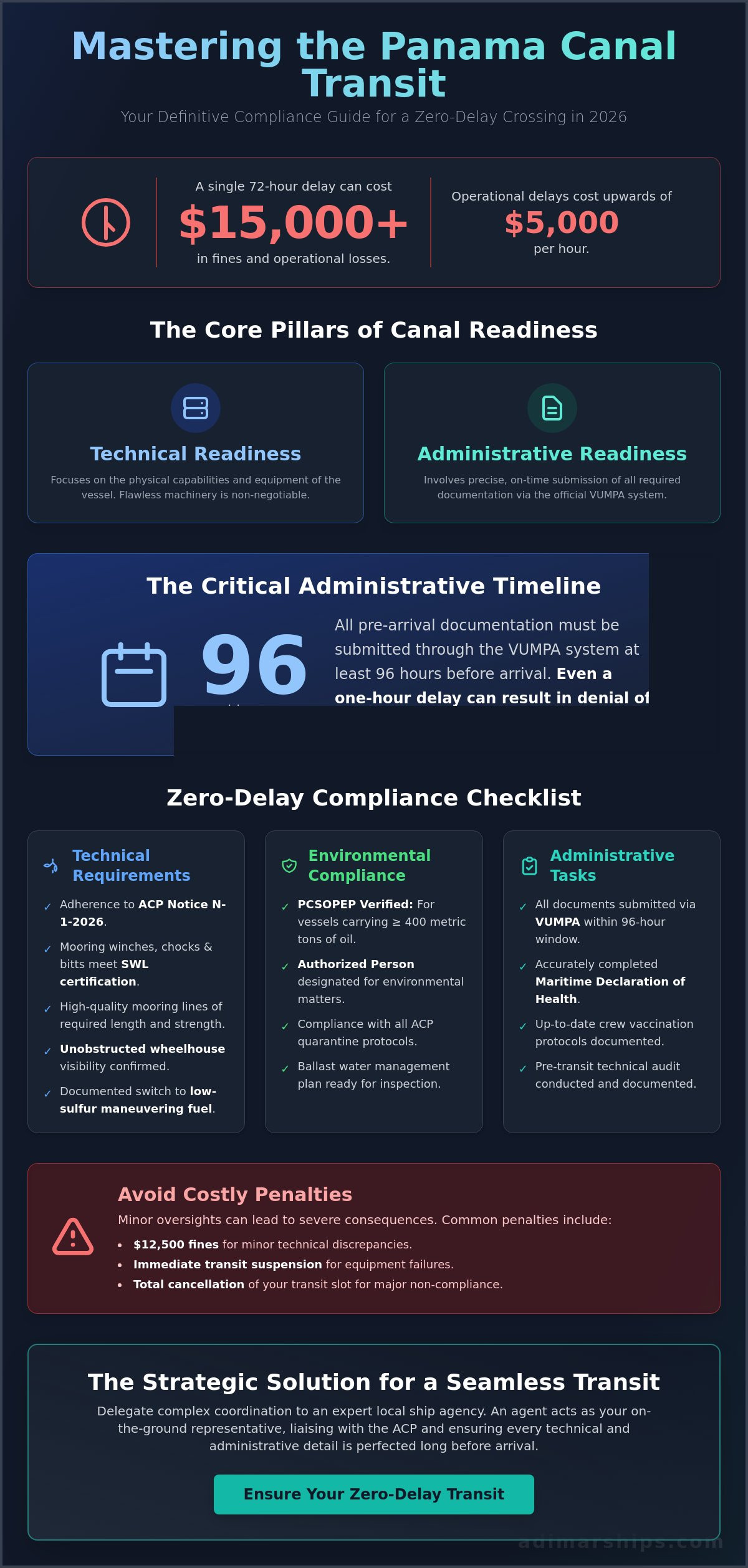
Successful vessel preparation for panama canal transit in 2026 requires a dual-track strategy. The Panama Canal Authority (ACP) has moved toward a highly digitized and strictly regulated environment where technical precision must match administrative accuracy. It isn’t enough for a ship to be seaworthy; it must be canal-worthy according to the specific, evolving standards of the ACP. For a broader perspective on the waterway’s scale and history, a Panama Canal Overview reveals why this transit remains one of the most demanding navigational feats in global trade. Today, the margin for error is thinner than ever. Operational delays now cost ship owners upwards of $5,000 per hour. A significant 72-hour delay can result in combined fines and losses exceeding $15,000, making early preparation the only viable way to protect your voyage’s profitability.
The foundation of a smooth transit lies in early coordination with a Panama Canal ships agent. An experienced agent acts as your on-the-ground representative, ensuring that every detail of your arrival meets the ACP’s rigorous expectations. They serve as the bridge between your vessel’s crew and the canal’s complex regulatory framework. By delegating these specialized tasks to a local expert, you gain the security of knowing that technical and administrative pillars are synchronized long before the vessel reaches the breakwater.
Technical vs. Administrative Compliance
Technical readiness focuses on the physical capabilities and equipment of the ship. This includes ensuring mooring winches, chocks, and bitts meet Safe Working Load (SWL) requirements, and that wheelhouse visibility remains unobstructed. Administrative readiness is equally critical. It involves the precise submission of documentation through the VUMPA system, including maritime health declarations and crew vaccination protocols. Both pillars must be perfectly aligned. A vessel with flawless deck machinery can still be denied entry if its documentation is submitted even an hour past the mandatory 96-hour deadline.
Navigating the OP Notice to Shipping No. 1
The primary technical manual for any transit is the ACP Notice to Shipping N-1-2026. This document is the source of truth for all technical standards, and it undergoes annual updates that can catch unprepared operators off guard. Staying updated on 2026 amendments is a full-time job. Your agent plays a vital role here, interpreting these complex notices and translating them into actionable checklists for your crew. This proactive oversight prevents minor technical discrepancies from turning into $12,500 penalties or, worse, the total cancellation of your hard-won transit slot.
Technical Requirements: Equipment and Structural Standards
Technical integrity is the backbone of vessel preparation for panama canal transits. The ACP doesn’t just inspect your paperwork; they scrutinize your deck. Every piece of machinery, from mooring winches to anchors, must operate flawlessly. If a winch fails during a lockage, it’s not just a mechanical issue. It’s a safety hazard that can lead to immediate transit suspension. You also need to ensure your vessel is equipped with high-quality mooring lines that meet specific length and strength requirements. We’ve seen transits halted simply because lines weren’t in prime condition.
Structural standards for chocks and bitts are equally rigid. These components must handle the immense tension of towing locomotives. For 2026, the ACP requires specific Safe Working Load (SWL) certifications for all towing points. If your chocks don’t match the canal’s locomotive needs, you’ll face delays or be forced to take on expensive tug assistance. Maneuvering fuel is another critical factor. Vessels must switch to low-sulfur fuel before entering canal waters. This procedure needs to be documented and ready for inspection by the boarding officer the moment they step on the bridge.
Mooring and Towing Arrangements
Mooring configurations differ significantly between Panamax and Neopanamax vessels. Neopanamax ships require more robust arrangements to handle the larger lock chambers. Chock sizes must accommodate the heavy-duty wires used by the ACP’s specialized towing locomotives. A common equipment failure that leads to transit denial is a lack of properly maintained bitts or incorrectly positioned chocks. We recommend conducting a pre-transit technical audit to catch these issues early. Our team provides ship agency services that include preliminary equipment reviews to ensure your vessel stays on schedule.
Navigation and Visibility Standards
Your bridge must offer a clear, unobstructed view. The ACP uses a specific formula to calculate the required blind distance from the bow. If deck loads or protrusions block this view, you’ll need to hire additional pilots or tugboats, which increases your costs. Navigation aids like bridge wing indicators, radars, and horn controls must be fully operational. Boarding facilities are also a priority. Pilot ladders must comply with SOLAS Chapter V, Regulation 23. If a ladder is worn or improperly rigged, the pilot may refuse to board, stalling your schedule immediately and potentially causing you to lose your transit slot.
Pre-Arrival Documentation and Administrative Timeline
Precision in administrative vessel preparation for panama canal transit is just as vital as the mechanical readiness of your ship. The Panama Canal Authority (ACP) operates on a strict timeline that leaves no room for data discrepancies. All documentation must be submitted through the Ventanilla Única Marítima de Panamá (VUMPA) system. This digital portal is now the exclusive method for vessel clearances. Missing the mandatory 96-hour notification window isn’t just a logistical headache; it results in a minimum sanction of $2,500. Even minor clerical errors in your declarations can trigger penalties of $12,500, making administrative vigilance a financial necessity.
Managing your transit slot requires constant interaction with the ACP’s electronic information exchange. Because demand for slots is high, with auction prices reaching as much as $385,000 in early 2026, losing a reservation due to paperwork errors is a catastrophic outcome. We ensure that your Ship’s Information and Visibility forms are cross-checked against actual vessel conditions. This prevents the “data mismatch” delays that often occur when bridge teams and shore-side offices aren’t perfectly synchronized.
The 96-Hour Arrival Window
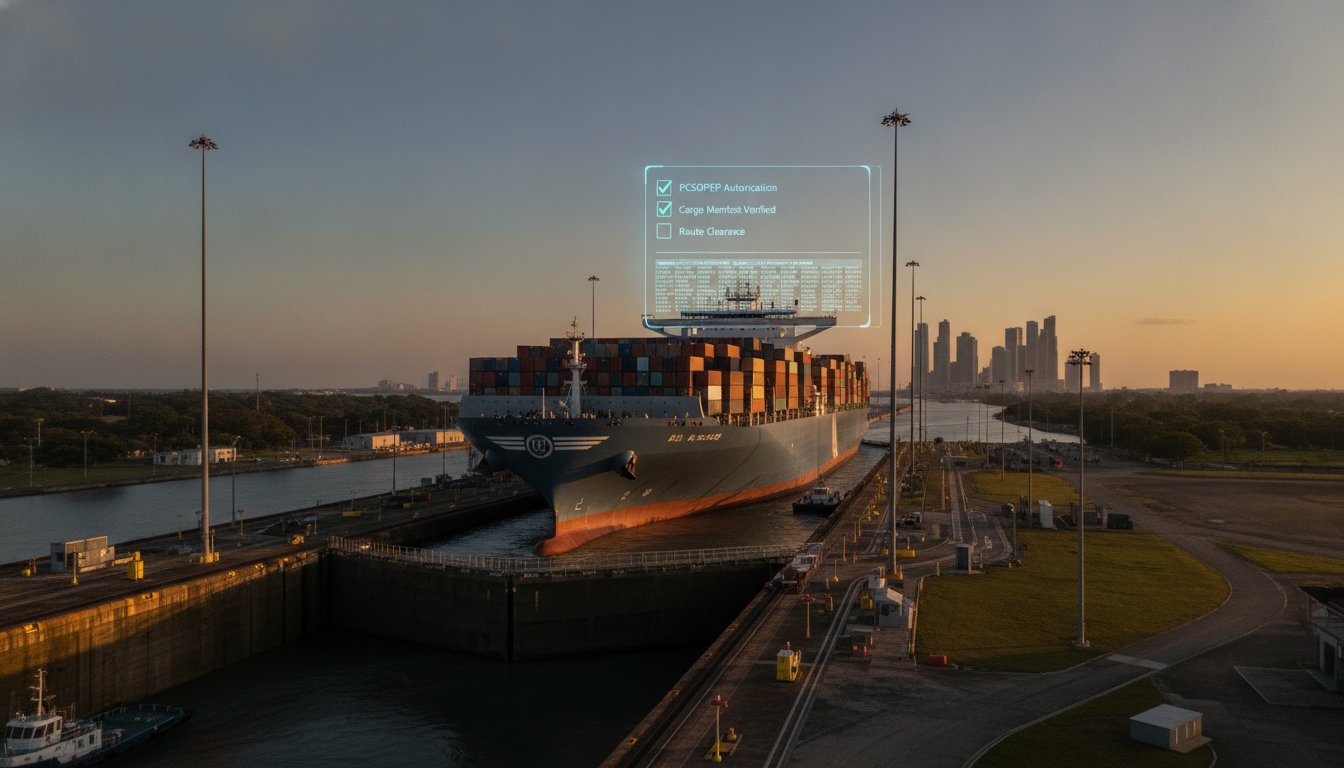
The countdown to a successful transit begins four days before your arrival. You must follow a structured three-step submission process to avoid fines:
- Step 1: Submit the initial arrival notification and comprehensive security data. This includes your estimated time of arrival (ETA) and vessel dimensions.
- Step 2: Provide a detailed list of the last ten ports of call. This is used for both security screening and health risk assessments.
- Step 3: Confirm the vessel’s final transit condition. You must report accurate drafts and trim, as any deviation from the reported data upon arrival can lead to transit suspension.
Essential Documentation Checklist
Your administrative file must be complete before the boarding officer arrives. Key documents include the Maritime Declaration of Health, which must detail crew vaccination status, specifically for Yellow Fever if coming from high-risk zones. You also need to have Bunker Delivery Notes (BDN) ready for inspection to prove the use of compliant low-sulfur fuel. Finally, ensure your Ship Security Officer (SSO) has all ISPS Code compliance documents organized and available. Having these records ready projects a high level of professionalism and helps the boarding process proceed without friction.
Environmental Compliance and PCSOPEP Standards
Environmental protection is a non-negotiable priority for the ACP in 2026. For any vessel with a carrying capacity of 400 metric tons or more of oil, whether as cargo or fuel, vessel preparation for panama canal must include a verified Panama Canal Shipboard Oil Pollution Emergency Plan (PCSOPEP). This plan is distinct from the standard MARPOL SOPEP and is categorized into four tiers. Tier 1 covers vessels up to 7,000 metric tons, while Tier 4 applies to those exceeding 90,000 metric tons. If you’re operating a new vessel or have recently updated your plan, you must allow for a 4-6 week approval process by the ACP. Failing to have an approved plan on board leads to fines starting at $50,000. It’s a high price to pay for an administrative oversight.
Compliance also extends to how your vessel manages its daily footprint. The ACP has intensified its focus on zero-discharge policies within canal waters. This means your crew must be prepared for rigorous inspections of waste logs and seal records. Any discrepancy in how sludge or bilge water is handled can result in immediate transit suspension. We’ve seen that vessels with well-organized environmental records move through the boarding process much faster, as it builds immediate trust with the ACP inspectors.
PCSOPEP Readiness and Authorized Persons
A critical component of your plan is the designation of a PCSOPEP authorized person. This individual must be a resident of Panama and serves as the official liaison with the ACP in the event of a spill. They have the legal authority to spend up to $1,000,000 on cleanup operations without waiting for owner approval. It’s a role that requires local expertise and immediate availability. Adimar Shipping acts as your vigilant authorized person, providing the specialized representation the ACP demands. We ensure your documentation is submitted via VUMPA at least 96 hours before arrival to avoid the $2,500 late-submission penalty.
Managing Ship Waste and Emissions
Properly managing ship waste is essential for a clean inspection. If your vessel requires sludge disposal in Panama, this must be coordinated with certified local facilities before you enter canal waters. You must also adhere to North American Emission Control Area (ECA) standards. This requires switching to low-sulfur fuel and maintaining detailed Bunker Delivery Notes (BDN) for inspection. Our team helps you coordinate these husbandry services to ensure your waste management and fuel switching are fully compliant, protecting you from environmental fines and operational delays.
Ensure your vessel is fully protected by securing a qualified PCSOPEP Authorized Person through Adimar Shipping today.
Strategic Delegation: Why a Local Agent is the Final Step
Strategic delegation is the final, most crucial component of vessel preparation for panama canal transits. While your crew focuses on the technical and structural standards discussed earlier, a local agent manages the friction points that exist between ship and shore. The sheer complexity of a Panama Canal transit requires a partner who understands the nuances of the ACP’s operational rhythm. We act as a vigilant presence on the ground, ensuring that no detail is lost in translation. This on-site oversight eliminates confusion and provides the security that your vessel’s interests are protected at every turn.
Personalized Coordination and Communication
Effective transit management relies on real-time data. We provide constant updates on canal traffic, slot availability, and any sudden scheduling changes from the ACP. Our team maintains a direct liaison with pilots, tug masters, and port authorities to ensure your vessel’s arrival is expected and handled with priority. This level of personalized coordination reduces the operational stress that often accompanies high-stakes transits. You aren’t just another hull in the queue; you have a dedicated partner advocating for your schedule.
Owner’s and Charterer’s Representation
It’s vital to understand the distinction between Owner’s and Charterer’s nominated agency roles. While both serve the transit, a protective agent focuses specifically on safeguarding your financial and operational interests. Adimar Shipping acts as a true extension of your own team in Panama, providing local oversight that standard business language can’t replicate. Our final readiness checklist ensures that technical, administrative, and environmental pillars are 100% verified. With our team as your representative, you can approach the 2026 transit season with total confidence in your vessel’s compliance.
Master Your 2026 Panama Canal Transit
Successful vessel preparation for panama canal transits relies on the perfect alignment of technical readiness and administrative precision. You’ve seen how strict the ACP’s 96-hour VUMPA deadlines are and how a single equipment failure or environmental oversight can lead to thousands of dollars in fines. By mastering these regulatory pillars, you protect your vessel from the rising costs of delays and slot cancellations. The complexity of the 2026 season requires more than just a checklist; it requires a proactive partner on the ground to manage the unexpected.
Adimar Shipping provides the vigilance you need in Panama City. We offer expert PCSOPEP Authorized Person services and comprehensive husbandry solutions, acting as a protective agency that treats your vessel’s interests as our own. With decades of local expertise, we simplify the most challenging logistical hurdles and keep your schedule on track. Secure your Panama Canal transit with Adimar Shipping’s expert agency services. Let’s work together to ensure your next crossing is efficient, compliant, and completely stress-free.
Frequently Asked Questions
What are the primary technical requirements for a Panama Canal transit?
Primary technical requirements include functional mooring winches, specific chock and bitt configurations, and unobstructed bridge visibility. These standards are strictly outlined in the ACP Notice to Shipping N-1-2026. Vessels must ensure that all deck machinery is operational and that mooring lines meet the required Safe Working Load (SWL) for locomotive towing. Failure to meet these physical standards can lead to immediate transit suspension or the requirement for additional tug assistance.
How far in advance should I start vessel preparation for the Panama Canal?
You should begin vessel preparation for panama canal transit at least four to six weeks before your expected arrival date. This timeline is necessary if your vessel requires a new or updated PCSOPEP approval, which typically takes over a month to process. Early preparation allows your team to conduct technical audits of deck machinery and ensure all administrative documentation is ready for the mandatory 96-hour VUMPA submission window.
What is PCSOPEP and does my vessel need an authorized person?
PCSOPEP stands for the Panama Canal Shipboard Oil Pollution Emergency Plan. It is mandatory for any vessel with an oil carrying capacity of 400 metric tons or more. You must designate a Panama-resident Authorized Person who acts as a direct liaison with the ACP. This individual has the legal authority to coordinate cleanup operations and manage communication with local authorities in the event of an oil spill during transit.
Can a vessel be denied transit for poor bridge visibility?
A vessel can be delayed or denied immediate transit if bridge visibility is compromised by deck cargo or structural obstructions. The ACP calculates a specific blind distance from the bow that must not be exceeded. If your vessel fails this calculation, you may be required to hire additional pilots or tugboats to ensure safe navigation. These extra services increase your operational costs and can disrupt your original transit schedule.
What documents must be submitted 96 hours prior to arrival at the Panama Canal?
The mandatory 96-hour submission includes the initial arrival notification, security information, and a list of the last ten ports of call via the VUMPA system. You must also provide the Maritime Declaration of Health and crew vaccination lists. Accurate reporting of vessel drafts and trim is essential at this stage. Missing this deadline or providing incorrect data can result in significant fines and potential transit delays.
What happens if my vessel does not meet the ACP chock and bitt requirements?
Non-compliance with chock and bitt requirements usually leads to the mandatory use of additional tugboats at the owner’s expense. This is necessary because the standard towing locomotives cannot safely attach to non-compliant hardware. These tugboat fees can exceed $5,000 per unit for Neopanamax vessels. Ensuring your hardware meets the canal’s Safe Working Load (SWL) standards is a critical part of vessel preparation for panama canal transits.
Are there specific fuel requirements for vessels transiting the Panama Canal in 2026?
Vessels must comply with North American Emission Control Area (ECA) standards by using low-sulfur fuel during transit. Your engine room team must complete the fuel switching procedure before the vessel enters the canal’s jurisdiction. You are required to maintain detailed Bunker Delivery Notes (BDN) and fuel logs for inspection by ACP boarding officers. Verifying that your fuel supply meets these environmental regulations is essential for a successful crossing.
How does a Panama ship agency assist with vessel preparation?
A ship agency manages the complex interface between the vessel owner and the ACP to ensure total compliance. They handle the submission of all pre-arrival documentation and serve as your resident PCSOPEP Authorized Person. Beyond compliance, an agency coordinates husbandry services like crew changes and provisioning. This strategic delegation allows you to focus on vessel operations while your agent ensures every administrative and technical requirement is met for a zero-delay transit.