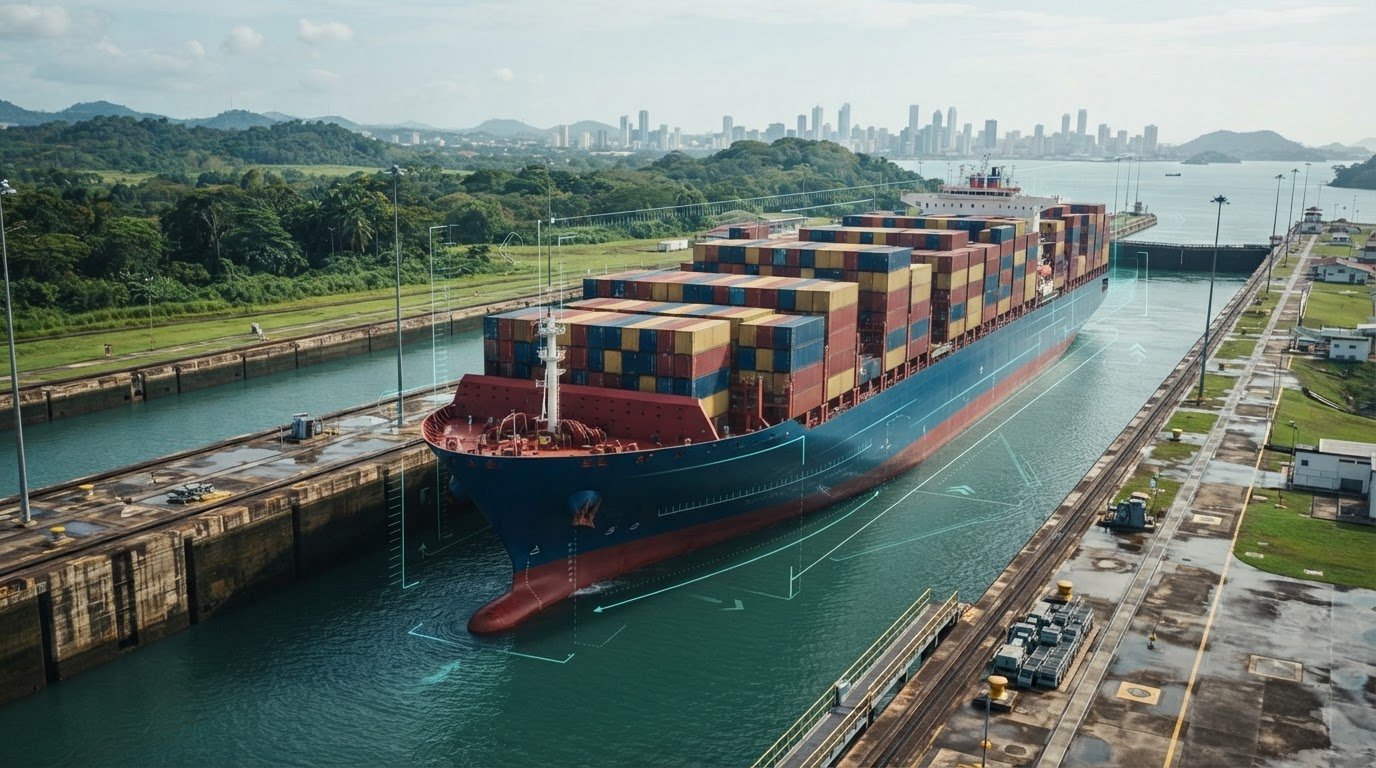


A single clerical error in your VUMPA submission can trigger a $15,000 fine before your vessel even reaches the locks. For operators managing global schedules, the margin for error has disappeared as the Panama Canal Authority moves toward fully automated, machine-validated systems. You understand that meeting the strict 96-hour deadline for panama canal transit documentation requirements is more than just an administrative task. It’s a critical component of your vessel’s operational readiness.
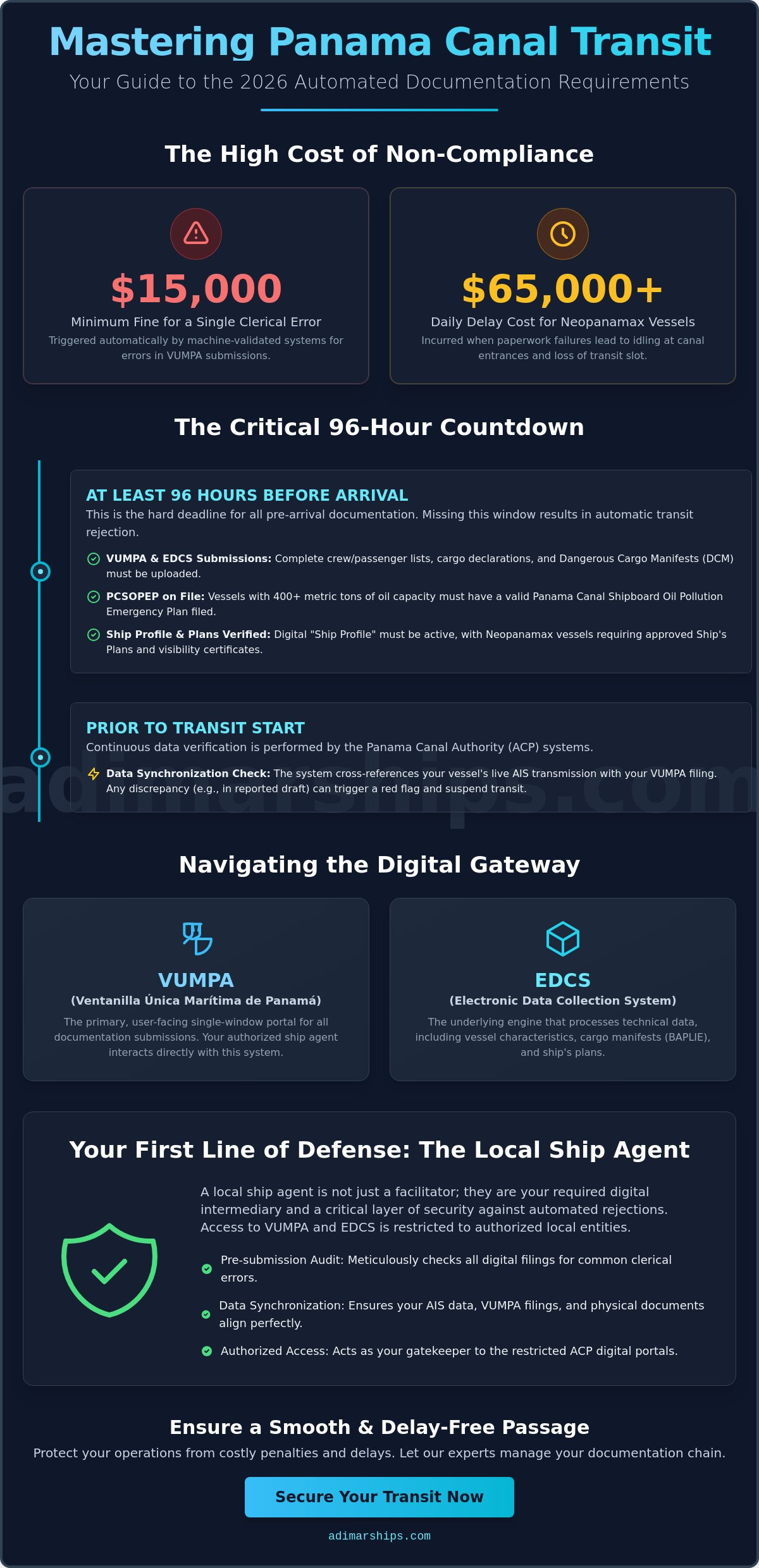
It’s natural to feel frustrated by the overlapping demands of VUMPA and EDCS or the high stakes of PCSOPEP compliance. This guide provides the clarity you need to master the 2026 updated standards and ensure a delay-free passage. We’ll provide a chronological checklist of required documents, clear up the confusion between digital portals, and show you how to secure your transit against the $65,000 daily delay costs that Neopanamax vessels face when paperwork fails.
Key Takeaways
- Navigate the transition to fully automated VUMPA and EDCS filing systems to maintain your vessel’s transit priority.
- Follow a precise 96-hour countdown for panama canal transit documentation requirements to eliminate the risk of automatic transit rejections.
- Secure the correct local certifications, including the PCTC and PCSOPEP, to prevent costly admeasurement delays and environmental fines.
- Protect your operations from the $15,000 minimum non-compliance penalties by identifying common clerical errors before they’re submitted.
- Learn how a local ship agency audits your digital filings to provide a layer of security between your vessel and the canal authorities.
The High Stakes of Panama Canal Transit Documentation
Precision is the primary currency of the Panama Canal. In 2026, the Panama Canal Authority (ACP) has moved beyond manual reviews to a system of strict, machine-validated compliance. For vessel operators, this means the panama canal transit documentation requirements are no longer just administrative hurdles. They are the primary factor in determining your transit slot priority. A single typo in a container manifest or a late bunker declaration doesn’t just result in a request for correction; it can lead to an immediate loss of your scheduled slot.
The ACP uses pre-arrival data to orchestrate a complex ballet of pilot assignments and tugboat scheduling. When your digital filing is incomplete, the entire sequence breaks. This is why the role of a ship agent has evolved. We act as your digital intermediary, ensuring every data point aligns with ACP expectations before the 96-hour clock runs out. In this environment, “close enough” is a recipe for expensive idling at the Atlantic or Pacific entrances. Details matter. Errors cost time. We provide the expertise to ensure your vessel remains on schedule.
Why Documentation is Your “Digital Hull”
The ACP begins vetting your vessel long before it reaches the breakwater at Colon or Balboa. Think of your documentation as a “digital hull” that must be as sound as the steel of your ship. Clerical errors in the VUMPA system trigger immediate transit suspensions. These aren’t just minor inconveniences. The financial reality of waiting for paperwork at anchor is staggering. For a Neopanamax vessel, daily delay costs can exceed $65,000. When you factor in potential fines for non-compliance, which often start at $15,000, the importance of accuracy becomes clear. Your ship agent provides the vigilance needed to protect your bottom line from these avoidable expenses.
The 2026 Regulatory Landscape
The regulatory environment shifted significantly on January 1, 2026, with the implementation of the N-01-2026 Vessel Requirements. These updates emphasize 100% digital verification through the VUMPA and EDCS systems. Environmental documentation has also taken center stage. The Panama Canal Shipboard Oil Pollution Emergency Plan (PCSOPEP) is now a primary gatekeeper for transit. Vessels with a capacity of 400 metric tons or more of oil must have a valid plan on file at least 96 hours prior to arrival. Without this, the locks remain closed to you. This move toward automation leaves no room for manual intervention or last-minute favors. Your paperwork must be perfect from the start.
Digital Filing Systems: Navigating VUMPA and EDCS
The Panama Canal Authority (ACP) operates through a sophisticated digital infrastructure. VUMPA (Ventanilla Única Marítima de Panamá) serves as the primary user-facing portal. Meanwhile, the EDCS (Electronic Data Collection System) functions as the underlying engine for technical data processing. Understanding the interplay between these two systems is essential for meeting panama canal transit documentation requirements. Access to these portals is restricted to authorized local entities. This requirement makes your ship agent the primary gatekeeper for your vessel’s digital profile.
Accuracy begins with data synchronization. Your AIS transmission must match your VUMPA filing exactly. Discrepancies between reported draft and real-time sensor data often trigger automatic red flags in the ACP system. While U.S. Coast Guard regulations provide a framework for safety and security zones in regional waters, the ACP maintains absolute authority over its digital corridor. Your agent ensures these digital streams align before the machine-validation process begins. This proactive oversight prevents the clerical rejections that derail tight schedules.
Step-by-Step VUMPA Submission
The process starts with securing a Panama Canal Ship Identification (SIN). This unique number tracks your vessel throughout its operational life in the canal. Once registered, the agent must upload mandatory documents through the single-window interface. This includes the complete Crew List and Passenger List. For full container vessels, cargo declarations must be submitted via the EDCS-BAPLIE system. Every Dangerous Cargo Manifest (DCM) requires precise coding to pass the ACP’s automated safety filters. Missing the 96-hour window for these uploads leads to an automatic loss of your transit slot.
EDCS and Technical Data Management
EDCS focuses on the physical characteristics of your vessel. For Neopanamax transits, the ACP requires specific “Ship’s Plans” to verify lock compatibility. This includes visibility certificates that prove the bridge team has an unobstructed view of the canal banks. You must verify that your digital “Ship Profile” is active and approved before the vessel reaches the anchorage. If technical specs change, such as a modification to the bow thrusters, the EDCS must be updated immediately. Managing these technical nuances is a core part of our ship agency services, ensuring your digital profile never conflicts with your physical arrival.
Specialized Certificates: PCSOPEP and Admeasurement
Standard international maritime certificates are rarely enough to satisfy the Panama Canal Authority. The canal operates under its own legal and technical framework. This means your vessel must hold specific, local certifications to move from the anchorage to the locks. Failure to present these documents during the pre-arrival audit stops your transit before it starts. Central to these panama canal transit documentation requirements are the PCSOPEP and the Panama Canal Tonnage Certificate (PCTC). These documents verify your vessel’s environmental readiness and its exact volume for toll calculation.
Beyond technical specs, the ACP requires a Maritime Declaration of Health and updated ISPS security documentation. These filings ensure the safety of canal pilots and shore-side personnel. While most operators are familiar with international security codes, Panama’s local enforcement is rigorous. Discrepancies in your security profile or health declarations lead to immediate quarantine or inspection delays. We ensure these specialized certificates are verified and uploaded well before your vessel reaches the breakwater.
The Role of the PCSOPEP Authorized Person
Every vessel with a carrying capacity of 400 metric tons or more of oil must have a Panama Canal Shipboard Oil Pollution Emergency Plan (PCSOPEP). This isn’t a suggestion; it’s a gatekeeper. You must nominate a local pcsopep authorized person at least 96 hours before arrival. This representative is legally empowered to coordinate oil spill response efforts on your behalf. Failure to have an approved plan on file results in a minimum fine of $2,500. Integrating this requirement with your owner’s nominated agency ensures that your environmental compliance and operational logistics are handled by a single, vigilant team.
Admeasurement and Tonnage Verification
The ACP doesn’t use standard international tonnage to calculate tolls. Instead, they use the Panama Canal Universal Measurement System (PC/UMS). To obtain a PCTC, your vessel must undergo an initial admeasurement, which carries a fee of approximately $1,100. You must provide specific technical drawings, including the General Arrangement, Capacity Plan, and Midship Section. These blueprints allow ACP admeasurers to calculate the exact volume of your vessel. Additionally, you must submit a “Vessel Visibility” declaration. This document proves that your bridge configuration meets the strict safety standards required for canal pilots to navigate the narrow locks safely. Accuracy here is vital, as incorrect measurements can lead to unexpected toll surcharges or transit rejections.
The Documentation Timeline: A 96-Hour Countdown
Success at the locks depends on a disciplined adherence to the clock. The Panama Canal Authority (ACP) operates on a strict, machine-validated schedule that penalizes hesitation. Managing the panama canal transit documentation requirements is not a single event; it’s a 96-hour sequence of digital and physical handshakes. If you miss a window, the system automatically de-prioritizes your vessel, often leading to costly delays at the anchorage.
The timeline is structured to allow the ACP to coordinate pilots, tugs, and line-handlers with surgical precision. Your documentation serves as the trigger for these resources. Without the correct data at the correct time, your vessel remains a ghost in the system, invisible to the schedulers who control the gates. We provide the vigilant oversight needed to ensure every milestone is met without friction.
- 96 Hours Prior: This is the machine-validation deadline for initial VUMPA and EDCS filings. You must also have your PCSOPEP on file by this mark.
- 48 Hours Prior: Operators must finalize cargo manifests and bunker declarations. Any discrepancy here can trigger a manual audit.
- 24 Hours Prior: The “Ready for Transit” notice must be submitted alongside finalized health declarations.
- Arrival at Anchor: The digital process transitions to a physical inspection as the boarding officer arrives to verify original certificates.
The 96-Hour Rule Explained
The 96-hour mark is the “point of no return” for avoiding late fees and transit rejections. Once this window closes, the ACP’s automated system locks the initial vessel profile. If cargo manifests change after this filing, you must act quickly to avoid penalties. Coordinating with your ship agency panama allows for the rapid communication needed to update the ACP before these changes become violations. We act as your representative on the ground, ensuring that last-minute operational shifts don’t turn into administrative nightmares.
Physical Documentation for Boarding Officers
While the process is digital, the boarding officer still requires a physical “Bridge Pack” for inspection. This pack must contain original certificates for admeasurement, sanitation, and security. The boarding officer interview is a critical step where the Master must confirm the vessel’s technical readiness. It’s essential that the Master’s signature on these physical forms matches the digital submissions exactly. Any inconsistency can lead to a suspension of transit while the ACP conducts a manual review. For reliable oversight of this handover, consider our ship agency services to ensure every document is in order before the officer steps on deck.
How Adimar Shipping Secures Your Documentation Chain
Submitting paperwork is only half the battle. In a system governed by machine validation and strict deadlines, the real value of a ship agent lies in their ability to audit information before it reaches the authorities. We don’t just relay your data. We perform a rigorous “Pre-Flight” check on every file. Our team scrutinizes your panama canal transit documentation requirements to identify the clerical inconsistencies that automated systems flag for rejection. This proactive approach transforms your documentation from a liability into a strategic advantage.
Our local presence in Panama City provides a direct line of communication with ACP admeasurers and inspectors. When technical conflicts arise regarding vessel dimensions or visibility certificates, we resolve them in real-time. We also manage the complex financial logistics of a transit. This includes precise toll calculations and the secure handling of Cash to Master (CTM) documentation. By acting as your vigilant local representative, we ensure that the financial and administrative sides of your transit are as seamless as the physical passage through the locks.
Eliminating the Risk of Delays
Global agencies often rely on templates that miss the specific nuances of the Panama corridor. We identify “red flag” errors in manifests, such as subtle mismatches in dangerous cargo codes, that lead to immediate suspensions. Navigating the panama canal authority bureaucracy requires more than just an internet connection. It requires local expertise and a deep understanding of how ACP officials interpret new regulations like the N-01-2026 notices. Our office provides real-time monitoring of your VUMPA status. If a filing is questioned, we’re already on the ground to provide the necessary clarification before a delay is even recorded.
Personalized Service for Ship Owners
We believe that every vessel deserves a customized compliance strategy. Moving beyond a “one-size-fits-all” approach allows us to address the unique technical profiles of Neopanamax and Panamax vessels alike. Our husbandry services integrate directly with your transit documentation. This ensures that crew changes, bunker deliveries, and spare parts logistics are synchronized with your VUMPA filing. This level of coordination provides the peace of mind that comes from knowing your vessel’s interests are protected by a partner who acts as an extension of your own team. Contact Adimar Shipping today for a customized transit compliance audit to secure your next passage.
Ensuring Operational Excellence in the Panama Corridor
The transition to a fully digital, machine-validated environment means that your vessel’s paperwork is now as critical as its engine. Success at the locks requires more than just submitting forms; it demands a proactive audit of every data point within the VUMPA and EDCS systems. By mastering the 96-hour countdown and securing specialized local certificates like the PCSOPEP, you protect your vessel from the heavy fines and scheduling delays that define the 2026 regulatory landscape. Accuracy is your best defense against the rising costs of transit auctions and idling time.
Managing panama canal transit documentation requirements shouldn’t be a source of operational stress for your team. We’ve provided local Panama City expertise since 1993, acting as a vigilant extension of your bridge team to resolve conflicts before they escalate. As an Authorized PCSOPEP Representative with a specialized ACP regulatory compliance team, we provide the security and transparency you need to navigate these complexities with confidence. Delegating these technical tasks to a seasoned partner allows you to focus on your global schedule while we handle the local details.
Secure Your Panama Canal Transit with Expert Documentation Support
We look forward to ensuring your next passage is efficient, compliant, and completely error-free.
Frequently Asked Questions
What is the most common documentation error for Panama Canal transits?
Typographical errors in the VUMPA portal and mismatched AIS data are the most frequent mistakes operators make. These clerical oversights trigger automatic rejections because the ACP system requires perfect synchronization between your digital filing and real-time sensor data. We recommend a double-audit of all entries to ensure your vessel’s reported draft and dimensions align exactly with your pre-arrival declaration.
Do I need to submit physical copies of documents before the ship arrives?
No, you don’t need to send physical copies before arrival because the initial process is entirely digital. You must submit all panama canal transit documentation requirements through the VUMPA and EDCS portals. However, the Master must have a physical “Bridge Pack” of original certificates ready for the ACP boarding officer’s inspection once the vessel reaches the anchorage.
How long does the ACP take to approve pre-arrival documentation?
Digital validation through the VUMPA portal is typically immediate for standard, machine-validated filings. Data points are processed as soon as they are uploaded to the system. However, manual reviews for technical vessel plans or new admeasurement data in the EDCS can take several business days. Submitting your package well before the 96-hour deadline provides a necessary buffer for these manual reviews.
What happens if my cargo manifest changes while the ship is at sea?
You must update the VUMPA portal immediately if your cargo manifest changes after your initial submission. While the 96-hour rule is a strict deadline for the first filing, the ACP allows for subsequent corrections. Late-stage changes can trigger a manual audit or result in administrative fees. We coordinate these updates directly with the authorities to ensure your transit slot remains secure.
Is the PCSOPEP document required for every single transit?
PCSOPEP documentation is only mandatory for vessels with a carrying capacity of 400 metric tons or more of oil as fuel or cargo. If your vessel meets this threshold, you must have an approved plan and a nominated local Authorized Person on file. Smaller vessels or those carrying non-petroleum cargo may be exempt, but you should always verify your status with your agent before arrival.
Can a global ship agency handle all Panama Canal documentation requirements?
Global agencies often lack the direct, authorized login credentials required for the VUMPA and EDCS portals. Only locally registered entities in Panama can access these systems to manage your filings. Most global firms sub-contract this work to local specialists. Working directly with a local ship agency ensures faster communication and more precise oversight of the entire documentation chain.
What are the fines for late or inaccurate documentation filing in 2026?
Fines for non-compliance in 2026 start at $2,500 for PCSOPEP violations and can exceed $15,000 for more significant documentation errors. Beyond these penalties, the financial impact of a transit delay is often much higher. A Neopanamax vessel can face daily delay costs of over $65,000 if it loses its transit slot due to inaccurate or late filing.
Do Neopanamax vessels have different documentation requirements than Panamax ships?
Neopanamax vessels face stricter technical documentation requirements, particularly regarding bridge visibility and lock compatibility blueprints. You must submit specialized drawings, including the Midship Section and Capacity Plan, to the EDCS for these larger transits. Panamax vessels follow a more standard admeasurement process, though both must strictly adhere to the 96-hour notification window for all panama canal transit documentation requirements.