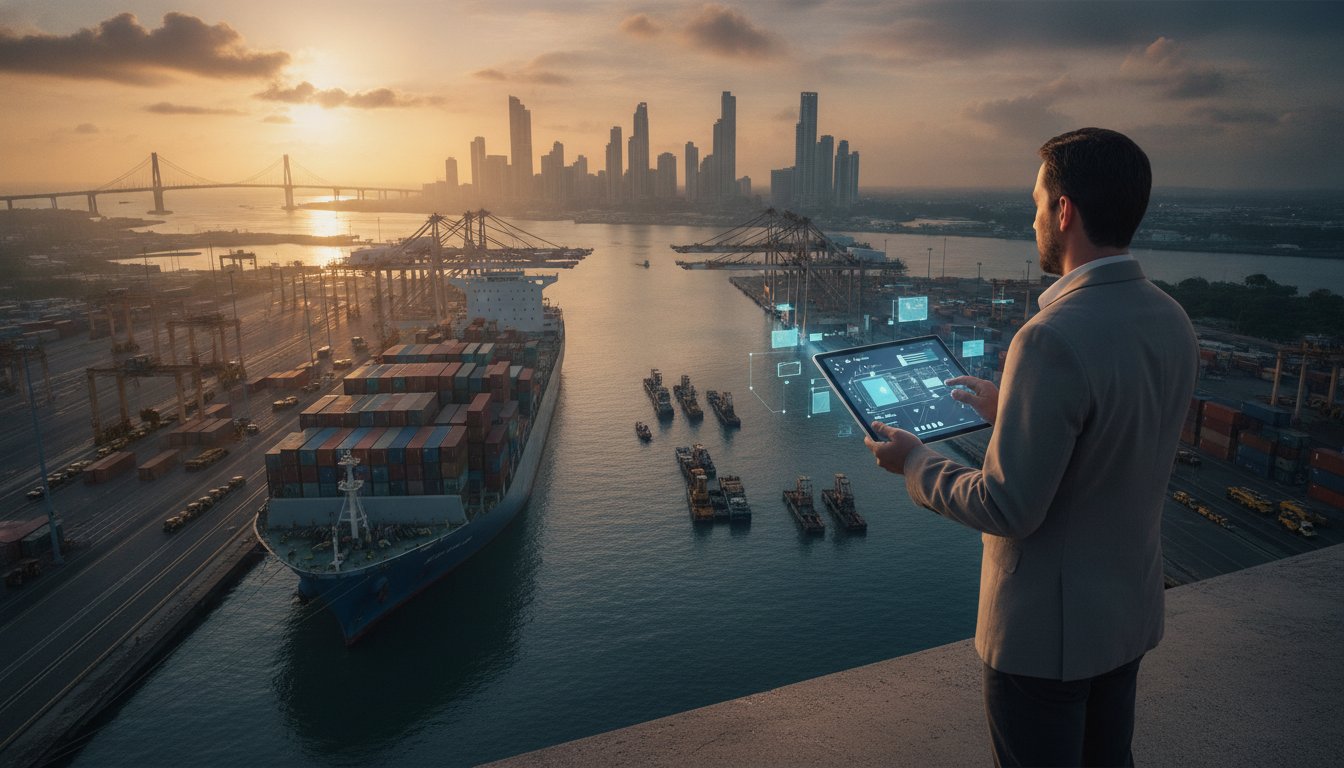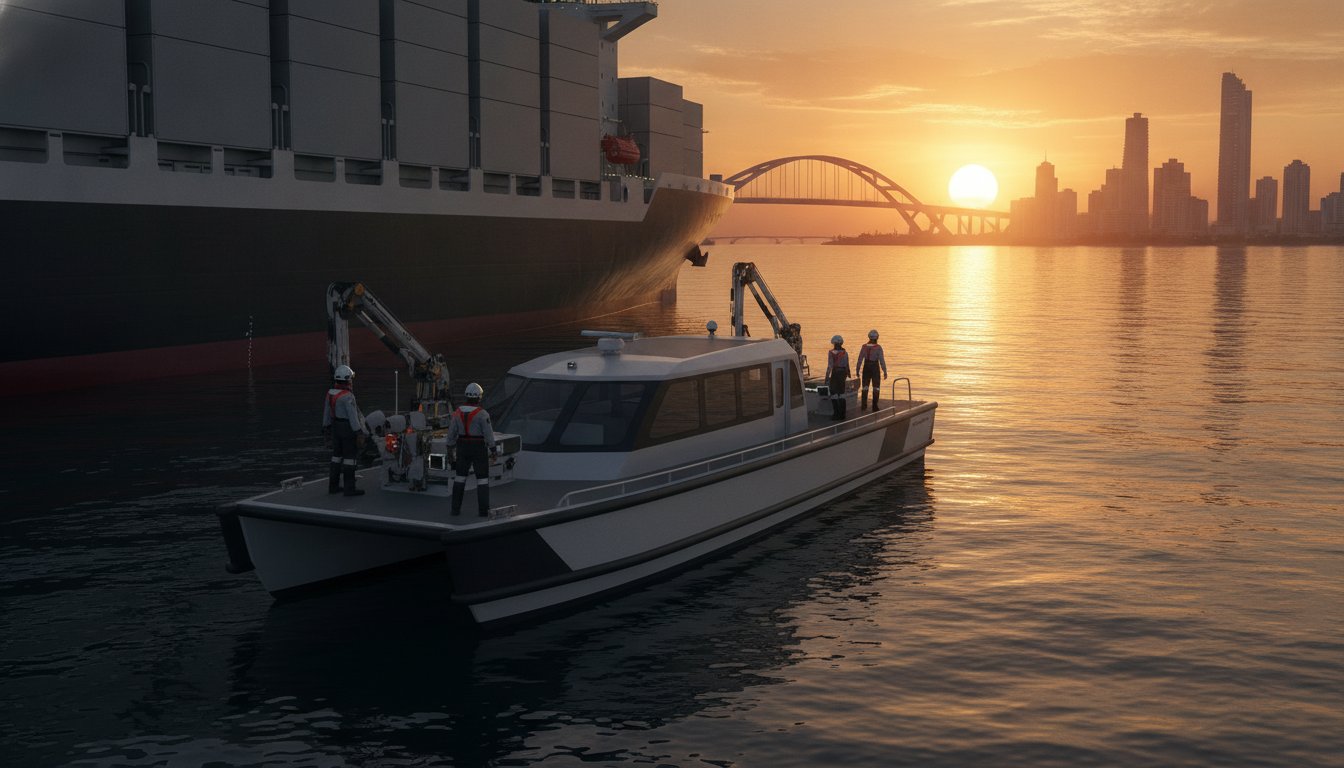

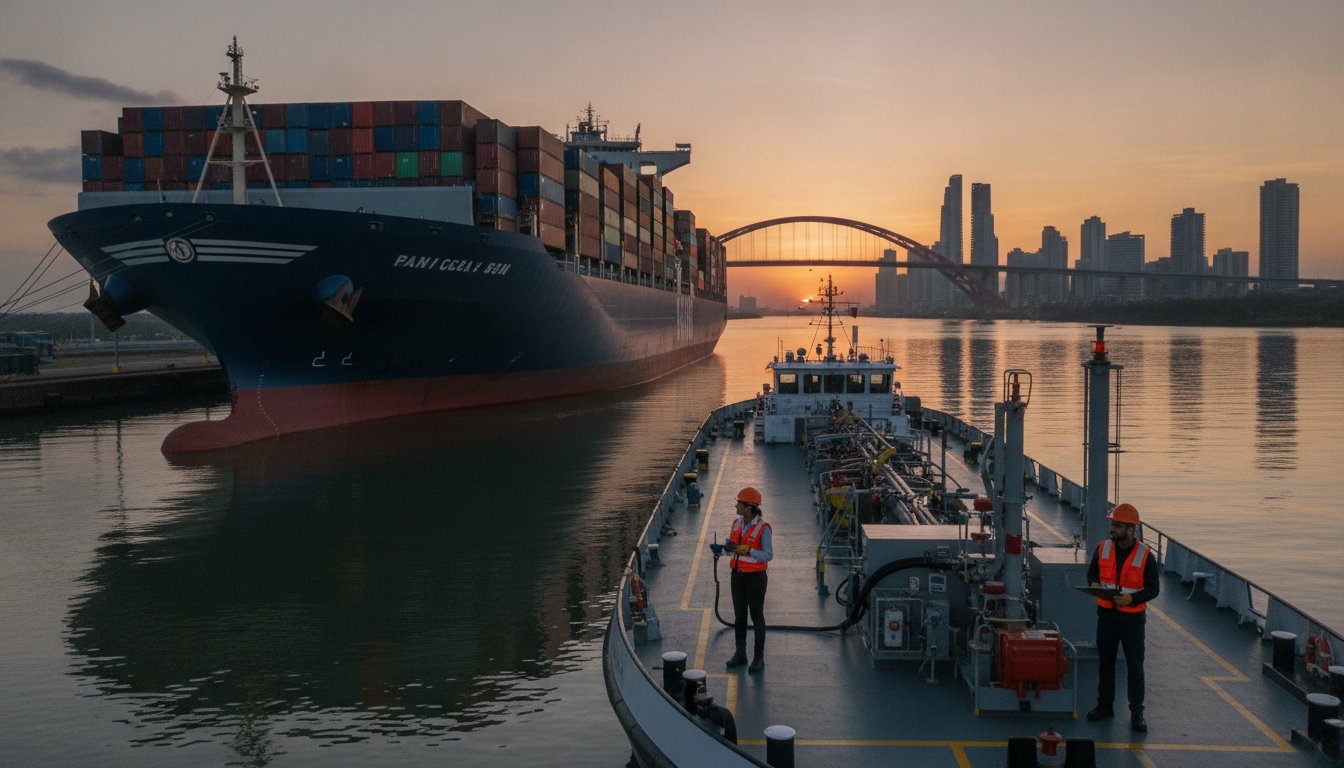
What if a minor oversight in fuel coordination cost you more than the fuel itself? In the high-stakes maritime industry, the price per ton is often secondary to the precision of the delivery schedule. Effectively managing bunkering costs panama canal requires a shift in focus from procurement alone to a comprehensive strategy involving logistics and local oversight. You likely recognize that even a small delay at the canal can trigger a massive financial cascade, making the role of ground-level coordination paramount.
This guide provides a strategic roadmap to help you regain control over your disbursement accounts and operational timelines. We will show you how to optimize your procurement process, eliminate hidden fees, and use local expertise to protect your voyage margins. By exploring market dynamics, strategic timing, and risk mitigation, this article ensures your transit remains both efficient and profitable.
Key Takeaways
- Understand why fuel expenses account for up to 60% of total voyage costs and why precision in coordination often saves more than a low fuel price.
- Learn the “Golden Rule” of synchronizing bunkering with transit windows to avoid losing high-value reservation slots.
- Discover proven strategies for managing bunkering costs panama canal by identifying hidden logistical fees and optimizing the refueling-at-anchorage process.
- Identify common quantity manipulation tactics, such as the “Cappuccino Effect”, and how independent surveys provide irrefutable third-party evidence.
- See how a specialized local agent acts as your financial watchdog to ensure transparent Disbursement Accounts and operational efficiency.
The High Stakes of Managing Bunkering Costs in the Panama Canal
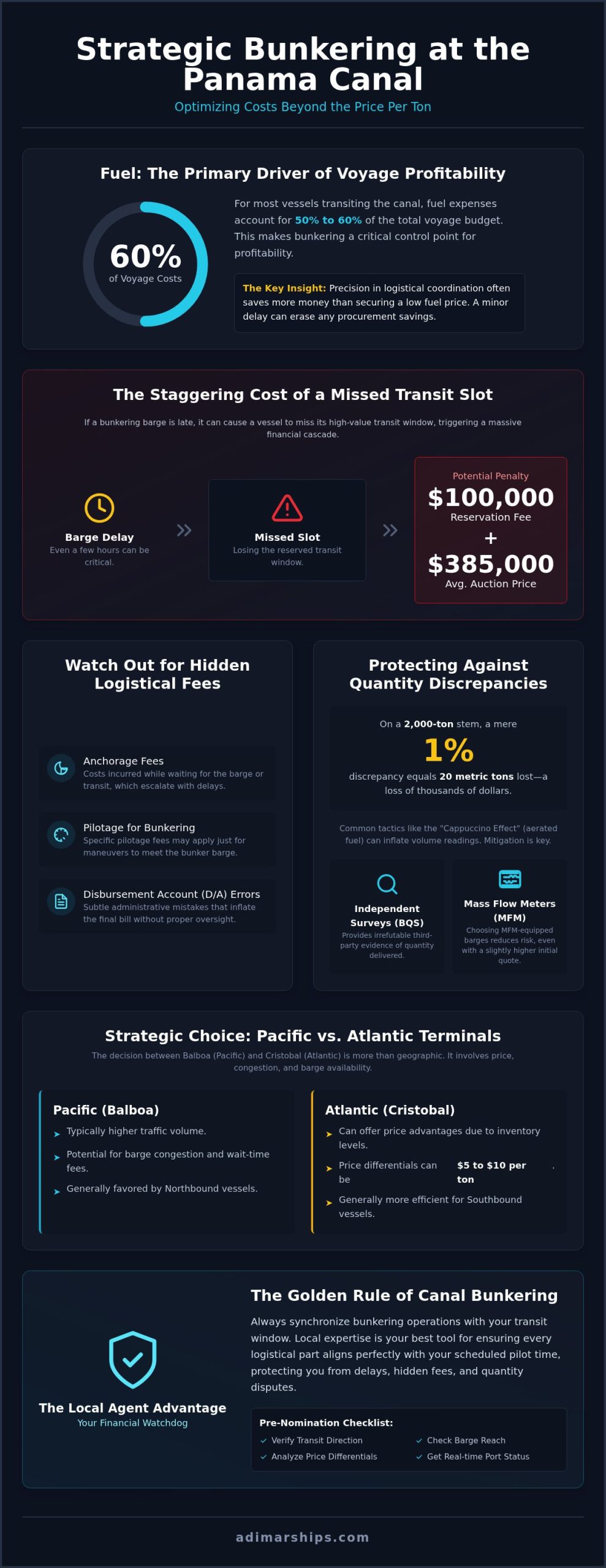
Bunkering at the Panama Canal represents a complex financial equation that extends far beyond the initial quote from a fuel supplier. Total expenditure is a composite of the fuel price, barge delivery fees, and various logistical overheads that can quickly inflate a voyage’s budget. For most transiting vessels, fuel accounts for 50-60% of total voyage expenses. This reality makes managing bunkering costs panama canal a critical priority for any operator looking to protect their margins in a high-stakes environment.
While the fuel price is the most visible line item, hidden costs often cause the most significant financial friction. These include anchorage fees, pilotage specifically required for bunkering maneuvers, and subtle administrative errors within the Disbursement Account (D/A). Because the canal serves as a strategic global hub with intense competition between physical suppliers in Balboa and Cristobal, operators have many choices. However, without expert local oversight, these choices can lead to unexpected charges that erase any savings gained on the initial fuel quote.
Fuel as the Primary Driver of Voyage Profitability
Precision matters when dealing with high-volume stems. Consider a Panamax vessel taking a 2,000-ton stem. A mere 1% discrepancy in the delivered quantity results in a loss of 20 metric tons, which translates to thousands of dollars vanishing before the transit even begins. The Panama bunker market often shows higher volatility than hubs like Singapore because it’s sensitive to local barge availability and shifting ACP regulations. Bunker cost management is the integration of procurement, logistics, and oversight.
The Hidden Impact of Logistical Delays
Timing is everything in the canal. If a barge is unpunctual and causes a vessel to miss its Neopanamax transit slot, the financial penalty is staggering. With standard reservation fees for Neopanamax vessels at $100,000 and auction prices frequently averaging $385,000, a three-hour delay is an expensive mistake. This creates a costly cascade effect where a delayed transit forces the vessel to remain at anchorage longer, increasing crew husbandry costs and provision requirements. We view vigilance as a primary cost-saving tool. By acting as your eyes on the ground, we ensure that every logistical moving part aligns perfectly with your scheduled pilot time.
Market Dynamics: Navigating Panama’s Bunker Supply and Pricing
Panama operates as a highly competitive bunker market with multiple physical suppliers active at both canal entrances. While Section 1 highlighted the high stakes of hidden fees, managing bunkering costs panama canal also involves navigating the logistical constraints set by the Panama Canal Authority (ACP). These regulations dictate barge movements and anchorage assignments, which often shift based on canal congestion or environmental factors. Understanding these localized supply dynamics is essential for operators who want to leverage competition without falling into logistical traps.
Operators can readily source VLSFO, LSMGO, and HSFO in the region. However, the maturity of the market hasn’t eliminated the need for careful supplier selection. The adoption of Mass Flow Meters (MFM) is a major factor in pricing transparency. While some suppliers utilize MFM technology to provide irrefutable quantity data, others still rely on manual tank soundings. Choosing an MFM-equipped barge often reduces the risk of the quantity discrepancies mentioned earlier, even if the initial price per ton appears slightly higher on the quote.
Pacific (Balboa) vs. Atlantic (Cristobal) Terminals
The choice between Balboa and Cristobal involves more than just the vessel’s direction of travel. Barge availability and wait times fluctuate based on localized infrastructure projects and seasonal demand. Balboa typically sees higher traffic volume, which can lead to barge congestion and increased wait-time fees. Conversely, Cristobal might offer a price advantage if inventory levels are higher on the Atlantic side. Before nominating a supplier, consider this checklist:
- Transit Direction: Southbound vessels generally find Cristobal more efficient, while Northbound vessels favor Balboa.
- Price Differentials: Inventory imbalances can create a $5 to $10 gap per ton between the two entrances.
- Barge Reach: Verify if the supplier’s barge can reach your specific anchorage without incurring additional pilotage fees.
- Real-time Congestion: Ask your agent for a 24-hour port status update before finalizing the nomination.
Fuel Quality Standards and ISO 8217 Compliance
Off-spec fuel is a catastrophic expense that can derail the financial gains of a well-planned transit. The cost of de-bunkering in Panama is prohibitive; it requires specialized permits and port authority oversight while causing days of delay. Ensuring strict ISO 8217 compliance is the only way to mitigate this risk. Vessels must also maintain Marpol Annex VI compliance to avoid heavy fines during ACP inspections. Our role is to act as your vigilant representative, verifying that every supplier meets these rigorous standards before the barge pulls alongside. As a dedicated Panama Canal ships agent, we provide the local oversight necessary to protect your engine and your bottom line.
Strategic Timing: Synchronizing Bunkers with Transit Schedules
In the high-pressure environment of the canal, timing is your most valuable asset. We operate by one “Golden Rule”: bunkering operations must never interfere with your assigned ACP transit window. A transit slot is far more than a scheduled time; it’s a massive financial commitment that cannot be jeopardized. By strategically managing bunkering costs panama canal, you turn unavoidable idle time into a productive refuelling window. This approach requires more than just booking a barge. It demands a deep understanding of the canal’s internal rhythm.
Most vessels experience a 24 to 48-hour wait period before their pilot arrives. This is the ideal time for refuelling at anchorage. Instead of paying for extra port days or rushing a stem upon arrival, you can leverage the natural rhythm of the Panama Canal transit to eliminate operational waste. This “just-in-time” approach ensures that fuel delivery occurs while the vessel is already stationary, providing a seamless transition from the bunker barge to the canal entrance without adding a single hour to the total voyage time.
Turning Idle Time into Productive Refuelling
The financial logic is simple. Every hour your vessel spends in Panamanian waters carries a daily operating cost. If you bunker during the pre-transit wait, those costs are already baked into your voyage plan. However, this synchronization requires flawless coordination. The barge, the ship agent, and the pilot station must operate in total alignment. Last-minute nominations often fail because barge availability is never guaranteed in this busy hub. By nominating early and coordinating through a local expert, you ensure the barge is alongside exactly when the vessel drops anchor, maximizing your productive time.
Avoiding Slot Forfeiture and Demurrage
The ACP maintains a strict stance on vessel readiness. If a ship is still receiving bunkers when the pilot is ready to board, that vessel is considered “not ready” for transit. The consequences are severe. Missing a slot can lead to reservation forfeiture, forcing you back into an expensive auction or to the end of the line. Beyond canal fees, delays in the anchorage can trigger demurrage charges from the bunker supplier if the vessel isn’t ready to receive. We recommend including specific “Bunker Delay” clauses in charter parties to protect against these risks. Our vigilance ensures that all operations conclude well before the ACP boarding time, protecting your slot and your reputation.
Risk Mitigation: Bunker Quantity Surveys (BQS) and Quality Control
Relying on trust alone during a high-volume bunker delivery is a dangerous gamble. Effective managing bunkering costs panama canal relies on more than just negotiating a contract; it requires physical oversight at the point of transfer. The “Cappuccino Effect” remains a persistent issue in many global hubs, including Panama. This involves injecting compressed air into the fuel to increase its volume artificially, making a tank appear fuller than it is. Without a professional eye on the ground, these discrepancies often go unnoticed until the vessel is already at sea.
An independent surveyor provides the irrefutable third-party evidence needed to resolve disputes before they escalate. A typical survey costs between $500 and $1,000, yet it can identify discrepancies that would otherwise cost an owner $10,000 or more in lost fuel value. Integrating a Bunker Quantity Survey (BQS) into your broader husbandry services package is a standard best practice for operators who prioritize financial transparency. It’s a small investment that offers a massive return in peace of mind.
Preventing ‘Short Delivery’ and Quantity Disputes
The survey process starts with rigorous pre-delivery and post-delivery soundings on both the barge and the receiving vessel. While Mass Flow Meters (MFM) are becoming more common in Panama and provide more reliable data, they aren’t yet universal. Even with an MFM, a surveyor’s presence ensures the meter’s profile is correct and the seals are intact. The independent surveyor ensures the integrity of the delivery by sealing the bunker manifold to prevent unauthorized tampering during the transfer. This level of detail is essential for managing bunkering costs panama canal and maintaining a clean disbursement account.
Safeguarding Against Contaminated Fuel
Quantity is only half the battle. Quality disputes can be even more damaging. Representative drip sampling is mandatory throughout the entire delivery process to ensure the fuel meets ISO 8217 standards. Because lab analysis can take several days, the vessel is often already transiting the canal when results arrive. Having a properly documented and witnessed sample provides the legal protection necessary to file a claim if the fuel is later found to be off-spec. Protecting your engine and your budget starts with choosing a Panama Canal shipping agency that treats your fuel stem with the vigilance it deserves.
Adimar Shipping: Your Local Partner for Financial Efficiency
Choosing the right partner is the final and most critical step in managing bunkering costs panama canal. At Adimar Shipping, we function as your local office on the ground. We don’t just process paperwork; we act as a protective layer between your budget and the complexities of the Panamanian maritime market. By positioning ourselves as a Panama Canal ships agent that treats the owner’s money as our own, we ensure that every bunker stem is delivered with maximum efficiency and zero hidden friction.
Our coordination team bridges the gap between bunker suppliers, the ACP, and your vessel’s command. We understand that a successful transit depends on perfect synchronization. We monitor barge movements in real-time to ensure they align with your pilot’s boarding time, effectively eliminating the risk of slot loss. This proactive stance transforms the agency role from a simple service provider into a strategic partner dedicated to your voyage’s profitability.
Transparency in Disbursement Accounts (D/A)
Financial clarity is the foundation of our partnership. Adimar Shipping performs a rigorous audit of all third-party invoices, including charges from barges, surveyors, and fuel suppliers. We verify every line item against the agreed tariffs to prevent overbilling or administrative errors. This level of scrutiny is especially vital when we act as an Owner’s Protective Agency (OPA). If a charterer nominates the bunker supplier, we remain your vigilant representative, ensuring the owner’s interests aren’t sidelined. Our commitment to ethical standards means you receive “zero-surprise” billing with every D/A we produce.
Leveraging Local Expertise for Competitive Nominations
Deep-rooted relationships in the Panamanian maritime sector provide our clients with a distinct advantage. Our standing with local suppliers often leads to better barge priority and more flexible scheduling during periods of high canal congestion. Having an expert team on the ground in Coco del Mar allows us to handle physical documentation and regulatory hurdles with speed that distant operators cannot match.
Beyond logistics, we help you navigate environmental compliance. As an authorized PCSOPEP authorized person, we ensure your vessel meets all oil pollution emergency plan requirements during the bunkering process. This oversight is essential for preventing costly environmental fines and ensuring a smooth, uninterrupted transit. Contact Adimar Shipping today to optimize your next bunkering operation and protect your financial interests at the Panama Canal.
Securing Your Voyage Margins in Panama
Precision in bunkering is the difference between a profitable transit and a logistical nightmare. By synchronizing your fuel stems with the natural wait times of the canal and employing rigorous quantity surveys, you eliminate the invisible costs that erode your margins. Mastering the art of managing bunkering costs panama canal requires more than just a competitive price per ton. It demands a partner who understands the local landscape and treats your operational budget with the same vigilance you do.
As a specialized Panama Canal Ships Agent and Authorized PCSOPEP Representative, Adimar Shipping provides the on-the-ground oversight necessary to protect your interests. Whether we act as your Owner’s or Charterer’s Nominated Agency, our focus remains on transparent billing and zero-delay coordination. Don’t leave your voyage profitability to chance. Request a Bunkering Coordination Quote from Adimar Shipping and experience the security of having a dedicated local expert on your team. We look forward to ensuring your next transit is your most efficient one yet.
Frequently Asked Questions
What is the average cost of bunkering in Panama compared to Singapore?
Panama fuel prices typically trade at a premium compared to Singapore. This price gap is primarily due to the smaller barge fleet and the logistical complexities of the canal region. Ship operators often accept this premium to avoid the significant expense and time loss of an additional port call on trans-Pacific or trans-Atlantic routes.
Can a vessel take on bunkers while transiting the Panama Canal locks?
Bunkering is strictly prohibited while a vessel is physically inside the locks or transiting the canal channel. All refuelling operations must be completed at the designated anchorages in Balboa or Cristobal. The vessel must have all bunker hoses disconnected and be fully ready for transit before the Panama Canal pilot boards.
How much advance notice is required to arrange a bunker barge in Balboa?
We recommend providing at least 72 hours of advance notice to secure a barge in Balboa. While some suppliers can accommodate shorter windows, the Pacific side is frequently congested. Early coordination is a vital strategy for managing bunkering costs panama canal and ensuring your vessel doesn’t wait idle for a delivery.
What happens if the bunker barge is late and I miss my transit slot?
Missing a slot due to a late barge can be a $100,000 mistake for a Neopanamax vessel. The ACP considers a vessel “not ready” if bunkering is still underway at the scheduled pilot time. This leads to the forfeiture of your reservation fee and may force the vessel into a costly auction for the next available slot.
Are Mass Flow Meters (MFM) mandatory for all bunker deliveries in Panama?
Mass Flow Meters are not yet a legal requirement for all deliveries in Panama. However, many physical suppliers have adopted them to improve transparency and reduce quantity disputes. We recommend verifying the barge’s delivery method during the nomination process to ensure accurate measurement and avoid the “Cappuccino Effect” during transfer.
What fuel grades are currently available at the Panama Canal Atlantic entrance?
VLSFO, LSMGO, and HSFO are all readily available at the Atlantic entrance in Cristobal. While the Pacific side typically has higher traffic volume, Atlantic suppliers are well-equipped to handle most stem sizes. Always confirm specific grade availability with your agent 48 hours before arrival to account for any local supply shifts.
Does the Panama Canal Authority charge a fee for bunkering at the anchorage?
The ACP does not levy a direct “bunkering tax” for refuelling at the anchorage. However, vessels remain subject to standard canal fees, such as the $1,250 security charge for vessels over 3,000 tons and the Fresh Water Surcharge. If a vessel enters Panamanian waters solely for bunkers without transiting, different port and anchorage tariffs apply.
How can an Owner’s Protective Agent (OPA) save money during bunkering?
An OPA acts as your financial watchdog when a charterer nominates the bunker supplier. We audit the barge’s soundings, verify the surveyor’s data, and check the final Disbursement Account for any hidden administrative fees. This level of oversight ensures you only pay for the exact metric tons received and prevents common overbilling errors.