
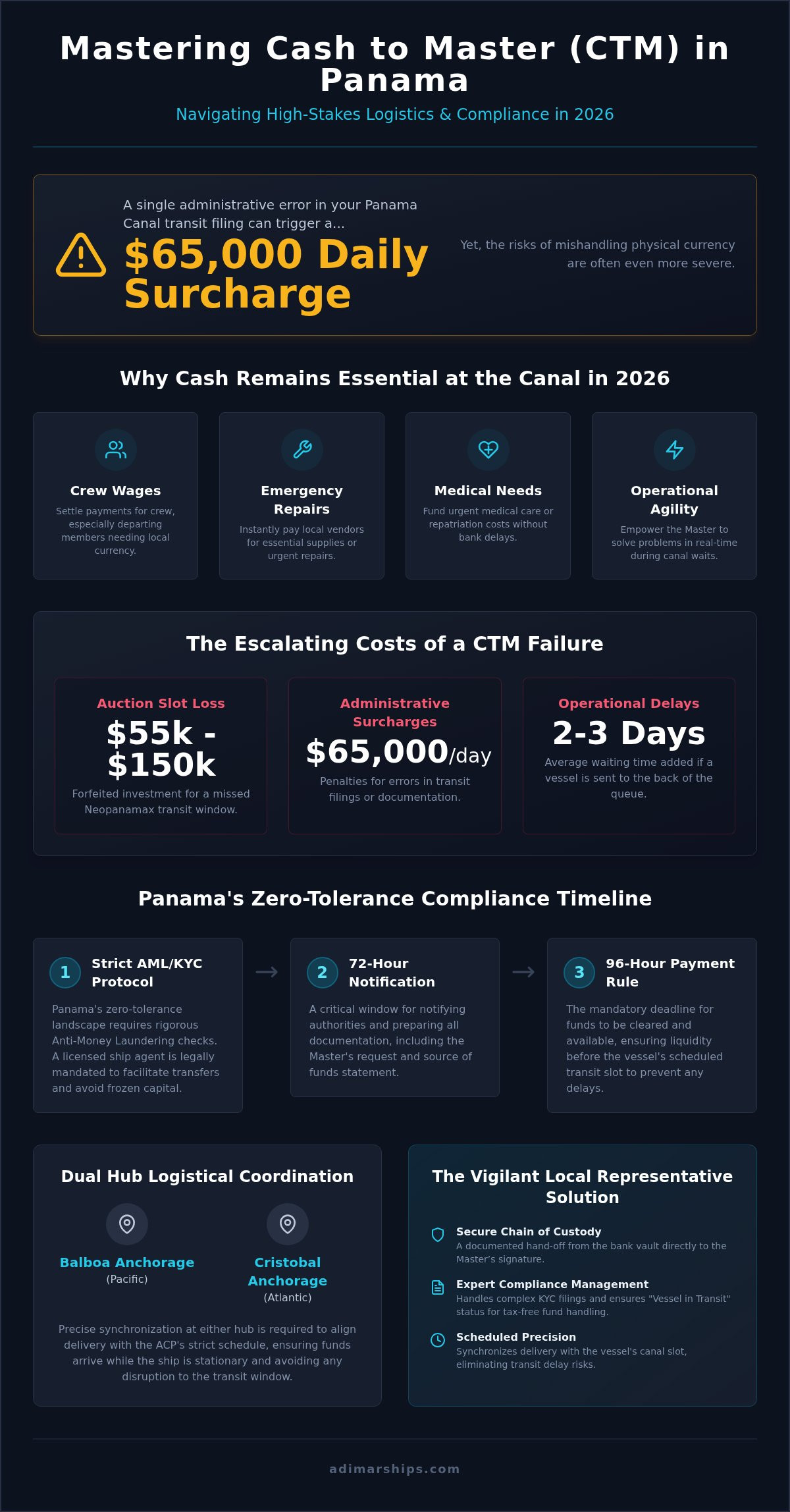
A single administrative error in your Panama Canal transit filing can trigger a daily surcharge of $65,000, yet the risks of mishandling physical currency are often even more severe. Managing cash to master panama transfers in 2026 is no longer a simple delivery task. It’s a specialized compliance and security operation that requires a vigilant local partner to bridge the gap between global banking and the vessel’s deck. You understand the stress of navigating strict AML laws while facing the reality of reduced transit slots and shifting draft restrictions.
This guide provides the expert framework you need to master these high-stakes logistics. We’ll show you how to secure a documented hand-off of funds while maintaining total compliance with the latest Panamanian financial regulations. You’ll learn how to navigate the critical 72-hour notification windows and the 96-hour payment rules that keep your vessel moving. We’ll also break down the coordination required at Balboa and Cristobal anchorages to ensure your delivery happens without a single minute of disruption to your canal schedule.
Key Takeaways
- Learn why physical currency remains a cornerstone of 2026 maritime operations for crew wages, emergency repairs, and essential local supplies.
- Master the logistical differences between Balboa and Cristobal hubs to ensure your cash to master panama delivery aligns perfectly with your vessel’s transit window.
- Understand Panama’s strict 2026 Anti-Money Laundering (AML) landscape and the legal requirements for licensed ship agents to facilitate fund transfers.
- Discover the “Vigilant Local Representative” approach to maintaining a secure, documented chain of custody from the bank vault to the Master’s signature.
- Identify how to manage critical 72-hour notification windows and 96-hour payment rules to prevent costly canal delays and administrative surcharges.
The Essential Role of Cash to Master (CTM) in 2026 Maritime Operations
Cash to Master (CTM) remains an indispensable component of maritime logistics, specifically within the high-pressure environment of the Panama Canal. While the global economy moves toward digitization, the deck of a vessel awaiting transit requires tangible liquidity. Physical currency is the cornerstone of husbandry services, providing the Master with the immediate resources needed to maintain vessel momentum. Effective Ship management requires a balance between digital efficiency and the practical necessity of physical currency for day-to-day onboard expenses. Successful cash to master panama operations ensure that a vessel remains operational during its critical crossing, bridging the gap between offshore banking and on-site requirements.
Why Cash is Still King at the Panama Canal
Digital transfers often fail to meet the immediate needs of a vessel in transit. In 2026, the human element of shipping still relies on physical cash for several critical functions. Masters use these funds to settle crew wages, especially for departing members who need local currency or USD for travel. It’s also the primary method for funding emergency medical expenses or repatriation costs that cannot wait for bank processing times. Local vendors at the Balboa and Cristobal anchorages frequently require immediate payment for specialized supplies or emergency repairs. Having physical currency on board grants the Master the operational flexibility to solve problems in real-time without waiting for shore-side financial clearance, which is vital during the multi-day waiting periods currently seen at the canal.
The High Cost of CTM Logistical Failures
The financial stakes of a failed CTM delivery have never been higher. With the Panama Canal Authority (ACP) restricting daily transits to as few as 32 ships in September 2026, every minute counts. A 15-minute delay in a fund hand-off can cause a vessel to miss its designated canal slot. When this happens, the “Off-Hire” costs can escalate rapidly. Consider these risks:
- Auction Slot Loss: Neopanamax auction slots in 2026 trade between $55,000 and $150,000. Missing a window can mean forfeiting these significant investments.
- Administrative Surcharges: Errors in transit filings or documentation can trigger daily surcharges of $65,000.
- Operational Delays: With average waiting times of 2 to 3 days, a missed slot can push a vessel back to the end of the queue, disrupting entire global supply chains.
Adimar Shipping acts as your vigilant local representative to prevent these catastrophes. We synchronize the delivery of cash to master panama with the ACP’s strict schedule, ensuring that funds reach the Master while the ship is stationary at designated anchorages. This precision eliminates the risk of transit delays and keeps your vessel’s schedule intact.
Navigating Panama Banking Regulations and 2026 Compliance
Panama’s financial regulatory environment has evolved into a zero-tolerance landscape in 2026. For ship operators, this means cash to master panama transfers require more than just a simple wire transfer; they require rigorous adherence to Anti-Money Laundering (AML) protocols. Local banks now utilize machine-validated clearance systems like VUMPA, which flag even minor administrative discrepancies. To avoid having capital frozen, you must work through a licensed ship agent. Panamanian law mandates this partnership to ensure every dollar is accounted for and legally documented from the moment it enters the local system.
The CTM Documentation Trail
Establishing a clear chain of custody begins with the right paperwork. Panama’s banking system is sophisticated and operates without foreign exchange controls, but it demands a crystal-clear documentation trail. You must provide a formal Master’s request, detailed invoices, and a verified source of funds statement. Maintaining a “Vessel in Transit” status is essential. This specific designation allows for the tax-free handling of funds intended for ship husbandry. Adimar Shipping manages the complex KYC (Know Your Customer) filings on your behalf, ensuring your operation meets all 2026 standards and avoids capital being stalled by local compliance officers.
Timeline for Fund Remittance and Availability
Timing is the difference between a successful transit and a $65,000 administrative surcharge. Notice to Shipping N-1-2026 requires a 72-hour notification window for all CTM services before arrival at Balboa or Cristobal anchorages. For requests exceeding $50,000, we recommend a 5-business-day notice to account for enhanced scrutiny. Additionally, the 96-hour payment rule for canal transits means your funds must be cleared four days before arrival to secure your slot. We monitor the arrival of international wires in real-time, coordinating with local banks to ensure immediate availability once your vessel hits the anchorage. Delegating these ship agency services to experts ensures your funds are ready when the Master needs them most.
Logistical Execution: Balboa (Pacific) vs. Cristobal (Atlantic)
Choosing the right delivery hub for cash to master panama is a strategic decision that impacts both security and scheduling. Your vessel’s direction and the current anchorage congestion play major roles in this choice. Coordination with launch services is the most critical link in this chain. We time the delivery to match your vessel’s ETA precisely, ensuring the launch is ready as soon as the ship is stationary. All operations must comply with Panama Maritime Authority regulations, which mandate specific financial warranties for service providers handling high-value maritime assets.
Pacific Delivery: Balboa Anchorage Logistics
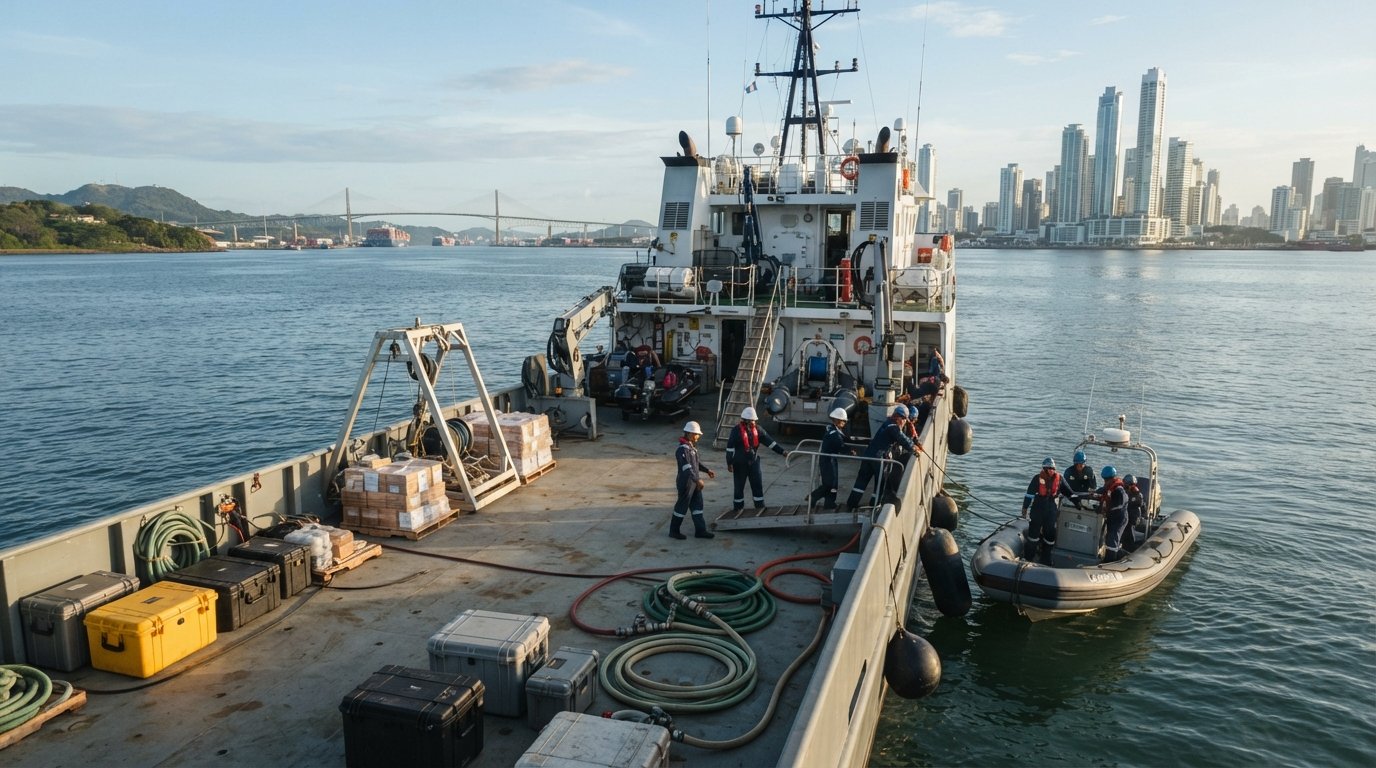
The Balboa anchorage is often the preferred choice for operators due to its proximity to Panama City’s central banking district. This geographic advantage allows for rapid fund retrieval and shorter land-side transport times. Launch services at the Pacific entrance operate with high frequency, but boarding protocols are strict. We manage deliveries for both southbound and northbound transits, though southbound vessels often find Balboa more convenient for final husbandry tasks before entering the canal. Typical launch times from the Flamenco or Balboa piers are approximately 20 to 40 minutes, depending on the assigned anchorage sector.
Atlantic Delivery: Cristobal Anchorage Challenges
Delivering funds at the Cristobal anchorage requires managing a logistical bridge across the isthmus. Since the primary banking hubs are in the capital, funds must travel approximately 50 miles to reach the port area in Colon. We prioritize security during this cross-country transit, utilizing armored transport and vigilant oversight to mitigate risks. Launch availability at the Atlantic entrance can be more limited during peak periods, and anchorage fees vary based on the duration of the stay. Weather and sea state are also more volatile on the Atlantic side; we constantly monitor swell conditions to ensure safe boarding for our personnel and your crew.
For vessels that don’t require a full port call, the “Off-Port Limits” (OPL) delivery option exists. While OPL can reduce some port-related fees, it carries higher logistical risks. Notice to Shipping N-1-2026 requires the ship to be stationary at a designated anchorage for cash transfers, meaning true OPL deliveries of cash are limited by current safety and regulatory standards. We recommend utilizing the established anchorages to ensure a secure, documented hand-off that satisfies both your insurance requirements and Panamanian law.
Security and Risk Mitigation: Protecting Your Capital
Managing high-value assets in a transit zone requires a “Vigilant Local Representative” who treats your capital with the same care as their own. When you authorize a cash to master panama transfer, you aren’t just paying for a delivery service; you’re investing in a secure chain of custody. This chain begins at the bank vault in Panama City. We utilize armored transport and professional security escorts to move funds to the pier, mitigating the risk of theft during the land-side journey. Ship owners must ensure their agency partner carries comprehensive transit insurance. This coverage is essential for protecting your funds from the moment they leave the bank until they reach the vessel’s bridge.
Adimar’s “Eyes at the Canal” Protocol
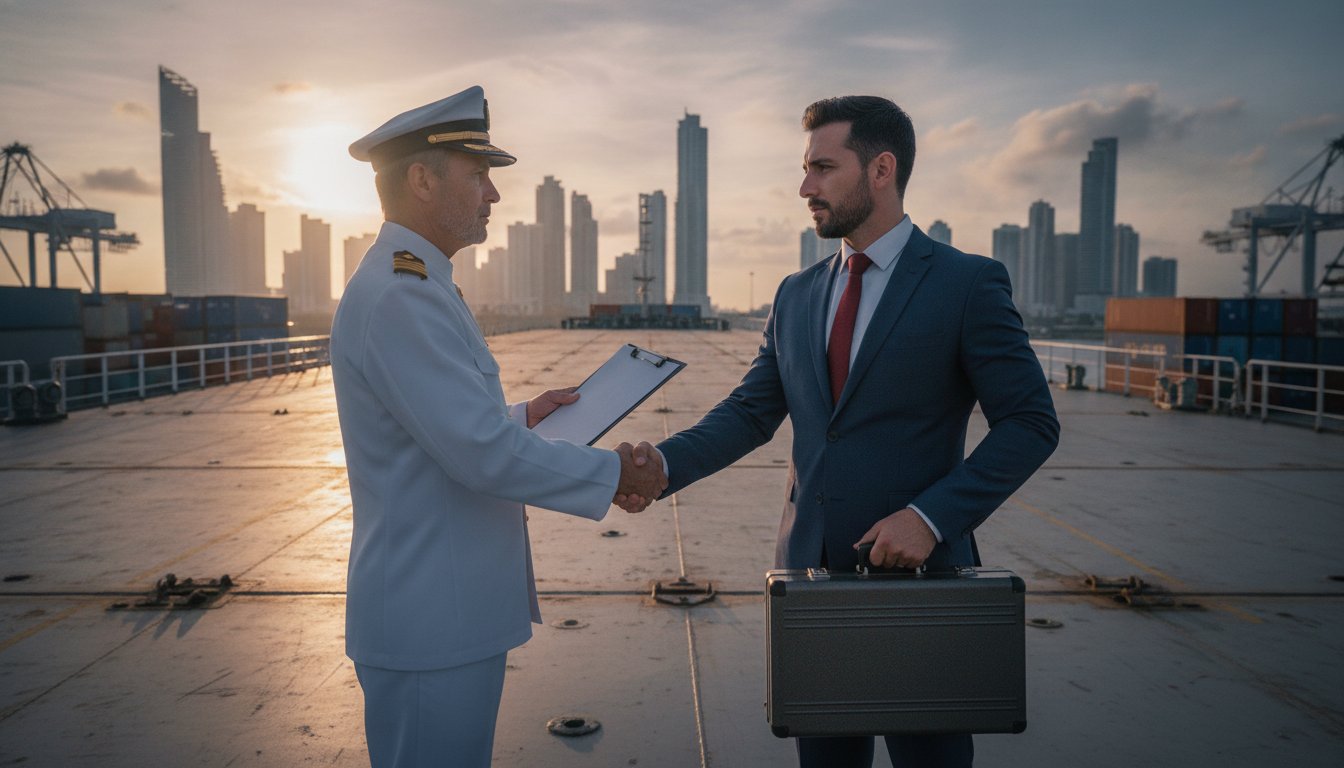
We’ve established a rigorous “Eyes at the Canal” protocol to ensure total transparency. Our representatives provide real-time reporting and photographic evidence of the hand-off. We don’t just drop off a package. We verify the Master’s identity, witness the counting of funds, and secure an official signed receipt. This documentation is immediately uploaded to your digital file. By integrating these details into your Port Disbursement Account (PDA), we provide a clear, auditable trail that satisfies both internal controllers and international regulators. This level of detail is why experienced owners choose Adimar for their ship agency services in Panama.
Avoiding Fraud and Unofficial Channels
The risks of using unlicensed couriers or sub-agents are too high to ignore. In international maritime hubs, common CTM scams often involve “phantom” service fees or the use of undocumented delivery personnel. These unofficial channels lack the legal standing to operate within Panama’s strict 2026 AML framework. If a delivery goes wrong, you’ll have little recourse without a bonded, licensed agent. The most effective way to protect your vessel’s interests is through a direct Owner’s Nominated Agency relationship. This partnership ensures that your cash to master panama is handled by a team with 20 years of local experience and a reputation for ethical conduct. Don’t leave your capital to chance; let our team provide the vigilant oversight your high-stakes operations demand.
Why Adimar Shipping is Your Strategic Partner for CTM in Panama
Adimar Shipping, Inc. brings over 20 years of on-the-ground experience to every vessel transit. We don’t just facilitate cash to master panama; we serve as an extension of your own team. Our role as a vigilant local representative is built on a foundation of trust and a deep understanding of the unique pressures at the canal. By delegating complex logistical hurdles to our experts, you gain the operational freedom to focus on your global fleet while we handle the local details. We maintain the highest ethical standards, ensuring your funds are managed with total transparency and in full alignment with 2026 financial compliance mandates.
Integrating CTM with our broader husbandry services creates a seamless experience for ship owners. This holistic approach eliminates the need for multiple vendors and reduces the risk of communication gaps. We treat every vessel as a top priority, providing personalized oversight that standard corporate agencies often overlook. Our long-standing history at the canal solidifies our reputation for stability and dependability in a volatile maritime environment.
Beyond Cash: A Full-Service Ship Agency
Our expertise goes far beyond simple fund delivery. We combine CTM operations with essential services like crew changes and spare parts coordination. This synchronization ensures that all your husbandry needs are met during a single window of availability at the anchorage. We act as your primary liaison with the Panama Canal Authority (ACP), navigating their strict regulations on your behalf. Our team provides proactive communication, giving you real-time updates that eliminate the “black hole” of port operations. You’ll always know the status of your funds, your crew, and your vessel’s progress.
Initiate Your CTM Request Today
The first step toward a secure transit is nominating a partner who understands the high stakes of the industry. You can nominate Adimar Shipping, Inc. for your upcoming canal transit to ensure your cash to master panama is handled by seasoned specialists. We’ll provide a customized Proforma Disbursement Account (PDA) that covers your CTM requirements alongside any additional husbandry support you need. This transparency allows for better financial planning and eliminates unexpected costs during the transit.
Our 24/7 operations team is always available for urgent fund coordination or last-minute schedule changes. Don’t let logistical complexities or banking delays threaten your transit slot or your vessel’s security. Contact us today to secure a partner that prioritizes your interests and maintains a vigilant watch over your high-value assets at the Panama Canal.
Securing Your Vessel’s Financial Momentum at the Panama Canal
Navigating the complexities of 2026 maritime finance requires more than a simple delivery service. It demands a vigilant local partner who understands the high stakes of Panama’s banking regulations and the razor-thin margins of the canal schedule. By mastering the 72-hour notification windows and maintaining a secure chain of custody, you protect your capital from both theft and administrative surcharges. Delegating your cash to master panama operations to a seasoned expert ensures that your vessel remains compliant and your crew remains supported without ever risking your transit slot.
Adimar Shipping provides the stability and local oversight your fleet deserves. With 20+ years of Panama Canal agency expertise and our status as an Authorized PCSOPEP Representative, we offer the 24/7 coordination necessary for seamless husbandry. Secure Your Cash to Master Delivery with Adimar Shipping today and gain the peace of mind that comes with professional, on-the-ground representation. We’re ready to act as your local eyes and ears, ensuring every transit is a smooth and successful operation.
Frequently Asked Questions
What is the typical lead time for a Cash to Master delivery in Panama?
The typical lead time for a cash to master panama delivery is at least 72 hours before the vessel’s arrival at the anchorage. This follows the Panama Canal Authority’s Notice to Shipping N-1-2026. If your request exceeds $50,000, we recommend a five-business-day notice. This extra time allows for the enhanced banking scrutiny and AML compliance checks required in 2026. Early planning ensures funds are cleared and ready for immediate delivery upon arrival.
Are there limits on the amount of cash that can be delivered to a vessel?
There aren’t fixed maximum limits on the amount of cash delivered, but larger sums trigger stricter regulatory oversight. Transfers exceeding $50,000 require a longer lead time for banking clearance. Every delivery must be backed by comprehensive documentation, including a Master’s request and a verified source of funds. We manage these high-value transfers through secure, armored transport to ensure the total amount reaches the vessel’s bridge without any security compromises or legal delays.
Can CTM be delivered while the ship is transiting the locks?
No, cash to master deliveries cannot occur while a vessel is transiting the locks. Panama Canal regulations require all cash transfers to take place while the ship is stationary at designated anchorages. These deliveries typically happen at the Balboa (Pacific) or Cristobal (Atlantic) anchorages while the vessel awaits its transit slot. Attempting a transfer during transit is prohibited for safety and security reasons, as it would disrupt the canal’s strict 2026 operational schedule.
What currencies are available for CTM services at the Panama Canal?
The primary currency for CTM services at the Panama Canal is the US Dollar ($). Since Panama’s economy is fully dollarized, USD is the standard for crew wages, local supplies, and emergency repairs. While some specialized requests for other major global currencies can be facilitated, they often require significantly more lead time for local banks to process. We recommend sticking to USD to ensure the fastest remittance and the highest level of liquidity for the Master.
How are the service fees for CTM calculated in Panama?
Service fees for CTM in Panama are calculated based on the logistical complexity of the delivery. Factors include the total amount of funds, the chosen anchorage, and the required security measures, such as armored transport or professional escorts. Fees also cover the administrative work involved in banking compliance and AML documentation. Since every transit is unique, we provide a customized Proforma Disbursement Account (PDA) that outlines these costs alongside your other husbandry requirements.
What happens if the vessel’s ETA changes after funds have been withdrawn?
If your vessel’s ETA changes after funds have been withdrawn, our 24/7 operations team immediately adjusts the delivery schedule. We act as your vigilant local representative, constantly monitoring the ACP’s transit queue and launch availability. Your funds remain in a secure, insured chain of custody until the vessel is stationary at the anchorage. We maintain proactive communication with the Master to ensure the hand-off occurs at the new optimal time without disrupting the canal window.
Is CTM delivery available 24/7 at both Balboa and Cristobal?
Yes, cash to master panama coordination is available 24/7 at both the Balboa and Cristobal anchorages. While banking hours in Panama City are restricted, we coordinate the withdrawal and staging of funds in advance to meet your vessel’s arrival at any hour. Our team manages the launch services and security escorts regardless of the time of day. This round-the-clock support is essential for maintaining the vessel’s schedule in the face of 2026’s reduced transit slots.
What documentation does the Master need to provide upon delivery?
Upon delivery, the Master must provide a valid form of identification and sign an official receipt for the funds. This process is part of our “Eyes at the Canal” protocol, which creates a documented chain of custody. The Master should also have the original CTM request and any relevant invoices ready for verification. We provide photographic evidence of the hand-off to the ship owner, ensuring the transaction is transparently recorded in the final Port Disbursement Account.