
Did you know that auction premiums for Neopanamax slots reached $425,000 in May 2026? When you add an 81% probability of a severe El Niño event impacting Gatun Lake levels, it’s clear that the cost of doing business in Panama is becoming increasingly volatile. You’re likely concerned about how to reduce Panama Canal transit fees while maintaining a reliable schedule for your fleet. We understand that managing a voyage’s budget requires more than just a toll calculator; it requires a proactive partner on the ground who anticipates risks before they hit your bottom line.
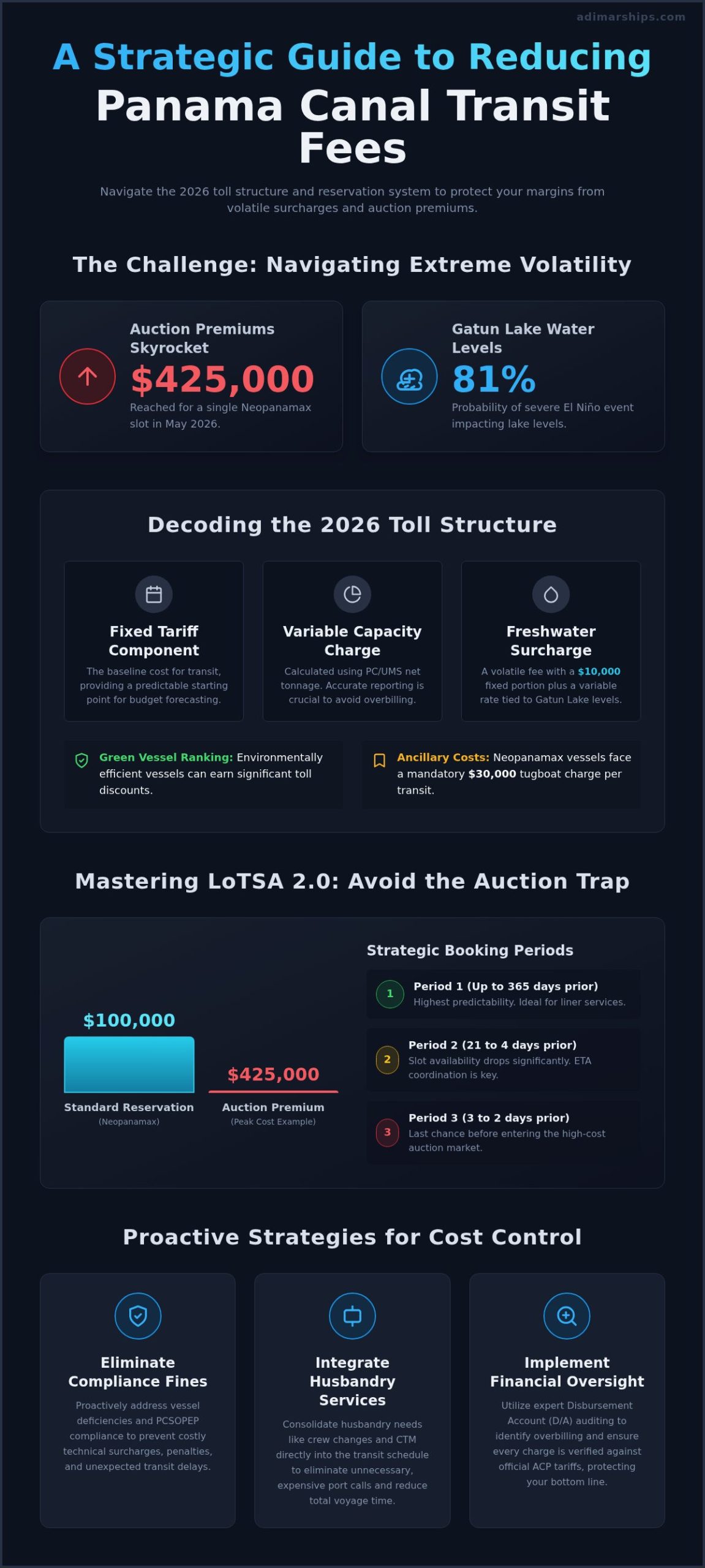
This guide provides a strategic roadmap for navigating the frozen 2026 toll structure and the updated LoTSA 2.0 reservation system. You’ll discover how to secure predictable transit windows while avoiding the hidden technical fines and environmental surcharges that often inflate a final Disbursement Account. By consolidating husbandry services and utilizing vigilant local oversight, you can transform your Panama transit from a financial risk into a well-managed operational success that protects your margins.
Key Takeaways
- Master the distinction between fixed and variable toll components to accurately forecast the impact of Gatun Lake levels on freshwater surcharges.
- Discover how to reduce Panama Canal transit fees by strategically utilizing the three LoTSA 2.0 booking periods to bypass expensive transit auctions.
- Protect your bottom line by addressing vessel deficiencies and PCSOPEP compliance early, preventing costly technical surcharges and delays.
- Eliminate unnecessary port calls by integrating husbandry services like crew changes and CTM directly into your transit schedule.
- Implement rigorous financial oversight through expert D/A auditing to identify overbilling and ensure every dollar spent is verified against actual ACP tariffs.
Decoding the 2026 Panama Canal Toll Structure and Surcharges
Understanding the mechanics of the 2026 toll structure is the first step in learning how to reduce Panama Canal transit fees. The Panama Canal Authority (ACP) maintains a complex, market-based system that blends fixed operational costs with variable charges tied to vessel capacity. For a comprehensive Panama Canal overview, one must look beyond the physical locks to the financial framework that governs every passage. While the base structure is designed for predictability, its variable components require constant monitoring to prevent budget overruns.
Fixed vs. Variable Cost Factors
Your total invoice starts with the Fixed Tariff Component, but the Variable Capacity Charge is where the budget often shifts. This fee is calculated using the PC/UMS net tonnage, which is a specialized measurement system unique to the waterway. Accurate dimension reporting is vital. Even minor discrepancies lead to overbilling or unnecessary delays. Ballast transits remain significantly cheaper than laden voyages. Strategic Panama Canal transit planning involves coordinating cargo loads to take advantage of these lower rates whenever operational requirements allow.
The Dynamic Nature of Water and Environmental Surcharges
The 2026 ‘Freshwater Surcharge’ is the most volatile element of your Disbursement Account. It consists of a fixed $10,000 fee for vessels over 300 feet in length, plus a variable percentage that fluctuates based on Gatun Lake levels. With an 81% probability of severe El Niño conditions in late 2026, these costs can spike with very little notice. Timing your transit during the rainy season doesn’t just help with draft; it directly lowers the variable portion of this surcharge by capitalizing on higher water availability.
To mitigate these rising costs, the ACP rewards environmental efficiency through the Green Vessel Ranking. This system provides tiered incentives for vessels meeting specific carbon intensity or technical thresholds. Achieving a higher rank leads to measurable toll discounts. It’s a viable long-term strategy for how to reduce Panama Canal transit fees. Vessel size also dictates ancillary costs, such as the mandatory $30,000 tugboat charge for Neopanamax ships. We help operators navigate these tiers by auditing every line item, ensuring you aren’t placed in a higher cost bracket due to administrative errors or outdated vessel data.
Mastering the Transit Reservation System to Avoid Auction Premiums
Securing a transit slot without paying a massive premium is the most effective way on how to reduce Panama Canal transit fees. In 2026, the competition for Neopanamax slots has intensified, with auction premiums reaching $425,000 in May of this year. For many operators, these costs are unsustainable. Relying on the auction market is a high-risk gamble that can be avoided through disciplined long-term planning and real-time monitoring of the Official Panama Canal Toll Structure. By understanding the LoTSA 2.0 system, you can lock in standard reservation fees, which currently sit at $100,000 for Neopanamax vessels and $50,000 for Super vessels.
Strategic Booking Periods (1, 2, and 3)
The ACP divides reservations into three distinct windows. Booking Period 1 starts 365 days before transit and offers the highest level of predictability. It’s the ideal window for liner services with fixed schedules. As you move into Period 2 (21 to 4 days prior) and Period 3 (3 to 2 days prior), slot availability drops significantly. We’ve seen that accurate ETA coordination is the only way to avoid heavy cancellation penalties. If your vessel arrives outside its window, you don’t just lose your fee; you’re forced into the high-cost queue at anchorage. Implementing ‘Just-in-Time’ (JIT) service helps align your arrival with your slot, cutting down on idle time and fuel consumption while waiting for your window to open.
Navigating the Slot Auction Market
When slots are scarce, the auction market becomes the only option for immediate transit. This is where costs spiral. A seasoned Panama Canal ships agent provides the market intelligence needed to decide whether to bid or wait. We monitor the daily “Daily Transit Reservation Slot” availability to advise you on bidding strategies. Missing a VUMPA (Vessel Unified Maritime Panama Application) deadline can lead to ‘Slot Forfeiture,’ where you lose your reservation and your deposit. This administrative error is entirely avoidable with vigilant local oversight. If you’re looking to tighten your voyage budget, consider delegating your coordination to our expert ship agency services to ensure every deadline is met and every slot is secured at the lowest possible price.
Eliminating the ‘Vessel Deficiency’ Trap and Compliance Fines
Many operators focus solely on base tolls, but the ‘Vessel Deficiency’ trap is where budgets truly break. When a vessel arrives at the locks with technical or administrative non-compliance, the Panama Canal Authority (ACP) doesn’t just delay the transit; they apply heavy surcharges. Understanding how to reduce Panama Canal transit fees means identifying these technical pitfalls before your ship reaches the Caribbean or Pacific entrances. A single deficiency, such as a non-compliant pilot ladder or blocked visibility from the bridge, can trigger a requirement for additional tugboats or specialized pilotage, adding five-figure sums to your final invoice.
Technical Readiness and ACP Inspections
ACP inspectors are meticulous. Common issues like improperly maintained chocks, bitts, or pilot ladders often lead to a vessel being declared deficient. If this happens, you don’t just face a fine; you’re often required to pay for extra tugs to ensure safe passage through the locks. For Neopanamax vessels, these mandatory tug fees represent a significant portion of the transit budget and can double in price if surcharges are applied. Our local agents conduct pre-arrival technical audits to verify your vessel’s readiness against the latest ACP requirements. This proactive oversight ensures you don’t fall victim to these avoidable cost multipliers.
PCSOPEP and Environmental Compliance
Administrative compliance is just as critical as technical readiness. The Panama Canal Shipboard Oil Pollution Emergency Plan (PCSOPEP) is a mandatory requirement for all vessels with a carrying capacity of 400 metric tons or more of oil. Appointing a PCSOPEP authorized person is a fundamental step in fee avoidance. Without this designated representative on the ground, your vessel faces immediate fines and transit denial.
Managing the Vessel Unified Maritime Panama Application (VUMPA) is another area where costs can leak. Incorrect or late filings in this single-window system lead to administrative penalties. While a standard vessel security charge applies to all transits, late documentation surcharges are entirely avoidable. By delegating these complex filings to a specialized agent, you ensure every document is submitted correctly. This isn’t just about paperwork; it’s a tactical strategy for how to reduce Panama Canal transit fees by eliminating the risk of punitive administrative charges.
Reducing Total Voyage Expenditure through Integrated Husbandry
Total voyage expenditure is often inflated by fragmented logistics. While ACP tolls are non-negotiable, the overhead associated with port calls is highly variable. Finding ways on how to reduce Panama Canal transit fees should always include a rigorous review of your husbandry spend. By utilizing the 2026 transit window for essential services, you eliminate the need for separate, costly port calls before or after the canal passage. Every hour your vessel spends at anchorage is an opportunity to complete necessary operations without adding days to your schedule.
Logistics Synchronization
Coordinating spare parts and provisions to arrive during the transit window is a hallmark of an experienced agent. Performing crew changes at the Pacific or Atlantic anchorages instead of a dedicated port stay saves thousands in berth fees and pilotage. We manage multiple vendors under a single point of contact. This consolidated approach reduces the administrative burden and eliminates the double-handling fees that often plague uncoordinated deliveries. When your husbandry services are synchronized with your transit slot, you maximize the value of every minute spent in Panamanian waters.
Bunkering Coordination in Panama
Integrating bunkering in Panama with your transit timeline is another high-impact strategy. Timing your fuel intake to coincide with your mandatory anchorage wait time reduces overall idle periods and anchorage fees. However, compliance remains the priority. The ACP’s ‘Bunker Deficiency’ surcharges are punitive for vessels that don’t meet strict fuel quality or documentation standards. We verify these technical details in advance to protect your schedule and your budget from unnecessary penalties.
Consolidated logistics also simplify ‘Cash to Master’ (CTM) deliveries. By coordinating CTM with other vessel requirements, we lower the delivery fees that typically accumulate with separate launch boat runs. Every boat trip saved is direct profit back to the ship owner. If you’re ready to streamline your operations and see exactly how to reduce Panama Canal transit fees through expert logistics, contact Adimar Shipping to manage your next transit and husbandry requirements.
Financial Oversight: How Adimar Shipping Protects Your Bottom Line
Strategic financial management is the final, essential step in how to reduce Panama Canal transit fees. Even the most efficient voyage can suffer from fee leakage if the final invoice isn’t rigorously audited. We provide the local oversight necessary to ensure that every charge on your Disbursement Account (D/A) aligns with actual operations. Our role is to identify discrepancies before they become permanent losses for your company. This vigilance ensures that your voyage budget remains predictable and protected from administrative errors.
Disbursement Account (D/A) Accuracy
A typical transit involves multiple third-party vendors and various ACP service tiers. We consolidate these costs into a single, audited account. Our team meticulously reviews ACP pilotage and tugboat charges for accuracy, ensuring your vessel hasn’t been misclassified or overbilled for services not rendered. Proactive funding management is also a priority. By ensuring your account is properly funded in advance, we prevent the administrative delays that can lead to missed slots or additional anchorage fees. We act as a protective barrier between your budget and the complexities of the canal’s billing system.
The Adimar Advantage: Local Expertise as a Cost-Saver
Choosing an experienced Owner’s Nominated Agency provides you with a seasoned partner who understands the nuances of ACP regulations. We serve as your vigilant eyes on the ground, monitoring every aspect of the transit to prevent “hidden surcharges” resulting from minor technicalities. Our deep local knowledge allows us to tailor a transit strategy specifically for your vessel type, whether you’re operating a Panamax bulk carrier or a Neopanamax container ship. This personalized service ensures you only pay for what is strictly necessary.
Transparency and ethical representation are the cornerstones of our partnership. In a complex regulatory environment, having a dependable representative ensures your interests are always protected. We provide clear, honest communication at every stage of the coordination process. This commitment to integrity helps build the trust required for long-term operational success in Panama. If you’re planning a voyage for the coming year, contact us today to request a comprehensive 2026 transit cost estimate and see how our expertise can protect your bottom line.
Securing Your 2026 Transit Success
Navigating the complexity of the ACP toll structure requires more than just a passing knowledge of the rules; it demands a proactive approach that integrates technical readiness with strategic booking windows. You’ve learned that how to reduce Panama Canal transit fees is a multi-front effort involving slot management, regulatory compliance, and rigorous financial oversight. By addressing vessel deficiencies before arrival and consolidating husbandry services during the transit window, you eliminate the hidden surcharges that often erode voyage profitability.
As an Authorized PCSOPEP Representative with deep expertise in local coordination, Adimar Shipping serves as your vigilant partner in Panama City. We provide transparent Disbursement Account (D/A) auditing to ensure every dollar you spend is verified and necessary. Request a Personalized 2026 Panama Canal Transit Cost Estimate from Adimar Shipping today to protect your bottom line. We’re ready to ensure your next transit is efficient, predictable, and cost-effective.
Frequently Asked Questions
How can I avoid the Panama Canal transit auction in 2026?
To bypass the volatile auction market, you must secure a slot during the early booking periods of the LoTSA 2.0 system. Period 1 opens 365 days before transit, allowing you to lock in standard reservation fees. With auction premiums hitting $425,000 in May 2026, long-term planning is essential. We monitor slot availability daily to ensure our clients don’t get forced into the high-bid market, keeping your transit costs predictable and manageable.
What is the most expensive part of a Panama Canal transit fee?
For most operators, the Variable Capacity Charge and potential auction premiums represent the largest financial outlays. The capacity charge is calculated based on your vessel’s PC/UMS net tonnage. Additionally, Neopanamax vessels face a mandatory $30,000 tugboat fee per transit. When slots are scarce, the cost of a last-minute auction can easily exceed the base toll itself, making strategic reservation management the most critical factor in your voyage budget.
Does a ship agent actually save money on transit fees?
A specialized agent identifies overbillings and eliminates logistical redundancies that inflate your final invoice. By auditing every line item on the Disbursement Account (D/A), we ensure you aren’t charged for services not rendered. Coordinating crew changes and provisions during the transit window also removes the need for separate port calls. This integrated approach is a highly effective method for how to reduce Panama Canal transit fees while maintaining operational efficiency.
Is the PCSOPEP authorized person fee mandatory for every transit?
Yes, appointing an authorized person for the Panama Canal Shipboard Oil Pollution Emergency Plan (PCSOPEP) is mandatory for vessels with an oil carrying capacity of 400 metric tons or more. This is a non-negotiable compliance requirement. Failing to have a designated representative on the ground leads to immediate administrative fines and can result in the denial of your transit slot. We provide this authorized person service to ensure full regulatory compliance.
How is the 2026 Panama Canal freshwater surcharge calculated?
The calculation for vessels over 300 feet in length includes a fixed $10,000 fee plus a variable percentage tied to the Gatun Lake level. This variable component fluctuates daily based on water availability. With an 81% probability of a severe El Niño event in late 2026, these levels are expected to drop. We provide real-time water level data to help you forecast these dynamic costs and adjust your transit timing accordingly.
Can I reduce fees by transiting in ballast instead of laden?
Transiting in ballast is significantly more cost-effective because the Panama Canal Authority applies a lower toll rate for empty vessels. If your operational schedule allows, routing your ballast legs through Panama instead of laden legs is a tactical way on how to reduce Panama Canal transit fees. We help you analyze your route options to determine if the toll savings outweigh the potential increase in fuel consumption or time for a specific voyage.
What are the penalties for vessel deficiencies at the Panama Canal?
Deficiencies trigger punitive surcharges, such as the requirement for extra tugboats or additional pilots to ensure safety. A vessel declared deficient due to a blocked bridge view or a non-compliant pilot ladder faces immediate financial penalties. These “Extra Tug” fees can double your tugboat expenditure. Our agents perform pre-arrival technical audits to identify these risks early, ensuring your vessel passes inspection without triggering these avoidable and expensive technical surcharges.
How do I ensure my vessel qualifies for Green Vessel discounts?
Your vessel must meet specific environmental thresholds, such as carbon intensity indicators or energy efficiency designs, to qualify for the Green Vessel Ranking. The ACP provides tiered incentives and toll discounts for ships that demonstrate superior environmental performance. We assist you in documenting your vessel’s technical specifications and submitting the necessary evidence to the ACP. This ensures you receive the highest possible ranking and the associated financial rewards for your transit.