
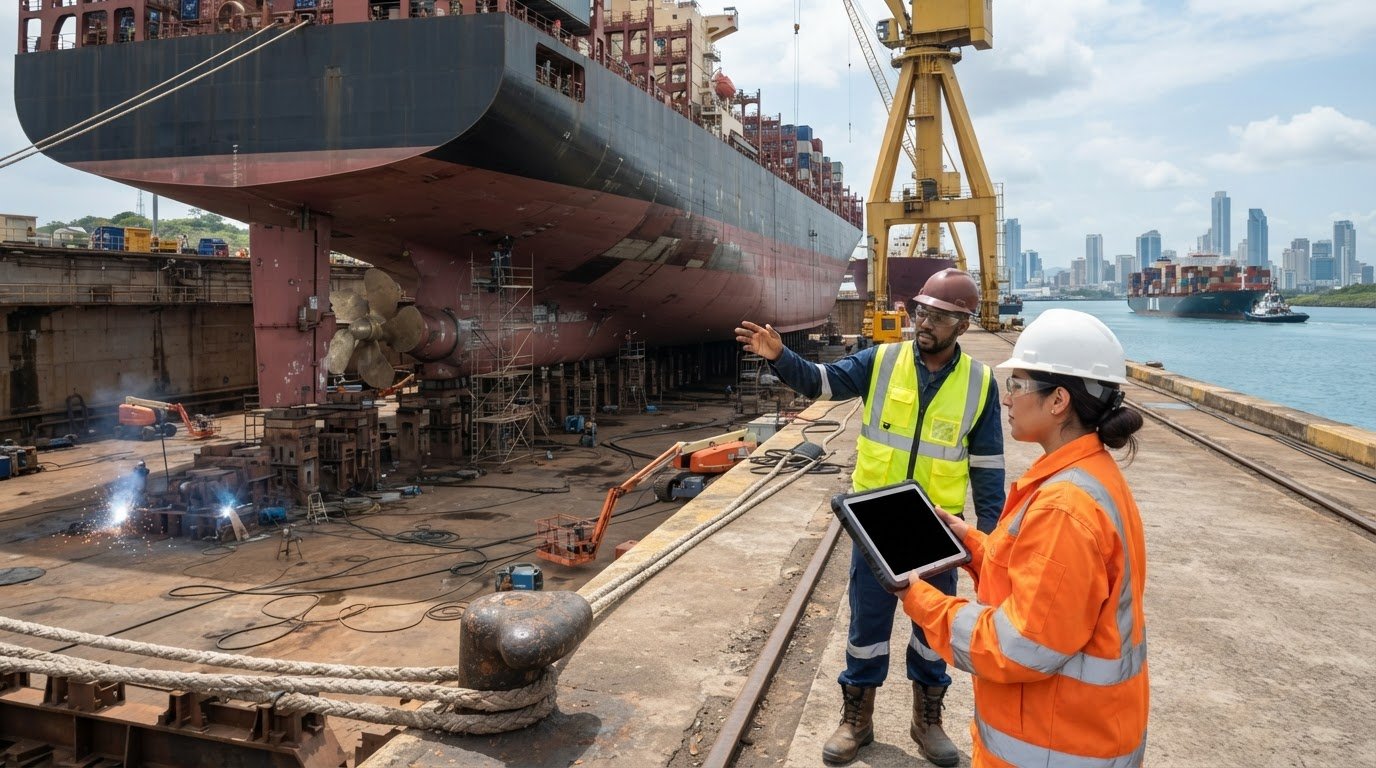
A ship agent for dry docking support in Panama coordinates vessel, port and canal logistics around planned repairs; underwater inspections and dry-dock surveys address the vessel’s technical condition. Afloat repairs are limited for work more than 2 meters below the waterline, which usually requires a dry dock or a complex cofferdam. The right plan depends on the inspection findings and the scope of work.
That distinction matters when a vessel needs maintenance without losing sight of its schedule, survey requirements, or next port call. A ship agent for dry docking support in Panama can coordinate local arrangements, but does not replace the technical judgment of the surveyor or repair team.
This guide explains what ship agency support in Panama can involve, how underwater inspections differ from dry-dock surveys, and what to consider when choosing between afloat repairs and docking. It also covers how to plan next steps with a local agency partner, keeping vessel movements and service coordination clear from arrival through departure.
Key Takeaways
- Map port and canal arrangements around the vessel’s repair plan so local coordination supports its onward movements.
- Use the vessel’s flag, type, size, and inspection history to understand which underwater inspection schedule applies.
- Distinguish routine afloat work from repairs or surveys that call for dry docking, and align the docking plan with the required survey scope.
- Clarify who coordinates agency and husbandry arrangements when owners or charterers need local support in Panama.
Ship agency coverage at Panamanian ports and the Panama Canal
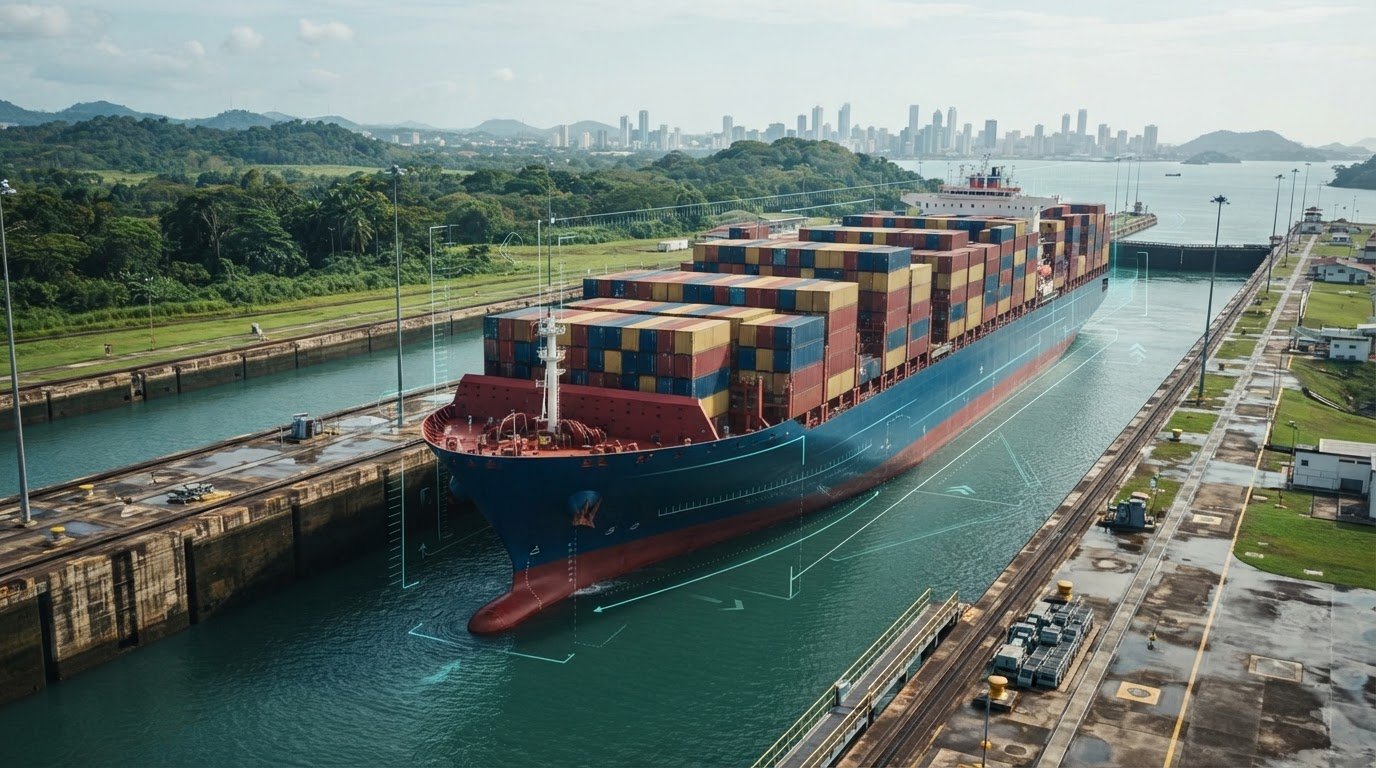
A ship agent for dry-docking support in Panama coordinates port-call logistics, canal timing, documentation, and communication between vessel representatives and local service teams. Start by mapping the repair window against the vessel’s intended arrival, canal pre-booking, anchorage or port arrangements, and onward passage. Compare agents and shipyards by their ability to align these moving parts, explain responsibilities, and keep owners or charterers informed. A 48-hour repair at Balboa or Cristobal anchorage can keep a vessel moving toward its destination.
Pre-arrival planning should identify the vessel, call purpose, repair scope, crew and spares movements, and required canal paperwork. Vessels with a carrying capacity of 400 MT or more carrying oil as cargo and/or fuel must submit a valid Panama Canal Shipboard Oil Pollution Emergency Plan. The plan must be submitted 96 hours before arriving in canal waters. Build these deadlines into the document schedule, alongside canal pre-booking and updates when the repair plan changes.
Port access, crew immigration, customs treatment of repair spares, and environmental controls depend on the vessel’s call and work scope. Include each item in the arrival plan, assign responsibility, and coordinate applicable requirements with the relevant authorities. The oil pollution plan is a specific canal requirement; it does not replace arrangements for port work or repairs.
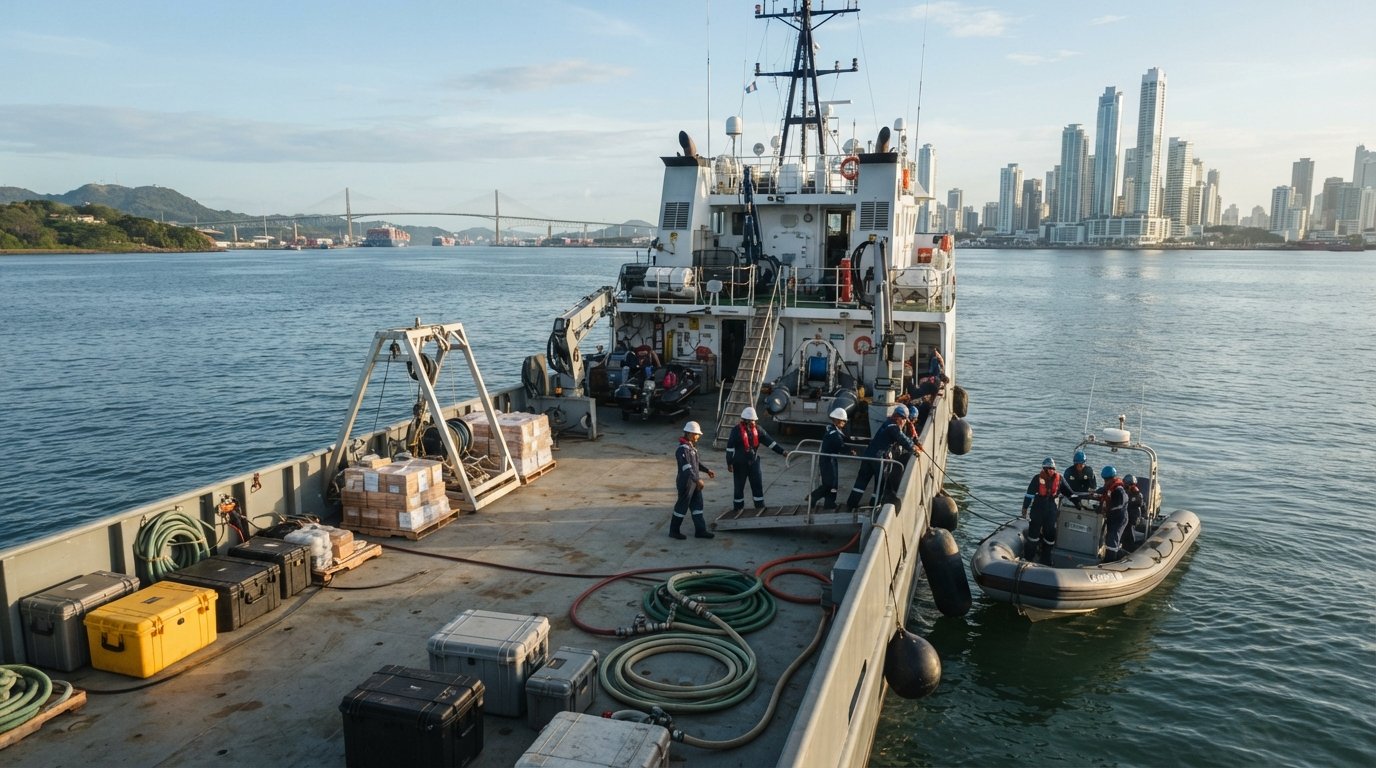
For riding squads or repairs during a canal passage, coordinate the work location, access, personnel movements, and timing with the vessel’s schedule. Afloat work at Balboa or Cristobal anchorage may help avoid a shipyard diversion, while repairs requiring a dry dock need separate facility and survey planning.
Common delays include late documents, spares coordination, and weather-sensitive work. Heavy rains occur between May and December and can affect external welding and painting schedules. Afloat repair operations pause when wind speeds exceed 22 knots or swell heights reach 2 meters. For emergency technical support during a dry dock, an agent can coordinate communications and port-call logistics between the vessel and the responsible repair and survey teams.
Urgent repair spares weighing 9,085 pounds were consolidated and cleared for export in Miami 24 hours after the initial call.
Inspection of underwater vessel parts
A bottom inspection gives the survey team direct access to underwater areas that remain submerged during normal operations. During dry docking, the vessel is drained, exposing its bottom for inspection and assessment of marine growth or accumulation. The survey can also identify damage or deterioration that may need attention before the vessel returns to service. Findings inform decisions about repairs, maintenance, and the next inspection plan.
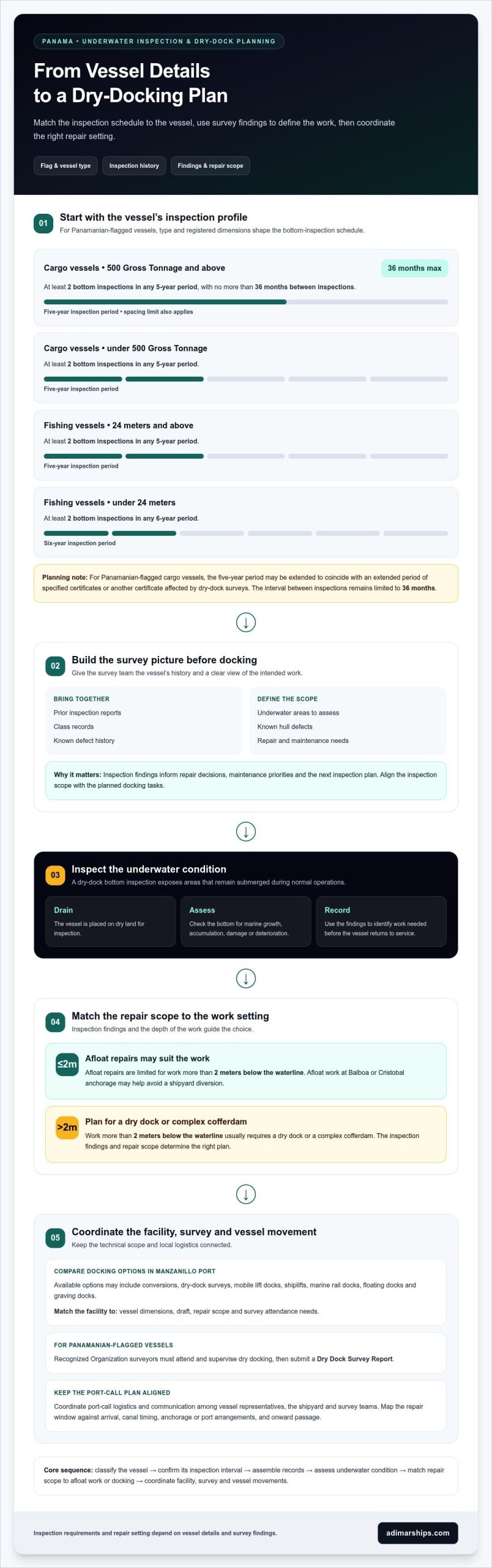
For Panamanian-flagged cargo vessels, inspection intervals depend on Gross Tonnage. Vessels of 500 Gross Tonnage and above must undergo at least two bottom inspections during any five-year period, with no more than 36 months between inspections. Cargo vessels under 500 Gross Tonnage must also undergo at least two bottom inspections during any five-year period. Keep the vessel’s inspection record and flag details together when planning the next survey.
Fishing vessels have separate thresholds based on length. Panamanian-flagged fishing ships 24 meters in length and above must undergo at least two bottom inspections during any five-year period. Fishing vessels under 24 meters in length must undergo at least two bottom inspections during any six-year period. These distinctions make vessel type and registered dimensions essential planning details, not administrative footnotes.
Before docking, assemble the vessel’s prior inspection reports, class records, and known defect history. This gives the survey team context for checking the hull and other underwater areas, then recording findings against the vessel’s maintenance needs. Align the inspection scope with the repair plan, so identified work can be assessed alongside docking tasks. Owners can also map the timing of inspections against port calls and the repair supply chain. For local coordination around a planned call, explore Panama vessel agency support.
For Panamanian-flagged cargo vessels, the five (5)-year bottom-inspection period may be extended to coincide with an extended period of specified certificates or another certificate affected by dry-dock surveys, while the interval between inspections remains limited to 36 months. Dry-docking is the process of repairing and maintaining a ship on dry land so a certified class surveyor can inspect it.
The Panama Canal handles over 14,000 vessel transits annually. Afloat repair teams can replace sections of 150mm piping while a vessel is at anchorage.
Dry-dock surveys
Dry docking allows repairs and maintenance on land, while surveys assess the vessel’s condition and required work. Survey scope, docking arrangements, and repair coordination need to work together.
Dry-Dock Survey Coordination
Panama ship agents coordinate port-call logistics and communication among vessel representatives, the shipyard, and survey teams. Dry-docking providers in Manzanillo Port may offer conversions, dry-dock surveys, mobile lift docks, shiplifts, marine rail docks, floating docks, and graving docks. Compare facilities with the vessel’s dimensions, draft, repair scope, and survey attendance needs. For Panamanian-flagged vessels, Recognized Organization surveyors must attend and supervise dry docking and submit a Dry Dock Survey Report.
Vessel Details for Quotes
To scope a docking request, prepare the vessel’s name, flag, type, dimensions, draft, and current location. Include the intended work, known hull defects, prior inspection records, and relevant survey or certificate dates. These details help match the vessel to a docking method and clarify the survey and repair scope. Afloat repairs have limitations for work more than 2 meters below the waterline, which usually requires a dry dock or complex cofferdam.
Dry-Dock Arrangement Steps
Begin by defining the repair and survey requirements, then share vessel particulars and preferred timing with the shipyard and agent. Coordinate the proposed facility, port call, survey attendance, and repair sequence before confirming the docking plan. For Panamanian-flagged cargo ships, dry docking should coincide with renewal or intermediate surveys for relevant certificates, such as cargo safety construction, load line, or pollution prevention. The applicable circular references Law Decree No. 7 and SOLAS’ 74 as amended.
Scheduling and Project Duration
Project duration depends on the repair scope, survey findings, facility arrangements, and availability of required parts. These factors shape the work sequence, so an unexpected hull defect or delayed spare can affect the departure plan. Dry docking is mandatory for five-year special surveys or major hull breaches. Emergency repairs alone do not count as specified dock attendance unless equivalent surveys are also completed under applicable standards or requirements.
Which ship agents in Panama provide dry-docking support?
Look for a Panama-based ship agent who can coordinate the vessel’s port call, canal movements, and communication with the selected shipyard. Agency coordination supports the plan, while the shipyard carries out docking work and the surveyor handles technical inspection. For example, a vessel calling at Balboa or Cristobal needs arrangements suited to its location and repair schedule.
Compare support by scope, not by a broad claim of “dry-dock services.” Clarify who coordinates the port call, liaises with the yard, and updates owners or charterers. Manzanillo Port facilities may offer mobile lift docks, shiplifts, marine rail docks, floating docks, and graving docks. The vessel’s particulars and work scope help determine which facility is suitable.
- Port and canal coordination: Ask how the agent aligns the planned call with vessel movements and the docking schedule.
- Yard communication: Establish how repair requirements, survey attendance, and work updates pass between the vessel and facility.
- Representation: Define whether the agent acts for the owner or charterer, and identify who approves operational decisions.
A useful comparison starts with the repair scope and vessel details, then assigns each responsibility to a specific party. Check that the proposed sequence covers port arrangements, survey attendance, personnel movements, and repair supplies. A ship agent for dry docking support in Panama should clarify coordination roles without suggesting that agency staff replace the yard or surveyor.
Before appointing an agent, prepare the vessel’s flag, type, dimensions, draft, location, inspection history, and intended work. Then request a coordination plan outlining the proposed port call, facility interface, communication flow, and decision-makers. This helps owners compare practical coverage while leaving technical judgments to the surveyor and repair decisions to the responsible parties.
For Panama port-call coordination around a docking plan, discuss ship agency support as the next operational step.
Adimar Shipping: Ship Agency Services
Adimar Shipping, Inc. helps owners and charterers coordinate vessel calls and related arrangements in Panama. Its Ship Agency Services are suited to planned docking that requires local agency coordination alongside the yard and survey team, rather than technical repair or survey work. For owners seeking a ship agent for dry docking support in Panama, clear communication and defined responsibilities help keep the port-call plan aligned.
Adimar Shipping, Inc. also provides Owner’s Nominated Agency and Charterer’s Nominated Agency, representing the party that makes the appointment. Husbandry Services address vessel-related requirements during a call. Share the vessel’s particulars, location, planned work, and timing to define the coordination needs and agency arrangement.
Contact Adimar Shipping, Inc. or visit adimarships.com to discuss agency support for your vessel’s Panama call.
Set Your Panama Call Up for Clear Coordination
Before committing to a docking plan, define who will represent the vessel and how decisions will move between the owner, charterer, and local teams. A ship agent for dry docking support in Panama can provide a local coordination point for the port call, while the shipyard and surveyor remain responsible for their respective technical work. Clear roles help organize instructions, approvals, and operational updates.
Adimar Shipping, Inc. offers Ship Agency Services, including Owner’s Nominated Agency and Charterer’s Nominated Agency. These arrangements allow the owner or charterer to appoint agency representation suited to its role in the vessel’s call. Share the vessel’s intended schedule and coordination priorities to start a focused discussion about representation in Panama.
Move your planning forward with a conversation with Adimar Shipping, Inc. A clearly defined agency role can give your team a practical foundation for the next stage of the vessel’s plans.