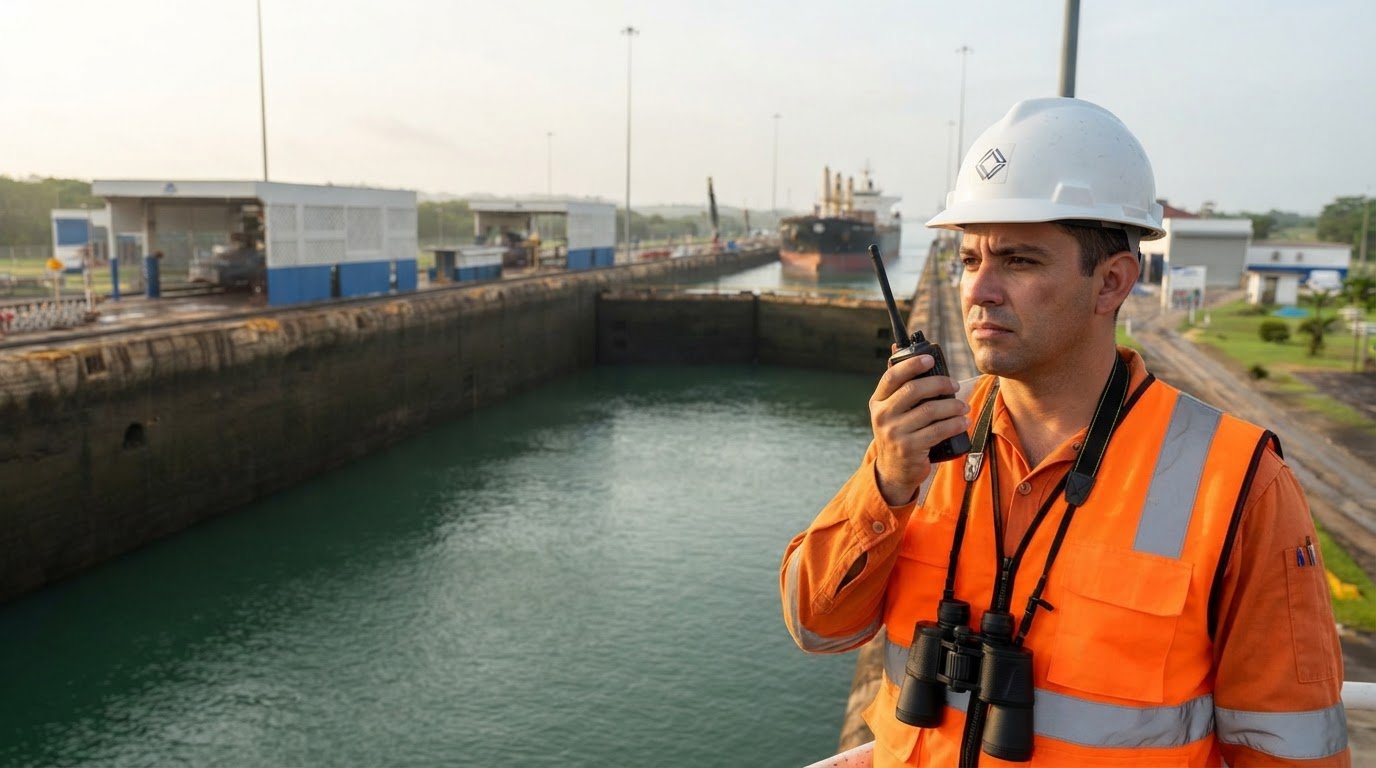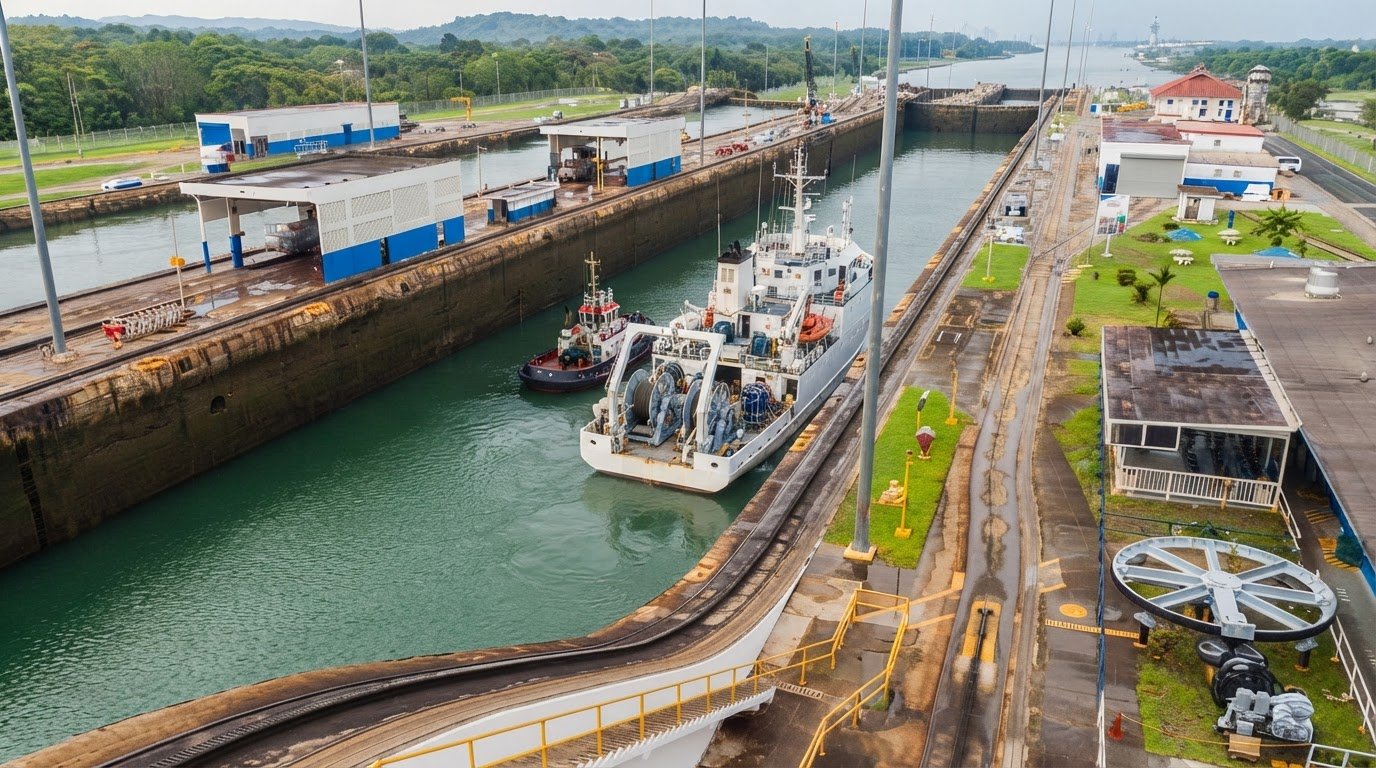

The biggest ship agency isn’t automatically the best fit. The choice between a personalized ship agent and a global firm in Panama depends on how much local coordination your vessel’s call requires, alongside the reach and consistency your operations need across markets. The Panama Canal spans about 80 kilometers, and a vessel transit takes approximately eight hours, making clear communication and well-coordinated support important to the passage.
Ship owners, operators, and charterers need dependable representation, but their priorities can differ from one call to the next. This guide compares a personalized ship agent with a global firm in Panama, explains what to consider when choosing representation, and shows how local coordination can support canal transits and vessel needs. You’ll learn how to assess the fit for your operation.
Key Takeaways
- Match agency support to your vessel’s operational needs, communication requirements, and the level of local coordination involved.
- Understand how an agent can support owners, operators, and charterers while keeping their different responsibilities aligned.
- See why local presence on both sides of the canal can help coordinate vessel calls and husbandry needs.
- Learn which Panama-specific maritime rules shape an agent’s work and where port and customs coordination fits.
Local ship agency and husbandry services in Panama
In Panama, a ship agent coordinates a vessel’s transit and related arrangements, while husbandry support addresses practical vessel and crew needs. The right appointment depends on the call’s location, scope, and communication requirements.
Port-Call Ship Agency
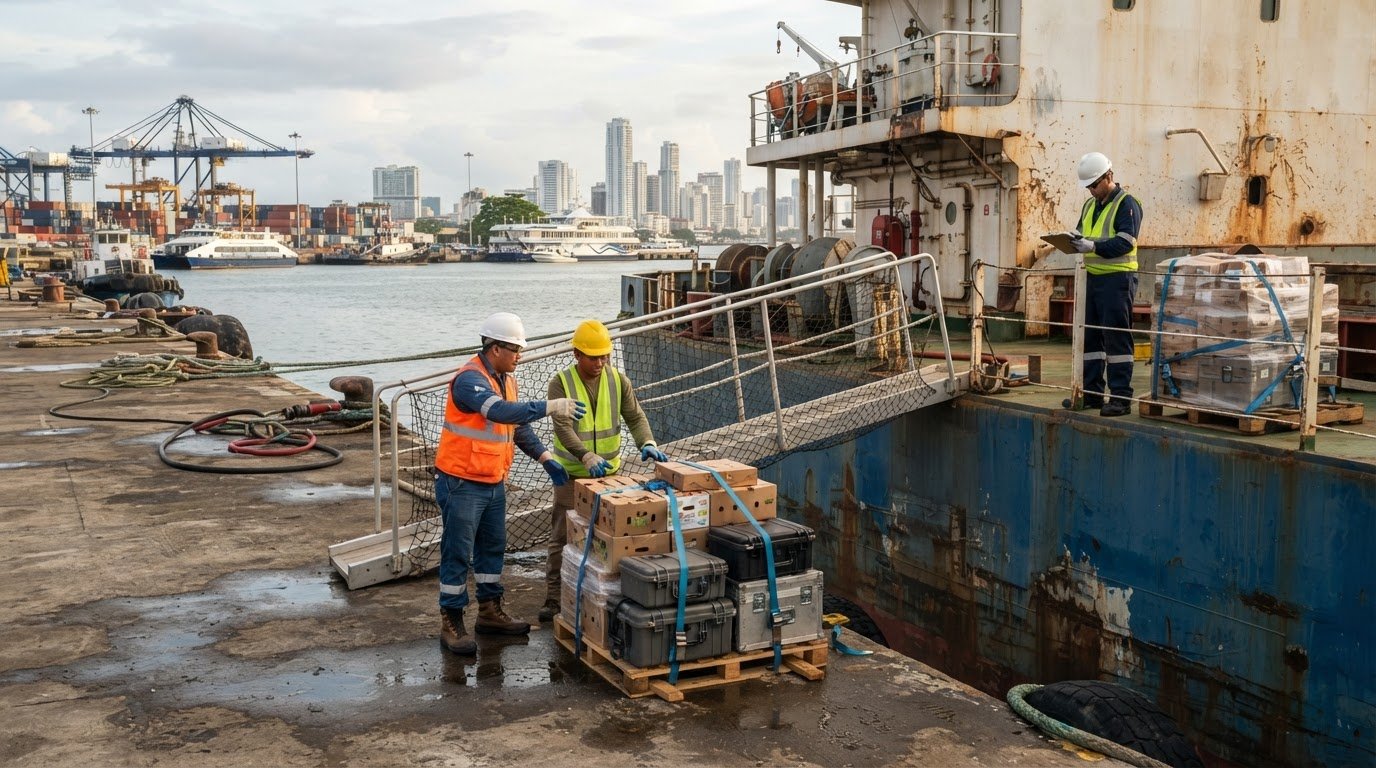
Port-call agency covers coordinating vessel-related arrangements with the parties involved in a call. The scope can include communication around arrival, port activities, and departure, with husbandry handling operational needs beyond the transit itself. For a cruise vessel, passenger and crew requirements may shape the coordination; a yacht call can have different priorities. Define the vessel’s requirements and expected responsibilities in the appointment, so the agent’s role is clear.
Agent Appointment and Local Requirements
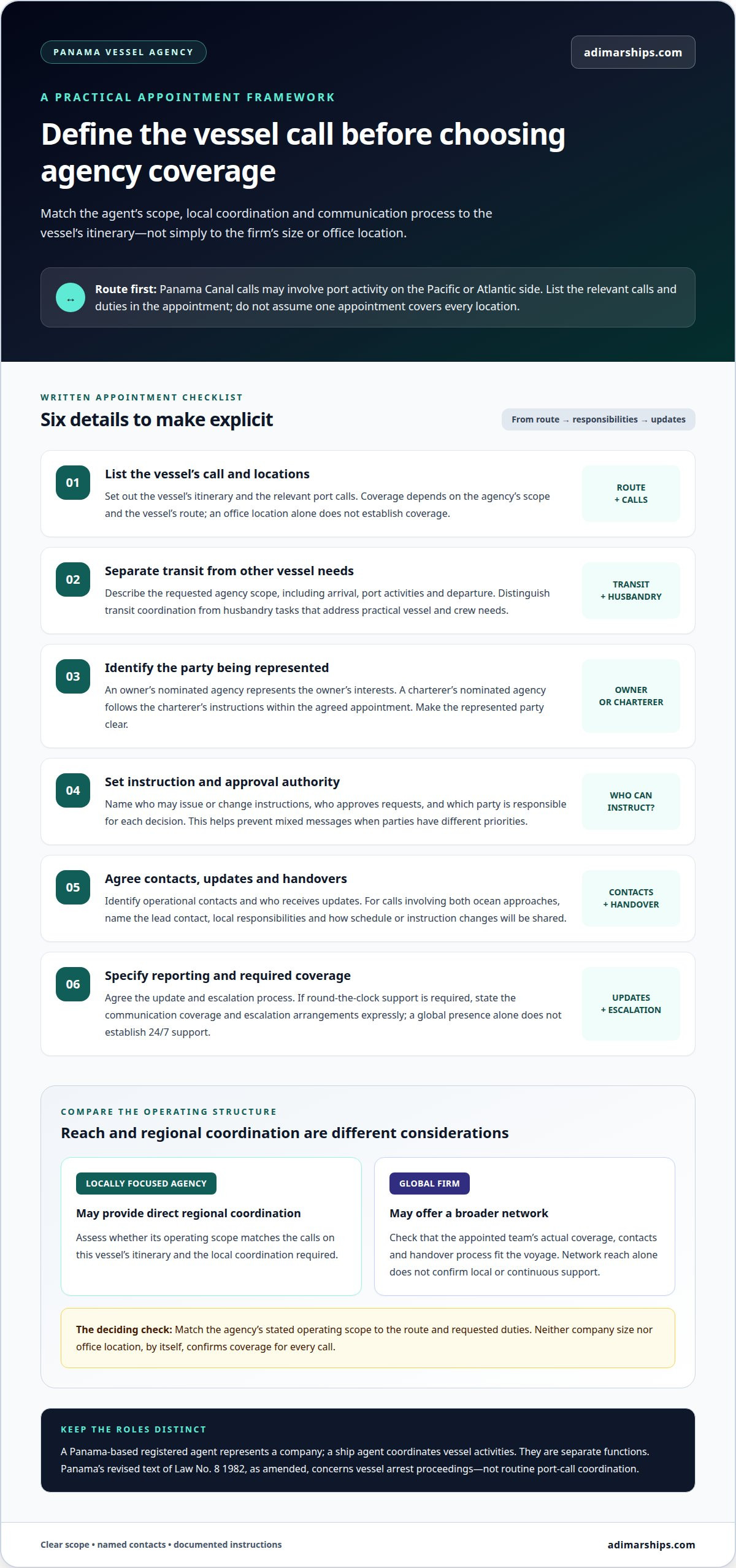
To choose and appoint a ship agent in Panama, define the vessel’s call, location, requested agency scope, and reporting needs. Then appoint the agent in writing and identify who may give instructions and receive updates. Panama-based registered-agent services are a separate function from vessel agency: one concerns a company’s registered representation, while a ship agent coordinates vessel activities. Keep those roles distinct in contracts and correspondence. For vessel arrests, Panama applies the revised text of Law No. 8 1982, as amended, also known as the Maritime Procedure Code. That rule concerns arrest proceedings, not routine port-call coordination.
Local Expertise and 24/7 Support
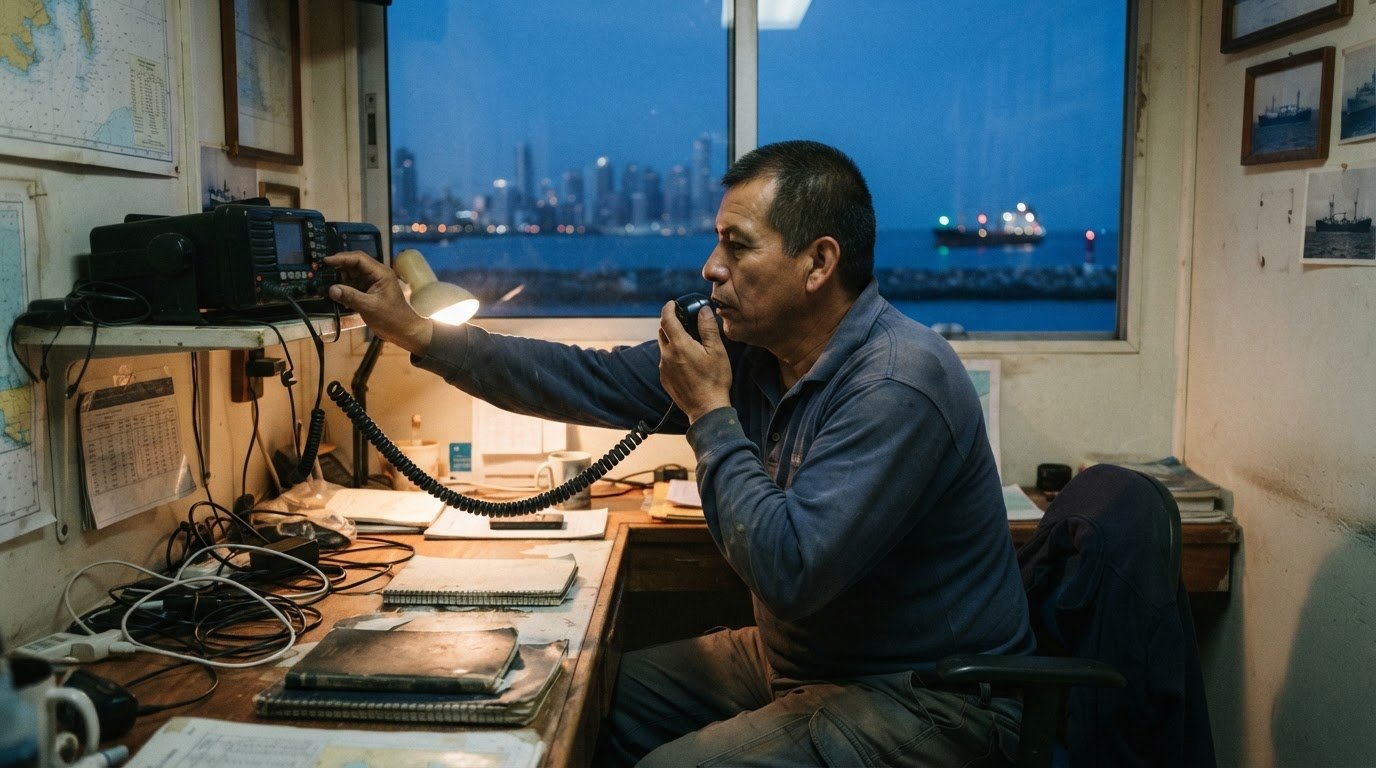
Local expertise matters when an agent must coordinate communications across a vessel call and understand the needs of the port involved. Ask for a clear division of responsibilities, named operational contacts, and an agreed update and escalation process. Which ship agents in Panama offer 24/7 support and local expertise? The agent offering continuous support is the one whose appointment expressly provides for round-the-clock communications and escalation; a global presence alone does not establish that coverage. Set the required coverage in the appointment, including how urgent vessel updates reach the responsible contact.
Support for ship owners, operators, and charterers
Owners, operators, and charterers may give different instructions for the same vessel call. An owner’s nominated agency represents the owner’s interests, while a charterer’s nominated agency follows the charterer’s instructions within the agreed appointment. Define each role clearly to prevent mixed messages. For example, specify who receives operational updates, who approves requests, and which party is responsible for each decision.
Owners need visibility into vessel activity and clear communication with the appointed agent. Operators focus on coordinating vessel operations and sharing timely instructions. Charterers may need updates related to their voyage and charter-party arrangements. A practical process identifies an operational contact for each party, records instructions, and shares significant changes with those responsible. This supports international voyages without assuming that every party has the same authority.
Cargo, insurance, and charter-party claims require careful records and distinct responsibilities. If cargo damage is reported during a call, the agent can coordinate communications and help organize relevant vessel-call information for the responsible parties. The owner, operator, charterer, insurer, or legal adviser handles decisions within their own role. An agent’s coordination does not replace insurance assessment or legal advice. Clear timestamps, written updates, and an agreed reporting route help keep records organized.
Before appointing an agent, define the represented party, scope, reporting contacts, and approval route in writing. Then share the vessel’s call information and specify who may issue or change instructions. This is especially useful when an owner and charterer have separate priorities. For Panama Canal calls, owner’s or charterer’s nominated agency can provide a defined local point of coordination for the party making the appointment.
Ship-agent offices on both sides of the Panama Canal
Which Panama ports and shipping routes does a local ship agent cover? Coverage depends on the agency’s scope and the vessel’s itinerary. Panama Canal calls may involve port activities on the Pacific or Atlantic side, while the canal connects the two oceans. Define the relevant calls and route in the agency instructions instead of assuming one appointment covers every location.
For a vessel transiting between ocean approaches, coordination on both sides can help keep operational information aligned. Continuity matters: one agency team can manage updates and responsibilities across the call. For example, an arrival change on one side may affect arrangements on the other. The agent communicates changes to designated contacts and coordinates the agreed tasks.
An office location alone does not establish coverage. Match the agency’s operating scope to the vessel’s itinerary. Identify which calls fall within the appointment, who handles each location, and how information moves between contacts. A global firm may offer a broader network, while a locally focused agency may provide direct regional coordination. Compare the operating structure with the needs of this voyage.
Set a clear handover process for calls involving both sides. Identify the lead contact for the vessel, record local responsibilities for each call, and agree how schedule or instruction changes will be shared. Specify who receives status updates. This reduces ambiguity when an owner, operator, or charterer sends separate instructions during an international voyage.
If a vessel’s itinerary includes activity on both ocean approaches, list each location and requested task in the appointment. Separate transit coordination from other port-call requirements and make reporting responsibilities explicit. This gives the agent a practical scope and makes clear who oversees coordination. Choose coverage based on the route and duties, not office labels alone.
A local agent may coordinate a vessel’s Panama Canal transit and related needs across the Pacific and Atlantic approaches. Define the specific calls and responsibilities in the appointment.
What Panama-specific port, customs, and maritime rules must ship agents follow?
Panama regulates vessel arrests under the revised text of Law No. 8 1982, as amended, also known as the Maritime Procedure Code. This concerns arrest proceedings, not routine port-call administration. Keep operational coordination separate from legal representation when a dispute or arrest affects a vessel. The distinction helps owners and operators understand where an agent’s coordination role ends.
Port and customs coordination also depends on clear communication between the vessel’s representatives and the parties handling relevant information. An agent can organize communications for a port call, but the instructions should identify who supplies details and who makes decisions. For example, an owner, operator, or charterer can designate a contact for vessel updates and document-related questions. This avoids assuming that every participant has the same authority.
Use a defined process for each call. Identify the vessel and the port activity covered by the appointment, assign responsibility for sending operational information and receiving updates, then record changes and route questions to the right party. If a vessel faces a legal dispute, keep the operational workflow distinct from the legal process under the Maritime Procedure Code. An agent’s coordination does not replace legal advice.
- Port call: State the location, activity, and scope of the agent’s coordination.
- Information: Name the party responsible for providing operational details and documents.
- Instructions: Identify who can approve actions or change directions.
- Escalation: Set a route for legal or customs questions requiring a responsible specialist.
These steps make responsibilities easier to follow without confusing vessel support with legal authority. For help coordinating a Panama vessel call, discuss vessel-call coordination.
Adimar Shipping: Ship Agency Services
Adimar Shipping, Inc. supports vessel owners and charterers with local coordination for Panama Canal calls. Its Ship Agency Services cover transit clearance, pilot and tug orders, and required documentation. Husbandry services address vessel and crew needs, including crew changes and provisioning.
Owners can appoint Adimar Shipping, Inc. as their Owner’s Nominated Agency, and charterers can appoint it as their Charterer’s Nominated Agency. Each option defines whose interests and instructions guide the agency relationship. Adimar Shipping, Inc. also provides PCSOPEP Authorized Person services for vessels transiting the Panama Canal.
Turn to Adimar Shipping, Inc. when a Panama Canal call needs a clear local point of coordination or an owner or charterer needs nominated representation. Share the vessel’s itinerary, the appointing party, and the requested scope to align agency work with the call. Contact Adimar Shipping, Inc. to discuss your vessel’s agency needs.
Prepare a Clear Brief for Your Next Panama Call
Before your next appointment, turn the provider decision into a practical operating brief. Define who gives instructions, which party receives updates, and how changes move between your team and the local representative. Include the vessel’s itinerary and the boundaries of the agent’s authority. This gives everyone a shared reference when schedules or responsibilities shift.
Choosing a personalized ship agent versus a global firm in Panama should depend on how your organization works, not brand size alone. Consider which decisions need local coordination and which can remain with your central team. If nominated representation fits your structure, Adimar Shipping, Inc. offers Owner’s Nominated Agency and Charterer’s Nominated Agency, alongside Ship Agency Services. Specify the party represented and the expected communication flow before the appointment begins.
Contact Adimar Shipping, Inc. to discuss the agency arrangement for your next Panama call and take the next step with a clear operating brief.
Frequently Asked Questions
What services does a ship agent provide in Panama?
A ship agent can coordinate canal transit arrangements, including transit clearance, pilot and tug orders, and required documentation. Husbandry services can also support vessel and crew needs, such as crew changes and provisioning. An owner planning a transit may need help coordinating passage-related tasks, while a vessel needing crew support may require husbandry. The agreed scope determines which arrangements the agent handles.
What is the difference between a local personalized ship agent and a global shipping firm in Panama?
The key difference is often how local coordination connects with a company’s wider network. A personalized ship agent can focus on Panama-specific vessel needs and direct communication, while a global firm may connect the call to broader international operations. Choosing a personalized ship agent versus a global firm in Panama depends on your voyage structure, reporting preferences, and need for regional coordination alongside international support.
What are the risks of using a small local ship agent versus a global firm in Panama?
Risks depend on the agent’s operating arrangements, not simply its size. A local provider may be a poor fit if its scope or reporting process does not match the vessel’s itinerary. A global firm may introduce extra communication handoffs when local and central teams have unclear responsibilities. For example, transit instruction changes need a defined route to the person coordinating the call. Compare scope, coverage, and accountability.
Which ship agents in Panama offer 24/7 support and local expertise?
Choose an agent whose appointment expressly provides round-the-clock communications and escalation, and names the responsible local contacts.