
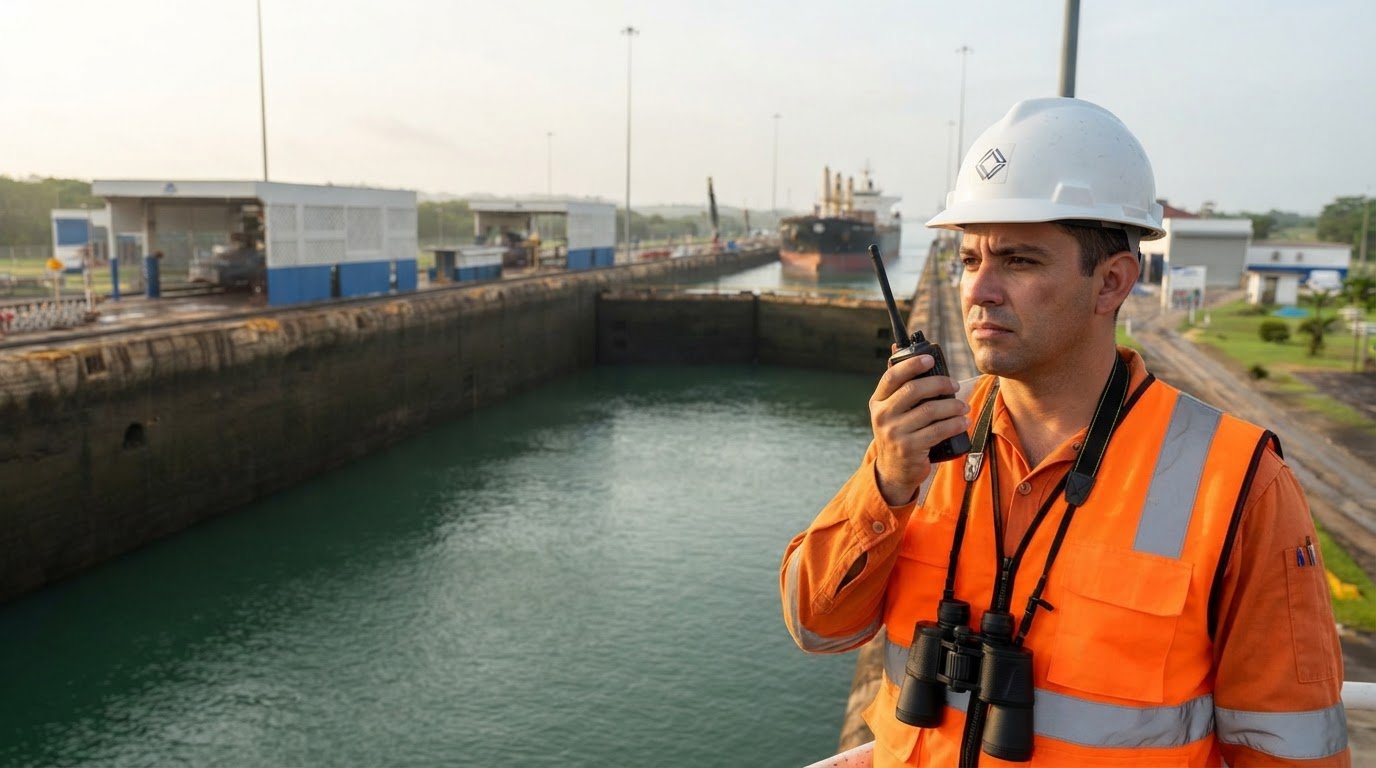
The widest international network isn’t automatically the best fit for a Panama port call. When comparing a local Panama ship agent vs. an international one, the practical difference is often who coordinates local representation, vessel updates, suppliers, and on-the-ground support. For a Panama Canal transit, clear communication and local coordination help keep the owner or charterer informed as operational plans develop.
Global reach can be valuable, especially when a voyage involves several ports and parties. For Panama support, however, local knowledge can make it easier to coordinate the moving parts and respond to the vessel’s needs. This comparison looks at how local and international agencies differ in port-call representation, vessel updates, geographic coverage, supplier coordination, and local support. It also explains what to consider when choosing an agency arrangement for a Panama Canal transit or port call.
Key Takeaways
- Clarify who represents the vessel locally and how updates will reach owners, charterers, and other parties involved in the port call.
- Assess whether the agency’s coverage matches the vessel’s Panama Canal transit and port-call requirements.
- Understand how supplier coordination fits into the call, from identifying vessel needs to organizing delivery.
- Choose the agency arrangement that aligns with the owner’s or charterer’s priorities and the level of local support required.
Port-call representation and vessel updates
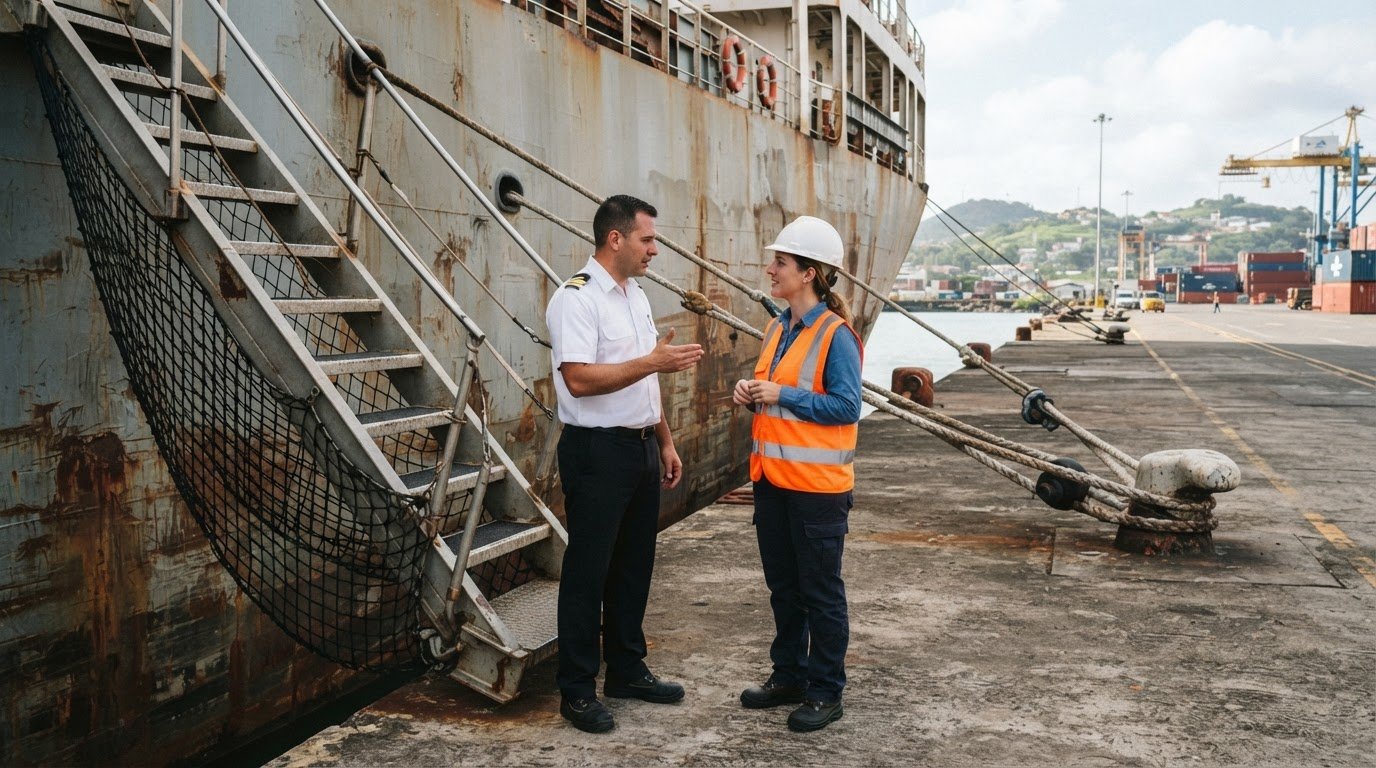
A local agent represents the vessel in port-call coordination, relays operational updates, and connects the ship with relevant local parties. Services can include arrival and departure coordination, bunkering arrangements, and support for port operations.
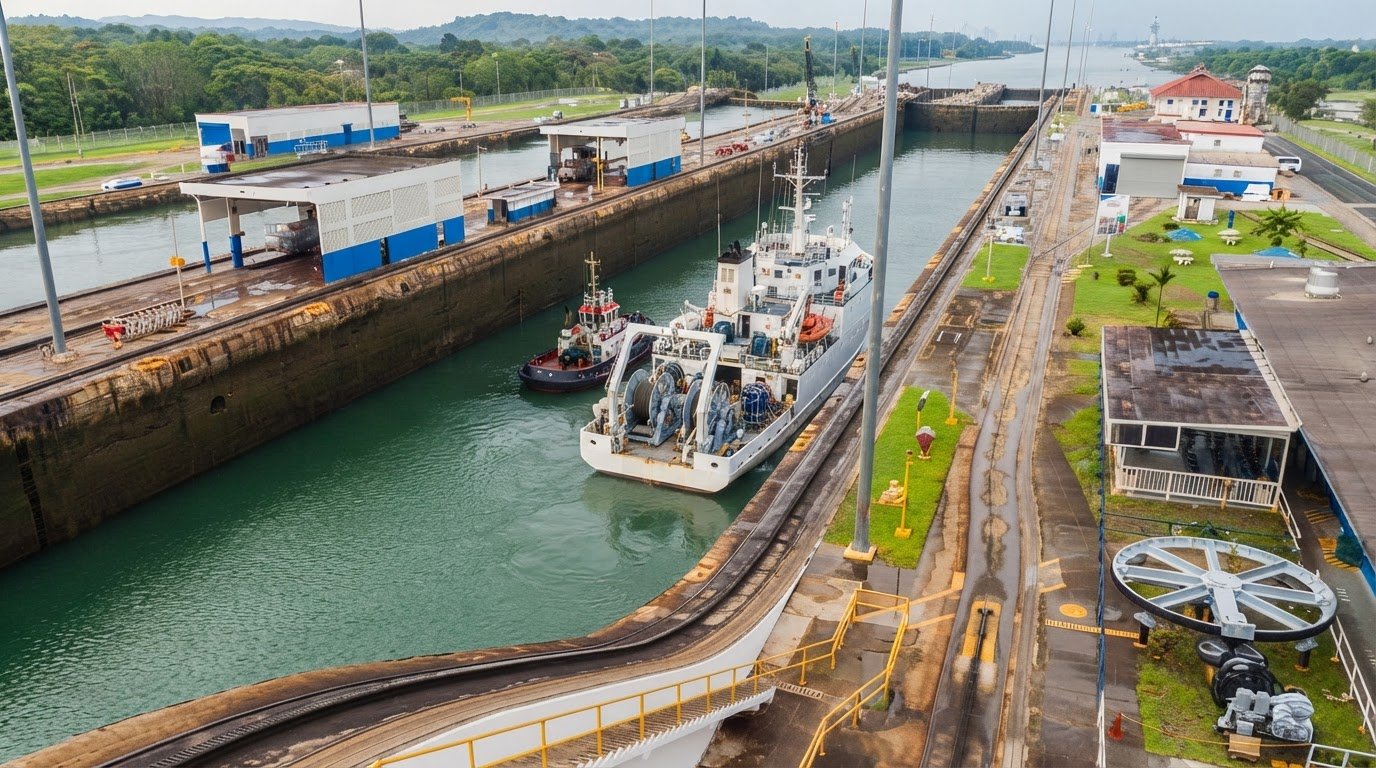
For a Panama Canal transit, the Panama Canal assigns a transit schedule to each vessel. The agent’s role is to keep the owner or charterer informed as call details and operational plans develop.
Local Ports and Anchorage Coverage
Port agency support may involve coordinating a vessel’s call at a local port or anchorage, according to its planned movements and operational needs. The key question is whether the agency’s coverage matches the vessel’s location and the work required. For example, an anchorage call involving bunkering requires coordination among the vessel, supplier, and other relevant parties. Clear updates keep everyone aligned as arrangements develop.
Agent Authorization and Port Coverage
Authorization and coverage are separate considerations: authorization concerns an agency’s status, while coverage concerns where it represents vessels. Panama has an authorized shipping-agency directory; use its entry to compare an agency’s identity and contact details with the party handling the call. Then establish which ports and anchorages it covers. This helps clarify who will represent the vessel locally and where the agency’s responsibility applies.
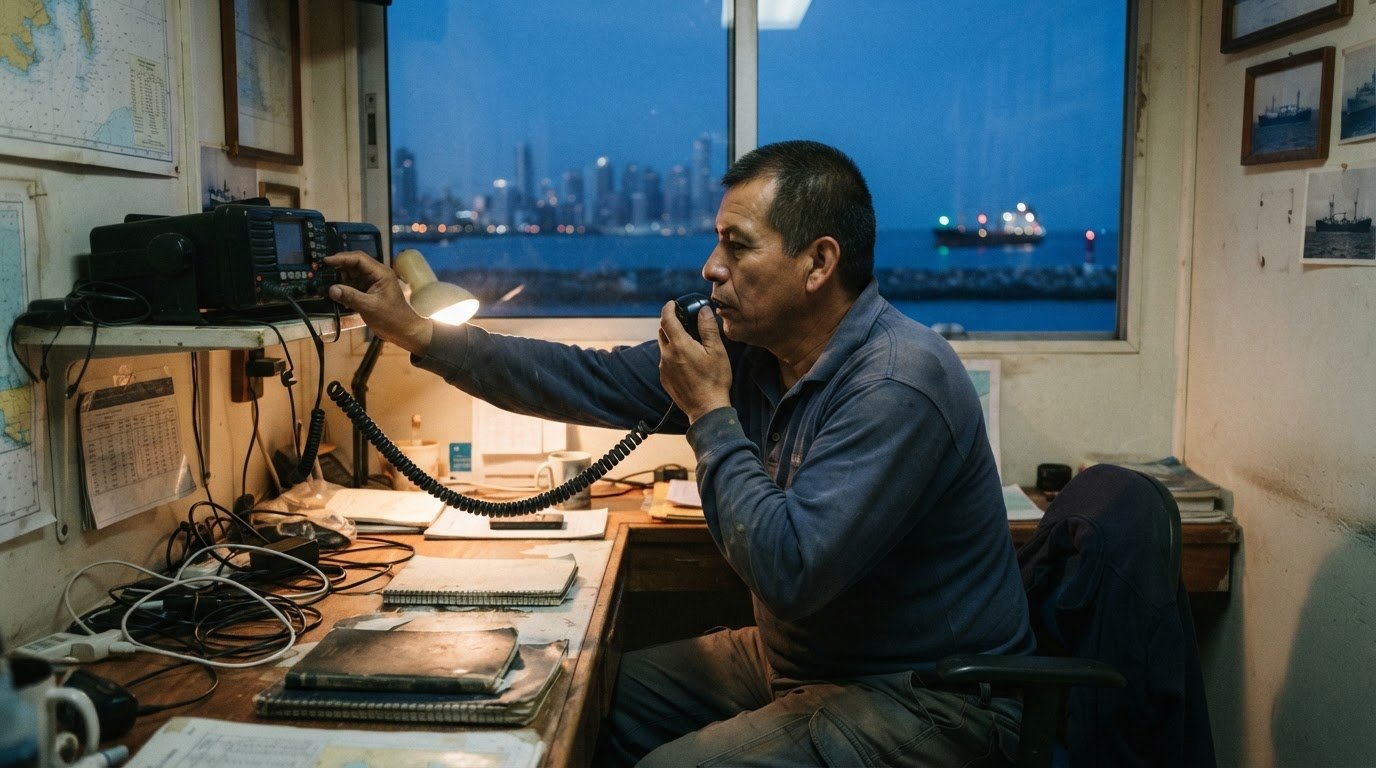
For arrival procedures, the agent coordinates information about the vessel’s call and shares relevant updates with the owner or charterer. Useful updates identify the current schedule, operational changes, and any action needed from the represented party. A clear reporting routine reduces uncertainty when several parties coordinate the same port call.
Bunkering coordination is another practical part of port operations. The agent connects the vessel’s requirements with supplier arrangements and keeps the parties informed about changes affecting the call. During a Panama Canal transit, reservation availability also matters: the optional transit reservation system has a limited number of payable bookings available each day. Timely, clear communication helps owners and charterers understand the vessel’s operating picture.
Ship agency coverage at Panamanian ports and the Panama Canal
An international ship agency may coordinate port-call representation, transit planning, vessel updates, and supplier arrangements in Panama. Its local contacts can connect the vessel’s operating plan with relevant port-call parties.
Panama Canal coverage matters because the Canal serves 180 maritime routes connecting 1,920 ports in 170 countries. This scale places a Panama transit within a wider voyage involving owners, charterers, operators, and agents. An international network can support coordination across multiple ports, while local representation handles Panama-specific communication and operational details. The useful distinction is how responsibilities move between the international contact and the local agency during a call.
Transit planning also has a reservation component. The Panama Canal adopted an optional transit reservation system in 1983. For a vessel’s route plan, coordination means aligning transit arrangements with the voyage schedule and sharing relevant changes with the parties involved. A shipping agent can project a Panama Canal transit in less than ten hours, giving operators a planning estimate to work into wider voyage decisions.
Canal transits and port agency work intersect when a vessel’s needs extend beyond the waterway. A call may require local port or anchorage coordination, supplier arrangements, and clear communication with the owner or charterer. Agency coverage should match the vessel’s planned movements, not just the reach of its wider network. That distinction helps define who handles each operational step in Panama.
For international agencies, the core value is continuity across locations; for Panama operations, local coordination provides the regional link. Canal forecasts have also looked six months ahead when estimating daily ship movements, illustrating why forward planning and current updates both matter. A practical handover identifies who communicates transit developments, who coordinates port-call requirements, and how local and international teams share changes. This division keeps responsibilities clear across the voyage.
Ship agent suppliers in Panama
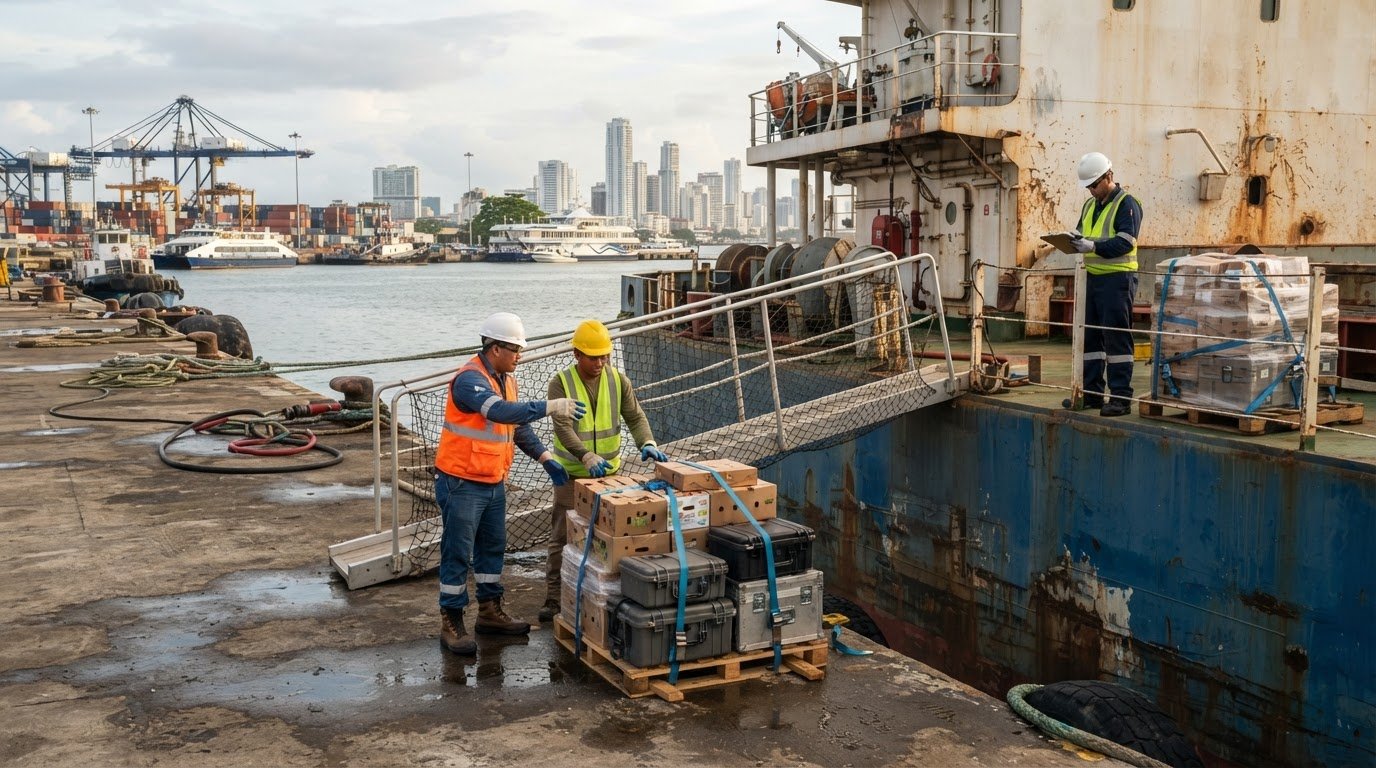
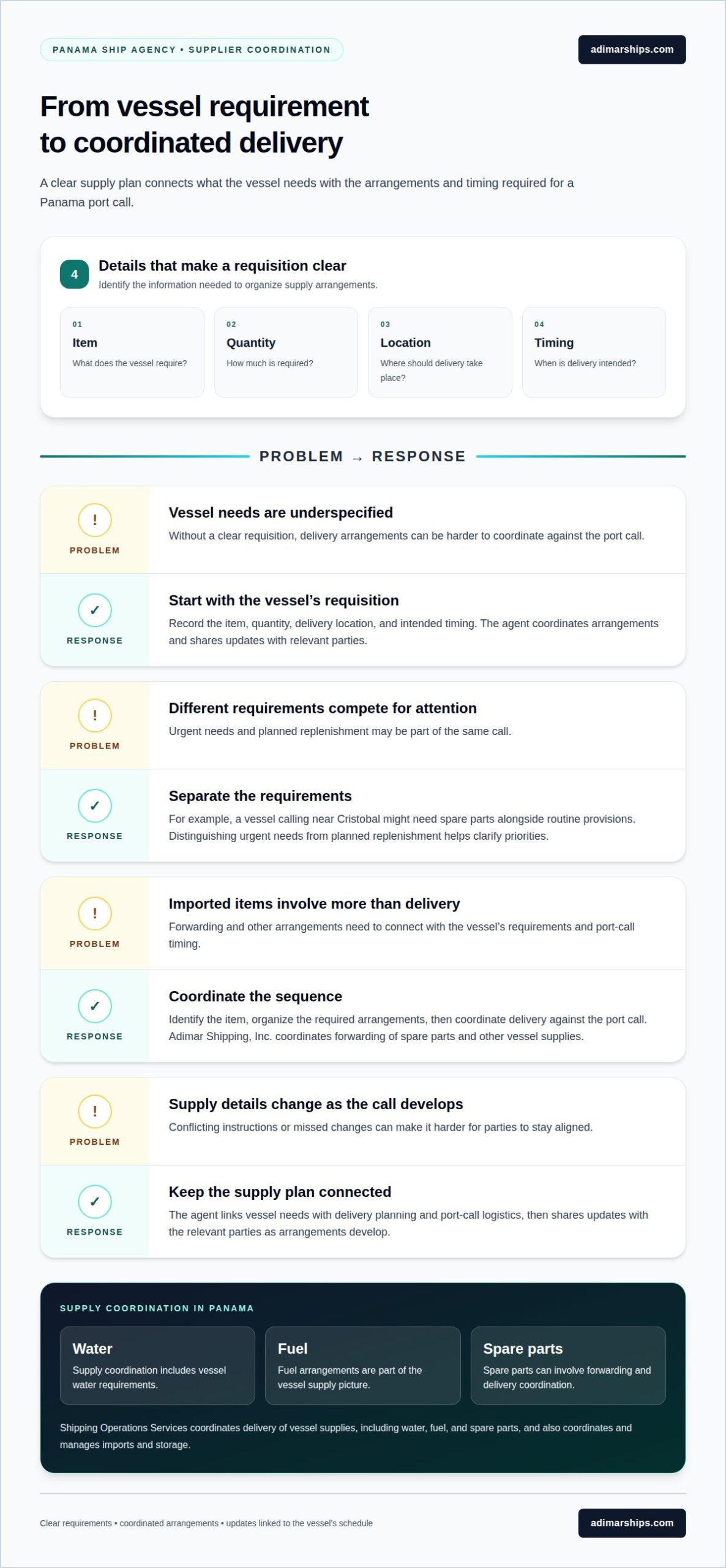
Supplier coordination connects a vessel’s requirements with delivery planning and port-call logistics. In Panama, Shipping Operations Services coordinates delivery of vessel supplies, including water, fuel, and spare parts. It also coordinates and manages imports and storage. This work links the vessel’s needs with the arrangements required to place supplies where they are needed. The agent helps keep the supply plan connected to the vessel’s schedule and operating priorities.
A useful process begins with a clear requisition. The vessel identifies the required item, quantity, delivery location, and timing. The agent then coordinates the arrangements and shares updates with the relevant parties. For example, a vessel calling near Cristobal might need spare parts alongside routine provisions. Separating each requirement helps distinguish urgent needs from planned replenishment, while a clear communication route reduces conflicting instructions.
Imported items add coordination steps beyond delivery. Adimar Shipping, Inc. coordinates forwarding of spare parts and other vessel supplies, connecting those arrangements with the vessel’s needs. The sequence matters: identify the item, organize the required arrangements, then coordinate delivery against the port call. This gives owners and charterers a clearer view of which needs are progressing and which require attention.
- For water: record the vessel’s requirement and intended delivery timing.
- For fuel: align the supply arrangement with the vessel’s port-call plan.
- For spare parts: identify the item clearly and coordinate any import or storage needs.
Coordination does not guarantee supplier stock or delivery timing. Each plan depends on the item, its location, and the vessel’s schedule. A local agent can keep those details connected in Panama, while an international agency may coordinate broader voyage requirements through its network. The useful measure is whether the assigned agent communicates the status of each supply need and manages the handoff between the vessel, supplier, and relevant parties.
Local ship-agent representation in Panama
Local representation connects a vessel’s Panama call with the people coordinating its operational requirements. The choice between a local agent and an international agency can create risks when responsibility, location coverage, or communication handoffs are unclear. A local agency can focus on Panama operations; an international agency can connect the call with broader voyage coordination. Either arrangement needs clear responsibilities.
Consider a vessel calling at Balboa while its owner coordinates through an international operations team. If the local representative and wider agency network don’t share updates, a change to delivery arrangements may reach one party late. The practical risk is a gap between the vessel’s needs and the people arranging support, not simply the agency’s location. Assigning a clear contact for each operational issue helps reduce that gap.
Local knowledge is most useful when it supports specific coordination. For a call involving an anchorage, bunkering, or spare-parts delivery, the agent connects the vessel’s requirements with relevant local arrangements. International coverage can add continuity across ports, but handoffs between teams need defined reporting lines. Owners can receive consistent updates through one designated channel, even when local and international staff both participate.
Before representation begins, define the scope in practical terms:
- Location: identify the Panama port or anchorage involved, such as Balboa or Cristobal.
- Responsibility: assign who coordinates port-call operations, supplier arrangements, and vessel updates.
- Communication: agree which contact consolidates changes and shares them with the owner or charterer.
This division makes the local-versus-international decision clearer. Local representation can suit a call where Panama-specific coordination is central. An international agency can suit a voyage requiring consistent coordination across several locations, provided local responsibilities remain clear. The strongest arrangement matches coverage to the vessel’s route and gives each party a defined role. For Panama port-call support, discuss local agency representation as part of the vessel’s operating plan.
Adimar Shipping: Ship Agency Services
Adimar Shipping, Inc. provides Ship Agency Services for vessels transiting the Panama Canal, coordinating transit arrangements, communication, and operational needs. Owners can appoint Adimar through Owner’s Nominated Agency, while charterers can use Charterer’s Nominated Agency for representation aligned with their role in the voyage. Husbandry Services support crew changes and other vessel needs during the call.
This is a practical next step when a Panama transit requires a local point of coordination for the owner or charterer. Clear delegation connects vessel requirements, port-call updates, and local arrangements while keeping the wider voyage plan in view.
Contact Adimar Shipping, Inc. to discuss representation for your vessel’s Panama call.
Set a Clear Course for Your Panama Call
Choose representation by matching the agency arrangement to the decisions your team needs to delegate. The choice between a local Panama ship agent vs. an international agency is most useful when it clarifies who speaks for the vessel, coordinates local requirements, and keeps the owner or charterer informed. Before the next call, define the intended representative and the communication route your operations team will use.
Adimar Shipping, Inc. offers Ship Agency Services, including Owner’s Nominated Agency and Charterer’s Nominated Agency. These options let owners and charterers appoint representation suited to their role in the voyage. A dedicated point of coordination helps your team focus on vessel operations while Adimar manages local arrangements in Panama.
For a Panama port call or Canal transit, take the next step by discussing the representation your voyage requires. Contact Adimar Shipping, Inc. about Panama ship agency and move forward with a clear plan for your vessel.
Frequently Asked Questions
How do local and international ship agents compare in Panama?
A local Panama ship agent vs. international agency comparison comes down to local coordination and continuity across a wider network. A Panama-based representative can focus on local call requirements, while an international agency can link coordination across a wider voyage. When deciding between a local Panama ship agent vs. an international agency, define who handles Panama-specific arrangements and who keeps other voyage teams informed. Clear roles help prevent handoff gaps.
How do Panama ship agents handle port calls, permits, and customs clearance?
Ship agents coordinate port-call communication and required vessel documentation, while port and customs authorities make official clearance decisions. Panama Canal transit clearance is distinct from customs clearance, so the parties should understand which process each update concerns. When a document is requested, the agent can coordinate communication about the requirement and its status, helping the vessel’s representatives organize the relevant steps.
What licenses and requirements apply to ship agents in Panama?
Panama maintains an authorized shipping-agency directory, which provides a practical starting point for identifying listed agencies. PCSOPEP has a separate requirement: vessels with oil capacity of at least 400 MT must submit it through an Authorized Person residing in Panama. That person’s Panama residency requirement applies to PCSOPEP submission, not as a general license rule for every ship agent.
What are the benefits of hiring a local Panama ship agent?
A local representative gives the vessel’s owner or charterer a direct coordination point for Panama-specific arrangements. This is useful when a port call involves a time-sensitive delivery, a supplier handoff, or communication among several operating parties. The local agent keeps those matters connected to the vessel’s plan, while the owner or charterer retains visibility over decisions and priorities.
How can shipowners verify a Panama ship agent’s experience and credentials?
Check the agency’s identity and contact details in Panama’s authorized shipping-agency directory, then confirm which ports and anchorages it covers. Clarify its local responsibilities and how it will provide vessel updates.