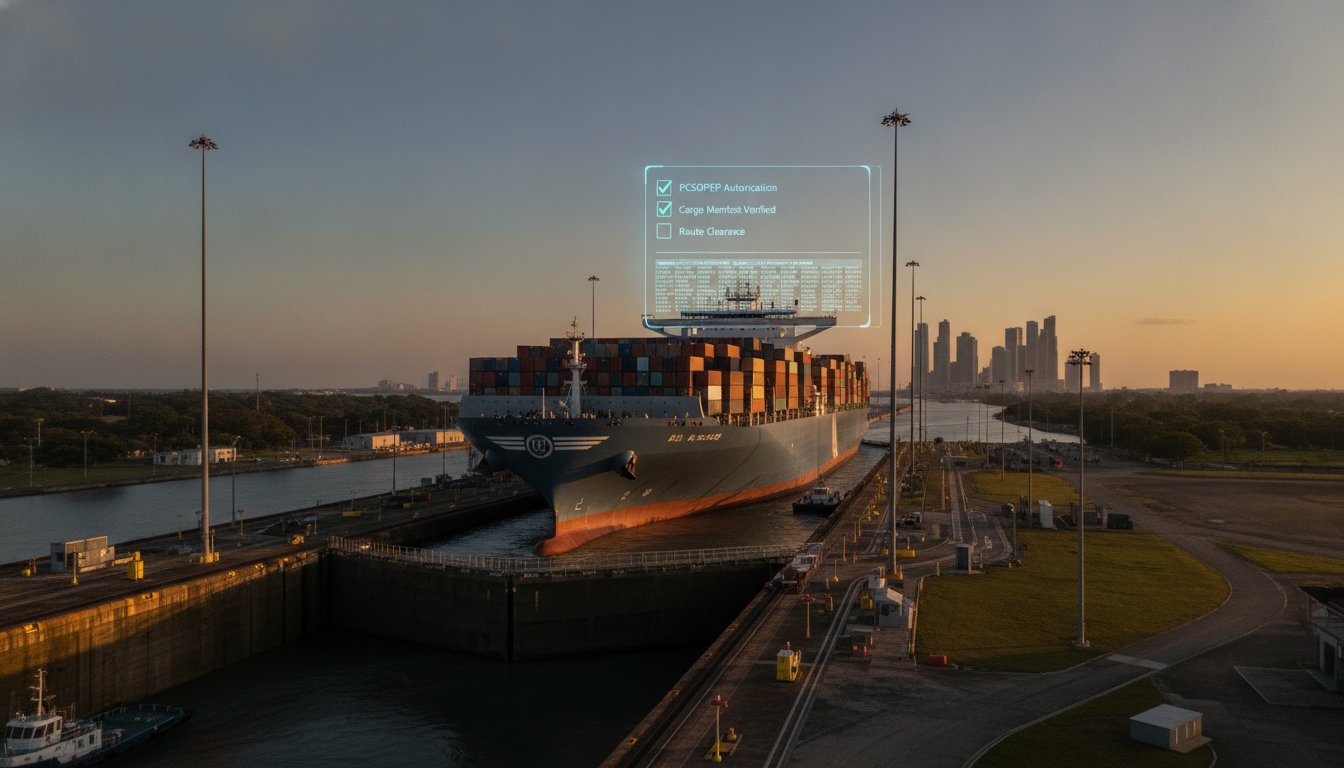


What if the difference between a seamless transit and a $200,000 last-minute reservation fee came down to a single oversight in your 96-hour documentation window? Managing the panama canal transit process for ship owners has never been more demanding, especially with the Panama Canal Authority set to unveil a revised toll structure in June 2026. You’re likely already dealing with the frustration of unpredictable wait times and the high stakes of regulatory fines. It’s a logistical puzzle where even a small delay at Gatun Lake can ripple through your entire global supply chain.
We understand that you need more than just a booking; you need a proactive partner on the ground to navigate these shifts. This strategic guide helps you master the complexities of the 2026 transit landscape, from understanding the latest capacity tariffs to ensuring your vessel meets all PCSOPEP requirements. You’ll gain a clear roadmap of the transit timeline and learn how expert coordination can significantly reduce your port stay costs. We’ll walk you through the essential steps to secure your slot and maintain full compliance in this evolving maritime corridor.
Key Takeaways
- Navigate the 2026 operational landscape with a clear understanding of current water levels and the upcoming June 2026 toll restructuring.
- Streamline the panama canal transit process for ship owners by mastering the 96-hour documentation window and the Maritime Service Portal protocols.
- Maintain strict compliance with PCSOPEP regulations and vessel classification rules to eliminate the risk of administrative fines or transit delays.
- Maximize efficiency by coordinating husbandry services, such as crew changes and bunkering, during your time at anchor.
- Ensure your vessel’s interests are protected through proactive, local oversight from an experienced owner’s nominated agency.
Navigating the Complexity of Panama Canal Transits in 2026
The Panama Canal isn’t just a waterway; it’s a high-stakes logistical corridor where timing is everything. For a broader history and overview of the Panama Canal, one can see how it has evolved from an engineering marvel into a data-driven hub. In 2026, the Panama Canal Authority (ACP) has shifted its focus toward aggressive water management and tiered booking systems. This evolution means the panama canal transit process for ship owners is no longer a routine task. It’s a strategic operation where a single documentation error can lead to a week of idle time at the entrance locks.
High-risk operational phases like these demand more than just technical compliance. They require a proactive understanding of how the ACP manages modern maritime logistics. Common bottlenecks, such as sudden draft restrictions or congestion at the Neopanamax locks, can quickly turn a profitable voyage into a financial liability. Owners who rely on outdated information or passive agency representation often find themselves at the mercy of unpredictable scheduling shifts.
Understanding the 2026 Operational Climate
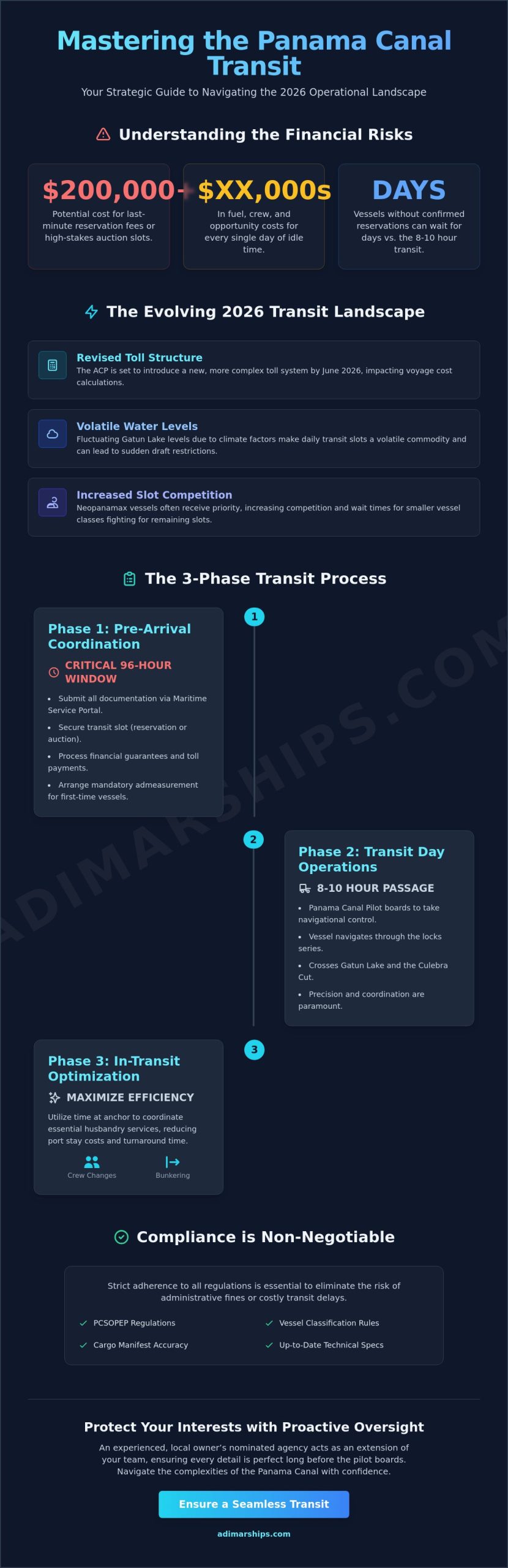
Recent data from the ACP Panama annual report highlights a significant shift in traffic patterns. While Neopanamax vessels often take priority due to their size and revenue impact, smaller vessel classes face increased competition for the remaining slots. Climate factors in 2026, specifically the fluctuating levels of Gatun Lake, have made daily transit slots a volatile commodity. Auction prices for unreserved slots frequently reach six figures during peak demand. If you aren’t monitoring these daily shifts through a local expert, you’re likely overpaying for access or waiting longer than necessary. The ACP also plans to introduce a revised toll structure by June 2026, adding another layer of complexity to your voyage planning.
The Ship Owner’s Financial Risks in the Canal
Idle time is the greatest enemy of maritime profitability. While an average transit takes 8 to 10 hours, a vessel without a confirmed reservation can wait days at the Atlantic or Pacific entrances. A single day of idle time can cost tens of thousands of dollars in fuel, crew wages, and missed delivery windows. The panama canal transit process for ship owners involves more than just paying tolls; it requires precise coordination of every variable. “Standard” compliance with ACP regulations isn’t enough anymore. Many owners find that without a vigilant, local representative on the ground, their vessels are sidelined by minor administrative discrepancies. Having a partner who acts as an extension of your own team ensures that documentation is perfect long before the pilot boards.
A Step-by-Step Breakdown of the Panama Canal Transit Process
Success in the Panama Canal starts long before your vessel reaches the breakwater. It’s a race against the clock where precision is the only currency that matters. While the physical passage through the locks is the most visible part of the journey, the panama canal transit process for ship owners is actually a three-phase operation that demands constant vigilance. Missing a single deadline in the pre-arrival stage can trigger massive surcharges or even result in a lost transit slot.
Phase 1: Pre-Arrival Coordination and Booking
The 96-hour window is your most critical timeframe. All vessels must submit comprehensive documentation through the Maritime Service Portal at least four days prior to arrival. This includes technical specifications, cargo manifests, and compliance certificates. You must strictly follow the Official Panama Canal Vessel Requirements to avoid administrative holds. During this phase, your agent secures your transit slot. Whether you’re utilizing the standard reservation system or participating in a high-stakes auction for a last-minute opening, having all financial guarantees and toll payments processed in advance is non-negotiable. If your vessel is transiting for the first time, you must also account for the mandatory admeasurement service.
Phase 2: The Transit Day Operations
Transit day is a masterclass in maritime coordination. The process begins when the Panama Canal Pilot boards your vessel to take navigational control. Over the next 8 to 10 hours, your ship will move through a series of locks, Gatun Lake, and the Culebra Cut. This phase requires seamless communication between the bridge, the pilot, and the shoreside support team. Tugboats and line-handlers must be perfectly positioned at the Gatun, Pedro Miguel, and Miraflores locks to ensure a safe passage. A dedicated ship agency in Panama acts as your eyes and ears on the ground, providing real-time updates as your vessel hits every milestone.
Phase 3: Post-Transit and Departure
The operation doesn’t end once you clear the final lock. Post-transit logistics are essential for a clean departure and accurate accounting. This phase involves obtaining final clearance from the Panama Canal Authority (ACP) and other maritime bodies. It’s also the time for husbandry tasks, such as the “Cash to Master” (CTM) process, where essential funds are delivered to the captain. Finally, your agent will finalize the disbursement accounts, ensuring all fees are settled correctly so your vessel can transition smoothly back to open sea operations without lingering administrative debt.
Managing these moving parts requires a partner who understands that every minute at anchor is a minute of lost revenue. Choosing a reliable agency ensures these phases happen without friction, protecting your bottom line and your reputation with the ACP.
Critical Documentation and Compliance Requirements
Compliance isn’t just a safety measure; it’s the foundation of your schedule. The panama canal transit process for ship owners hinges on administrative perfection. Minor discrepancies in blueprints or manifests can trigger administrative holds that cost thousands in lost time. While the Panama Canal Authority (ACP) provides a comprehensive list of rules, the challenge lies in the execution. You need a team that audits your documentation long before the vessel reaches the breakwater, ensuring every certificate is current and every technical specification is accurate.
The PCSOPEP Mandate for Ship Owners
Every vessel transiting the Canal must comply with the Panama Canal Shipboard Oil Pollution Emergency Plan (PCSOPEP). It’s a non-negotiable environmental safeguard designed to protect the local ecosystem. A central requirement of this regulation is designating a PCSOPEP authorized person who resides in Panama. This individual serves as the critical legal liaison for environmental emergencies, acting as a bridge between the ship and the ACP. Without a verified authorized person on file, the ACP will deny transit. Maintaining this compliance isn’t just a legal hurdle; it’s a way to avoid heavy penalties and potential transit bans that could sideline your fleet for months.
ACP Vessel Requirements and Inspections
Before a vessel can transit, it must undergo a rigorous inspection by the Admeasurement Department. This is where physical dimensions and equipment are verified against the Official Panama Canal Maritime Regulations. The difference between “Panamax” and “Neopanamax” classifications determines your entire toll structure and which locks your vessel will use. Inspectors look for specific mandatory equipment like chocks, bitts, and pilot ladders that meet precise Canal standards. Your documentation checklist must be flawless: vessel blueprints, tonnage certificates, and crew manifests must be ready for immediate review.
The Canal Zone also adheres to strict ISPS Code and port facility security standards. Port authorities monitor vessel security levels closely, and any lapse can lead to expensive delays. Proactive document auditing is the only way to avoid common compliance fines. We recommend a thorough “pre-audit” of all files at least 72 hours before arrival. This local vigilance ensures that when the ACP inspectors board, your vessel is ready to move without delay, protecting both your reputation and your bottom line.
Optimising Your Transit: Husbandry and Scheduling Strategies
Every hour spent at anchor is a potential cost, but it’s also a strategic window for essential vessel maintenance. The panama canal transit process for ship owners has become increasingly synchronized with the “Just-in-Time” (JIT) transit system. This system aims to reduce idle time by providing vessels with specific arrival times, yet it complicates the scheduling of support services. If your vessel is slow-steaming to meet a JIT slot, you have less time at anchor to complete crew changes or receive spare parts. Success requires a partner who can compress these tasks into a narrow operational window without risking your transit sequence.
Managing these logistics involves more than just making a phone call. It requires a deep understanding of local terminals and the agility to respond to sudden ACP schedule shifts. When you integrate these services correctly, you eliminate the need for multiple boat trips and reduce overall port stay costs. It’s about turning a mandatory pause into a productive period for your fleet.
Coordinating Crew Changes and Medical Services
Technical Support and Spare Parts Logistics
High-value maritime components require expert handling and rapid customs clearance to avoid delays. You can leverage husbandry services to manage the entire lifecycle of a spare part, from its arrival at Tocumen International Airport to its final delivery on deck. Warehousing in the Free Zone allows you to store critical components until the exact moment they’re needed. If emergency repairs are required, we coordinate with local workshops while your vessel is awaiting transit. Additionally, the logistics of bunkering in Panama must be seamlessly woven into your transit plan. Fueling during the transit window ensures your vessel is fully prepared for its next voyage without requiring an additional port call.
Don’t let logistical gaps slow your operation. You can schedule your husbandry services with Adimar Shipping, Inc. to ensure every hour at anchor is used efficiently.
Protecting the Owner’s Interest: The Adimar Shipping, Inc. Advantage
You deserve an advocate who treats your vessel as their own. The panama canal transit process for ship owners is too complex to leave to a party whose interests might not align with yours. While earlier sections of this guide addressed the technical steps and compliance rules, this final phase focuses on the value of specialized representation. Choosing the right partner in Panama is the most effective way to safeguard your assets. We act as your vigilant eyes on the ground, ensuring every operational decision serves your specific goals.
Owners Agency vs. Charterers Agency
The distinction between agency types isn’t just administrative; it’s a matter of priority. When a charterer appoints an agent, their primary focus is often the cargo and the speed of the port operation. They might overlook the vessel’s specific husbandry needs or be less aggressive in challenging unnecessary port fees. This is why a dedicated owner’s nominated agency is essential. Adimar Shipping, Inc. provides independent oversight that ensures your interests remain the priority. We act as a check and balance against unfair expenses, auditing every invoice and operational delay to protect your bottom line. Having an independent representative means you aren’t reliant on a third party whose loyalties may be divided.
Adimar Shipping, Inc.’s Local Expertise in Panama
Our philosophy is built on local vigilance and proactive communication. We don’t just wait for updates; we anticipate changes in the ACP’s flow. Our person-to-person service model means you have a direct line to an expert who understands the nuances of the 2026 operational landscape. This local knowledge acts as your best insurance policy. Adimar Shipping, Inc. closes the gap between your head office and the reality on the ground in Panama, serving as a seamless extension of your own team. Our history of managing complex transits has allowed us to develop the relationships needed to navigate difficult scheduling conflicts. Our 24/7 availability ensures you’re never left in the dark, regardless of your time zone.
Transparency is our core brand promise. We eliminate hidden costs through rigorous disbursement accounting, ensuring every fee is justified and documented. By delegating these specialized tasks to our team, you gain the operational freedom to focus on your global strategy. You aren’t just hiring an agent; you’re securing a dependable partner who stands watch over your interests at every lock and every terminal. Adimar Shipping, Inc. protects your vessel, your crew, and your financial interests with unwavering ethical standards.
Mastering Your 2026 Transit Strategy
Navigating the panama canal transit process for ship owners in 2026 requires more than just a booking. It demands a proactive approach to the upcoming June toll restructuring and a meticulous eye for documentation. As we’ve explored, integrating husbandry services and maintaining strict PCSOPEP compliance can transform a high-risk operational phase into a streamlined success. By delegating these complexities to a partner with deep local expertise in Panama City, you protect your vessel from avoidable delays and ensure your interests remain the primary focus.
Adimar Shipping, Inc. stands ready to act as a dependable extension of your own team. As an Authorized PCSOPEP Person and a specialized owner’s and charterer’s agency, we provide the vigilance necessary to secure your interests in every lockage. Don’t let administrative bottlenecks or shifting ACP regulations disrupt your global schedule. Secure your vessel’s passage with Adimar Shipping, Inc. – Contact our expert agents today. We look forward to ensuring your next transit is your most efficient and secure voyage yet.
Frequently Asked Questions
How long does a standard Panama Canal transit take for a ship owner?
A standard transit through the Panama Canal typically takes between 8 and 10 hours. This timeframe covers the physical passage from the first set of locks to the final exit into the open sea. However, you must also account for the time spent at anchor awaiting the pilot and your specific lockage sequence. Total port stay time depends heavily on your reservation status and the efficiency of your agent’s coordination.
What are the main causes of transit delays in the Panama Canal in 2026?
Transit delays in 2026 are primarily driven by fluctuating water levels in Gatun Lake and high demand for Neopanamax slots. Administrative errors in the 96-hour documentation window also cause significant setbacks. When paperwork is incomplete, the Panama Canal Authority (ACP) may delay your vessel’s slot. Proactive auditing and real-time monitoring of canal congestion are essential to avoid these expensive idle periods at the Atlantic or Pacific entrances.
Is a ship agent mandatory for a Panama Canal transit?
Yes, appointing a ship agent is a practical necessity for navigating the panama canal transit process for ship owners. The ACP requires a local representative to manage Maritime Service Portal submissions and handle the complex toll payment structure. Beyond compliance, an agent coordinates essential services like pilot boarding and tugboat assistance. Without a local expert, managing the financial guarantees and technical requirements of the canal is nearly impossible for international owners.
How much are the Panama Canal transit fees for 2026?
Transit fees for 2026 vary based on vessel size and type. Fixed tariffs range from $25,000 for regular vessels to $300,000 for Neopanamax ships. Additionally, capacity tariffs apply, such as $3.25 to $6.00 per PC/UMS for tankers. You should also factor in reservation fees, which can reach $100,000 for Neopanamax vessels. A revised toll structure is expected in June 2026, so precise budgeting requires the latest maritime tariff data.
What is the role of the PCSOPEP Authorized Person during the transit process?
The PCSOPEP Authorized Person acts as the mandatory legal liaison between the vessel and the ACP for environmental emergencies. This individual must reside in Panama and be available to coordinate response efforts in the event of an oil spill or pollution incident. It’s a critical compliance role. Without a designated authorized person on file, your vessel will be denied transit and may face substantial administrative penalties or transit bans.
Can I change my transit booking date after it has been confirmed?
You can change a confirmed transit booking, but it often involves significant rescheduling or cancellation fees. The ACP’s booking system is rigid due to the high demand for slots. Last-minute changes or cancellations can cost ship owners tens of thousands of dollars. It’s vital to coordinate closely with your agent to ensure your vessel arrives within its assigned window, as missing a slot often requires re-entering the expensive auction process.
What is the difference between Panamax and Neopanamax transit processes?
The primary difference lies in the lock dimensions and the associated toll structure. Panamax vessels use the original, smaller locks, while Neopanamax vessels transit through the larger locks designed for ships with higher TEU or DWT capacities. The panama canal transit process for ship owners involves different reservation fees and priority tiers for these classes. Neopanamax transits generally command higher fixed tariffs and require more complex tugboat coordination during the lockage phase.
How do I handle crew changes during a Panama Canal transit?
Crew changes are best handled while the vessel is at anchor at the Atlantic or Pacific terminals before or after the transit. Your agent manages the logistics, including launch boat services, visa requirements, and immigration clearance at the port. Timing is critical to ensure the crew rotation doesn’t interfere with the pilot’s boarding schedule. Coordinating these husbandry tasks during the transit window maximizes efficiency and reduces the need for additional port calls.