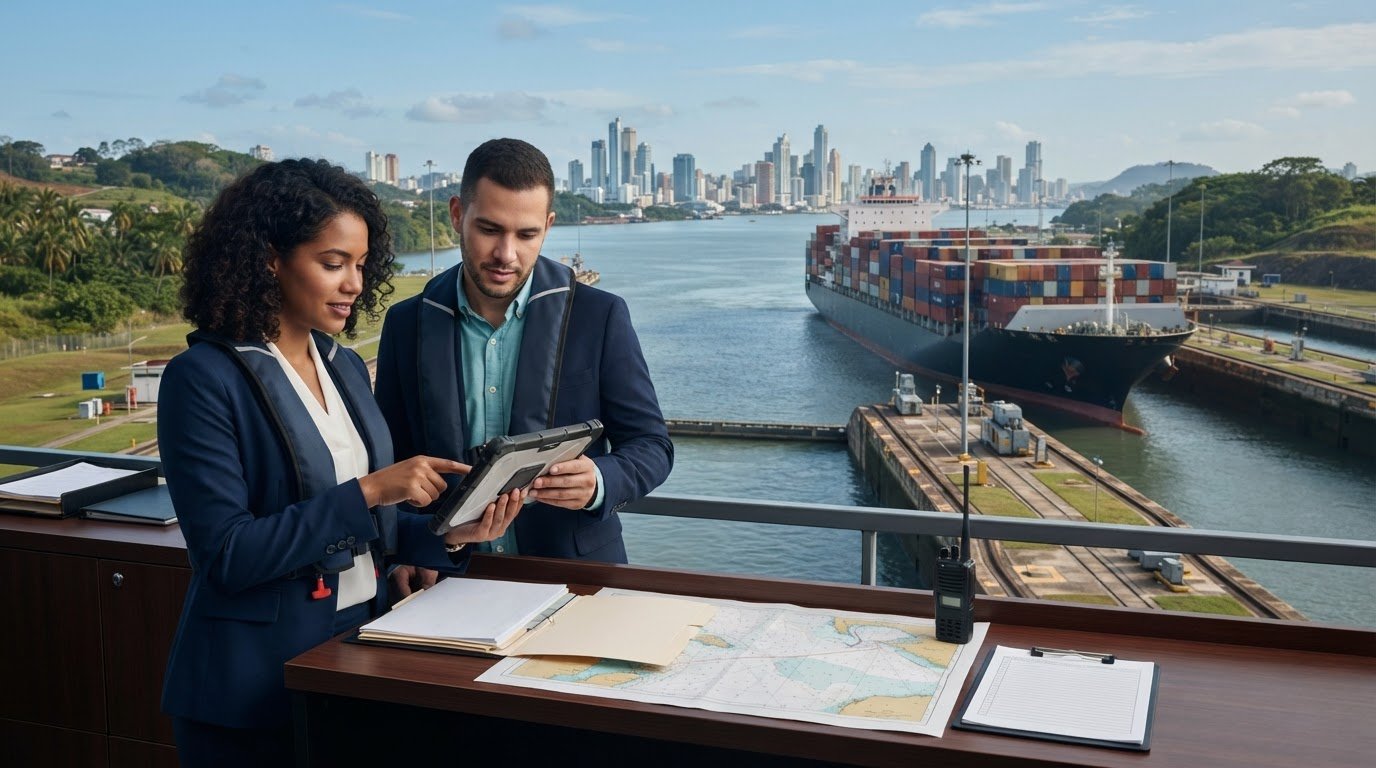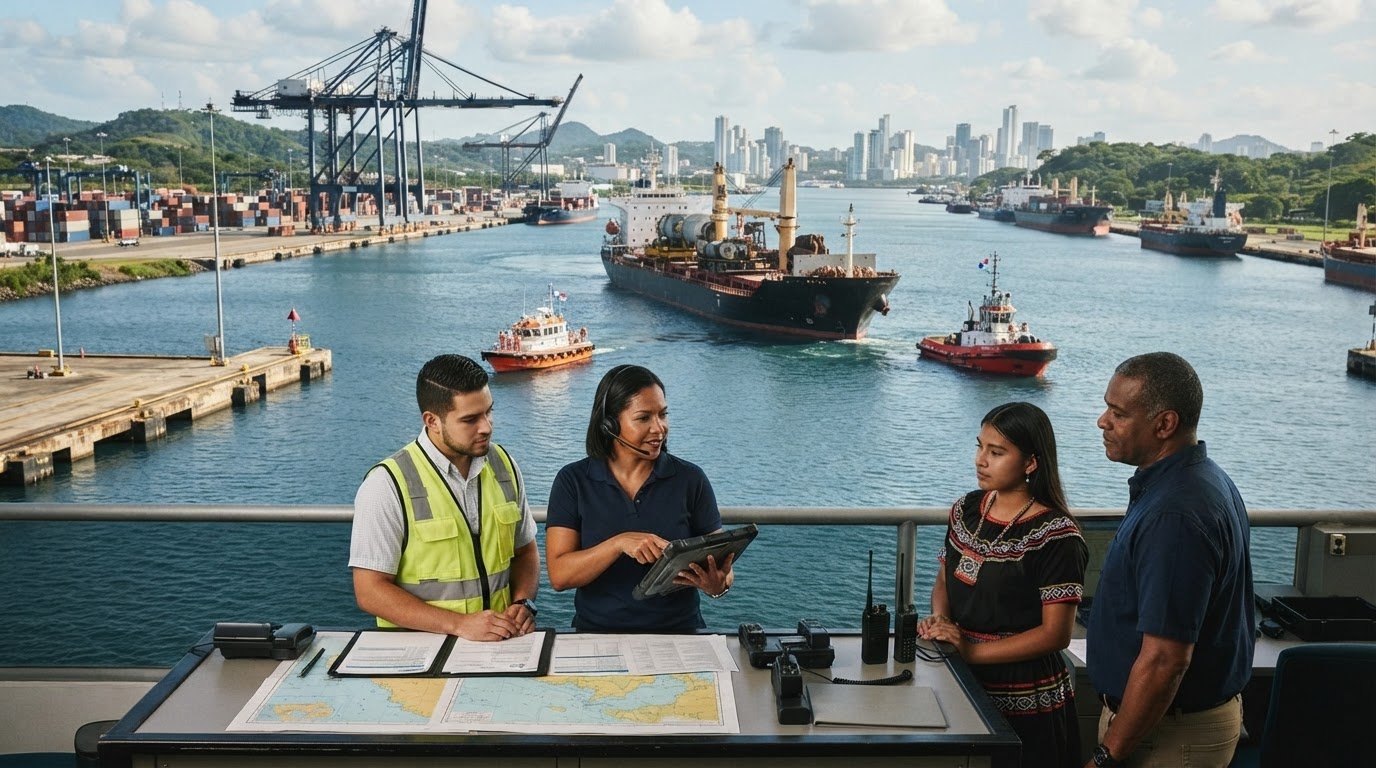

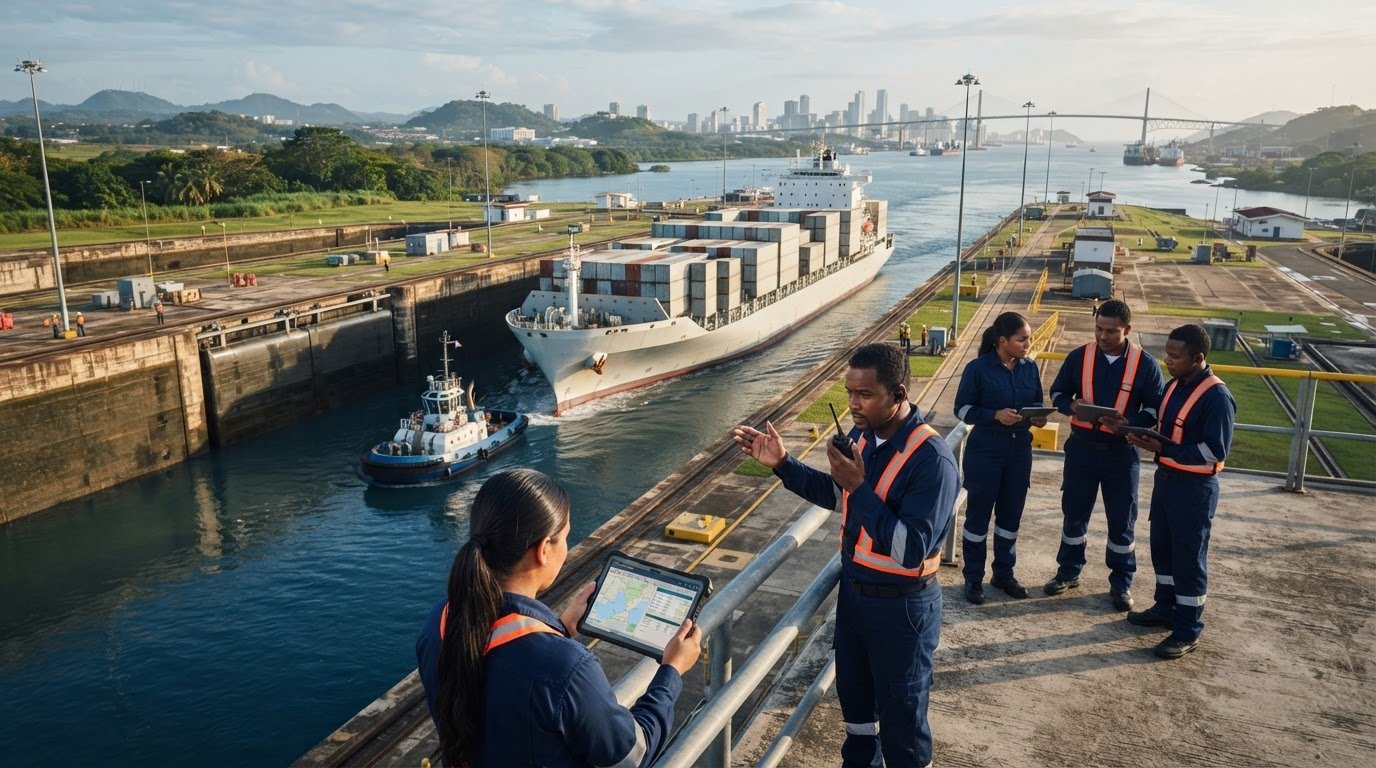
A humanitarian mission can’t afford coordination gaps between its vessel, Canal stakeholders, and shore-side support. Choosing a ship agent for humanitarian missions panama means looking beyond transit paperwork: define who handles each task and how updates reach the people who need them. For a vessel transiting the Panama Canal, a local agent can coordinate clearance, pilot and tug ordering, and inbound and outbound documentation while serving as an on-the-ground point of contact.
Schedule changes, crew needs, and consistent updates all matter when mission operations depend on a vessel’s movements. This guide explains how to assess a Panama ship agent’s role, set clear agency responsibilities, and connect transit coordination with relevant husbandry support. It also covers practical ways to organize a call brief and agree on communication, so your team can plan the transit with vessel and crew priorities in view.
Key Takeaways
- Choose a ship agent for humanitarian missions panama by matching the defined scope to your vessel’s transit and mission priorities.
- Separate Panama Canal transit coordination from vessel and crew support, then assign a clear point of accountability for each requirement.
- Compare agents on scope, communication, local coordination, and reporting, not broad humanitarian claims alone.
- Prepare for the call by organizing vessel particulars, itinerary, key contacts, and the agency scope your team needs.
- Adimar Shipping, Inc. coordinates Canal transit and offers nominated agency, husbandry, protective agency, and PCSOPEP authorized-person support.
Why a humanitarian mission needs a Panama ship agent
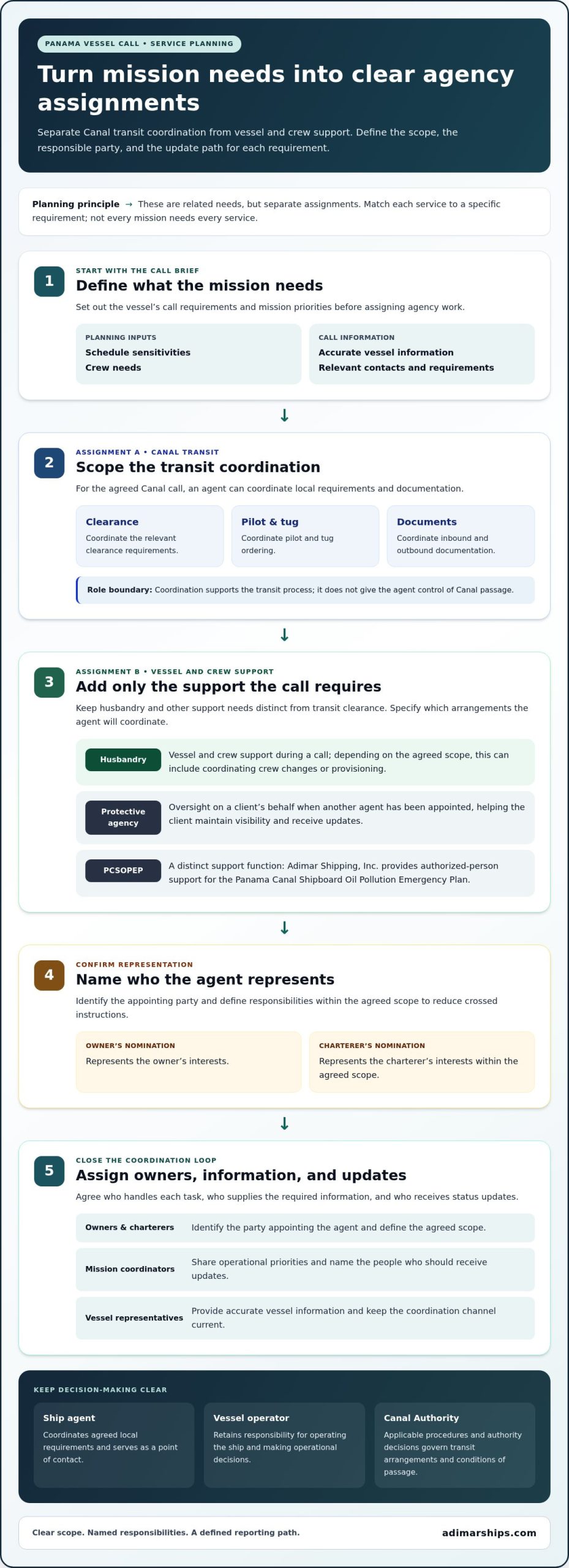
A humanitarian vessel’s Panama call can involve a mission schedule, vessel requirements, and Canal procedures. The local ship agent represents the vessel for the agreed work, coordinating relevant transit and port-call arrangements and communicating with the vessel and other stakeholders. For a ship agent for humanitarian missions panama, the value is clear ownership of local coordination, not a special status for the mission. An identified point of contact helps relay operational needs and follow up on open tasks.
A ship agent coordinates agreed local requirements for a vessel’s call; the vessel operator retains responsibility for operating the ship and making its operational decisions. An agent does not operate the Panama Canal, broker cargo, or provide freight forwarding. Canal passage remains subject to the procedures and decisions of the relevant authorities. Understanding this distinction helps mission teams separate local agency coordination from the authority’s role.
What a ship agent coordinates during a Panama Canal call
Transit coordination can include clearance, pilot and tug ordering, and inbound or outbound documentation. Each task depends on accurate vessel information and communication among the relevant parties. A local agent can connect the vessel, owner or charterer, and other call stakeholders, helping route requests and updates to the right contacts instead of leaving responsibility unclear.
The Panama Canal is a specialized transit route, but the agent’s role is coordination, not control of passage. The Canal Authority’s applicable procedures govern transit arrangements. The agent handles agreed local requirements and documentation; the vessel operator remains responsible for the ship, while authority decisions determine the conditions of passage.
Why humanitarian missions need clear operational ownership
Mission plans may depend on timing, crew arrangements, provisioning, or regular reporting. When responsibilities are unclear, a request can stall while stakeholders determine who should act or provide an update. An agreed reporting path helps identify open items and share changes with the mission team.
Before the call, owners, charterers, and mission coordinators can define who handles each agency task, who supplies the required information, and who receives status updates. Share mission priorities as planning inputs, including schedule sensitivities and crew needs. These priorities do not create regulatory privileges or guarantee a particular transit time.
- Owners and charterers: identify the party appointing the agent and define the agreed scope.
- Mission coordinators: communicate operational priorities and name the people who should receive updates.
- Vessel representatives: provide accurate vessel information and keep the coordination channel current.
With responsibilities defined, a Panama-based agent can serve as a local point of contact while the mission team retains visibility and the vessel operator retains operational control. This division supports coordination without blurring who is accountable for the vessel, the mission, or authority decisions.
How Panama ship agency services support a humanitarian vessel
A humanitarian vessel’s call may involve both Canal transit arrangements and practical support for the ship and crew. These are related needs, but they are separate assignments. Scope the agency work by matching each function to a specific requirement, then identify who will coordinate it and who needs updates. Not every mission needs every service.
Panama’s role in humanitarian logistics is reflected in Panama’s Humanitarian Hub, which UNOPS describes in connection with regional aid logistics. A local ship agent can coordinate agreed vessel-call requirements, while mission teams retain responsibility for their wider aid operation and cargo arrangements.
Transit coordination, documentation, and nominated representation
For a Canal call, transit agency work can include coordinating clearance, pilot and tug ordering, and inbound or outbound documentation. These tasks support the vessel’s transit process; they do not mean the agent controls Canal passage. For more background on the transit process, consult this Panama Canal transit guide.
Nominated agency clarifies whose interests the agent represents. An owner’s nomination represents the owner’s interests, while a charterer’s nomination represents the charterer’s interests within the agreed scope. Identify the appointing party and define responsibilities to reduce crossed instructions. The owner’s nominated agency guide explains this representation in more detail.
Husbandry, protective agency, and PCSOPEP support
Husbandry covers vessel and crew support during a call. Depending on the agreed scope, this can include coordinating crew changes or provisioning. Set out crew welfare or supply priorities in the planning brief, then specify which arrangements the agent will coordinate. This keeps support work distinct from transit clearance and makes it easier to see who is handling each request.
Protective agency has a different purpose: it provides oversight on a client’s behalf when another agent has been appointed. The client can use this role to maintain visibility of the call and receive updates, without confusing oversight with the appointed agent’s operational responsibilities.
PCSOPEP support is another distinct function. Adimar Shipping, Inc. provides PCSOPEP authorized-person support for the Panama Canal Shipboard Oil Pollution Emergency Plan. Requirements and procedures can change, so consult current Panama Canal Authority guidance for submission rules and timing.
- Transit coordination: clearance, pilot and tug ordering, and documentation.
- Representation: agency for the owner or charterer, according to the appointment.
- Call support: husbandry for vessel and crew needs, protective oversight, or PCSOPEP authorized-person support where relevant.
Matching the scope to actual mission priorities keeps instructions focused and responsibilities visible. For a Panama-based point of coordination, explore Panama ship agency coordination with Adimar Shipping, Inc.
How to evaluate a ship agent for humanitarian missions in Panama
Look for clearly defined, relevant agency functions, not broad humanitarian branding alone. A capable ship agent for humanitarian missions panama should be able to explain what it will coordinate for your vessel, whom it represents, how it will share updates, and where its responsibilities end. Compare the proposed scope with the actual call, including vessel particulars, itinerary, stakeholders, crew priorities, and documentation needs.
A written scope and a named coordination lead make agency accountability easier to assess. Use the comparison below to structure discussions and identify responsibilities that still need an owner.
| Evaluation area | What to clarify | What clear scope looks like |
|---|---|---|
| Service scope | Which agency functions are included? | Transit coordination, nominated representation, husbandry, or PCSOPEP support are identified separately. |
| Named responsibilities | Who handles each task and supplies information? | The appointed agent, vessel contacts, and mission-side owners of each request are clear. |
| Communication | Who sends updates, to whom, and through what agreed channel? | Update recipients and expectations are stated, including how changed information is shared. |
| Local coordination | What Panama call requirements will the agent coordinate? | Local tasks and stakeholder interfaces are described without implying control over Canal operations. |
| Reporting | What status information will the team receive? | Open items, changes, and completed coordination tasks can be tracked against the agreed scope. |
Questions that reveal communication and accountability
Clarify how operational updates reach the vessel, owner or charterer, and mission coordinator. Identify the primary coordination lead, which stakeholder provides each document or instruction, and how a change is escalated if it affects another party’s task. Agree on what a status update should cover, such as outstanding information, completed arrangements, and changes that need the mission team’s attention.
Schedule changes require careful communication, not promises of control over Canal availability. Assess whether the agent can relay relevant changes, identify affected tasks, and keep designated stakeholders informed within the agreed scope.
Match the agency scope to the vessel’s mission
Build the scope from distinct workstreams. Transit coordination covers the vessel’s agreed Canal-call tasks. Owner’s or charterer’s nominated agency defines whose interests the agent represents. Husbandry addresses specified vessel and crew requirements, while PCSOPEP authorized-person support is a separate requirement to include when relevant. Avoid bundling these functions into a vague promise of “mission support.”
List crew changes, provisioning, documentation responsibilities, vessel contacts, and itinerary details that matter to the call. Assign each item to the agent or the appropriate mission or vessel contact. For a broader overview of local agency functions, review the ship agency Panama guide. Adimar Shipping provides Panama-based coordination, with scope defined around the vessel’s agency needs.
Prepare a humanitarian vessel’s Panama call with a practical checklist
Good preparation gives the local agent a clear picture of the vessel, intended call, and mission priorities. It also helps the team distinguish confirmed information from estimates that may change. Requirements and timing depend on the vessel’s call and current authority procedures, so treat schedules as planning inputs, not guarantees.
Information to organize before appointing the agent
Before discussing scope, gather the details your team already has. Not every mission needs the same arrangements. The goal is to give the agent enough context to identify relevant coordination tasks and the people responsible for them.
- Define mission priorities. Note schedule dependencies that matter to the operation, such as a planned handover or crew-related requirement. Explain which changes need prompt communication to mission leadership.
- Share vessel and itinerary information. Provide available vessel particulars, expected transit direction, estimated timing, and known itinerary details. Identify which information is final and which remains subject to change.
- List the stakeholders and contacts. Name the relevant vessel, owner or charterer, and mission-side contacts. State who can give instructions, who supplies information, and who should receive operational updates.
- Identify requested support. Describe known crew, provisioning, or other husbandry needs, alongside the transit coordination requested. Note whether owner’s or charterer’s nominated representation, protective agency, or PCSOPEP authorized-person support is relevant.
- Agree how to coordinate. Record the proposed agency scope and the responsible contact for each task. Set out preferred update channels and how stakeholders should communicate schedule or requirement changes.
This preparation is more useful than a broad request for “humanitarian support.” For example, specifying transit coordination and crew-change planning separates the tasks and identifies the information each requires. It does not assume that the agent handles humanitarian cargo arrangements.
Agreeing responsibilities and maintaining updates
Put the agreed scope in writing, including the coordination lead, task owners, update recipients, and process for sharing changes. If the estimated arrival time changes, for instance, communicate it through the agreed channel so relevant parties can review its effect on their tasks. The agent can coordinate and relay information within the agreed scope, but cannot guarantee Canal availability or control authority procedures.
If PCSOPEP authorized-person support is part of the requested scope, use the PCSOPEP authorized-person guide for more context and consult the appropriate authority for current requirements. Keep operational information up to date as plans develop.
For a Panama-based local representative to coordinate the agreed vessel-call scope, discuss your Panama ship agency requirements with Adimar Shipping, Inc.
Work with Adimar Shipping as your Panama Canal ship agent
A humanitarian vessel’s call needs local coordination based on the actual assignment, not assumptions about what a mission requires. Adimar Shipping, Inc. is a Panama City-based ship agency serving vessels transiting the Panama Canal. It coordinates agreed transit and vessel-call requirements while keeping responsibilities and communication clear for the vessel’s stakeholders.
As a ship agent for humanitarian missions panama, Adimar Shipping, Inc. can coordinate transit clearance, pilot and tug ordering, and inbound and outbound documentation. The agency scope can also include owner’s or charterer’s nominated representation, husbandry, protective agency, and PCSOPEP authorized-person support. Each function addresses a distinct need, so the appointment can be shaped around the vessel’s itinerary and mission priorities instead of treating every service as necessary.
A local agency scope shaped around the vessel call
Adimar Shipping, Inc.’s local coordination connects agreed agency tasks with the parties involved in the call. Nominated agency clarifies whose interests the agency represents: an owner’s nomination aligns representation with the owner, while a charterer’s nomination aligns it with the charterer, within the agreed scope. Husbandry can address specified vessel and crew needs, while protective agency provides oversight on a client’s behalf when another agent is appointed.
PCSOPEP authorized-person support is a distinct agency function. Humanitarian mission priorities can inform planning and communication, but they do not confer special Canal access or priority passage. Canal operations and transit decisions remain with the relevant authorities, and no agency appointment can guarantee a particular transit outcome.
- Transit: Coordinate clearance, pilot and tug ordering, and documentation for the Canal call.
- Representation: Define whether the owner’s or charterer’s interests are represented.
- Vessel support: Set out husbandry requirements for the ship and crew.
- Oversight or PCSOPEP support: Include protective agency or authorized-person support where relevant.
Start planning the Panama Canal call
Start with the information available: vessel particulars, expected timing and itinerary, mission priorities, key contacts, and the agency requirements you want coordinated. Identifying estimates and who can provide updates helps establish a workable scope and communication path. Adimar Shipping, Inc. can coordinate the agreed Panama Canal transit and vessel-call requirements as a local representative.
Share your vessel’s itinerary and agency requirements to discuss your humanitarian vessel’s Panama Canal call with Adimar Shipping, Inc. A clear starting brief keeps the conversation focused on scope, responsibilities, and the updates your team needs.
Turn mission priorities into a clear vessel-call plan
Turn operational priorities into an agency scope that everyone can use. Decide which details must stay visible to the mission team, who can provide instructions, and how schedule changes should be shared. This keeps the vessel call connected to the wider mission without confusing agency coordination with Canal authority decisions or the vessel operator’s responsibilities.
The right ship agent for humanitarian missions panama should make it easier to define who coordinates each agreed requirement and how your team stays informed. Start with the itinerary and the priorities that matter most, even if some details are still estimates. A focused discussion can shape the coordination plan around the call rather than assumptions.
Discuss your humanitarian vessel’s Panama Canal call with Adimar Shipping and take the next planning step with a clear, mission-aware scope. Your team can move forward with responsibilities and communication needs in view.
Frequently Asked Questions
Does a humanitarian vessel receive priority passage through the Panama Canal?
No, a humanitarian mission does not automatically receive priority passage because of its purpose. Transit arrangements and decisions are governed by the relevant Panama Canal Authority procedures. Treat the intended schedule as subject to change and build flexibility into onward commitments where possible. Share time-sensitive dependencies with the vessel’s agent so they can be considered during coordination, without assuming they alter transit order or availability.
How far in advance should a humanitarian mission appoint a Panama ship agent?
There isn’t one universal appointment lead time for every vessel call. Engage an agent as soon as the itinerary and expected timing begin to take shape, especially if the call involves several stakeholders, crew needs, or documentation coordination. Early planning gives the parties time to define scope and identify information gaps. Transit requirements and timing can vary, so base plans on current authority procedures rather than an assumed fixed deadline.
Can a Panama ship agent coordinate crew changes or provisioning for a humanitarian vessel?
Yes. Husbandry support can include coordinating crew changes and provisioning within the agreed scope. For example, tell the agent whether a planned crew change is time-sensitive and who will provide instructions or receive updates. Coordinating vessel support is distinct from immigration decisions or any separate arrangements required by other parties. Clear task ownership helps the vessel and mission team understand which matters the agency is handling.
What information should an NGO or vessel operator share with a Panama ship agent?
Share the vessel’s name and particulars, expected arrival window, transit direction, itinerary, and the main owner, charterer, vessel, and mission contacts. Include known crew or provisioning needs, documentation status, and the agency tasks requested. Flag estimates as provisional and identify who can authorize changes. For example, if a mission coordinator and master have different update roles, specify who should receive operational notices and who can issue vessel instructions.
Can the vessel owner and charterer appoint different Panama ship agents?
They may appoint agents to represent their respective interests, but each appointment should clearly state its authority and scope. An owner’s nominated agent and a charterer’s nominated agent are not automatically interchangeable. Before the call, establish how their instructions relate, who coordinates shared vessel requirements, and how information should be distributed. This helps reduce conflicting requests while keeping each principal’s representation clear within the agreed agency arrangements.
Does a ship agent operate the Panama Canal or guarantee a transit time?
No. A ship agent coordinates agreed vessel-call and transit requirements, but the Panama Canal Authority controls Canal operations and applicable transit decisions. An agent cannot guarantee a transit time or passage availability. For a ship agent for humanitarian missions panama, focus on accurate information, defined responsibilities, and timely communication about changes. Coordination supports planning, while the vessel operator remains responsible for operating the ship.