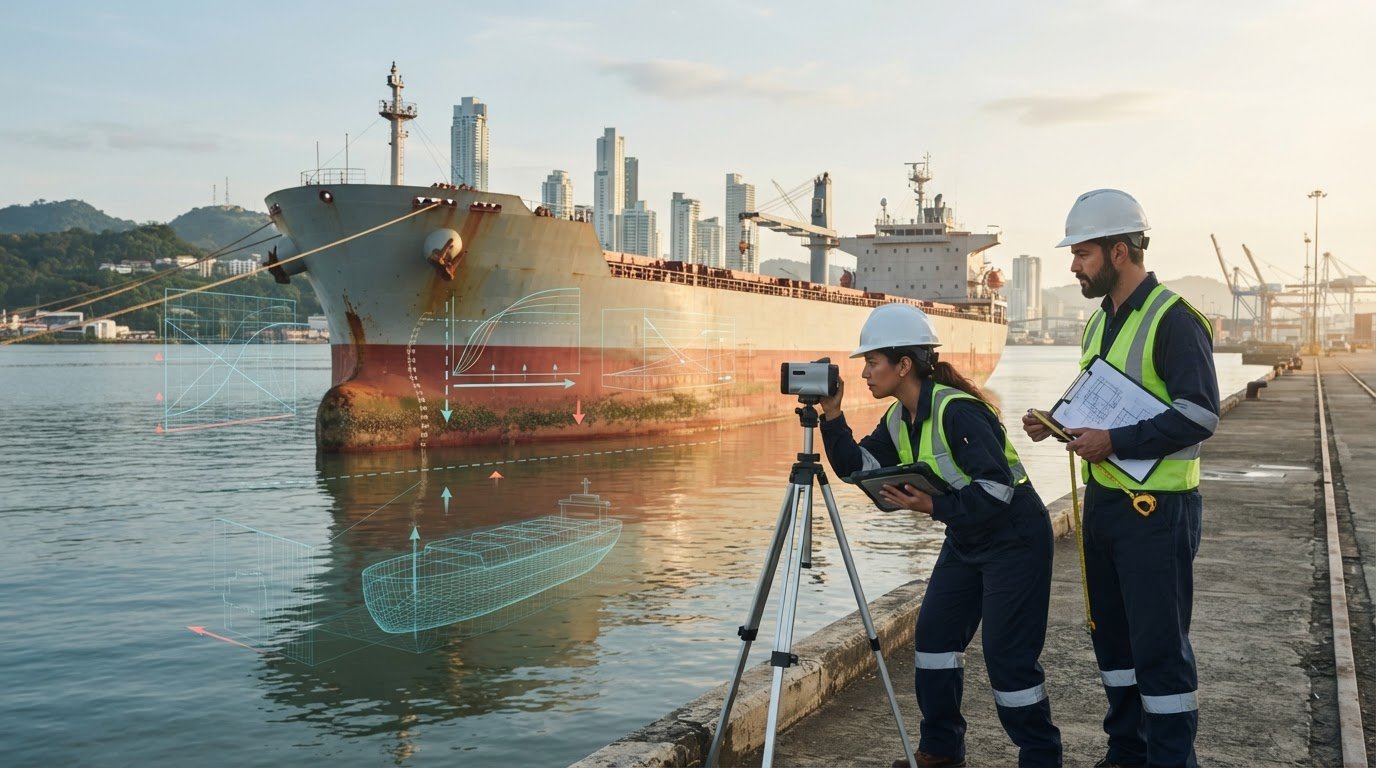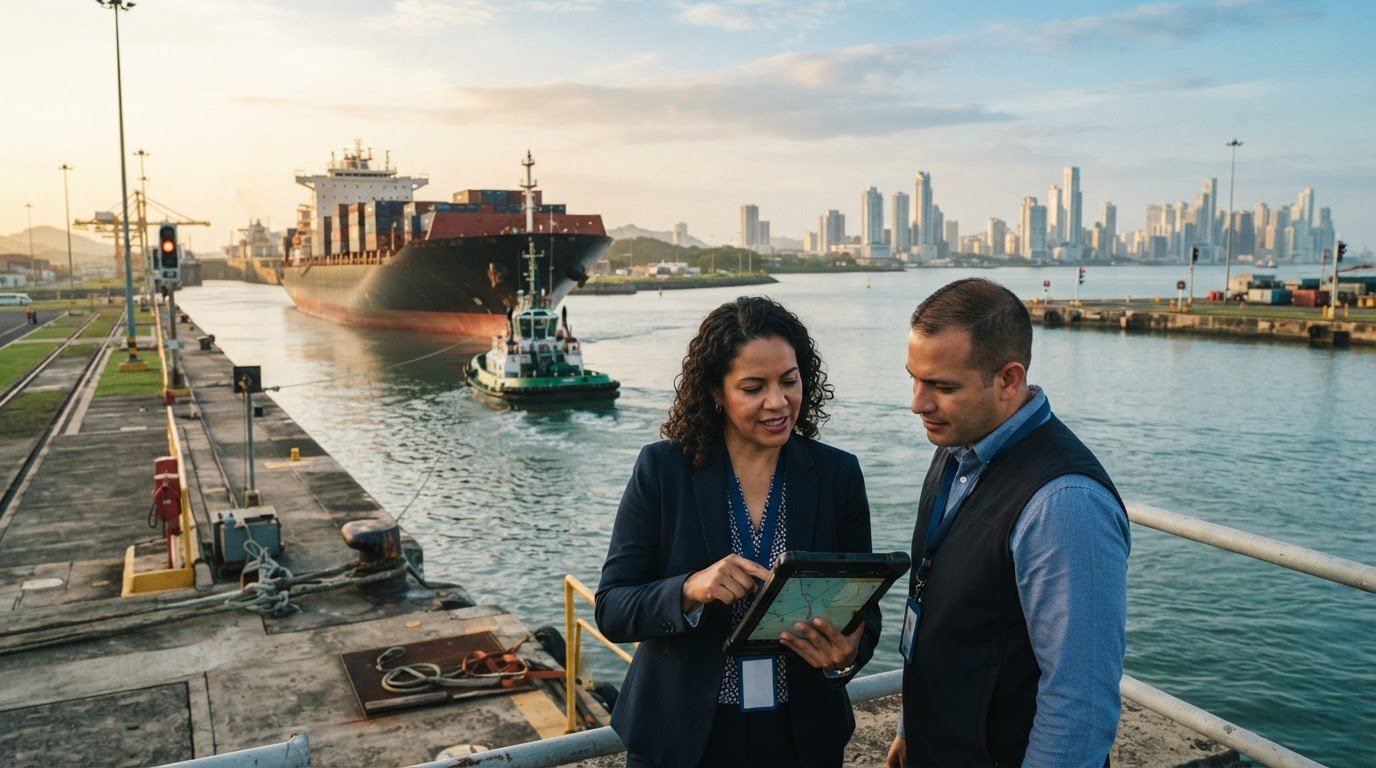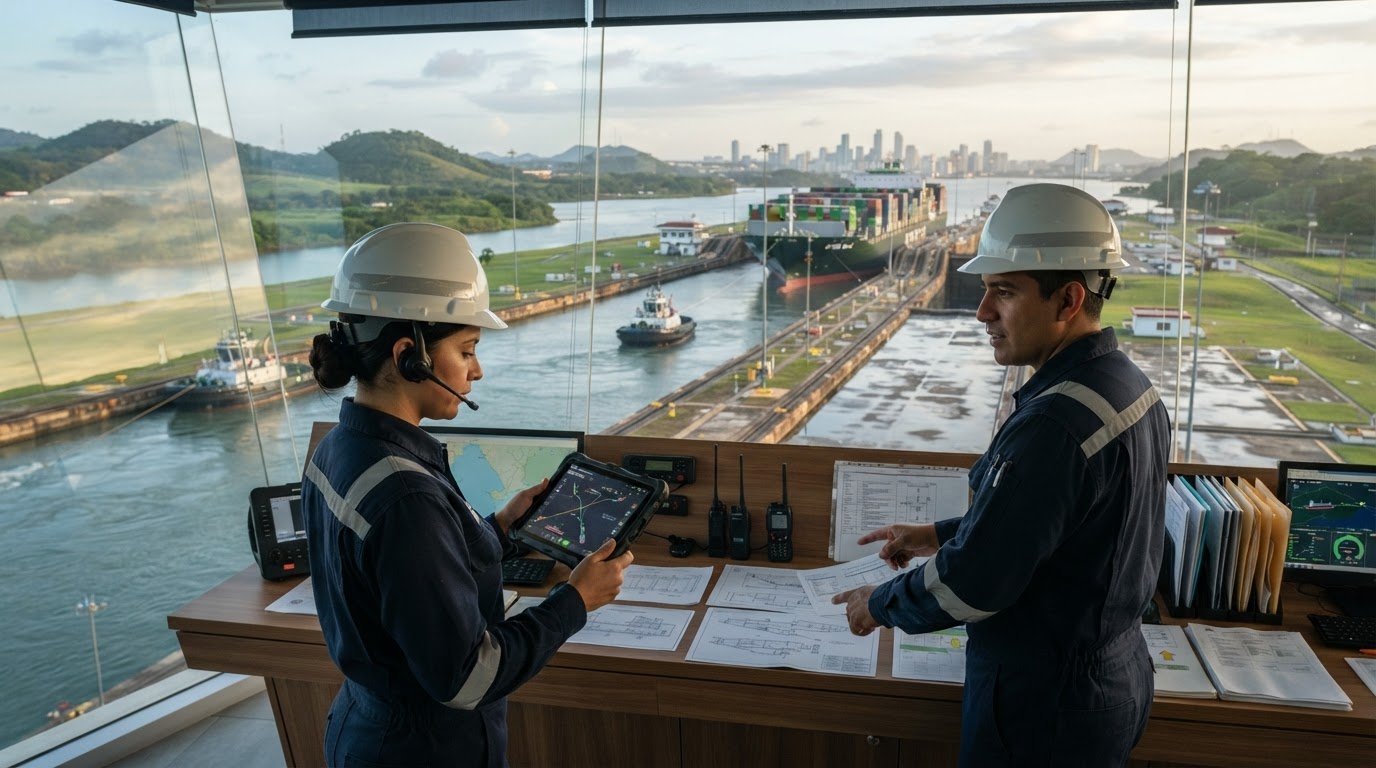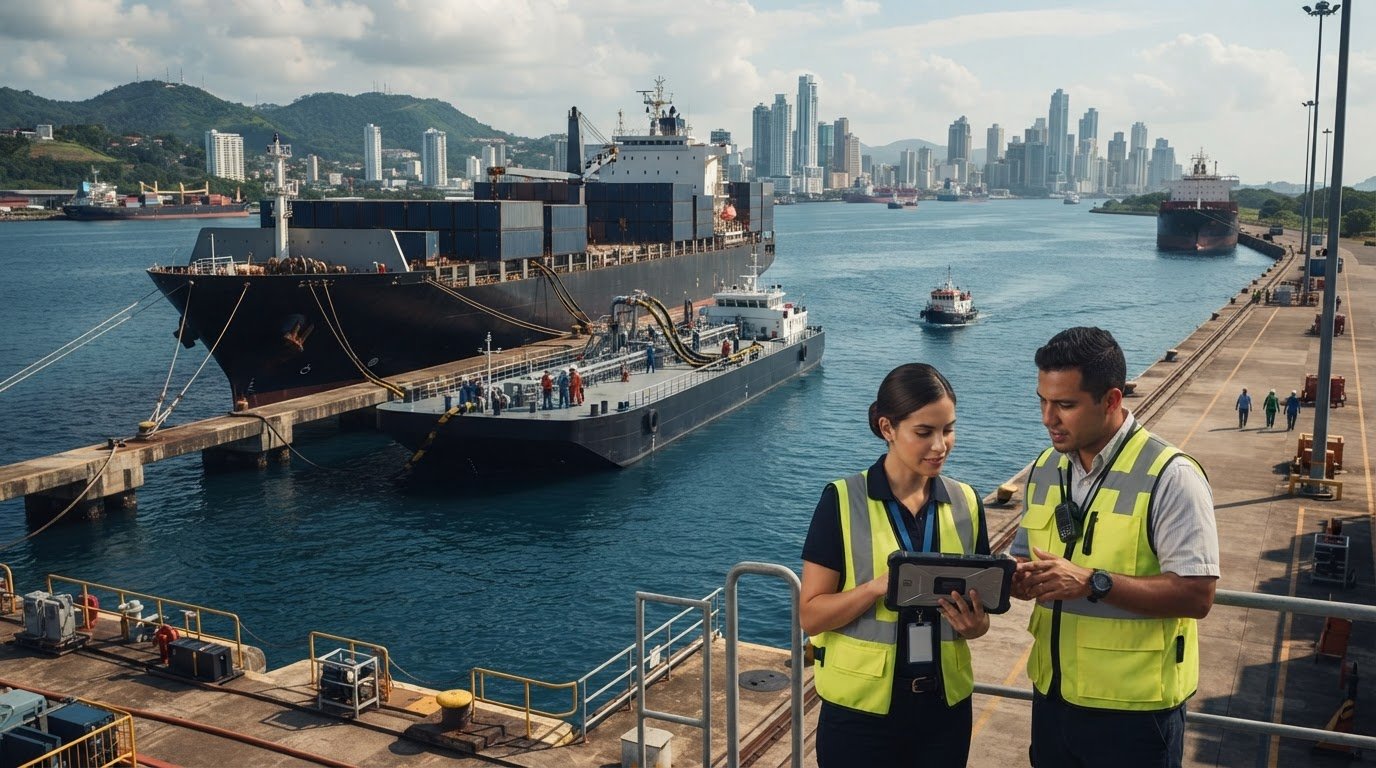

What helps keep a Panama project on track when vessel calls recur over time? Consistent representation can connect transit coordination, documentation, schedules, and vessel requirements from one call to the next. A ship agent for long-term projects in panama should make responsibilities clear and coordinate local agency work throughout the project.
For project teams, continuity matters. When contacts change or agency duties are unclear, communication gaps can make it harder to track arrangements and follow up on changes. The right scope depends on the work involved: Panama Canal transit coordination, owners’ or charterers’ nominated agency, and husbandry support address different operational needs.
This guide explains how to define agency responsibilities for recurring Panama operations, reduce avoidable uncertainty, and match representation to your vessels and stakeholders. You’ll learn what to consider for transit requirements, nominated agency, and vessel or crew support. Adimar Shipping, Inc. coordinates transit clearance, orders pilots and tugs, and handles required documentation as a local representative for your project.
Key Takeaways
- Assess whether a ship agent for long-term projects in panama can maintain clear representation as project activity and vessel requirements evolve.
- Map agency responsibilities to each project stage, including transit clearance, pilot and tug ordering, and inbound and outbound documentation.
- Compare local coordination, service scope, communication practices, and continuity to understand what an appointed agent contributes beyond digital tools or directories.
- Prepare a project brief with vessel details, expected activity, represented parties, and required support to define responsibilities clearly.
- Match Panama-based ship agency, nominated representation, and husbandry services to the project’s specific needs.
Why a Long-Term Panama Project Needs More Than a One-Call Ship Agent
A single port call has a defined set of immediate needs. A project with recurring calls or sustained vessel operations requires a broader view: schedules can shift, documentation must be coordinated for each call, and vessel requirements may change. Without continuity, teams may need to re-establish context repeatedly, making responsibilities and communication harder to manage.
Long-term project agency support in Panama is ongoing local representation and coordination that connects a project’s vessel calls, documentation, and service requirements over an agreed period of activity. The scope depends on the vessels, their operations, and whether the agent represents the owner or charterer. For background on the waterway and its operating context, see this overview of Panama Canal history and operations.
What counts as a long-term vessel project in Panama?
There’s no single vessel type or operating model that defines a long-term project. It may involve recurring calls, sustained operations, or activity planned over a defined project period. The pattern of work and the support required matter more than a particular number of vessels or a fixed duration. Define the project scope around expected vessel activity, stakeholder roles, and the services needed in Panama.
Why continuity matters across recurring port calls
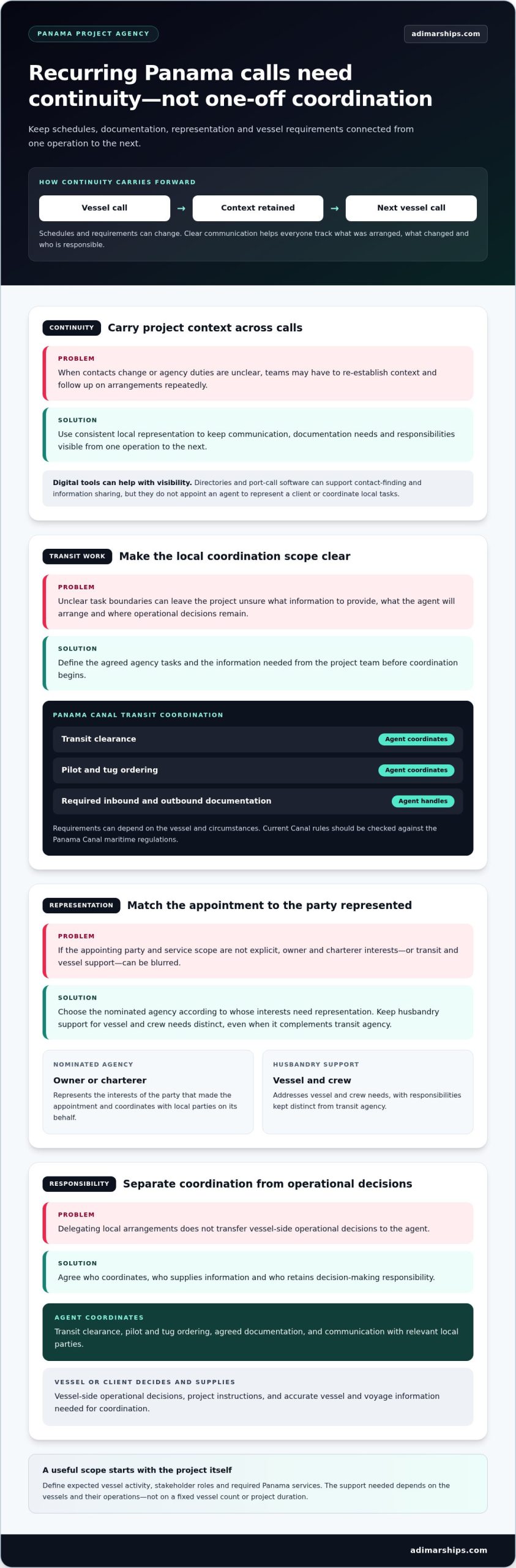
Repeated calls create coordination work across vessel schedules, documentation, and changing operational requirements. Consistent communication helps carry relevant context forward, so everyone involved knows what has been arranged, what has changed, and who is responsible for each task. Clear representation also distinguishes owner interests from charterer interests when several stakeholders take part in the project.
A directory listing can help a team find agency contacts, and port-call software can support information sharing and visibility. Neither, by itself, appoints an agent to represent a client and coordinate tasks with local parties. Digital tools can complement agency work, but the project still needs clear responsibility for communication, follow-through, and representation.
For a ship agent for long-term projects in panama, continuity means more than handling one arrival and departure. It means carrying forward a working understanding of the project’s needs while keeping responsibilities and communication channels visible to the client. A clear process can reduce avoidable misunderstandings, but it cannot ensure schedules or operating conditions will stay unchanged.
What a Panama Ship Agent Can Coordinate Across a Long-Term Project
Agency tasks can span advance preparation and inbound and outbound passage. A local agent coordinates the agreed services and communications, while the vessel’s master and project stakeholders retain their operational decision-making responsibilities. Define this division early so each party knows what information to provide, what the agent will arrange, and where decisions remain with the vessel or client.
Transit coordination and documentation in Panama
For a Panama Canal transit, Adimar Shipping coordinates transit clearance, orders pilots and tugs, and handles required inbound and outbound documentation. These tasks connect the vessel and passage information supplied by the project team with the arrangements needed for transit. Requirements can depend on the vessel and circumstances, so use the Panama Canal maritime regulations as the primary reference for current Canal rules. For additional operational context, see this Panama Canal transit guide.
Across recurring calls, consistent agency coordination helps keep communications and documentation needs clear from one operation to the next. It does not replace the vessel’s own planning or decisions. Ship agency also does not mean operating the Canal, arranging cargo through brokering, or providing freight forwarding. The agent coordinates the agreed agency work and represents the appointing party within that scope.
Nominated agency and vessel support during a project
An owner’s or charterer’s nominated agent represents the interests of the party that made the appointment and coordinates with local parties on its behalf. Choose the appointment according to whose interests the client needs represented. Husbandry services address vessel and crew needs and can complement transit agency while keeping the responsibilities distinct. Adimar provides owners’ and charterers’ nominated agency representation and husbandry support in Panama.
A practical responsibility check:
- Agent coordinates: transit clearance, pilot and tug ordering, agreed documentation, and communications with relevant local parties.
- Vessel or client decides and supplies: vessel-side operational decisions, project instructions, and accurate vessel and voyage information needed for coordination.
Setting this boundary lets the project team delegate local coordination while keeping decisions with the appropriate party. To see how Panama ship agency support can fit into project operations, explore Adimar Shipping’s agency services.
How to Compare Ship Agents for a Long-Term Panama Project
Compare agency support against the work your project needs, not just the features in a directory or software platform. A digital tool can organize port-call information, while an appointed agent provides local coordination and representation within an agreed scope. A single-call appointment may suit a one-off transit. For recurring activity, continuity helps retain project context and clarify responsibility from call to call.
| Criterion | What to assess |
|---|---|
| Local knowledge | Can the agency coordinate Panama-related transit and documentation work with relevant local parties? |
| Scope | Are transit coordination, nominated representation, husbandry, and specialized requirements clearly distinguished? |
| Communication | Are project contacts, reporting expectations, and escalation channels defined? |
| Continuity | Can working context and responsibilities carry across recurring calls? |
Weigh each criterion against the project’s actual requirements. A vessel needing transit coordination has different agency needs from one that also requires crew or vessel support. A directory can help identify contacts, and software can support visibility, but neither establishes who represents the owner or charterer, coordinates the agreed work, or communicates on the client’s behalf.
Which agency responsibilities should your project cover?
Transit coordination covers clearance, pilot and tug ordering, and required documentation. Owners’ or charterers’ nominated agency establishes whose interests the appointed agent represents. Husbandry and protective agency address other vessel-support or oversight needs. PCSOPEP authorized person services are a separate compliance-related agency requirement, not a substitute for general transit coordination. Read the PCSOPEP authorized person guide for more context. For vessels or stakeholders with U.S. legal considerations, the U.S. shipping and navigation laws for the Panama Canal offer a separate legal reference; they do not replace applicable Panama Canal requirements.
How to assess communication, continuity, and local oversight
At the start of the engagement, define the primary project contacts, how updates should be shared, and which channel to use when responsibilities or plans change. A Panama-based representative can coordinate with the appointing party, vessel stakeholders, and relevant local parties within the agreed scope. Adimar Shipping provides Panama ship agency services, nominated representation, husbandry, and PCSOPEP authorized person services. Explore Adimar’s Panama ship agency services.
How to Set Up Agency Support for a Recurring Panama Project
A clear setup gives the agency and project team a shared reference point. It defines who is represented, which tasks are included, what information must be exchanged, and how to handle updates as activity changes. For a ship agent for long-term projects in panama, treat the arrangement as a working coordination plan, not simply a contact name attached to each call.
Prepare a clear agency brief before the project begins
A useful agency brief starts with vessel details, expected Panama activity, the represented party, key stakeholders, and required support. Include enough context for the local representative to understand the project’s operating pattern and coordinate the agreed services.
- Vessel details: Identify the vessels involved and provide the relevant particulars and voyage information for the planned activity.
- Expected activity: Describe anticipated calls or other Panama-related operations, noting that schedules may change.
- Representation: State whether the appointment is for the owner, charterer, or another client interest, and identify the authorized project contacts.
- Service requirements: Specify the agency support needed, such as transit coordination, documentation, nominated agency representation, husbandry, or PCSOPEP authorized person services.
- Working arrangements: Set communication channels, reporting expectations, escalation contacts, and which decisions stay with the vessel or client.
These details provide a practical basis for assigning responsibilities. For example, a project may need transit coordination as well as representation for an appointing party. Listing each need separately helps prevent assumptions about what the agency is expected to arrange or communicate.
Coordinate recurring calls and review changing requirements
Once responsibilities are defined, keep the coordination process current. Share schedule changes and relevant updates with designated contacts, and review whether the agreed scope still fits as vessel requirements or project activity evolve. A review after a call or at a project milestone can reveal unclear handoffs and show where communication expectations need adjustment.
Panama Canal procedures and compliance details can change or depend on the vessel and transit. Verify current requirements against the appropriate authority guidance for each operation rather than assuming arrangements from a previous call automatically apply to the next one. The agent coordinates within the agreed scope, while the project team and vessel provide accurate information and retain their operational decision-making responsibilities.
A shared brief, named contacts, and a regular review process support clearer coordination across recurring activity without assuming schedules or requirements will stay fixed. Discuss your Panama project with Adimar to align agency support with your project’s needs.
Why Adimar Shipping Fits Long-Term Panama Agency Requirements
Recurring Panama operations need a local point of coordination and a clearly defined agency scope. Adimar Shipping is based in Panama, with an office in Panama City, and represents clients in coordinating assigned agency tasks. For a ship agent for long-term projects in panama, this local presence provides a point of contact for communication across vessel calls and project stakeholders.
A local agency partner for transit and representation
Adimar coordinates Panama Canal transit clearance, orders pilots and tugs, and handles required inbound and outbound documentation. These services address project transit needs and the responsibilities agreed with the client. Owners’ and charterers’ nominated agency represents the party making the appointment, helping keep that party’s interests and instructions clear during local coordination.
The key is to define the role rather than assume one arrangement fits every project. A team focused on transit coordination may need a different scope from one that also requires nominated representation or vessel support. Adimar’s Panama-based office provides a local contact point for organizing those responsibilities around the project.
Align Adimar’s services with your project needs
Set out the vessel activity, the party to be represented, and the support required. This creates a practical foundation for the agency relationship and distinguishes transit coordination from other services that may be relevant during the project:
- Ship agency: Transit clearance coordination, pilot and tug ordering, and inbound and outbound documentation.
- Nominated agency: Representation of the appointing owner’s or charterer’s interests.
- Husbandry and protective agency: Support for vessel or crew needs, or protective representation as required by the project.
- PCSOPEP authorized person: A distinct service for the vessel’s PCSOPEP-related requirements in Panama.
Not every project needs every service. A clear brief lets the client and agency align the scope with vessel transit, representation, and support requirements, while keeping responsibilities understood as project needs change. Adimar provides local coordination for the agreed scope without promising a particular schedule or outcome.
Discuss long-term ship agency support in Panama and outline the vessel activity, representation needs, and agency coordination your project requires.
Build Continuity Into Your Panama Project
Long-term vessel operations need more than an agent arranged for a single call. A clear scope, defined responsibilities, and consistent communication connect transit coordination and project requirements across recurring activity. Choosing a ship agent for long-term projects in panama means considering both the local coordination required and the party the agent represents.
Adimar Shipping is a Panama-based ship agency with an office in Panama City. Its services include transit clearance coordination, pilot and tug ordering, and inbound and outbound documentation. Project support can also include owners’ or charterers’ nominated agency, husbandry, protective agency, and PCSOPEP authorized person services. Aligning the scope with vessel activity and representation needs gives the project team a clearer framework for local coordination.
Start with a practical brief covering expected activity, vessel requirements, stakeholders, and agency responsibilities. Keep communication channels clear as schedules and operational needs evolve. Discuss long-term ship agency support in Panama with Adimar Shipping to define the local coordination your project needs.
Frequently Asked Questions
What does a ship agent do for a long-term project in Panama?
A ship agent coordinates agreed local services and represents the appointing client’s interests during vessel operations. For a long-term project, this can include coordinating transit clearance, pilot and tug ordering, and inbound and outbound documentation across recurring calls. Depending on the project scope, support can also include nominated agency, husbandry, protective agency, or PCSOPEP authorized person services. The agent coordinates these responsibilities with relevant parties, while vessel-side operational decisions remain with the appropriate vessel or client personnel.
Why use the same ship agent for recurring Panama calls?
Using the same agent can preserve project context between calls, including established contacts, communication preferences, and the agreed division of responsibilities. That continuity can make it easier to identify changes and reduce avoidable misunderstandings as schedules or vessel requirements evolve. It does not guarantee that delays or disruptions will be prevented. Its value is a consistent local point of coordination that understands the project’s working arrangements and carries them forward from one call to the next.
How do I choose a ship agent for a Panama project?
Choose an agent whose local presence and scope align with your project’s operating needs. Assess whether the responsibilities cover required transit coordination, representation, documentation, and vessel or crew support. Define communication contacts, reporting expectations, and how responsibilities will carry across calls. A directory or software platform can support information sharing, but it is not the same as an appointed agent coordinating agreed tasks and representing the owner’s or charterer’s interests.
Can a Panama ship agent represent both the owner and charterer?
A ship agent can act as an owner’s nominated agent or a charterer’s nominated agent, representing the interests of the party that makes the appointment. Identify the represented party and agency responsibilities clearly. Do not assume that one appointment automatically means the agent represents both parties in the same capacity. Clear instructions distinguish whose interests the agent represents and how communications should be handled among the owner, charterer, vessel, and other project stakeholders.
What services can a ship agent coordinate during a Panama Canal transit?
Ship agency coordination can include transit clearance, ordering pilots and tugs, and handling required inbound and outbound documentation. Arrangements depend on the vessel, transit, and agreed agency scope, so project teams should provide accurate vessel and voyage information and follow current authority requirements. Other support may be handled under separate service responsibilities, such as husbandry for vessel or crew needs. The agent coordinates agency tasks but does not operate the Canal or make vessel-side decisions.
What is a PCSOPEP authorized person for a Panama transit?
A PCSOPEP authorized person provides a specialized service related to the Panama Canal Shipboard Oil Pollution Emergency Plan. This is distinct from general transit agency coordination, such as arranging pilots and tugs or handling passage documentation. Adimar Shipping provides PCSOPEP authorized person services for vessels transiting the Canal. Include this requirement when defining the agency scope and address the vessel’s applicable PCSOPEP and transit requirements through the appropriate current procedures.
What information should I include when appointing an agent for a long-term project?
Provide vessel details, expected Panama activity, anticipated calls, and required services. Identify whether the agent represents the owner, charterer, or another client interest, and name the main project and vessel contacts. Include communication channels, reporting expectations, escalation contacts, and which decisions remain with the vessel or client. Share schedule updates and changes to vessel requirements as they arise. A clear brief gives the agency team a practical basis for coordinating recurring work within the agreed scope.